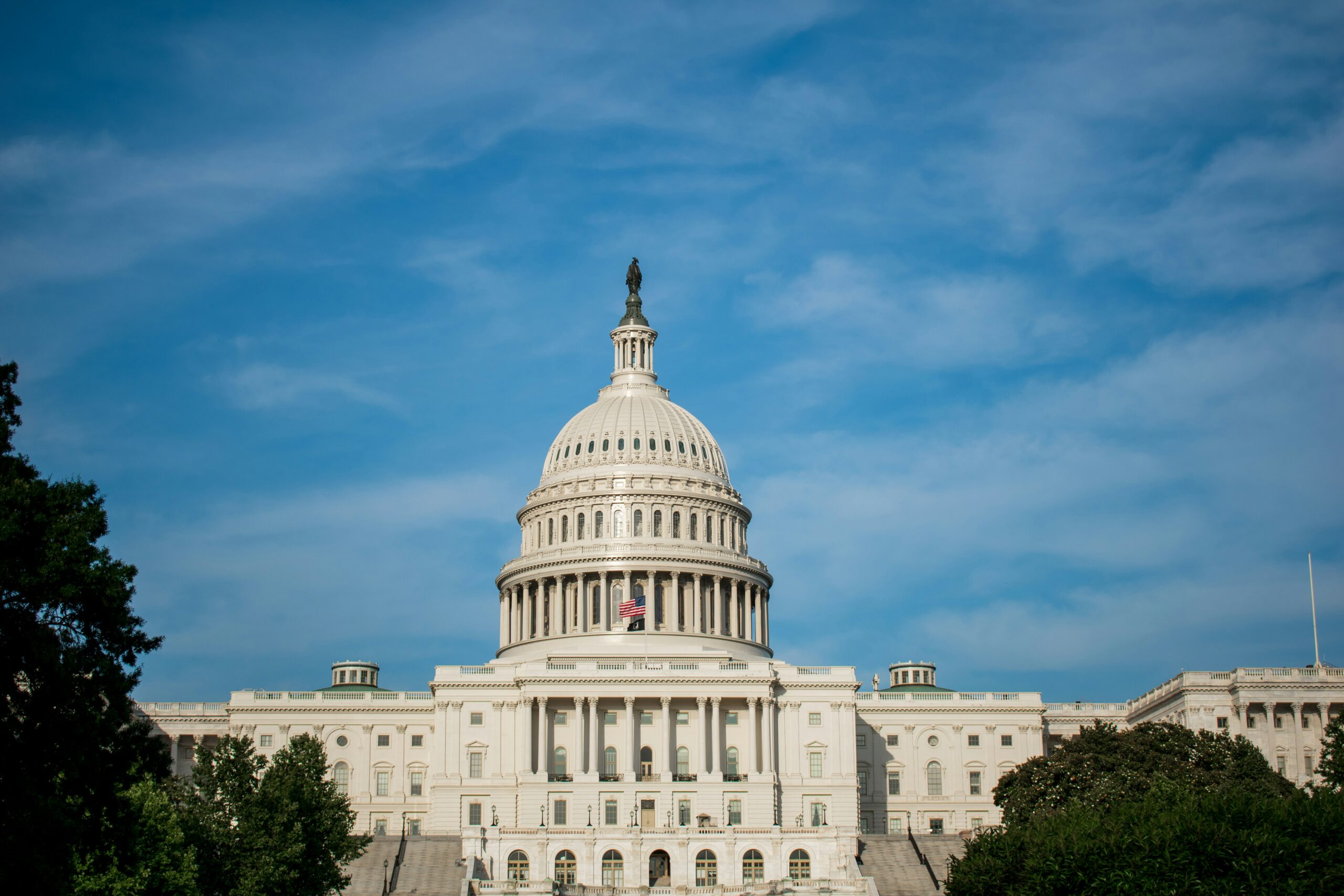
Last week, the US Congress passed a five-year authorization of the Federal Aviation Administration (FAA). While passage of a long-term FAA bill by a famously divided Congress is itself an achievement, and was not at all times plain sailing, we’re particularly excited by the bill’s game-changing hydrogen-related provisions. These unprecedented measures will almost certainly unlock tremendous progress toward a clean skies future.
In the first of two sections devoted entirely to hydrogen, 1019 Hydrogen Aviation Strategy, the Department of Transportation (DOT) and FAA are tasked with working with the Department of Energy on research and development activities “relating to the safe use of hydrogen in civil aviation.” This would begin with the agencies crafting and implementing a strategy that considers “the feasibility, opportunities, challenges, and pathways toward the potential and safe uses of hydrogen,” and the “use of hydrogen in addition to electric propulsion to propel commercial aircraft.” A key goal of this strategy is “to understand the contribution that the use of hydrogen would have on civil aviation,” including –among other applications– “hydrogen fuel cells as a source of electric propulsion.”
Implementation of the new strategy includes establishing goals and policy; advancing certification efforts for hydrogen technologies; exploring grants and loan guarantees to increase adoption of hydrogen aviation technologies; and, –of course,– mitigating any safety risks. The FAA is also advised to consult with NASA, DOE, aerospace industry, airports, airlines, and academia through an advisory committee.
Importantly, DOT and FAA are directed to “advance the competitiveness of the United States in the safe use of hydrogen in civil aviation.” All of this is welcome news to the US hydrogen aviation community, which has watched as other nations (e.g. UK, EU, China, and Japan) have opted to invest considerable government resources to develop hydrogen aviation technologies.
Section 1109, FAA Leadership in Hydrogen Aviation, begins where the Hydrogen Aviation Strategy leaves off, directing FAA to develop regulations and standards “for the safe and efficient certification of hydrogen in civil aviation, including hydrogen-powered commercial aircraft.” Critically, the first specific directive under this section is for FAA to “develop a viable path for the certification of the safe use of hydrogen in civil aviation, including hydrogen-powered aircraft.” For technology companies like ZeroAvia, whose powertrains are market-ready, this directive promises to open a crucial pathway toward entry-in-service in the U.S.
In non-hydrogen-specific sections, the bill also helps airports in their transition to hydrogen by expanding the definition of Airport Improvement Program (AIP) eligible projects to include building or acquiring fueling infrastructure or equipment to support type certificated hydrogen-powered aircraft.
The bill also encourages the FAA Center of Excellence for Alternative Jet Fuels and Environment (ASCENT) to include hydrogen among the various alternative aviation fuels it explores.
And, the bill directs the Aviation Rulemaking Advisory Committee to recommend regulations regarding deployment of specific findings and recommendations for regulations related to the certification and installation of, among other technologies: “(1) electric engines and propellers; (2) hybrid electric engines and propulsion systems; (3) hydrogen fuel cells; and (4) hydrogen combustion engines or propulsion systems.”
One interesting addition to the bill is Section 791, UFP Study, which directs FAA to initiate “a study examining airborne ultrafine particles less than or equal to 100 nanometers and the effect of such particles on airport-adjacent communities.” Because we’re pursuing hydrogen-electric technologies –where hydrogen is used in a fuel cell to generate electricity for an electric motor– we anticipate that such a study will demonstrate a key advantage of our approach: the complete elimination of non-carbon aircraft emissions that contribute to poor air quality and subsequent health issues for those living near airports. Hydrogen-electric aircraft will be zero-carbon emissions in operation and will also not impact local air quality at airports.
To be clear, the FAA Reauthorization passed by Congress does not guarantee development and adoption of hydrogen aviation in the U.S. Rather, it offers what technology developers like ZeroAvia and our competitors have sought: government-enabled opportunities to develop our technologies and prove the safety and benefits of hydrogen aviation. Other technologies, such as sustainable aviation fuel, have long enjoyed government support for development and adoption. The hydrogen aviation community seeks a level and competitive playing field where the federal government does not pick winners and losers, and this bill is a good start toward that.
We thank the U.S. Congress for helping create such a promising environment with this legislation, and we can’t wait to begin working with the FAA, DOT, DOE, NASA and others to implement the bill’s unprecedented hydrogen provisions.
To discuss the opportunities and challenges presented by the transition to hydrogen aviation, please contact us here.
We use cookies to improve your experience on our site. By using our site, you consent to cookies.
Manage your cookie preferences below:
Essential cookies enable basic functions and are necessary for the proper function of the website.