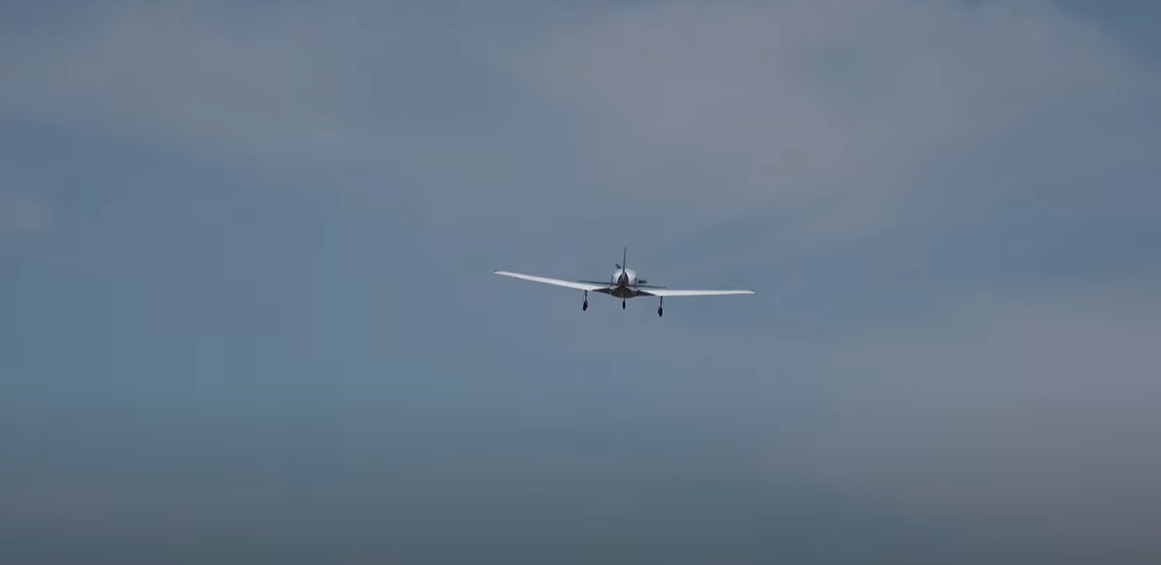
ZeroAvia Secures Additional $30 Million in Funding from IAG, Barclays, NEOM & AENU

  • International Airlines Group (IAG) increases its investment following an initial commitment from the Group last year
  • Barclays’ flagship Sustainable Impact Capital investment vehicle also joins the round, alongside the world’s largest hydrogen-focused future city NEOM project and multi-stage impact technology fund AENU, to power path to zero-emission flight
  • Additional investment brings investment round to $68 million following December raise, including United Airlines and Alaska Airlines

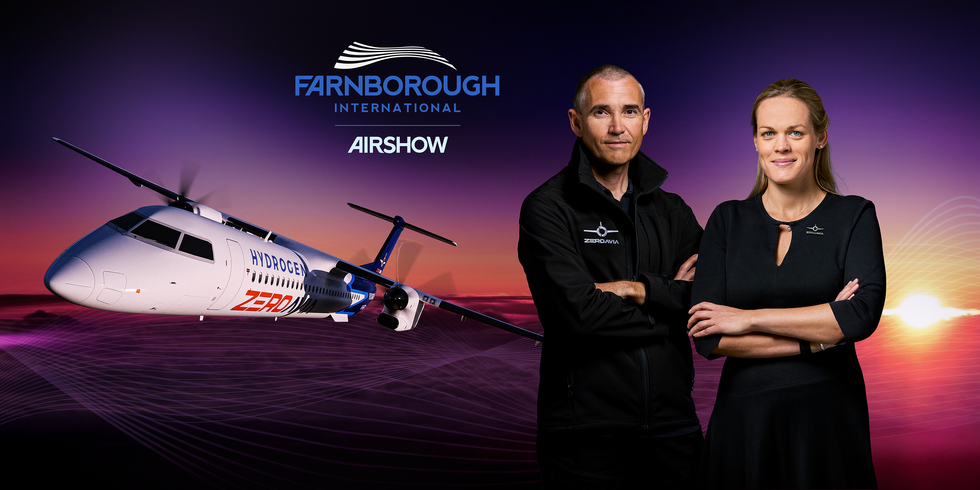
@Farnborough International Airshow, July 20, 2022: ZeroAvia, the leader in hydrogen-electric, zero-emission aviation, today announced $30 million in funding from new investors Barclays Sustainable Impact Capital, NEOM and AENU, with International Airlines Group (IAG) adding to prior investment from the Group, bringing the Series B round to $68 million.


ZeroAvia counts three major airline groups as strategic investors in the shape of IAG, United Airlines and Alaska Airlines. The fresh investment will further advance ZeroAvia’s 2-5MW hydrogen-electric powertrain development program, which aims to power 40-80 seat aircraft with zero-emission engines by 2026. Larger aircraft will use liquid hydrogen fuel as opposed to gaseous for smaller aircraft, allowing a higher energy density and increased range and payload. Being an early mover in this space opens up the potential to capture a significant chunk of the regional aviation engine market.


ZeroAvia will also deploy the funding for building infrastructure at airport sites, which will support live demonstrations of its Hydrogen Airport Refueling Ecosystem (HARE), in preparation for routes carrying passengers and cargo in the next handful of years.

Val Miftakhov,
ZeroAvia, Founder & CEO, said:

​

“Each of these star investors brings a unique perspective and strength to ZeroAvia’s wider team—from one of the world’s biggest airline groups, one of the largest and most historic banks, to the ambitious project to build the world’s first zero-carbon metropolis, as well as a pure-play impact investor. Our new investors are each looking at our journey through a different lens, but all energized by our mission to enable zero-emission flight using hydrogen-electric engines. This is a great recognition of ZeroAvia’s leadership in the space, fueled by real, tangible achievements.”

IAG combines leading airlines in Ireland, Spain, and the UK, including Aer Lingus, British Airways, Iberia, LEVEL and Vueling. It was the first airline group worldwide to commit to achieving net-zero emissions by 2050 and began partnering with ZeroAvia in 2020, when its Hangar 51 accelerator programme featured it as a participant.

Luis Gallego,
IAG’s chief executive, said:

​

“IAG has been leading aviation’s efforts towards achieving net-zero emissions by 2050. We are investing in a range of solutions, including hydrogen, which we believe has huge potential, especially for short-haul routes.”

This is the 14th overall investment made by Barclays through their Sustainable Impact Capital Programme, which has a mandate to invest up to £175m of equity capital in sustainability-focused start-ups by 2025.

Steven Poulter,
Head of Principal Structuring and Investments at Barclays, said:

​

“The aviation industry will require significant and recurring investment in the years ahead to ensure its technological evolution can keep pace with global decarbonisation targets. ZeroAvia is an innovative, industry-leading aviation business—we are delighted to support its ambition towards zero-emission flight, and look forward to seeing them accelerate change in the sector.”

NEOM is leveraging green hydrogen as a key power source in delivering the world’s first zero-carbon city. NEOM can produce green hydrogen for power at scale and recently launched a Hydrogen Innovation and Development Center. In addition to the investment relationship, ZeroAvia and NEOM will partner to bring fleets of ZeroAvia fuel cell-powered aircraft of all size classes to the region.

John Selden,
CEO of NEOM Airports, said:

​

“Aviation will play a key role in supporting our work to deliver a zero-carbon city, and we envisage hydrogen-electric aircraft connecting NEOM to regional destinations and beyond via zero-emission flight. From NEOM Bay Airport, a flight to Cairo, for example, will be well within range of a 20-seat turboprop aircraft powered by ZeroAvia’s hydrogen fuel cell engine by the end of the decade.”

AENU, an evergreen impact fund that invests multi-stage in climate-tech and social impact companies in Europe and the U.S., is making ZeroAvia its first investment into green aviation, applying its mission to drive environmental sustainability to one of the hardest to abate sectors.


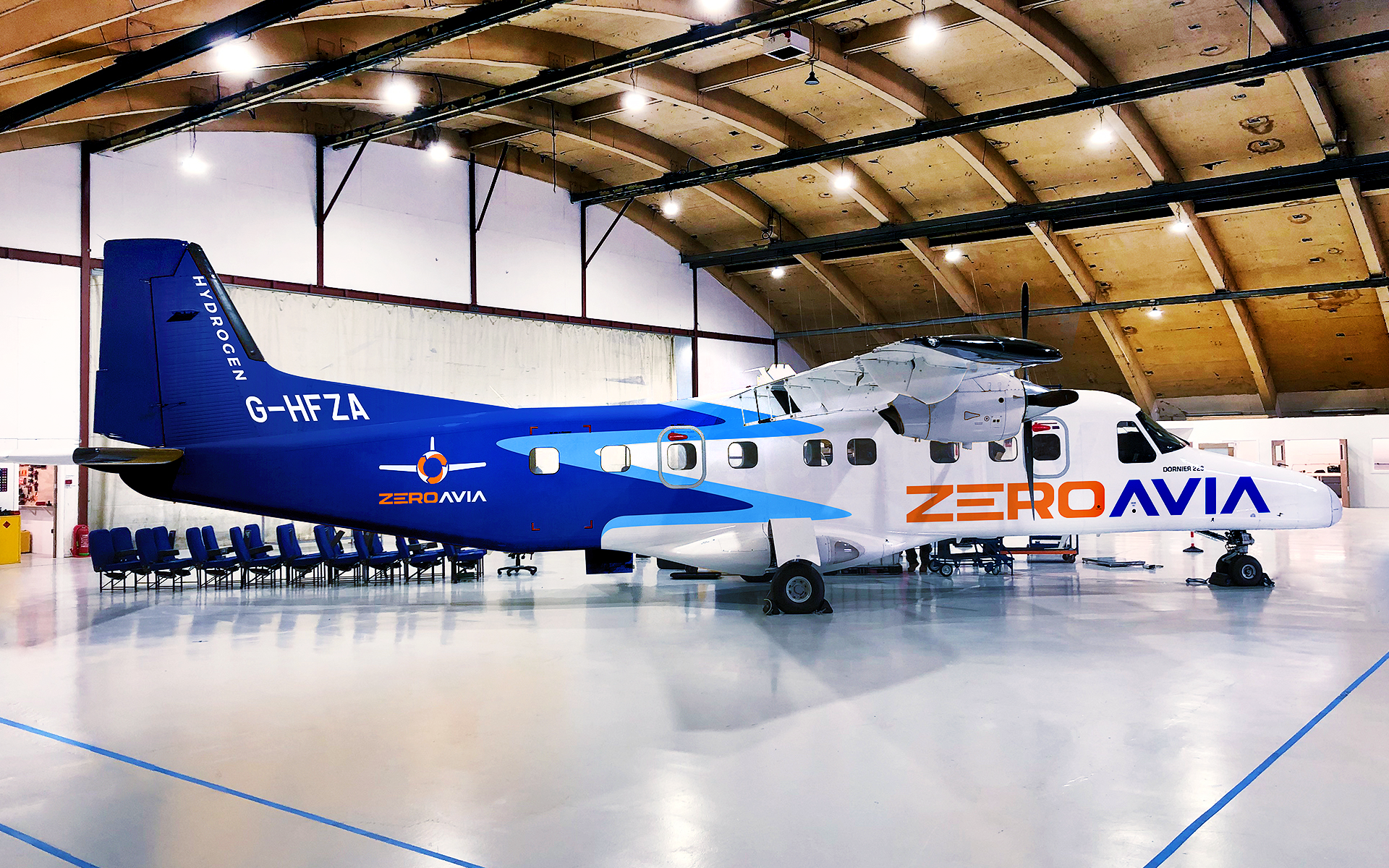
The funding announcement comes in the midst of ground testing of ZeroAvia’s ZA600 powertrain at its UK R&D facility at Cotswold Airport, part of Project HyFlyer II which aims to demonstrate hydrogen-electric flight in a Dornier 228 aircraft. This is the second in a family of projects designed to pioneer the technology, supported by the UK Government through matched grant funding provided by the Department for Business, Energy and Industrial Strategy (BEIS), Innovate UK and the Aerospace Technology Institute (ATI). ZeroAvia also recently welcomed a second Dornier 228 testbed to its expanded facility at Hollister, CA.

Subscribe to our Newsletters

About ZeroAvia


ZeroAvia is a leader in zero-emission aviation, focused on hydrogen-electric aviation solutions to address a variety of markets, initially targeting a 300-mile range in 5–20 seat aircraft by 2024, and up to 1000-mile range in 40–80 seat aircraft by 2026. Based in the UK and USA, ZeroAvia has already secured experimental certificates for its two-prototype aircraft from the CAA and FAA, passed significant flight test milestones, secured a number of key partnerships with major aircraft OEMs and major global airlines, and is on track for commercial operations in 2024. The company’s expanding UK operations are supported by grants from UK’s Aerospace Technology Institute and Innovate UK, and ZeroAvia is part of the UK Government’s Jet Zero Council. For more, please visit ZeroAvia.com, follow @ZeroAvia on Twitter, Instagram, and LinkedIn.


About IAG

​

International Airlines Group (IAG) is one of the world’s largest airline groups, with 533 aircraft flying to 279 destinations and carrying around 118 million passengers each year (pre-COVID). Its leading airlines in Spain, the UK, and Ireland include Aer Lingus, British Airways, Iberia, Vueling and LEVEL.


About Barclays Sustainable Impact Capital

​

Holly Brown: holly.brown@barclays.com
Annie McQuoid: annie.mcquoid@barclays.com

​

As part of the firm’s broader commitments, Barclays will invest £175m of its own capital, led by the Principal Investments team, in fast-growing, innovative, environmentally-focused companies whose values are aligned with those of Barclays and which target the goals and timelines of the Paris Agreement. Investments will be strategic to Barclays, its clients and the communities it serves, with clear scalable propositions that deliver both environmental benefits and economic returns. To find out more, click here.


About NEOM

​

NEOM is an accelerator of human progress and a vision of what a New Future might look like. It is a region in northwest Saudi Arabia on the Red Sea being built from the ground up as a living laboratory—a place where entrepreneurship will chart the course for this New Future. It will be a destination and a home for people who dream big and want to be part of building a new model for exceptional livability, creating thriving businesses and reinventing environmental conservation.

​

NEOM will include hyperconnected, cognitive towns and cities, ports and enterprise zones, research centers, sports and entertainment venues, and tourist destinations. As a hub for innovation, entrepreneurs, business leaders and companies will come to research, incubate and commercialize new technologies and enterprises in groundbreaking ways. Residents of NEOM will embody an international ethos and embrace a culture of exploration, risk-taking and Diversity. For further information, email media@neom.com or visit www.neom.com and www.neom.com/en-us/newsroom.


About AENU

​

AENU is an evergreen impact fund that invests multi-stage in climate-tech and social impact companies in Europe & US. AENU drives systemic transformation in venture capital towards impact, accessibility and stakeholder-alignment. Visit aenu.com or follow us on Linkedin and Twitter.

Press Contact

press@zeroavia.com

ZeroAvia and PowerCell sign memorandum of understanding regarding joint development and series deliveries of Fuel Cell Stacks for Aviation

  • MoU aiming at co-development and local manufacturing at ZeroAvia’s UK R&D facility of world-leading aviation-optimized fuel cell stacks.

@Farnbourough International Airshow, July 18, 2022: ZeroAvia, the leader in developing zero-emission solutions for commercial aviation, today announced a memorandum of understanding with PowerCell Sweden AB, a leading hydrogen fuel cell stack manufacturer, that will see joint development and deliveries of at least 5,000 aviation-optimized Proton Exchange Membrane (PEM) fuel cell stacks between 2024 and 2028. As part of the MoU, PowerCell intends to establish a UK presence for the first time, building a production team alongside ZeroAvia’s production facilities. The parties expect to reach a final agreement in the third quarter 2022.


The partnership will see both parties continuing work together to modify existing PowerCell stacks for optimal performance within ZeroAvia’s hydrogen-electric, zero-emission aviation powertrains. PowerCell intends to assemble the modified stacks for incorporation into ZeroAvia’s prototype, and later certified, powertrains.


PowerCell has been a key supplier of low temperature PEM (LTPEM) fuel cells as part of ZeroAvia’s pioneering efforts to develop a certifiable 600kW hydrogen-electric powertrain underneath the HyFlyer II project, supported by the UK Government through the ATI program. ZeroAvia plans to power 9–19 seat commercial aircraft up to 300 nautical miles using its ZA600 powertrains by 2024—enabling guilt-free flights on routes such as London to Edinburgh and Stockholm to Malmö.


After conducting demonstration of 6-seat R&D prototypes, ZeroAvia is preparing for the inaugural test flight of its 600kW hydrogen-electric engine in the coming days, including the use of PowerCell fuel cell stacks as part of these systems. The company is also retrofitting a second Dornier-228 testbed in Hollister, California, to conduct further flight tests and demonstrations in the important North American market.

Val Miftakhov,
ZeroAvia, Founder & CEO, said:

​

“This MoU further cements ZeroAvia’s lead in the race to deliver true zero-emission engines for commercial flights. By co-locating this operation, we can ensure the full collaboration of both talented teams in tailoring hydrogen fuel cell stacks for aviation. This will result in delivery of systems with the required power to enable electric aviation to achieve range and payload that are highly attractive to operators and airframe OEMs, while eliminating emissions.”

Richard Berkling,
CEO, PowerCell Sweden AB, said:

​

“Working with ZeroAvia has been a core plank of our entry into the clean aviation market, which is a very large future market for fuel cell technology. We are delighted to further formalize that partnership and to establish our first UK development presence, given our opportunities here across multiple sectors.”

ZeroAvia’s mission is to deliver hydrogen-electric engines into every aircraft, having identified the technology as the most practical, economical, and farthest reaching solution for reducing aviation’s climate change and clean air impacts. Hydrogen-electric engines use hydrogen in fuel cells to generate electricity, which is then used to power electric motors to turn the aircraft’s propellers, with the only byproduct being water.

Subscribe to our Newsletters

About ZeroAvia


ZeroAvia is a leader in zero-emission aviation, focused on hydrogen-electric aviation solutions to address a variety of markets, initially targeting a 300-mile range in 5–20 seat aircraft by 2024, and up to 1000-mile range in 40–80 seat aircraft by 2026. Based in the UK and USA, ZeroAvia has already secured experimental certificates for its two-prototype aircraft from the CAA and FAA, passed significant flight test milestones, secured a number of key partnerships with major aircraft OEMs and major global airlines, and is on track for commercial operations in 2024. The company’s expanding UK operations are supported by grants from UK’s Aerospace Technology Institute and Innovate UK, and ZeroAvia is part of the UK Government’s Jet Zero Council. For more, please visit ZeroAvia.com, follow @ZeroAvia on Twitter, Instagram, and LinkedIn.


About Powercell

​

PowerCell Sweden AB (publ) develops and produces fuel cell stacks and systems for stationary and mobile applications with a world-class power density. The fuel cells are powered by hydrogen, pure or reformed, and produce electricity and heat with no emissions other than water. As the stacks and systems are compact, modular and scalable, they are easily adjusted to any customer need. PowerCell was founded in 2008 as an industrial spinout from the Volvo Group. The share (PCELL) is since 2014 subject to trade at Nasdaq First North Stockholm with G&W Fondkommission as Certified Adviser.

Press Contact

press@zeroavia.com

Ravn Alaska Orders 30 Hydrogen-Electric Engines from ZeroAvia

  • Deal with Alaskan regional airline comes as ZeroAvia accepted into Launch Alaska accelerator program

Hollister, California & Kemble, UK, July 19, 2022: ZeroAvia, the leader in developing zero-emission solutions for commercial aviation, today announced it has signed an MoU with Ravn Alaska to deliver hydrogen-electric propulsion for the operator’s passenger aircraft. Ravn has placed an order for 30 of ZeroAvia’s ZA2000 powertrains with the intention of retrofitting its De Havilland Dash-8 fleet to enable zero-emission flights.

Ravn currently operates a number of Q100 and Q300 aircraft on routes serving rural communities in Alaska. The state is an important strategic target for early adoption of hydrogen-electric flight routes, given the dependence on aviation for interstate travel and the strong potential of Alaska’s renewable energy resources—particularly hydroelectric—to generate green hydrogen.

​

ZeroAvia’s ZA2000 is a 2–5 megawatt (3,000–7,000 shaft horsepower) modular powertrain designed for 40–90 seat turboprop planes, targeting 500 nautical mile plus journeys from 2026 onwards—enabling flights like Anchorage to St Mary’s with zero-emissions. The company is also working to certify a 600kW powertrain for 9–19 seat aircraft for entry into service in 2024.

Rob McKinney,
CEO, Ravn Alaska, said:

​

“We want to be at the forefront of adopting zero-emission aviation once FAA-certified technologies come to market. ZeroAvia is making great strides to bringing hydrogen-electric propulsion to Alaskan skies, and we’re looking forward to working together to realize green flight.”

In addition to the engine deal with Ravn Alaska, ZeroAvia has been accepted into the Launch Alaska program; a non-profit deployment accelerator focused on helping climate tech innovators to grow in the state.


Val Miftakhov,
ZeroAvia, Founder & CEO, said:

​

“Alaska represents the challenge facing the aviation industry writ large— air travel provides the vital connectivity that Alaskans so desperately need, but at the same time, the impacts of climate change on the breathtaking landscape are starkly visible. With its ample renewable energy supply and network of airfields, the state is the perfect place for some of the world’s earliest hydrogen-electric, zero-emission routes.”

ZeroAvia’s deal with Ravn continues the commercial momentum for ZeroAvia in recent weeks, following engine deals with MONTE and Otto Aviation, and major partnerships with manufacturer MHIRJ, and fuel supply partners Shell and ZEV Station.

Subscribe to our Newsletters

About ZeroAvia


ZeroAvia is a leader in zero-emission aviation, focused on hydrogen-electric aviation solutions to address a variety of markets, initially targeting a 300-mile range in 5–20 seat aircraft by 2024, and up to 1000-mile range in 40–80 seat aircraft by 2026. Based in the UK and USA, ZeroAvia has already secured experimental certificates for its two-prototype aircraft from the CAA and FAA, passed significant flight test milestones, secured a number of key partnerships with major aircraft OEMs and major global airlines, and is on track for commercial operations in 2024. The company’s expanding UK operations are supported by grants from UK’s Aerospace Technology Institute and Innovate UK, and ZeroAvia is part of the UK Government’s Jet Zero Council. For more, please visit ZeroAvia.com, follow @ZeroAvia on Twitter, Instagram, and LinkedIn.


About Ravn Alaska

​

Ravn Alaska is a regional airline headquartered in Anchorage that services communities across Alaska including Aniak, Cold Bay, Dillingham, Dutch Harbor, Homer, Kenai, Sand Point, St. Mary’s, St. Paul Island, Unalakleet and Valdez. The airline provides daily flights aboard its safety-rated de Havilland Dash-8 fleet, charter flights and cargo shipments. Visit https://ravnalaska.com to book a flight and learn more about Ravn.

Press Contact

ZeroAvia
press@zeroavia.com


Ravn Alaska

Tina Hanley
+1 (907) 266-8468

tina.hanley@ravnalaska.com

ZeroAvia Statement on the Publication of the AAIB Report

We welcome the conclusion of the AAIB’s investigation into the causes of the off-airport landing that occurred last year (April 2021) at Cranfield Airport as part of our test flight programme under Project HyFlyer I. While the report does not make specific recommendations for ZeroAvia within its conclusions, many of the issues identified in the report were similarly noted in our internal investigation and have subsequently been addressed robustly. Over a year on, ZeroAvia has grown to over 150 employees, and the recommendations made in this report have shaped this growth.


We have embedded key learnings into both our organisational culture and structure, as well as our future technical designs. This includes the establishment of a Safety and Security Review Board, adding to our team with extensively qualified members in several critical positions, including within our design, airworthiness and flight test teams, and establishing a safety management system based on a ‘just’ aviation culture, including occurrence reporting, investigation and corrective actions functions.

Press Contact

press@zeroavia.com

Subscribe to our Newsletters

ZeroAvia at Farnborough International Airshow 2022

ZeroAvia  will be hosting a stand at FIA for the first time and is looking forward to showing attendees our progress in developing zero-emission engines for aviation. There will be a host of experiences and multimedia to engage with on our stand 1010, as well as the chance to meet some of our leadership team.

Either stop by or get in touch in advance to arrange a meeting.


18 – 22 July 2022 / Stand 1010, Hall 1


We are working with aircraft operators, owners, and manufacturers to supply the world’s breakthrough zero-emission engines and the infrastructure and fuel to power a revolution in green flight.


Visit us at FIA22, meet our team and check out our solution!


Val will cover why hydrogen-electric propulsion solutions are the only practical technology to address aviation’s full climate change impact and detail ZeroAvia’s breakthrough zero-emission powertrain technology for commercial aircraft. He will also cover the company’s product roadmap and plans to establish hydrogen fueling ecosystems on-site at airports worldwide to make hydrogen aviation viable and scalable.

CFO Panel: The challenge of building a sustainable business model that supports the move towards net zero. Chief Financial Officers will come together to discuss how organisations can transition to value creation and finance decarbonisation.


Katya will discuss how through strategic partnerships and securing sizeable funding from notable investors, ZeroAvia was able to scale from a small startup to one of the biggest names in sustainable aviation.


Katya will discuss her predictions for future investment in green flight and her experience in raising capital to scale ZeroAvia’s operations. In addition, she will argue that hydrogen-electric is the most economical solution for reducing aviation’s carbon footprint, and explain why bringing hydrogen-electric solutions to regional airport can stimulate economic growth.

Stand 1010 — ALWAYS ON


Every day, 18–22 of July 2022, from 9:00 till 17:00 you can meet our team at stand 1010, Hall 1, ask questions, and discuss any related topics. If you have a specific question for one of our representatives, please schedule a meeting.

Study our technologies in AR


We have prepared a unique AR (augmented reality) experience to show at FIA that will walk visitors through our hydrogen-electric propulsion system, from hydrogen production through to fuel cell power generation and electric propulsion to fly commercial planes!

Visit our hangar virtually


You can also transport yourself to the green hills of the Cotswolds and take a tour of our hangar and R&D site in Kemble via our virtual reality, 360° film.

Hydrogen-electric aviation Q&A sessions


Our executives will be available on our stand 1010 to answer any questions you may have. Drop by and say hello!

Subscribe to our Newsletters

ZeroAvia & Otto Aviation Partner to Deliver First New Airframe Design with Hydrogen-Electric Engine Option

  • Leading zero-emission aviation pioneer ZeroAvia to optimize fuel cell-powered electric propulsion systems for Otto’s novel aircraft design

Hollister, California & Kemble, UK, June 15, 2022: ZeroAvia, the leader in hydrogen-electric solutions for aviation, today announced a collaboration with Otto Aviation, LLC, to develop a hydrogen-electric powertrain to power Otto’s Celera aircraft.

Under the agreement, Otto and ZeroAvia will work to integrate ZeroAvia’s ZA600 zero-emission engines to Otto’s revolutionary Celera aircraft. The collaboration has the potential to make the Celera the first new airframe design to leverage zero-emission propulsion in its launch models.

The Celera is a highly innovative new model of transcontinental aircraft, scalable to 19 passengers, that significantly improves the efficiency of flight and reduces the operational costs of flying as a result. This combination significantly expands the opportunities for private air transportation.
Otto’s advanced aircraft design offers exceptionally low drag across the entire aircraft. The design of the Celera fuselage, empennage and wings take advantage of laminar flow. Laminar flow is the minimum drag solution for aircraft surfaces and features smooth layers of airflow with little to no mixing of adjacent layers. When coupled with highly fuel-efficient propulsion systems, the Celera will significantly reduce operating costs and increase range relative to comparable aircraft, while creating optimal passenger comfort and cargo capacity.

When powered by ZeroAvia’s powertrain, the Celera will offer long range zero-emission flights, while further reducing operating costs, thanks to reduced maintenance costs and falling hydrogen-fuel prices. The Celera design is highly conducive to accommodate large volumes of hydrogen within the fuselage that will enable 1,000 nautical miles of range – all with zero climate impact from carbon and non-carbon emissions (like NOx, SOx and particulates). With non-carbon emissions from relatively inefficient, high temperature combustion contributing over half of the total climate impact of aviation, long range hydrogen-electric aircraft such as Celera will play an important role in eliminating all climate impacts of aviation.

Announcing the partnership today,

William Otto,
CEO of Otto Aviation, said:


“ZeroAvia’s hydrogen-electric powertrain helps us to realize the commitment Otto has made to lower operating costs and climate impact for operators. Otto is looking to provide the most efficient aircraft in all senses of the word: minimizing maintenance and operating costs and reducing emissions.”

Val Miftakhov,
ZeroAvia, Founder & CEO, said:

​

“The majority of our commercial deals to date have focused on retrofit and line-fit for existing airframes, which is essential to deliver zero-emission flight to market as quickly as possible. However, efficiency gains from new airframe design can expand the impact of zero-emission aviation. We are pleased to collaborate with innovators, like Otto Aviation, bringing cutting-edge clean sheet designs to market as we can optimize the hydrogen-electric propulsion system for those designs.”

Subscribe to our Newsletters

ZeroAvia’s mission is to deliver hydrogen-electric engines into every aircraft, having identified the technology as the most practical, economical, and furthest reaching solution for reducing aviation’s climate change and clean air impacts. Hydrogen-electric engines use hydrogen in fuel cells to generate electricity, which is then used to power electric motors to turn the aircraft’s propellers, with the only byproduct being water.

The development of this 600kW powertrain is part of Project HyFlyer II and will deliver a fully certified powertrain for aircraft of up to 19-seats by 2024. HyFlyer II is supported by the UK Government’s Department for Business, Energy and Industry Strategy (BEIS), Aerospace Technology Institute (ATI), and Innovate UK through the ATI Programme. After having flown multiple 6-seat R&D prototypes, ZeroAvia is preparing its first 19-seat prototype for its inaugural flight in the coming weeks. The company is also retrofitting a second Dornier-228 testbed in Hollister, California, to conduct further flight testing.


About ZeroAvia


ZeroAvia is a leader in zero-emission aviation, focused on hydrogen-electric aviation solutions to address a variety of markets, initially targeting a 300-mile range in 5–20 seat aircraft by 2024, and up to 1000-mile range in 40–80 seat aircraft by 2026. Based in the UK and USA, ZeroAvia has already secured experimental certificates for its two-prototype aircraft from the CAA and FAA, passed significant flight test milestones, secured a number of key partnerships with major aircraft OEMs and major global airlines, and is on track for commercial operations in 2024. The company’s expanding UK operations are supported by grants from UK’s Aerospace Technology Institute and Innovate UK, and ZeroAvia is part of the UK Government’s Jet Zero Council. For more, please visit ZeroAvia.com, follow @ZeroAvia on Twitter, Instagram, and LinkedIn.


About Otto Aviation


Otto Aviation is ushering in a new era in private aviation by using its advanced laminar flow technology and design to significantly reduce the cost structure and environmental impact of private flight. The groundbreaking Celera aircraft, a flight-tested full-scale aircraft, has already delivered fuel and emission reductions of 80% less than comparable aircraft. The Celera’s clean sheet design achieved this breakthrough in drag reduction by maximizing laminar flow across the airframe and control surfaces. These breakthroughs in aerodynamic efficiency make the cost and convenience of private aviation more accessible to both business and leisure travelers everywhere. To learn more, visit www.ottoaviation.com.

Press Contact

press@zeroavia.com

ZeroAvia and MONTE Strike Deal for 100 Hydrogen-Electric Powertrains to Enable Zero-Emission Aircraft Leasing

  • ZeroAvia and MONTE will jointly market hydrogen-electric powered aircraft to regional operators

Hollister, California & Kemble, UK, June 8, 2022: ZeroAvia, the leader in developing zero-emission solutions for commercial aviation, today announced that it has signed an agreement with MONTE Aircraft Leasing (MONTE), the pioneering zero-emissions regional turboprop aircraft lessor. As part of the agreement the partners will offer aircraft leasing and financing solutions that enable operators to run zero-emission flights.


Under the deal, MONTE will purchase up to 100 ZA600 powertrains to be installed on existing and new Cessna Caravan, DHC-6 Twin Otter, Dornier 228 and HAL-228 aircraft. MONTE and ZeroAvia aim to retrofit the aircraft for clients starting in 2024 and will provide and finance maintenance and hydrogen availability services to support these operations. The deal will make ZeroAvia MONTE’s exclusive hydrogen-electric powertrain provider for these aircraft.

Timothy Eyre,
Investment Director, MONTE said:

​

“We are delighted to have partnered with ZeroAvia who are the market leader in the hydrogen-electric space. Our partnership is an important step in our journey towards becoming one of the world’s first zero-emission aircraft lessors and we look forward to working with the ZeroAvia team on offering financing solutions for turboprop operators.”

James Peck – Chief Customer Officer
James Peck,
VP Business Development, ZeroAvia, said:

​

“We’re pleased to announce our partnership with MONTE. Together, ZeroAvia and MONTE will provide a compelling proposition to operators of 5–20 seat aircraft. This partnership will offer flexibility to operators to allow them to launch zero-emissions flights on their networks, as well as extending the lifespan of hundreds of in-service airframes.”

ZeroAvia’s hydrogen-electric powertrain brings state-of-the-art fuel cell and electric motor technology together to create an unparalleled aircraft engine that will deliver improved operating economics without harming the planet. The ZA600 powertrain—ZeroAvia’s market entry, 600kW system, designed to support 5–20 seat airframes by 2024—uses gaseous hydrogen stored onboard in lightweight tanks. The hydrogen feeds fuel cell stacks that generate power by converting hydrogen into electricity.


ZeroAvia will soon flight test the ZA600 powertrain in a retrofitted Dornier 228. In the initial testing configuration, the aircraft testbed will fly with one hydrogen-electric powertrain on one wing, while keeping the stock engine on the other wing to ensure safe testing conditions. The testing program will then sequentially move to full hydrogen-electric flight, ultimately working towards a certifiable hydrogen-electric powertrain as the sole propulsion source for the categories of airframes included in this deal with MONTE.


The work to develop ZA600 up to a certifiable configuration is part of the HyFlyer II project, in part supported by the UK Government through the ATI program.


Subscribe to our Newsletters

About ZeroAvia


ZeroAvia is a leader in zero-emission aviation, focused on hydrogen-electric aviation solutions to address a variety of markets, initially targeting a 300-mile range in 5–20 seat aircraft by 2024, and up to 1000-mile range in 40–80 seat aircraft by 2026. Based in the UK and USA, ZeroAvia has already secured experimental certificates for its two-prototype aircraft from the CAA and FAA, passed significant flight test milestones, secured a number of key partnerships with major aircraft OEMs and major global airlines, and is on track for commercial operations in 2024. The company’s expanding UK operations are supported by grants from UK’s Aerospace Technology Institute and Innovate UK, and ZeroAvia is part of the UK Government’s Jet Zero Council. For more, please visit ZeroAvia.com, follow @ZeroAvia on Twitter, Instagram, and LinkedIn.


About MONTE


MONTE is a pioneer in financing zero-emission technologies in the regional aviation market. MONTE is exclusively focused on supporting the aviation industry’s transition to net-zero carbon emissions by providing financing and leasing solutions for zero-emission technologies to regional aircraft operators. MONTE has a goal of becoming the first carbon-neutral aircraft leasing company in the world by 2027. For more information, please visit montecleantech.com and follow MONTE on LinkedIn.

PR Contact Information


ZeroAvia

press@zeroavia.com


MONTE

Timothy Eyre
MONTE

+44 (0) 20 7317 1500

info@montecleantech.com

ZeroAvia Advances Regional Jet Plans; Strikes New Agreement with MHIRJ

  • Hydrogen-electric propulsion pioneer will collaborate with MHIRJ engineering group to design retrofit and line fit options for Regional Jets

Hollister, California & Kemble, UK, May 25, 2022: ZeroAvia, the leader in developing zero-emission solutions for commercial aviation, has made a big leap forward in plans to deliver hydrogen-electric engines for regional jets, thanks to an expanded agreement with MHI RJ Aviation Group (MHIRJ). As part of the collaboration, MHIRJ will provide engineering services, aircraft integration, and its industry renowned OEM experience to support the certification of ZeroAvia’s hydrogen-electric powertrain for retrofit onto airframes in the regional jet markets.

​

ZeroAvia is already well advanced in plans to certify its ZA600, 600kW powertrain for smaller, 10-20 seat aircraft, with entry into service planned for 2024. Concurrently, the company is working on ZA2000, a 2-5MW modular powertrain which targets support for 40-80 seat turboprops by 2026. The ZA2000RJ powertrain will expand this technology to enable passengers to fly in zero-emission regional jets as early as the late 2020s.

This agreement places the CRJ Series aircraft as a frontrunner for the earliest operations using true zero-emission engines. Over 2,000 CRJ Series aircraft have been built since the launch of the program, effectively establishing itself as the backbone of regional aviation in the United States.

This expanded agreement follows a Memorandum of Understanding signed by the parties at the end of last year.

Speaking from the World Economic Forum in Davos where he has been discussing the pathway to sustainable aviation,

Val Miftakhov,
CEO and founder of ZeroAvia said:


“There are hundreds of CRJ Series aircraft in daily operation across North America, transporting millions of passengers. All these flights can and should be zero-emission well before the end of this decade. This agreement is a giant step forward in delivering hydrogen-electric engines to the regional jet segment.”

The agreement is the first for MHIRJ’s Aerospace Engineering Centre (AEC) in the hydrogen propulsion field. MHIRJ’s Aerospace Engineering Centre aims to provide engineering, design and certification services to third parties using the wide expertise and experience of its engineering team

Hiro Yamamoto,
President and CEO of MHIRJ, said:

​

“We are very excited about this agreement with ZeroAvia as it furthers two important goals for MHIRJ. The first is to continue to grow our AEC business through working with other companies and using our vast engineering expertise to advance this state-of-the art project. The second benefit is that we are part of the value chain in bringing innovative sustainable technology into the regional space.”

In the last quarter of 2021, ZeroAvia secured partnerships and funding with major airlines Alaska Air Group and United Airlines to accelerate the development of its ZA2000 engine, the largest of ZeroAvia’s current powertrain platforms. This announcement with MHIRJ closely follows ZeroAvia’s expansion of its Hollister location in California and a deal with Shell for hydrogen supply, as well as the opening of a new facility at Paine Field in Washington State in January.

Subscribe to our Newsletters

About ZeroAvia


ZeroAvia is a leader in zero-emission aviation, focused on hydrogen-electric aviation solutions to address a variety of markets, initially targeting a 300-mile range in 5–20 seat aircraft by 2024, and up to 1000-mile range in 40–80 seat aircraft by 2026. Based in the UK and USA, ZeroAvia has already secured experimental certificates for its two-prototype aircraft from the CAA and FAA, passed significant flight test milestones, secured a number of key partnerships with major aircraft OEMs and major global airlines, and is on track for commercial operations in 2024. The company’s expanding UK operations are supported by grants from UK’s Aerospace Technology Institute and Innovate UK, and ZeroAvia is part of the UK Government’s Jet Zero Council. For more, please visit ZeroAvia.com, follow @ZeroAvia on Twitter, Instagram, and LinkedIn.


About MHI RJ Aviation Group

​

MHI RJ Aviation Group (MHIRJ) provides comprehensive critical operational, engineering and customer support solutions including maintenance, refurbishment, technical publications, marketing and sales activities for the global regional aircraft industry. Headquartered in Montréal, Canada, and bolstered by an Aerospace Engineering Centre, MHIRJ’s network of service centers, support offices and parts depots are positioned in important aviation hubs in Canada, the U.S. and Germany. A wholly owned subsidiary of Mitsubishi Heavy Industries, Ltd., MHI RJ Aviation Group includes MHI RJ Aviation ULC (Canada), MHI RJ Aviation Inc. (U.S.A.) and MHI RJ Aviation GmbH (Germany).

WE ARE HIRING. Visit www.mhirj.com/en/careers to know more.

For more information about MHI RJ Aviation Group, please visit: www.mhirj.com
*CRJ, CRJ Series and MHIRJ are trademarks of MHI RJ Aviation ULC or its affiliates.

Press Contact

press@zeroavia.com

ZeroAvia Makes Major Strides in Hydrogen Refueling with Shell Collaboration and Airport Pipeline Launch

  • The two companies have signed an MOU to develop a compressed, low-carbon hydrogen supply for ZeroAvia’s California facilities and power flight testing
  • Collaboration comes as ZeroAvia also unveils Europe’s first landside-to-airside hydrogen airport pipeline at its UK R&D facility
  • Equilon Enterprises LLC d/b/a Shell Oil Products US (“Shell”) Collaboration and pipeline build represent significant advancement in hydrogen airport infrastructure and refueling in both U.S. and UK

Hollister, California & Kemble, UK, May 10, 2022: ZeroAvia, the leader in hydrogen-electric solutions for aviation, today announced a collaboration with its strategic investor Shell¹, who will design and build two commercial-scale mobile refuelers for use at ZeroAvia’s research and development site in Hollister, California. The announcement follows recent positive predictions relating to the falling price trajectory of hydrogen fuel and a flurry of State-led activity for establishing H2 Hubs as the Department of Energy prepares to receive bids from across the U.S.


At ZeroAvia’s test facility in Hollister, Shell will also provide compressed, low-carbon hydrogen supply to the facility and other locations in the Western U.S. This strategic collaboration will support the development of ZeroAvia’s flight testing program in the U.S. following the arrival of its second Dornier 228 at Hollister last month and will advance the company’s Hydrogen Airport Refueling Ecosystem (HARE) on a larger scale.


ZeroAvia’s zero-emission powertrains use hydrogen fuel in a fuel cell to create a chemical reaction which produces electricity. That electricity then powers electric motors that spin the propellers, while producing no emissions other than water.

Oliver Bishop,
General Manager, Hydrogen at Shell, said:

​

“Shell recognizes the aviation sector has unique challenges in decarbonization and needs practical and scalable net-zero solutions. We believe ZeroAvia’s technology is a viable option, and this agreement will allow us to demonstrate successful provision of low-carbon hydrogen supply while supporting development of codes, standards, and refueling protocols for hydrogen-powered aviation.”

The deal with Shell comes as ZeroAvia also unveils Europe’s first landside-to-airside hydrogen airport pipeline. The 100-meter-long hydrogen pipeline runs alongside ZeroAvia’s hangar at Cotswold Airport in the UK. The company will utilize it alongside an electrolyzer and mobile refueler to use low-carbon hydrogen for its test flight program. The pipeline will help ZeroAvia demonstrate and explore the operational safety case for hydrogen pipelines and refueling infrastructure at airports.


ZeroAvia received support for the pipeline from the UK Government’s Department for Transport and the Connected Places Catapult as part of the Zero Emission Flight Infrastructure (ZEFI) program to enable airports and airfields to prepare for the future of zero-emission operations.


Both projects also enable ZeroAvia to further explore the connection between aircraft refueling and landside hydrogen use cases, such as road transport. ZeroAvia operates multiple hydrogen fuel cell road vehicles as part of its operations at Cotswold Airport and Hollister, demonstrating the potential for airports to act as hydrogen hubs for onward transport and ground operations.

Arnab Chatterjee,
VP, Infrastructure, ZeroAvia said:

​

“These milestone announcements represent significant hydrogen infrastructure advancement for ZeroAvia and the industry. Hydrogen-electric aviation is the only practical, holistic, and economically attractive solution to aviation’s growing climate change impact. Fuel provision needs to be economical and convenient for airlines to achieve operational cost benefits and ZeroAvia is leading these pioneering infrastructure developments together with leading partners like Shell.”


The company has also been working alongside the Department for Transport and Connected Places Catapult on a concept study for liquid hydrogen mobile refueling vehicles. This will inform ZeroAvia’s development of a large-scale liquid hydrogen refueling truck, an important step as the company progresses its powertrains from gaseous to liquid hydrogen to support larger aircraft.


ZeroAvia will begin flight-testing its ZA600 hydrogen-electric powertrain this summer using its two Dornier-228 testbed aircraft, first in the UK, and later replicating this work on the US-based demonstrator. The development of this 600kW powertrain is part of Project HyFlyer II and will deliver a fully certified powertrain for aircraft of up to 19-seats by 2024. HyFlyer II is supported by the UK Government’s Department for Business, Energy and Industry Strategy (BEIS), Aerospace Technology Institute (ATI), and Innovate UK through the ATI Programme. The company is also now retrofitting a second Dornier-228 testbed in Hollister, California, to conduct further flight testing.


Earlier this month, ZeroAvia also announced its partnership with ZEV Station to develop hydrogen hubs at airports throughout California. These announcements signify ZeroAvia’s leadership in zero-emission powertrain technology and corresponding hydrogen infrastructure to support the transition to cleaner aviation solutions.


Subscribe to our Newsletters

About ZeroAvia


ZeroAvia is a leader in zero-emission aviation, focused on hydrogen-electric aviation solutions to address a variety of markets, initially targeting a 300-mile range in 5–20 seat aircraft by 2024, and up to 1000-mile range in 40–80 seat aircraft by 2026. Based in the UK and USA, ZeroAvia has already secured experimental certificates for its two-prototype aircraft from the CAA and FAA, passed significant flight test milestones, secured a number of key partnerships with major aircraft OEMs and major global airlines, and is on track for commercial operations in 2024. The company’s expanding UK operations are supported by grants from UK’s Aerospace Technology Institute and Innovate UK, and ZeroAvia is part of the UK Government’s Jet Zero Council. For more, please visit ZeroAvia.com, follow @ZeroAvia on Twitter, Instagram, and LinkedIn.


About Shell

​

Shell is a global group of energy and petrochemical companies with operations in more than 70 countries. In the U.S., Shell operates in 50 states and employs more than 14,000 people working to help tackle the challenges of the new energy future.

​

¹The term “Shell” is used in this press release to refer to specific legal entities affiliated, directly or indirectly, with Shell plc companies in general or where no useful purpose is served by identifying the precise legal entity referenced.

Press Contact

press@zeroavia.com

​ZeroAvia Kicks Off US 19-seat Aircraft Testing and Demonstration Program on Path to Worldwide Application of its Powertrain Technology

  • The company will expand its US base to test new components for the ZA600 hydrogen-electric powertrains.
  • With certification of the ZA600 planned for 2024, ZeroAvia’s second Dornier 228 aircraft to be retrofitted and tested in the coming months.
  • The US based aircraft will also be utilized to showcase a number of use cases for the company’s powertrains, including passenger, cargo, and industrial applications


Hollister, California & Kemble, UK, May 6, 2022: ZeroAvia, the leader in developing zero-emission solutions for commercial aviation, has received its second twin-engine 19-seat Dornier 228 aircraft at its headquarters in Hollister, California. The new U.S. initiative will take the system developed in the UK HyFlyer II project and integrate it into the same type of aircraft. It will serve as the basis for testing new components and integrations, as well as a testbed for working with the FAA ahead of the ZA600 engine’s planned certification in 2024. The company will test new components and integrations under an FAA certificate ahead of the ZA600 engine’s planned certification in 2024.

Val Miftakhov,
CEO and founder of ZeroAvia said:

​

“This new project in California will allow us to use architectures from our Hyflyer II initiative, where we are working with the same aircraft, and apply those lessons as we further test and demonstrate the system across a number of different use cases. Ultimately, this will help us optimize our zero-emission powertrain design ahead of certification. This year we will have two demonstration aircraft flying on two continents powered by our hydrogen-electric powertrains which will further help us secure partner and customer commitments across the worldwide aviation industry.”

ZeroAvia will work towards a hybrid engine configuration that incorporates both the company’s hydrogen-electric powertrain and a conventional engine into the aircraft. The conversion is expected to take approximately 3-4 months to prepare the aircraft for test flights. After the engine is configured, it will enter into the flight testing and demonstration program, spanning passenger, cargo, and industrial use cases with a number of to-be-announced partners.


In addition to the launch of this program, ZeroAvia will be expanding its facility at Hollister to ensure adequate staff and resources to reach planned milestones. The company has added a new 15,000 square foot hangar to its footprint at the airfield, enabling space for conducting engineering work on the aircraft and its HyperTruck test bed platform, as well as ample office space to support its growing operations.

Renee Wells,
Executive Director of the Economic Development Corporation of San Benito County, said:

​

“There is huge potential for Hollister Municipal Airport to become a hydrogen hub. There will be significant demand and since California leads the world in adopting zero-emission vehicles, zero-emission flight infrastructure is the next natural frontier. ZeroAvia’s technology is an economically viable solution and the EDC is thrilled to support them as they become the first TTF business development at the Airport, bring 50+ new jobs by year-end, and put Hollister on the map for innovative technology.”

Last fall, ZeroAvia conducted the first program ground test of its HyFlyer II program and successfully tested the flight-intent 600kW powertrain with its 15-ton HyperTruck mobile ground testing platform. The HyperTruck, developed based on heavy-duty military trucks, is sized to also support testing the company’s larger planned powertrain (ZA-2000, with shaft power over 1.8 megawatt) which can be used to test systems for 40-80 seat aircraft.

The HyFlyer II Project is co-funded by a £12.3m ($16.3m) grant through the UK Government’s ATI Programme. Progressing the demonstrations of the two Dornier aircraft is an important next step for ZeroAvia’s sequential R&D pathway to realizing the transformational possibilities of moving from fossil fuels to zero-emission hydrogen as the primary energy source for commercial aviation.


In the last quarter of 2021, ZeroAvia secured partnerships and funding with major airlines Alaska Air Group and United Airlines to accelerate the development of its ZA2000 engine, the largest of ZeroAvia’s powertrain platforms, capable of producing between 2,000 kW and 5,000 kW. The company also recently announced their latest partnership with ZEV Station, where the two will collaborate to develop hydrogen refueling infrastructure at airports in California. ZeroAvia was also just named as a Bloomberg NEF Pioneer for its efforts to decarbonize aviation.

Subscribe to our Newsletters

About ZeroAvia


ZeroAvia is a leader in zero-emission aviation, focused on hydrogen-electric aviation solutions to address a variety of markets, initially targeting a 300-mile range in 5–20 seat aircraft by 2024, and up to 1000-mile range in 40–80 seat aircraft by 2026. Based in the UK and USA, ZeroAvia has already secured experimental certificates for its two-prototype aircraft from the CAA and FAA, passed significant flight test milestones, secured a number of key partnerships with major aircraft OEMs and major global airlines, and is on track for commercial operations in 2024. The company’s expanding UK operations are supported by grants from UK’s Aerospace Technology Institute and Innovate UK, and ZeroAvia is part of the UK Government’s Jet Zero Council. For more, please visit ZeroAvia.com, follow @ZeroAvia on Twitter, Instagram, and LinkedIn.

Press Contact

press@zeroavia.com

ZeroAvia CEO Val Miftakhov to Attend World Economic Forum Annual Meeting in Davos

Hollister, Calif. & Kemble, UK, April 28th, 2022 : Val Miftakhov, founder and CEO of ZeroAvia, the leader in developing zero-emission solutions for commercial aviation, has been invited to attend the World Economic Forum (WEF) annual meeting in Davos, Switzerland. Val will attend the event next month (from 22 to 26 May) with a view to discussing the urgency of tackling climate emissions in aviation and the corresponding opportunities for economies, businesses and communities.


Last year, ZeroAvia was named a Technology Pioneer by WEF, and the company also joined WEF panels at the COP26 conference in Glasgow. The theme of this year’s annual meeting in Davos, initially delayed by COVID, will be “History at a Turning Point: Government Policies and Business Strategies”.

Val Miftakhov,
CEO and founder of ZeroAvia, said:

​

“The event in Davos brings together some of the most influential people from a variety of sectors with a theme this year that speaks to the urgency we need. The most recent IPCC report strongly stressed the need for all sectors to reduce emissions to avert disaster, and it is important to raise awareness with business and political leaders that aviation must pursue the farthest reaching solutions as soon as possible. This invitation is a great recognition of ZeroAvia’s leadership in addressing one of the thorniest climate change challenges.”

ZeroAvia is focused on developing hydrogen-electric propulsion as the only practical, holistic and economically attractive solution to aviation’s growing climate change impact. The company’s hydrogen-electric powertrains use fuel cells to generate electricity that powers electric motors to then turn propellers. Unlike alternatives like synthetic fuels in conventional combustion engines – which still produce carbon emissions and other climate forcing non-carbon emissions like nitrogen oxides (NOx), sulphur oxides (SOx), particulates and soot – hydrogen-electric systems produce only water vapor, and at temperatures that enable the management of contrail impact.


ZeroAvia’s development of the 600kW system for 10-20 seat aircraft is part of the HyFlyer II project, supported by the UK Government’s Department for Business, Energy and Industrial Strategy (BEIS), Aerospace Technology Institute (ATI) and Innovate UK through the ATI Programme. Concurrently, the company is working on its next-generation system, a 2-5MW modular powertrain which targets support for 40-80 seat turboprops by 2026, and regional jets by 2028.


The Company has already announced aircraft manufacturer and launch operator partnerships for all of these three segments. Following regional jet applications, the Company expects to apply its technology to narrow-body aircraft in early 2030, allowing it to address over half of the aviation industry’s total climate impact.

Subscribe to our Newsletters

About ZeroAvia


ZeroAvia is a leader in zero-emission aviation, focused on hydrogen-electric aviation solutions to address a variety of markets, initially targeting a 300-mile range in 5–20 seat aircraft by 2024, and up to 1000-mile range in 40–80 seat aircraft by 2026. Based in the UK and USA, ZeroAvia has already secured experimental certificates for its two-prototype aircraft from the CAA and FAA, passed significant flight test milestones, secured a number of key partnerships with major aircraft OEMs and major global airlines, and is on track for commercial operations in 2024. The company’s expanding UK operations are supported by grants from UK’s Aerospace Technology Institute and Innovate UK, and ZeroAvia is part of the UK Government’s Jet Zero Council. For more, please visit ZeroAvia.com, follow @ZeroAvia on Twitter, Instagram, and LinkedIn.

Press Contact

press@zeroavia.com

ZeroAvia named 2022 BNEF Pioneer for Decarbonizing Aviation

  • Bloomberg New Energy Finance selects ZeroAvia as the winner in the Aviation category from an applicant pool of over 270
  • ZeroAvia’s hydrogen-electric powertrains for commercial aircraft, recognized as a leading transformative technology

Hollister, Calif., April 14, 2022: ZeroAvia, a leader in zero-emission technology for commercial air travel, has been named a winner of the 2022 Bloomberg New Energy Finance Pioneer program for its innovations towards decarbonizing the aviation sector. The company is designing and developing zero-emission, hydrogen-electric propulsion systems to address a variety of markets, initially targeting a 500-mile range in 10–20 seat aircraft used for commercial transport.

Val Miftakhov,
CEO and founder of ZeroAvia, said:

​

“We are honored to be named a BNEF Pioneer. Being included in such a prestigious program further proves that our technology is imperative for the aviation sector’s full climate impact to be addressed. We are initially targeting the regional commercial aviation market with our hydrogen-electric powertrain for 19-seat aircraft with trips up to 500 miles. However, as we scale, we will implement the technology into larger aircraft, be able to fly for longer trips, and cover other aviation use cases, including cargo, agriculture, and more. We believe that with our zero-emission technology, we will significantly impact the climate change and air quality impact of aviation, saving 115 MegaTons of CO2 emissions by 2033, and placing the industry on track to eliminate its climate impact altogether in the coming decades.”

ZeroAvia has secured experimental certificates for its two prototype aircraft, achieved flight test milestones, and is on track for commercialization in 2024. The company has secured funding from notable investors, including United Airlines, Alaska Air Group, Breakthrough Energy Ventures, Amazon Climate Pledge Fund, and Shell Ventures.

This year, the Bloomberg NEF Pioneer program set out to find the most innovative organizations attempting to solve three distinct challenges: providing round-the-clock zero-emissions power, scaling long-term carbon removal technologies, and finally, decarbonizing aviation. ZeroAvia was announced as a finalist on February 15, will be in attendance at the BNEF Summit in New York on April 19-20, 2022, and available for questions at the company’s pioneers booth.

Subscribe to our Newsletters

About ZeroAvia


ZeroAvia is a leader in zero-emission aviation, focused on hydrogen-electric aviation solutions to address a variety of markets, initially targeting a 300-mile range in 5–20 seat aircraft by 2024, and up to 1000-mile range in 40–80 seat aircraft by 2026. Based in the UK and USA, ZeroAvia has already secured experimental certificates for its two-prototype aircraft from the CAA and FAA, passed significant flight test milestones, secured a number of key partnerships with major aircraft OEMs and major global airlines, and is on track for commercial operations in 2024. The company’s expanding UK operations are supported by grants from UK’s Aerospace Technology Institute and Innovate UK, and ZeroAvia is part of the UK Government’s Jet Zero Council. For more, please visit ZeroAvia.com, follow @ZeroAvia on Twitter, Instagram, and LinkedIn.


About BloombergNEF

​

BloombergNEF (BNEF) is a strategic research provider covering global commodity markets and the disruptive technologies driving the transition to a low-carbon economy. Our expert coverage assesses pathways for the power, transport, industry, buildings and agriculture sectors to adapt to the energy transition. We help commodity trading, corporate strategy, finance and policy professionals navigate change and generate opportunities.

Press Contact

press@zeroavia.com

ZeroAvia and ZEV Station sign MoU to Develop Hydrogen Refueling Ecosystem at California Airports

Project Designed to Seize Opportunity to Develop Airports to Act as Central H2-Hubs


Hollister, California, April 4, 2022: ZeroAvia, the leader in hydrogen-electric, zero-emission aviation, today signed an MoU and announced a new partnership with the hydrogen fueling firm ZEV Station to develop green hydrogen refueling infrastructure for airports in California.


The companies will work together on developing an initial regional airport project that represents sufficient scale to showcase how hydrogen-electric propulsion systems can deliver zero-emission commercial flights. ZeroAvia will leverage its significant research and development in hydrogen production and refueling for aviation alongside ZEV Station’s extensive team experience in the provision of gaseous hydrogen for road vehicles, in order to develop an innovative hydrogen airport refueling system.


As part of the partnership, ZeroAvia plans flight demonstrations of hydrogen-electric aircraft from pilot airports, supported by the co-developed refueling ecosystem and dedicated support from ZEV Station.


ZeroAvia has already developed a fully functioning microcosm of potential refueling operations. The Hydrogen Airport Refueling Infrastructure (HARE), developed as part of the HyFlyer projects in conjunction with the European Marine Energy Center (EMEC), has demonstrated green hydrogen production through to airside fueling. Airports are central points of significant demand, thanks to the high volumes of hydrogen required to power aircraft. Busy hubs can produce economies of scale for hydrogen production and thus make it more economical to remove greenhouse gas emissions in other areas such as ground operations, onward transportation links, and proximate industry.

Arnab Chatterjee,
VP, Infrastructure, ZeroAvia said:

​

“There is enormous potential for airports to act as hydrogen hubs precisely because there will be significant demand—hydrogen-electric propulsion is the only practical, holistic and economically viable solution to the industry’s full climate impacts. California leads the world in the adoption of zero-emission vehicles thanks to forward-thinking policies and deployment of infrastructure, and zero-emission flight infrastructure at airports is the next natural frontier. ZeroAvia’s partnership with ZEV Station is going to be a significant part of that journey.”

ZEV Station, with a main office in Palm Springs, California, is engineering a groundbreaking highway zero-carbon fueling station for both Fuel Cell and Electric vehicles at the same forecourt. Their charging-only test site is slated to open at the end of next month. The first “Premier” ZEV Station with both charging and hydrogen is under permitting and targeted for operation in early 2023. ZEV Station is in the planning for a network of stations with production of their own hydrogen, delivering to satellite stations.


Jesse Schneider,
CEO/ CTO, ZEV Station, said:

​

“The time is now to develop the path towards replacing fossil fuels. We see a unique synergy in our ground vehicle ‘hub & spoke’ hydrogen distribution model and aviation. For this, we are planning an aircraft fueling demonstration project together with ZeroAvia, also to increase utilization of a hydrogen delivery trailer. We jointly plan to collaborate to help accelerate fueling methodologies with public-private-partnerships such as the newly formed H2-Aero Team at the Vertical Flight Society. As a future step, there is great potential to take these learnings towards the creation of Zero Emission Airports with a large central hydrogen production at scale, an H2-Hub. This H2-Hub, with zero carbon energy, would generate a significant amount of green hydrogen on-site for both aircraft and vehicles. This could offset the need for carbon-based fuel at airports entirely, but there is a lot to be done to make this a common reality. ZEV Station sees the partnership with ZeroAvia as a key catalyst to help kickstart hydrogen fueling for aviation in California and beyond.”

ZeroAvia plans to work with industry partners to build out the refueling ecosystems for hydrogen at airports globally. Shell is both an investor in the business and fueling partner, and ZeroAvia has also partnered with Octopus Hydrogen to help power its current flight testing program in the UK. ZeroAvia is also working in partnership on an intention to develop one of the world’s first commercial zero-emission routes from London to Rotterdam The Hague Airport in conjunction with Royal Schiphol Group, Rotterdam The Hague Innovation Airport Foundation and the airport itself.

The company’s zero-emission powertrains use hydrogen fuel in an electrochemical reaction within a fuel cell system to produce electricity, which then powers electric motors that spin the propellers. The system produces no emissions other than water.

In the coming weeks, ZeroAvia will begin flight-testing its hydrogen-electric powertrain using its Dornier-228 testbed aircraft. This work, part of the HyFlyer II project, will deliver a fully certified 600kW model for aircraft of up to 19-seats for 2024 and is supported by the UK Government’s Department for Business, Energy and Industry Strategy (BEIS), Aerospace Technology Institute (ATI) and Innovate UK through the ATI Programme. The company plans to scale up its technology to 40–80 seat aircraft by 2026, with ground tests of the 1.8 megawatt power plant prototypes starting this year.

Subscribe to our Newsletters

About ZeroAvia


ZeroAvia is a leader in zero-emission aviation, focused on hydrogen-electric aviation solutions to address a variety of markets, initially targeting a 300-mile range in 5–20 seat aircraft by 2024, and up to 1000-mile range in 40–80 seat aircraft by 2026. Based in the UK and USA, ZeroAvia has already secured experimental certificates for its two-prototype aircraft from the CAA and FAA, passed significant flight test milestones, secured a number of key partnerships with major aircraft OEMs and major global airlines, and is on track for commercial operations in 2024. The company’s expanding UK operations are supported by grants from UK’s Aerospace Technology Institute and Innovate UK, and ZeroAvia is part of the UK Government’s Jet Zero Council. For more, please visit ZeroAvia.com, follow @ZeroAvia on Twitter, Instagram, and LinkedIn.


About ZEV Station:

​

ZEV Station is an innovator in carbon-free ZEV highway refueling centers for both DC Fast Charging and up to 70MPa Hydrogen refueling at the same highway location, together with restaurant and fresh food services. Based in Palm Springs, CA in the ‘Valley of Renewables’ with subsequent expansion on the major highways for truck and motor vehicle traffic.

ZEV Station’s founder is an industry veteran who standardized worldwide hydrogen fueling and wireless charging (at SAE & ISO) and has installed a number of stations in the US and Germany. He is also the chair of the newly formed H2-Aero Team (from the Vertical Flight Society). Its goal is to help harmonize the industry and establish industry-government public-private-partnerships towards decarbonizing aviation with green hydrogen.

ZEV Station is momentarily removing the ‘Z’ from the TM logo in solidarity with Ukraine.

For more information, please contact Sigrid Rios at admin@ZEV-Station.com

Press Contact

ZeroAvia Press Team
press@zeroavia.com


ZEV Station

Sigrid Rios
Communications

+1 (760) 699-7359
admin@ZEV-Station.com

ZeroAvia Selected for Cleantech Group’s 2022 Global Cleantech 100 list of Companies Committed to Taking Action on the Climate Crisis

Hollister, California, January 13, 2022: ZeroAvia has been named a 2022 Global Cleantech 100 Company by Cleantech Group. The 100 companies on the list represent the private, independent and for-profit companies best positioned to deliver solutions that will take us from commitments to actions in the sprint to net zero. This is the 13th edition of the widely respected annual guide. This year’s list included entries from 94 countries. The sectors covered include Agriculture & Food, Enabling Technologies, Energy & Power, Materials & Chemicals, Resources & Environment and Transportation & Logistics.

Val Miftakhov,
CEO and founder of ZeroAvia, said:

​

“It is an honor to be recognized alongside so many other innovators within the cleantech space. It is great to see influential bodies starting to take notice that meaningful and sustainable change is both necessary and possible within the aviation industry. We are leading this effort with our hydrogen-electric propulsion technology for commercial-sized aircraft and are excited to continue our efforts toward zero-emission flight.”

ZeroAvia Selected for Cleantech Group’s 2022 Global Cleantech 100 list of Companies Committed to Taking Action on the Climate Crisis
January 13, 2022
Hollister, California, January 13, 2022—ZeroAvia has been named a 2022 Global Cleantech 100 Company by Cleantech Group. The 100 companies on the list represent the private, independent and for-profit companies best positioned to deliver solutions that will take us from commitments to actions in the sprint to net zero. This is the 13th edition of the widely respected annual guide. This year’s list included entries from 94 countries. The sectors covered include Agriculture & Food, Enabling Technologies, Energy & Power, Materials & Chemicals, Resources & Environment and Transportation & Logistics.

Val Miftakhov, CEO and founder of ZeroAvia, said:


“It is an honor to be recognized alongside so many other innovators within the cleantech space. It is great to see influential bodies starting to take notice that meaningful and sustainable change is both necessary and possible within the aviation industry. We are leading this effort with our hydrogen-electric propulsion technology for commercial-sized aircraft and are excited to continue our efforts toward zero-emission flight.”


The list combines Cleantech Group’s research data with qualitative judgments from nominations and insight from a global, 85-member Expert Panel of leading investors and executives from corporations and industrials active in technology and innovation scouting. From pioneers and veterans to new entrants, the Expert Panel broadly represents the global cleantech community and results in a list with a powerful base of respect and support from many important players within the cleantech innovation ecosystem. The Global Cleantech 100 program is sponsored by Chubb.

Richard Youngman,
CEO Cleantech Group, said:

​

“We have the science and ingenuity to solve most of the issues and there is the investment capital, in both private and public markets, to propel a three-decade transformation, to net zero. The 2022 Global Cleantech 100 companies show this in spades. What they, and hundred others like them, now need is braver regulators, policy makers and procurement departments, to enable such solutions to scale and go down their different cost curves much faster than the current trajectories.”

  • For detailed information on ZeroAvia’s outlook as an innovator, visit Cleantech Group’s market intelligence platform i3 and search for ZeroAvia.
  • Download the report and meet the companies leading the sprint to net zero.
  • To meet many of the innovators and investors on the 2022 Global Cleantech 100 list, join us in person in Palm Springs or onscreen for Cleantech Forum San Francisco on 24-26 January.

Subscribe to our Newsletters

About ZeroAvia


ZeroAvia is a leader in zero-emission aviation, focused on hydrogen-electric aviation solutions to address a variety of markets, initially targeting a 300-mile range in 5–20 seat aircraft by 2024, and up to 1000-mile range in 40–80 seat aircraft by 2026. Based in the UK and USA, ZeroAvia has already secured experimental certificates for its two-prototype aircraft from the CAA and FAA, passed significant flight test milestones, secured a number of key partnerships with major aircraft OEMs and major global airlines, and is on track for commercial operations in 2024. The company’s expanding UK operations are supported by grants from UK’s Aerospace Technology Institute and Innovate UK, and ZeroAvia is part of the UK Government’s Jet Zero Council. For more, please visit ZeroAvia.com, follow @ZeroAvia on Twitter, Instagram, and LinkedIn.


About Cleantech Group

​

At Cleantech Group, we provide research, consulting and events to catalyze opportunities for sustainable growth powered by innovation. We bring clients access to the trends, companies and people shaping the future and the customized advice and support businesses need to engage external innovation.


Industries are undergoing definitive transitions toward a more digitized, de-carbonized and resource-efficient industrial future. At every stage from initial strategy to final deals, our services bring corporate change makers, investors, governments and stakeholders from across the ecosystem, the support they need to thrive in this fast-arriving and uncertain future.


The company was established in 2002 and is headquartered in San Francisco with people based in London, Paris and Boston.

Press Contact

ZeroAvia Press Team
press@zeroavia.com


Cleantech

Laura Dolby
Cleantech Group
laura.dolby@cleantech.com

State Grant Supports ZeroAvia Project at Paine Field

  • Governor’s Strategic Reserve Fund Grant Aids Development of Hydrogen-Powered Flight Facility in Snohomish County

Paine Field, Snohomish County, WA, January 11, 2022: The Washington State Department of Commerce awarded a $350,000 economic development grant to support ZeroAvia’s site selection at Paine Field, Snohomish County. Economic Alliance Snohomish County (EASC) requested the funds which will be invested into converting a warehouse building to office and research and development space.


ZeroAvia has developed the leading hydrogen-electric powertrain propulsion technology for aviation, and as part of its research and development, has flown the world’s largest commercial-scale hydrogen-electric aircraft. At this county-owned site in Everett, the company will leverage its $5.5 million refurbishment budget to occupy facilities and prepare the site for their launch team of 20 design and software engineers supporting important strands of its development of the ZA2000 powertrain for a De Havilland DHC-8-400 (Q400) aircraft in conjunction with Alaska Airlines.


The company has chosen to locate its third research and development site in Snohomish County, where more than 500 companies comprise the aerospace cluster. The county’s cluster produces more than $60 billion in annual revenues and supports 159,000 direct and induced jobs.


ZeroAvia recently announced a $35 million commitment from investors including United Airlines and Alaska Air Group, building on earlier investments from Amazon’s Climate Pledge Fund, Bill Gates’ Breakthrough Energy Ventures and others.

Governor
Jay Inslee said:


“Our state’s clean energy and clean aviation future just got stronger. This project is an important part of Snohomish County’s continuing efforts to maintain a competitive edge and strengthen the community with good jobs in the aerospace industry of the future. It enables advances in manufacturing and exploring opportunities for cleaner aircraft fuel.”

Commerce Director
Lisa Brown said:

​

“Meaningful support for innovation is key to transforming our legacy industries and accelerating growth of new clusters that will keep Washington’s statewide and regional economies vibrant for years to come.”

Val Miftakhov,
CEO and founder of ZeroAvia, said:

​

“Paine Field was an obvious choice for us. Working from this location, ZeroAvia is well positioned among one of the most talented aerospace and clean energy communities worldwide. We conducted a national search to locate our third R&D site. Given the age of the facility we will be occupying, this grant closed a gap related to facility construction and we are excited to engage in this community.”

Targeting 500 nautical mile trips initially, ZeroAvia’s engine technology can address the needs of nearly half of worldwide flight departures with hydrogen-electric propulsion systems. The company has secured experimental certificates for two prototype aircraft from the UK’s Civil Aviation Authority (CAA) and the U.S. Federal Aviation Administration (FAA), passed significant flight test milestones, and is on track for commercial operations in 2024.


Snohomish County Executive
Dave Somers said:

​

“ZeroAvia is exactly the type of company that Snohomish County wants to attract, because they are innovators, job-creators, part of our growing green economy, and the reason we are the aerospace capital of the world. This addition to our aerospace cluster at Paine Field will help expand our already impressive cutting edge base of technology companies. We welcome ZeroAvia to Snohomish County and wish them every success, since their success helps us reach our long-term economic development and environmental sustainability goals.”

EASC, the county’s economic development authority, will administer the Governor’s Strategic Reserve Fund (SRF) investment on behalf of the state. The SRF is an important business recruitment, retention and expansion tool for Washington state. Funds can be used in several ways including workforce development, technical, planning or relocation assistance, and environmental analysis.


Garry Clark,
EASC President & CEO, said:

​

“Many advanced manufacturing sectors are interested in locating to Snohomish County to leverage the existing talent. Our organization works as advocates and problem solvers for companies of all types and sectors, either expanding in this community or looking for a new home. EASC’s team credits the business-friendly policies, large and experienced manufacturing workforce and desirable quality of life for its success in in attracting new companies to the county.”

Subscribe to our Newsletters

About ZeroAvia

www.zeroavia.com

​

This firm was founded in November 2017 and hired its core team in April 2018. Val Miftakhov founded to create greener solutions and accelerate the world’s transition to sustainable aviation by giving aircraft customers and airframe manufacturers a zero-emission option that serves some of the most common airline trips.


ZeroAvia closed two additional funding rounds in March when they secured an initial $24.3 million to advance engine development for 40+ seat aircraft. This round was led by Horizons Ventures, and joined by a new investor British Airways. Existing investors Breakthrough Energy Ventures, Ecosystem Integrity Fund, Summa Equity, Shell Ventures, and SYSTEMIQ also participated in the financing. This initial closing was followed by the second closing of $13M in June from AP Ventures, a significant investor in breakthrough technologies across the hydrogen value chain, Alumni Ventures Group, SGH Capital, Agartha Fund LP, and existing investors Amazon’s Climate Pledge Fund, Breakthrough Energy Ventures, Summa Equity, Shell Ventures, SYSTEMIQ, and Horizons Ventures.

​

ZA makes history by flying the largest hydrogen-electric aircraft in the world ▶


About Snohomish County

www.painefield.com

​

Snohomish County, led by Executive Dave Somers, is Washington state’s third largest county by population and one of the fastest growing. Snohomish County is home to the largest aerospace manufacturing facility by volume in the world. Snohomish County owns and operates Paine Field Airport located six miles southwest of Everett’s central business district. Paine Field is a unique airport, driving the economy of the region, having the newest commercial airport terminal in Washington state and serving as home to over 500 aircraft, including small, single engine recreational aircraft, corporate jets, vintage warbirds, and brand-new Boeing aircraft. Paine Field’s privately-owned commercial air terminal services a dozen western destinations. Located about 30 miles north of downtown Seattle, the airport offers high quality aviation facilities, including a FAA tower, Cat 1 ILS, Part 139 certification, FBO services and good access to Seattle, Bellevue, Redmond, and Vancouver, B.C.

​

Snohomish County Overview ▶


About Economic Alliance Snohomish County

www.economicalliancesc.org

Economic Alliance Snohomish County (EASC) is a 501(c)(3) non-profit organization with investors from the public and private sectors and is designated by the State and Snohomish County as the county economic development authority. As such, it generates and advocates for smart economic policy and strategies, grow living wage jobs, and expand the economy through business expansion and attraction. EASC also hosts business services from the SBA and other federal and state agencies to deliver business services to local businesses.


About Commerce

www.commerce.wa.gov

​

Commerce works with local governments, businesses, community-based organizations and tribes to strengthen communities. The department’s diverse portfolio of more than 100 programs and effective public and private partnerships promote sustainable community and economic development to help all Washingtonians thrive. For information on locating or expanding a business in Washington, visit choosewashingtonstate.com. Subscribe to Commerce press releases by email. You may unsubscribe at any time.

Press Contact

ZeroAvia Press Team
press@zeroavia.com


Snohomish County Executive Office and Paine Field
Kent Patton

Communications Director
+1 (425) 388-9626

+1 (425) 330-1858
Kent.Patton@co.snohomish.wa.us


Washington State Department of Commerce
Penny Thomas

Media Relations Manager
+1 (360) 704-9489
penny.thomas@commerce.wa.gov


Economic Alliance Snohomish County
Katie Leone

Senior Manager Communications
+1 (425) 757-1170
katiel@economicalliancesc.org

De Havilland Canada and ZeroAvia Announce Memorandum of Understanding (MOU) to Develop Hydrogen-Electric Engine Program for Dash 8-400 Aircraft

Canadian manufacturer signs MOU with the leading hydrogen-electric innovator for joint line-fit and retrofit program

Demonstrator aircraft will be jointly developed

De Havilland Canada to be issued options to purchase 50 ZeroAvia engines

Kemble, UK & Hollister, CA (ZeroAvia) and Toronto, Canada (De Havilland Canada), December 14, 2021 

ZeroAvia, the leading innovator in zero-emission aviation powertrains, and De Havilland Aircraft of Canada Limited (“De Havilland Canada”) today announced that they have entered into a Memorandum of Understanding (MOU) to develop a line-fit and retrofit program for De Havilland Canada’s aircraft models, using hydrogen-electric propulsion in both new and in-service aircraft.


As part of the MOU, De Havilland Canada will be issued options to purchase 50 ZeroAvia hydrogen-electric engines. These options will be confirmed once a definitive agreement has been completed between De Havilland Canada and ZeroAvia.


The companies intend to work together on a service bulletin for the Dash 8-400 type certificate offering ZeroAvia’s hydrogen-electric engine as a line-fit option for new aircraft, as well as developing an OEM-approved retrofit program for in-service aircraft. This program will target the use of ZeroAvia’s 2MW+ powertrain (ZA2000) for Dash 8-400 aircraft. The Dash 8-400 is one of the world’s most reliable turboprop aircraft with more than 625 delivered to customers. The global fleet of Dash 8-400 aircraft has logged over 11 million flight hours and transported more than 550 million passengers.


As part of the program, ZeroAvia will develop a flight demonstrator, with De Havilland Canada’s support, using a Dash 8-400 aircraft to aid certification and showcase the operational and commercial potential of the engine. The intention is to identify a suitable existing route utilising the aircraft and aim for entry into service within the next five years. ZeroAvia and De Havilland Canada intend to jointly market aircraft powered by the hydrogen-electric engines to operators with power-by-the-hour (PBH) support.


In October, ZeroAvia announced a development collaboration with Alaska Air Group, the parent company of Alaska Airlines, for a hydrogen-electric powertrain capable of flying 76-seat regional aircraft in excess of 500 nautical miles, starting with initial deployment into a full-size Dash 8-400 aircraft.


ZeroAvia expects to fly a 19-seat aircraft using its ZA600 powertrain in the coming weeks in a hybrid configuration (one conventional engine, one hydrogen-electric) before flying the same aircraft using only hydrogen-electric engines in 2022 and building to certification by 2024. On its ZA2000 program, ZeroAvia aims to have full thrust ground demonstrations of its 1.8MW engine variant by the end of 2022. From there, the company plans certification of its ZA2000 powertrain to support 40-80 seat aircraft with a potential range in excess of 700 nautical miles – about the distance from Toronto to Atlanta – by 2026, and eventually extending into aircraft up to 90 seats by 2027.

Val Miftakhov,
Founder and CEO, ZeroAvia, said:

“De Havilland Canada have made significant strides on emission reductions and shown a big commitment to greener aviation, and the next step is to go to true zero-emission using hydrogen-electric engines. Partnering with De Havilland Canada puts ZeroAvia on a defined pathway to line-fitting into new airframes and signals OEM appetite to make the switch to certified, zero-emission propulsion as soon as possible.”


Dave Riggs,
Chief Transformation Officer, De Havilland Aircraft of Canada, said:

“De Havilland Canada has a strong belief in hydrogen-electric technology as a viable solution for de-carbonizing aviation. We are extremely pleased to be collaborating with ZeroAvia in developing climate-friendly propulsion as an option for our customers around the globe.”


Subscribe to our Newsletters

About ZeroAvia

ZeroAvia is a leader in zero-emission aviation, focused on hydrogen-electric aviation solutions to address a variety of markets, initially targeting 500-mile range in 10–20 seat aircraft used for commercial passenger transport, cargo, agriculture, and more. Based in the UK and USA, ZeroAvia has already secured experimental certificates for its two prototype aircraft from the CAA and FAA, passed significant flight test milestones, and is on track for commercial operations in 2024. The company’s expanding UK operations are supported by grants from UK’s Aerospace Technology Institute and Innovate UK, and ZeroAvia is part of the UK Government’s Jet Zero Council. For more, please visit ZeroAvia.com, follow @ZeroAvia on Twitter, Instagram, and LinkedIn.


About De Havilland Canada


De Havilland Canada’s portfolio includes support to the worldwide fleet of Dash 8-100/200/300/400 aircraft, as well as production and sales of the Dash 8-400 aircraft. With its low carbon footprint and operating costs, industry-leading passenger experience and jet-like performance, the Dash 8-400 aircraft, which seats up to 90 passengers, is the environmentally responsible choice for operators seeking optimal performance on regional routes. www.dehavilland.com

Press Contact


ZeroAvia Press Team
press@zeroavia.com


For De Havilland Canada:
Philippa King

Philippa.King@dehavilland.com

ZeroAvia Bolsters Executive Team With Aviation and Energy Veterans to Power Next Phase of Growth

Co-Founder and former Head of Strategy of the UK’s Aerospace Technology Institute James McMicking joins as new VP Strategy

Shell’s Former Global Hydrogen Technology Director Arnab Chatterjee named VP Infrastructure

35-year Boeing veteran and former Chief Engineer of Propulsion Jim Petersen joins advisory board

Hires follow the announcement of 460 order options from partners such as Alaska Airlines, United Airlines, and many others; funding reaches $115m

OEM partnerships represent a total 7,000 engine opportunity for ZeroAvia

Kemble, UK and Hollister, CA – December 21st, 2021: ZeroAvia, the leader in hydrogen-electric, zero-emission aviation, has added two new senior hires, and a new member to its advisory board, as it prepares to ramp up growth over the next 12 months.


James McMicking joins as ZeroAvia’s first Vice President of Strategy from the Aerospace Technology Institute (ATI) – the body in charge of developing the technology strategy for the UK aerospace sector. As one of the original executives to set up the ATI, McMicking held several positions throughout the business over seven years, including its Head of Strategy and Operations.

James McMicking,
Chief Strategy Officer, ZeroAvia, said:

“Through my work, in recent years I have seen first hand the rapid progression of zero-emission technologies for flight, so it is exhilarating to be joining a company that I believe is taking the right approach and is on the path to certification and market adoption in the very near future. True zero-emission technology will reduce aviation’s climate impact, improve air quality around airports and enable better regional connectivity in the future.”


A mechanical engineer by training, McMicking brings experience covering advanced R&D, business and innovation strategy, and transformation. At the ATI, McMicking worked extensively with organisations throughout the aerospace tech sector and UK Government to support world-class research and development, navigate complex strategic challenges and catalyse innovation.

At ZeroAvia, McMicking is now responsible for building a strategic roadmap for the business, both from a commercial and technical point of view to reach its 2024 target, working in collaboration with CEO Val Miftakhov and the rest of the executive team.


Meanwhile, Arnab Chatterjee also joins the business as Vice President of Infrastructure. Prior to ZeroAvia, Chatterjee spent almost a decade at Shell working on low carbon fuel, digital, e-mobility, and renewable energy solutions in a range of technical, commercial and strategy roles. Most recently, he has been driving Shell’s efforts in hydrogen at a global scale. Chatterjee has a background in chemical product development, venture investments and corporate development. He has a PhD in electrochemistry from the University of Oxford.

At ZeroAvia, Chatterjee will be responsible for working with aviation and energy industry partners to deliver the hydrogen production and refuelling infrastructure required to support the adoption of hydrogen-electric propulsion.


Commenting on his new role,
Arnab Chatterjee, said:

“Seeing ZeroAvia’s aircraft in the sky for the first time last year was a real lightning bolt moment, and I have followed the R&D progress closely. With a 19-seat aircraft close to flight testing and commercialisation a little over two years away, ground infrastructure requires equal focus to ensure our success in transforming the future of flight. It is an exciting challenge ahead.”


In addition, joining ZeroAvia’s advisory board is Jim Peterson. An expert in propulsion integration, Peterson brings over 35 years of experience from his time at Boeing where he was Chief Engineer of Propulsion, responsible for integrating engines into various Boeing airframes.


Val Miftakhov,
Founder and CEO, ZeroAvia, said:

We’re delighted to have these three remarkable leaders on our team. Adding strong strategic firepower to the business, as well as industry-leading expertise to continue our rapid R&D advancement, will help us to take things to a new level in 2022.


The executive and advisory board additions bookend an enormously successful year for ZeroAvia. Beyond being named one of the world’s most innovative companies by Fast Company and a Technology Pioneer by the World Economic Forum, the company made significant strides on its R&D. It completed 35 test flights of its six-seat prototype, part of the UK Government-backed HyFlyer I project.

​

The company also ramped up work on the HyFlyer II project, focused on delivering its commercial entry product, a 600 kW hydrogen-electric powertrain for 10-20 seat aircraft. In September, ZeroAvia welcomed its Dornier 228 testbed aircraft to its new base at Cotswold Airport, immediately beginning work to install its powertrain technology, and the team is already well advanced in preparation for flight testing early next year.

​

ZeroAvia raised over $70 million in 2021, taking the total to $115 million, with the most recent round of $35 million announced in December. The company also increased its headcount to nearly 100 employees globally.


ZeroAvia also announced several highly significant commercial deals throughout the year’s final quarter, amounting to more than 460 commitments for hydrogen-electric engines and several important joint development programmes. In the second half of the year, ZeroAvia also cemented a number of deals, including an intention to develop one of the world’s first commercial zero-emission routes from London to Rotterdam the Hague Airport, investment and purchase options from airlines such as Alaska Airlines and United Airlines, and partnerships with a variety of aviation players such as De Havilland of Canada, Rose Cay, Hindustan Aeronautics Limited, ASL Aviation Holdings, and Mitsubishi Heavy Industries Regional Jet division. The total number of engines (excluding spares) for in service or stored aircraft  produced by the OEMs that ZeroAvia has signed deals with stands at over 7,000, showing the scale of the opportunity.


Val Miftakhov,
Founder and CEO, ZeroAvia, continued:

“This commercial traction alongside the technical progress has been a massive boost for the company. It demonstrates how receptive the market is for both our ZA600 and ZA2000 powertrains, as well as illustrates that hydrogen-electric is the only meaningful solution for zero-emission aviation.”


Subscribe to our Newsletters

About ZeroAvia

ZeroAvia is a leader in zero-emission aviation, focused on hydrogen-electric aviation solutions to address a variety of markets, initially targeting 500-mile range in 10-20 and 40-90 seat aircraft used for commercial passenger transport, cargo, agriculture, and more. Based in the UK and USA, ZeroAvia has already secured experimental certificates for two prototype aircraft from the CAA and FAA, passed significant flight test milestones, and is on track for initial commercial operations of its technology in 2024. The company’s expanding UK operations are supported by grants from UK’s Aerospace Technology Institute and Innovate UK, and ZeroAvia is part of the UK Prime Minister’s Jet Zero Council. For more, please visit ZeroAvia.com, follow @ZeroAvia on Twitter, Instagram, and LinkedIn.


​


Press Contact

ZeroAvia Press Team
press@zeroavia.com

​ZeroAvia Raises Further $35 Million for Zero-Emission Flight Technology, Taking Total Raised to $115 Million

  • New investors Alaska Airlines and United Airlines join existing investors Amazon’s Climate Pledge Fund, AP Ventures, Breakthrough Energy Ventures, Horizons Ventures, Summa Equity and Shell Ventures in the round.
  • New raise will accelerate the development of ZeroAvia’s 2-5MW powertrain for larger aircraft.

Kemble, UK & Hollister, California, USA, December 13, 2021: As the company moves closer to commercialization of its hydrogen-electric technology, ZeroAvia has secured a new raise of $35 million to help develop its 2–5MW zero-emission powertrain system for regional aviation. As announced today, United Airlines has invested in ZeroAvia through this round, and our agreement with United anticipates an order for 50 ZA2000-RJ engines, with an option for 50 more. United joins an already announced new investor, Alaska Air Group, in this round, alongside existing investors Amazon’s Climate Pledge Fund, AP Ventures, Breakthrough Energy Ventures, Horizons Ventures, Summa Equity, and Shell Ventures. This brings the company’s total investment to date up to $115 million.


ZeroAvia is on track to achieve commercialization for its hydrogen propulsion technology in 2024. Initially, the company is targeting a 500-mile range in a 10–20 seat aircraft used for commercial passenger transport, package delivery, agriculture, and beyond. This funding round targets the next segment of 40-80 seat aircraft, targeting turboprops by 2026 and regional jets by 2028. The funding will also allow ZeroAvia to further ramp up presence across its US, UK, and continental Europe locations.

Val Miftakhov,
CEO and founder of ZeroAvia, said:

​

“We are very excited to welcome our new investors, including one of the world’s largest airlines in United, into the ZeroAvia family. As we prepare for ground and flight testing of our first commercial intent product in the coming weeks, this backing by our investors will enable us to accelerate delivery of our engine for larger aircraft. We are tremendously grateful to all our investors who are helping us achieve our mission—a world where every aircraft is powered by hydrogen-electric engines, delivering a true zero-emission future for flying.”

Scott Kirby,
CEO of United, said:

​

“Hydrogen-electric engines are one of the most promising paths to zero-emission air travel for smaller aircraft, and this investment will keep United out in front on this important emerging technology. United continues to look for opportunities to not only advance our own sustainability initiatives, but also identify and help technologies and solutions that the entire industry can adopt.”

Kevin Eggers
of AP Ventures, said:

​

“Aviation remains crucial to efficient global travel and trade. The resulting carbon emissions are however significant. ZeroAvia offers a credible and compelling pathway to zero-emission aviation, enabling the long-term future of the industry. ZeroAvia is pioneering practical clean aviation solutions in a meaningfully short time frame. We are excited to work alongside established industry companies, such as United Airlines, Alaska Airlines, and British Airways to further this historic transformation.”

Throughout the past few weeks, ZeroAvia has made significant progress towards achieving its goal of zero-emission aviation. This investment round follows significant commercial momentum for the company, including partnerships with Alaska Airlines, Rose Cay, Hindustan Aeronautics Limited, ASL Aviation Holdings, Mitsubishi Heavy Industries Regional Jet division and Rotterdam the Hague Airport.

Also in the last few weeks, ZeroAvia CEO Val Miftakhov addressed the UK Climate Change Conference (COP26) in Glasgow, as well as the UK Parliament, calling for a focus on delivering zero-emission aviation as soon as possible to ensure the industry’s climate change impact can be tackled. This followed the company’s second annual Hydrogen Aviation Summit, the largest event examining the future of hydrogen in the sector.

Subscribe to our Newsletters


About ZeroAvia


ZeroAvia is a leader in zero-emission aviation, focused on hydrogen-electric aviation solutions to address a variety of markets, initially targeting a 300-mile range in 5–20 seat aircraft by 2024, and up to 1000-mile range in 40–80 seat aircraft by 2026. Based in the UK and USA, ZeroAvia has already secured experimental certificates for its two-prototype aircraft from the CAA and FAA, passed significant flight test milestones, secured a number of key partnerships with major aircraft OEMs and major global airlines, and is on track for commercial operations in 2024. The company’s expanding UK operations are supported by grants from UK’s Aerospace Technology Institute and Innovate UK, and ZeroAvia is part of the UK Government’s Jet Zero Council. For more, please visit ZeroAvia.com, follow @ZeroAvia on Twitter, Instagram, and LinkedIn.

Press Contact

ZeroAvia Press Team
press@zeroavia.com

Rose Cay Partners with ZeroAvia to Fund Hydrogen-Electric Powered Zero-Emission Aircraft

• Rose Cay plans to acquire existing aircraft, convert them using ZeroAvia’s hydrogen-electric powertrain system, and lease them to operators.

• Rose Cay intends to support the Energy Transition through the deployment of hydrogen infrastructure at airports worldwide.

• The deal includes a conditional purchase order for up to 250 engines with deliveries beginning as early as 2024.

Delaware, USA, Kemble, UK & Hollister, USA, November 9, 2021 – ZeroAvia, a leader in zero-emission passenger aircraft, today announced an Aircraft and Infrastructure financing collaboration with Rose Cay GP, LLP (“Rose Cay”), a US-based real asset special situations investment platform.


Alex J. Parker,
Managing Partner at Rose Cay, said:

“Rose Cay is committed to the Energy Transition and development of a sustainable, zero-emission airline industry. Rose Cay is uniquely poised to leverage both our experience in infrastructure investments as well as aircraft financing to enable ZeroAvia to deliver its hydrogen-electric technology. By converting existing aircraft, we can minimize lifecycle environmental impacts, while concurrently accelerating zero-emission hydrogen aircraft entry into service. We are delighted to work with ZeroAvia for the long term, as a leader in the development of zero-emission aircraft.”


Rose Cay and ZeroAvia plan to bring to market zero-emission aircraft to operators worldwide. Rose Cay would provide the capital to fund aircraft acquisition, ZeroAvia hydrogen-electric powertrain systems, and conversion costs for lease customers. Together with ZeroAvia, Rose Cay also intends to develop airport infrastructure projects, with committed offtake agreements, to ensure hydrogen availability.

Val Miftakhov,
Founder and CEO, said:

“Working with Rose Cay will help us deliver zero-emission aircraft to market in the shortest time frame. By acquiring, converting and leasing, stored available aircraft we can ensure operators can take advantage of our zero-emission powertrain technology without having to wait for new aircraft to be built. In addition, having Rose Cay supporting infrastructure projects ensures we can deliver a robust in-service support network”


Recently, ZeroAvia also successfully ground-tested its 600kW powertrain capable of flying airframes 10-20 seats in size 500 miles, in a 19-seat aircraft at Cotswold Airport in the UK, with flight testing planned over the coming months. Concurrently, ZeroAvia is also moving to full-size prototype manufacturing of its ZA2000 – an engine family capable of producing between 2,000 and 5,000 kilowatts of power to support up to 90 seat aircraft over 500 nautical miles – for flight testing demonstrations starting in 2023.

HyFlyer II is part-funded by the ATI Programme, which is supported by the UK’s Aerospace Technology Institute, Innovate UK and the Department for Business, Energy and Industrial Strategy.

In late October 2021, ZeroAvia and Rotterdam The Hague Airport (RTHA) announced a partnership with the aim of establishing the world’s first hydrogen-electric international passenger route, using 19-seat aircraft such as HAL’s 228.


Subscribe to our Newsletters

About ZeroAvia

ZeroAvia is a leader in zero-emission aviation, focused on hydrogen-electric aviation as the initially targeting a 300-mile range in 9–19 seat aircraft by 2025, and up to 700-mile range in 40–80 seat aircraft by 2027. Based in the US and the UK, ZeroAvia has already secured experimental certificates for its three prototype aircraft from the CAA and FAA, passed significant flight test milestones, secured a number of key partnerships with major aircraft OEMs, secured pre-orders for nearly 2,000 engines from a number of the major global airlines, with future revenue potential over $10b. The company is on track for commercial operations in 2025. ZeroAvia is part of the UK Government’s Jet Zero Council. For more, please visit ZeroAvia.com, follow @ZeroAvia on Twitter, Instagram, and LinkedIn.

​


Press Contact

ZeroAvia Press Team
press@zeroavia.com

About Rose Cay

Rose Cay GP, LLC (“Rose Cay”) is a real asset special situations investment platform. Rose Cay targets opportunities across forward looking sectors that are poised for growth and offers a stable credit profile. Investments seek to leverage best-in-class ESG compliance, global trends, technology, and core assets to deliver long-term value.

This press release does not constitute an offer to sell or the solicitation of an offer to purchase any securities.  


Hindustan Aeronautics Ltd (HAL) Collaborating with ZeroAvia to Develop Hydrogen Powertrain for Dornier 228 Zero-Emission Aircraft

● HAL & ZeroAvia will develop a Supplemental Type Certificate (STC) to incorporate a 600KW hydrogen-electric powertrain system into a Dornier 228 aircraft.

● HAL intends to offer retrofits to existing Dornier & Hindustan-228 Aircraft and line fit new manufactured Dornier & Hindustan-228 Aircraft.

● The aircraft will use the ZeroAvia ZA600, the company’s first commercial type powertrain platform, capable of producing up to 600 kW without emissions.

Bengaluru, India, Kemble, UK & Hollister, Calif., November 9, 2021 – ZeroAvia, the leading innovator in zero emission aviation, has announced a development collaboration with the Indian state-owned aerospace & defence company Hindustan Aeronautics Ltd (HAL) for a hydrogen-electric powertrain capable of flying the 19 seat Dornier 228 aircraft up to 500 NM.

HAL intends to work with ZeroAvia to develop a Supplemental Type Certificate (STC) to allow retrofit of existing airframes for both Indian military and worldwide operators. HAL also intends to continue to build new aircraft with additional FAA approval, designated Hindustan-228, creating the opportunity to incorporate ZeroAvia’s ZA600 zero-emission engines. Additionally, HAL and ZeroAvia engineers will integrate ZeroAvia’s ZA600 hydrogen-electric powertrain into the Dornier 228 airframe. ZeroAvia will work closely with HAL and aircraft regulators during this project to ensure that aircraft meets both safety and operational requirements.

Approximately 270 Dornier 228 aircraft have been manufactured globally, with 242 currently in service. The production line of Do-228 aircraft is operational at HAL, India (Transport Aircraft Division, Kanpur, UP, India).

R Madhavan,
CMD, HAL, said:

“HAL is committed to contributing to the protection and better development of the environment. This MoU with ZeroAvia has the potential to pave the way for zero emission regional connectivity. We are looking forward to steering and supporting sustainable and environmentally friendly aviation in India and the world”


Apurba Roy,
General Manager, HAL's Transport Aircraft Division said:

“HAL is committed to the ongoing development of the Dornier 228 aircraft, and it is critical to offer it as a zero-emission platform, including the conversion of the existing fleet. We are honored to partner with ZeroAvia, who in our view is leading the way in the development of innovative solutions to deliver practical zero-emission aircraft”


Val Miftakhov,
Founder and CEO, said:

“We are pleased to be working with HAL to deliver zero-emission aircraft to market in the shortest time frame. HAL has a long experience with the Dornier 228 aircraft, and since this is also our flight test aircraft, this collaboration helps us achieve our goal of certifying our engine whilst providing an STC solution to operators worldwide,”


A Dornier 228 based at ZeroAvia’s facility at Cotswold Airport in the UK is being used as the dedicated development platform for the HyFlyer II project, which is progressing the R&D required for the ZA600 powertrain for 19-seat aircraft. ZeroAvia recently successfully ground-tested its 600kW powertrain and will begin flight testing using its Dornier 228 in the coming months to achieve certification and entry into commercial service in 2024.

HyFlyer II is part-funded by the ATI Programme, which is supported by the UK’s Aerospace Technology Institute, Innovate UK and the Department for Business, Energy and Industrial Strategy.

In late October 2021, ZeroAvia and Rotterdam The Hague Airport (RTHA) announced a partnership with the aim of establishing the world’s first hydrogen-electric international passenger route, using 19-seat aircraft such as HAL’s 228.


Subscribe to our Newsletters

About ZeroAvia

ZeroAvia is a leader in zero-emission aviation, focused on hydrogen-electric aviation solutions to address a variety of markets, initially targeting 500 mile range in 9-19 seat aircraft used for commercial passenger transport, cargo, agriculture, and more. Based in the UK and USA, ZeroAvia has already secured experimental certificates for two prototype aircraft from the CAA and FAA, passed significant flight test milestones, and is on track for commercial operations in 2024 for its 600kW engines, and 2026 for its 2,000-5,000kW engine platform. The company’s expanding UK operations are supported by grants from UK’s Aerospace Technology Institute and Innovate UK, and ZeroAvia is part of the UK Prime Minister’s Jet Zero Council. For more, please visit ZeroAvia.com, follow @ZeroAvia on Twitter, Instagram, and LinkedIn.

Press Contact

ZeroAvia Press Team
press@zeroavia.com

About Hindustan Aeronautics Ltd

Hindustan Aeronautics Limited (HAL) is an Indian state-owned aerospace and defense company, headquartered in Bengaluru, India. Established on 23 December 1940, HAL currently has 10 dedicated Research and development (R&D) centers and 20 manufacturing divisions spread across India. HAL is managed by a Board of Directors appointed by the President of India through the Ministry of Defence, Government of India. HAL is currently involved in designing and manufacturing of fighter jets, helicopters,  transport aircraft in passenger and maritime surveillance roles, jet engines and marine gas turbine engine, avionics, software development, spare supply, overhauling and upgrading of Indian military aircraft. India has been manufacturing the Dornier 228 since 1983, primarily for the Indian Defence services but has also provided airframe subassemblies, such as the wings, tail and fuselage to RUAG (Erstwhile Dornier Gmbh).  

ASL Aviation Holdings Signs Deal with ZeroAvia for Zero Emission Freight Operations

ZeroAvia will scale-up its hydrogen-electric propulsion technology, already flight tested in six-seat PAX airframe and currently in advanced R&D for a certifiable 19-seat configuration

Kemble, UK, November 9 2021 – ZeroAvia, the leading innovator in hydrogen-electric zero emission powertrains, today announced that it has signed an agreement to partner with ASL Aviation Holdings in developing hydrogen-electric engine conversions for ATR72 aircraft. The project will ultimately include an order with ZeroAvia for converting up to 10 of ASL’s owned ATR72 freighter aircraft to hydrogen-electric propulsion, resulting in zero emission cargo operations.
 
Under the deal, ASL Airlines Ireland will provide a retired ATR72F aircraft for the program development and subsequent use as a demonstrator. ASL will then convert a number of owned aircraft on its freight operations, resulting in the launch of zero-emission hydrogen-electric powered operations for the carrier from 2026 onwards.
 
ASL Aviation Holdings and ZeroAvia are members of the ASL CargoVision Forum, an initiative to drive innovation and sustainability in the air cargo industry. Working together in this forum, ZeroAvia and ASL aim to use ZeroAvia’s new technology to  reduce emissions progressively in the regional sector where connectivity is a critical issue.

Dave Andrew,
CEO, ASL Aviation Holdings, said:

“This deal with ZeroAvia’s further strengthens ASL’s commitment to being a first-mover in the introduction of new emissions reduction technology in our current fleet. ZeroAvia  will support us in the provision of cargo services and vital connectivity in an environmentally sustainable way without having to wait for the introduction of new aircraft types. It’s critical for ASL that we take immediate steps to reduce our carbon footprint and ZeroAvia’s hydrogen-electric powertrain will allow us to operate cost effective regional freight services using existing aircraft that are now powered by traditional turbines. ZeroAvia’s early flight test successes are promising, and we are also excited by the extensive R&D they have put into the green hydrogen production and the refueling ecosystem needed to support air operations.”


Val Miftakhov,
Founder & CEO, ZeroAvia said:

“ASL has identified zero emissions technology as an enormous priority and, happily, is pursuing the opportunity with energy. Given our success in demonstrating the technology in flight testing, the advanced nature of the R&D for our first certifiable configuration, and the technological progress we are making, we are confident that this partnership will lead to some of the earliest commercial freight operations using hydrogen-electric propulsion.”


ZeroAvia will collaborate with ASL on the development of its ZA2000 Powertrain. This engine replacement is a 2 – 5 megawatt (MW) powertrain for aircraft models that are typically outfitted with 40 – 90 seats in passenger configurations. The ATR variant is optimised to be retrofitted on the ATR72 aircraft and utilises a hydrogen fuel cell and electric motor powertrain.
 
To support the refueling of these aircraft, ZeroAvia is currently working toward scaling its already developed Hydrogen Airport Refuelling Ecosystem (HARE), which was developed with EMEC as part of the HyFlyer programme in the UK Government backed ATI programme. In addition, ZeroAvia was recently awarded a new transport research and innovation grant from the UK Department for Transport’s Zero Emission Flight Infrastructure (ZEFI) programme, in order to explore concepts for liquid hydrogen refuelling in an airport setting.


Subscribe to our Newsletters

About ZeroAvia

ZeroAvia is a leader in zero-emission aviation, focused on hydrogen-electric aviation as the initially targeting a 300-mile range in 9–19 seat aircraft by 2025, and up to 700-mile range in 40–80 seat aircraft by 2027. Based in the US and the UK, ZeroAvia has already secured experimental certificates for its three prototype aircraft from the CAA and FAA, passed significant flight test milestones, secured a number of key partnerships with major aircraft OEMs, secured pre-orders for nearly 2,000 engines from a number of the major global airlines, with future revenue potential over $10b. The company is on track for commercial operations in 2025. ZeroAvia is part of the UK Government’s Jet Zero Council. For more, please visit ZeroAvia.com, follow @ZeroAvia on Twitter, Instagram, and LinkedIn.

​


About ASL Holdings


ASL Aviation Holdings, a global aviation services company with airlines based in Europe, South Africa and Asia, is a world leader in ACMI airline operations serving major cargo and passenger airlines. Headquartered in Dublin, Ireland, ASL’s six airlines include ASL Airlines Ireland, ASL Airlines Belgium, ASL Airlines France and ASL Airlines United Kingdom in Europe. ASL also have joint venture and associate airlines FlySafair in South Africa and K-Mile Asia in Thailand. The group also includes several leasing entities. ASL Aviation Holdings operates cargo services for the world’s leading express parcel integrators and online retailers. Group airlines also operate scheduled and charter passenger services under its own airline brands on domestic, international, and intercontinental routes in Europe, Asia, the Middle East, North America and Africa.  ASL has a global team of 2,500 people of 51 nationalities. The Group has a fleet of 130 aircraft that includes 11 aircraft types ranging from the turbo prop ATR 72 to the Boeing 747. ASL’s agreement with Boeing for 20 Boeing 737-800BCF ‘Boeing Converted Freighters’, will see the entry into service of the tenth aircraft later this year.


About ASL CargoVision

ASL CargoVision, for greener, sustainable aviation, is a forum developed in late 2020 by ASL and leading new aviation technology companies. The objective is to help raise awareness of ASL and the Forum members’ position on both innovative new technologies and sustainability for air cargo operations. ASL and the other members of the CargoVision Forum will promote these new technologies as they bring sustainability to the aviation industry, and particularly to cargo operations.

Press Contact

ZeroAvia Press Team
press@zeroavia.com


For ASL Aviation Holdings Media Contact:
Andrew Kelly
akelly@aslaviationholdings.com
+353 85 711 7711

​First commercial hydrogen-electric flight between London and Rotterdam The Hague Airport expected in 2024

Partnership between ZeroAvia, Royal Schiphol Group and Rotterdam The Hague Innovation Airport

Kemble, UK and Rotterdam, Netherlands – 27th October 2021 – The aviation sector is planning zero emission commercial passenger flights between Rotterdam The Hague Airport (RTHA) and London with a 19-seater aircraft in 2024.

The aircraft, currently under development by ZeroAvia, will fly entirely on hydrogen. ZeroAvia, Royal Schiphol Group, Rotterdam The Hague Innovation Airport Foundation and the airport itself have announced a partnership to realize this ambition today.

The deal sets a solid timeline for the launch of the first zero emission commercial passenger flights between the UK and the Netherlands, and potentially the first international commercial operation in the world. ZeroAvia and Royal Schiphol Group are in advanced partnership talks with airlines to agree on an operator for the planned route.

Through the partnership to deliver this commercial route, ZeroAvia and Royal Schiphol Group will collaborate on testing and demonstrating hydrogen supply chain refuelling operations and integration with airport operations. The two companies will also focus on ensuring the pathway for commercially adopting hydrogen-electric aviation, including establishing the right regulatory framework and understanding industry and public appetite for zero emissions flight powered by hydrogen.

ZeroAvia recently established a legal entity in the Netherlands. This will enable the company to create opportunities for commercialisation and partnership with airports, airframe manufacturers and/or airlines, within the Netherlands and wider European Union.

New Technology

ZeroAvia has focused its R&D on developing a hydrogen-electric powertrain – using hydrogen fuel cells to power electric motors – as a viable way to tackle aviation’s climate change impacts at scale. With the hydrogen-electric system ZeroAvia is pioneering, the only emission is water vapour at manageable temperatures, allowing for sustainable flights.

Hydrogen-electric propulsion will have the additional benefit of lower operating costs, making routes more attractive to airlines and airports and passengers.


Pioneering

Sergey Kiselev,
Head of Europe, ZeroAvia, said:

“This deal means that, in just three years’ time, you should be able to board a flight and make the hour journey between the UK and the Netherlands without worrying about the impact on the climate. Working with partners like Royal Schiphol Group, we are making true zero emission flights a reality for passengers in the first half of this decade.”


Sergey Sq

Ron Louwerse,
CEO of Rotterdam Hague Airport, said:

“Boarding a zero emission flight from Rotterdam to London is only the beginning of green aviation, and that will only be made possible by pioneering and promoting innovation in the sector. With the Netherlands as the testing ground for aviation, we strengthen our competitive position, knowledge base and business climate.”


Miranda Janse,
Director of 'Stichting', Rotterdam the Hague Innovation Airport, said:

​“This partnership marks an important milestone, bringing operational expertise of hydrogen powered flight into practice in the Netherlands.”


Subscribe to our Newsletters

About ZeroAvia

ZeroAvia is a leader in zero-emission aviation, focused on hydrogen-electric aviation solutions to address a variety of markets, initially targeting a 500-mile range in 9-19 seat aircraft used for commercial passenger transport, cargo, agriculture, and more. Based in the UK and USA, ZeroAvia has already secured experimental certificates for two prototype aircraft from the CAA and FAA, passed significant flight test milestones, and is on track for commercial operations in 2024. The company’s expanding UK operations are supported by grants from UK’s Aerospace Technology Institute and Innovate UK, and ZeroAvia is part of the UK Prime Minister’s Jet Zero Council. For more, please visit ZeroAvia.com, follow @ZeroAvia on Twitter, Instagram, and LinkedIn.


About Rotterdam The Hague Airport (RTHA)


Founded in 1920 and relocated in 1956, Rotterdam the Hague Airport has become a regional airport with national significance. Rotterdam the Hague airport offers a Network connecting more than 50 relevant destinations for the region. RTHA is investing with partners such as the Municipalities of Rotterdam and the Hague as well as companies such as the Port of Rotterdam to ensure a smooth transition for both energy and aviation of the future. While safety and security remain our main pillars, Rotterdam the Hague Airport has created an innovation platform for the Royal Schiphol Group as well as for the metropolitan region around it to accelerate innovation and help start up, test and experiment with their product in a real life laboratory. With this said, Rotterdam The Hague Airport is set to be the most innovative airport in its class.


About Rotterdam The Hague Innovation Airport (RHIA)


RHIA is a runway for innovation; a hotspot where entrepreneurs, researchers and students bring innovation and sustainability to life. Together, we create a cleaner, quieter and more sustainable future for the aviation industry. Together, we make innovation fly. RHIA is an independent non-profit organization founded by Rotterdam the Hague Airport and municipality of Rotterdam in 2019.


Press Contact


ZeroAvia Press Team
press@zeroavia.com


For Royal Schiphol Group:

Willemeike Koster

+31 206012673

press@Schiphol.nl


From Rotterdam The Hague Airport:

Raymond de Jong

+31 623010000

communicatie@rtha.com

​Alaska Air Group Collaborating with ZeroAvia to Develop Hydrogen Powertrain for 76-Seat Zero-Emission Aircraft

ZeroAvia will incorporate a 3MW+ hydrogen-electric powertrain system into a De Havilland DHC-8-400 (Q400) aircraft.

Joint development collaboration also adds Alaska Airlines to ZeroAvia’s list of investors.

The aircraft will contain a ZA2000, the largest ZeroAvia’s powertrain platform, capable of producing between 2,000 kW and 5,000 kW.

Seattle, Washington, Kemble, UK & Hollister, Calif., October 26, 2021 – ZeroAvia is gaining altitude as the leader in zero-emission passenger aircraft as it announces a development collaboration with Alaska Air Group, the parent company of Alaska Airlines, for a hydrogen-electric powertrain capable of flying 76-seat regional aircraft in excess of 500 NM. Alaska is also joining the list of top investors for the company, alongside a fellow Seattle-based Amazon Climate Pledge Fund and Bill Gates’s Breakthrough Energy Ventures.


Diana Birkett Rakow,
Vice President of Public Affairs and Sustainability, Alaska Airlines said:

“Alaska is committed to creating a sustainable future for aviation, working on all aspects of a five-part path toward our goal of net zero by 2040. We are honored to partner with ZeroAvia’s innovative and forward-thinking team, to support their progress developing zero-emissions aviation, and to collaborate for real-world hydrogen aviation success.”


Alaska and ZeroAvia engineers will work together to scale the company’s existing powertrain platform to produce the ZA2000, an engine family capable of producing between 2,000 and 5,000 kilowatts of power with a 500-mile range. The partnership will initially deploy ZeroAvia’s hydrogen-electric propulsion technology into a full-size De Havilland Q400 aircraft, previously operated by Alaska Air Group subsidiary Horizon Air Industries, Inc., capable of transporting 76 passengers. ZeroAvia will also work closely with aircraft regulators during this project to ensure the aircraft meets both safety and operational requirements. ​​ZeroAvia will set up a location in the Seattle area to support this initiative. 


Alaska has also secured options for up to 50 kits to begin converting its regional aircraft to hydrogen-electric power through ZeroAvia’s zero-emission powertrain, starting with the Q400 aircraft. This pioneering zero-emission aviation rollout will be supported by the ground fuel production and dispensing infrastructure from ZeroAvia and its infrastructure partners, such as Shell. Working to advance novel propulsion is one of the five parts of Alaska’s strategy to achieve net zero.

Val Miftakhov,
Founder and CEO, ZeroAvia, said:

“The aviation industry is one of the hardest industries to decarbonize; however, with this collaboration, we are one step closer to achieving our goal of making our skies emission-free. We are thrilled to see Alaska taking the lead to implement clean technologies into their operations and look forward to putting boots on the ground with Alaska’s team.”


Recently, ZeroAvia also successfully ground-tested its 600kW powertrain capable of flying airframes 10-20 seats in size 500 miles, is well advanced in preparing a 19-seat aircraft for flight testing at Cotswold Airport in the UK and is moving to full-size prototype manufacturing of its 2,000 kW engine for demonstrations in 2022.


Subscribe to our Newsletters

About ZeroAvia

ZeroAvia is a leader in zero-emission aviation, focused on hydrogen-electric aviation solutions to address a variety of markets, initially targeting 500 mile range in 9-19 seat aircraft used for commercial passenger transport, cargo, agriculture, and more. Based in the UK and USA, ZeroAvia has already secured experimental certificates for two prototype aircraft from the CAA and FAA, passed significant flight test milestones, and is on track for commercial operations in 2024 for its 600kW engines, and 2026 for its 2,000-5,000kW engine platform. The company’s expanding UK operations are supported by grants from UK’s Aerospace Technology Institute and Innovate UK, and ZeroAvia is part of the UK Prime Minister’s Jet Zero Council. For more, please visit ZeroAvia.com, follow @ZeroAvia on Twitter, Instagram, and LinkedIn.

​


Press Contact

ZeroAvia Press Team

press@zeroavia.com 


About Alaska Airlines 


Alaska Airlines and its regional partners serve more than 120 destinations across the United States and to Mexico, Canada and Costa Rica. The airline emphasizes Next-Level Care for its guests, along with providing low fares, award-winning customer service and sustainability efforts. Alaska is a member of oneworld. With the global alliance and the airline’s additional partners, guests can travel to more than 1,000 destinations on more than 20 airlines while earning and redeeming miles on flights to locations around the world. Learn more about Alaska at newsroom.alaskaair.com and blog.alaskaair.com. Alaska Airlines and Horizon Air are subsidiaries of Alaska Air Group (NYSE: ALK).


​MHIRJ and ZeroAvia to collaborate on the design & development of Zero Emission propulsion technology for Regional Jets


Kemble, UK; Hollister, CA and Montreal, QC, October 25, 2021 — MHI RJ Aviation Group (MHIRJ), the world’s largest CRJ Series Aircraft Maintenance, Repair and Overhaul company and ZeroAvia, a leading innovator in hydrogen-electric propulsion for aviation, announced today that they have signed an agreement to cooperate in developing hydrogen-electric propulsion for regional jet applications. The collaboration with MHIRJ will leverage ZeroAvia’s hydrogen fuel cell powertrain technology and MHIRJ’s aircraft design, certification and support experience to create aircraft solutions, which not only have the potential to deliver new aircraft with hydrogen-electric propulsion, but also to efficiently retrofit existing aircraft in the market. According to the MOU, MHIRJ will be supporting ZeroAvia by providing engineering services in support of the certification of the engines to PART 33 for aircraft, as well as assisting ZeroAvia by providing advisory services evaluating the feasibility of a green retrofit program for regional aircraft.


This marks a crucial step in ZeroAvia’s progress and entry into a wider market. A recognized leader in zero emission aircraft propulsion, focused on hydrogen-electric power, the company has completed more than 35 test flights of a Piper M-class six-seat aircraft using its hydrogen fuel cell powertrain. Currently, it is working to convert a larger 19-seat Dornier 228 aircraft with its zero-emission powertrain with a first test flight expected in the coming months. ZeroAvia plans certification and market entry for its 19-seat powertrain by 2024, with an eye towards larger aircraft (50-80 seats) by 2026, and regional jets around 2028.

Hiro Yamamoto,
President and CEO of MHIRJ, said:

“Developing aviation solutions for the future requires a re-assessment of their environmental impact and developing new technologies to ensure that aviation lives up to the commitments required to meet carbon reduction targets. At MHIRJ we are working with propulsion innovators to ensure that we are at the forefront of such developments and can design solutions to move the world forward. Regional aircraft are key to keeping smaller communities and regions connected and are also more able to exploit the new technologies on the horizon than larger aircraft and, therefore this is a logical place for this development to begin and we are proud to be a part of this innovative solution.”


Val Miftakhov,
CEO, ZeroAvia, said:

“We believe that in the future almost every aircraft in the world will be powered by hydrogen-electric engines, simply because it is the most viable and scalable method for eliminating carbon and also to cut the other harmful emissions from the aviation sector. This collaboration with MHIRJ is a significant milestone for us and the aviation industry as a whole. We are honored to work with MHIRJ to introduce hydrogen-electric propulsion technology into the regional jet segment and demonstrate the myriad of cost and emissions benefits airlines can derive from hydrogen fueled flight.”


Subscribe to our Newsletters

About ZeroAvia

ZeroAvia is a leader in zero-emission aviation, focused on hydrogen-electric aviation solutions to address a variety of markets, initially targeting 500-mile range in 9-19 seat aircraft used for commercial passenger transport, cargo, agriculture, and more. Based in the UK and USA, ZeroAvia has already secured experimental certificates for two prototype aircraft from the CAA and FAA, passed significant flight test milestones, and is on track for commercial operations in 2024. The company’s expanding UK operations are supported by grants from UK’s Aerospace Technology Institute and Innovate UK, and ZeroAvia is part of the UK Prime Minister’s Jet Zero Council. For more, please visit ZeroAvia.com, follow @ZeroAvia on Twitter, Instagram, and LinkedIn.


About MHI RJ Aviation Group 


MHI RJ Aviation Group (MHIRJ) provides comprehensive critical operational, engineering and customer support solutions including maintenance, refurbishment, technical publications, marketing and sales activities for the global regional aircraft industry. Headquartered in Montréal, Canada, and bolstered by an Aerospace Engineering Centre, MHIRJ’s network of service centers, support offices and parts depots are positioned in important aviation hubs in the U.S., Canada and Germany. A wholly owned subsidiary of Mitsubishi Heavy Industries, Ltd, MHI RJ Aviation Group includes MHI RJ Aviation ULC (Canada), MHI RJ Aviation Inc. (U.S.A.) and MHI RJ Aviation GmbH (Germany).


For more information about MHI RJ Aviation Group, please visit: www.mhirj.com


Press Contact

ZeroAvia Press Team
press@zeroavia.com


For MHIRJ:
Nathalie Scott
MHIRJ, Public Relations and Media
+1 (514) 518-7542
nathalie.scott@mhirj.com

About MHI Group 

Mitsubishi Heavy Industries (MHI) Group is one of the world’s leading industrial groups, spanning energy, logistics & infrastructure, industrial machinery, aerospace and defense. MHI Group combines cutting-edge technology with deep experience to deliver innovative, integrated solutions that help to realize a carbon neutral world, improve the quality of life and ensure a safer world.


For more information, please visit www.mhi.com or follow our insights and stories on spectra.mhi.com

​

*CRJ, CRJ Series and MHIRJ are trademarks of MHI RJ Aviation ULC or its affiliates.

ZeroAvia Celebrates U.S. National Hydrogen and Fuel Cell Day

HOLLISTER, Calif., October 8, 2021: Today, ZeroAvia joined the United States in celebrating the seventh annual National Hydrogen and Fuel Cell Day, which marks the growth of the industry by raising awareness of the benefits fuel cell technologies and hydrogen energy provide in reducing emissions while driving economic growth.

National Hydrogen and Fuel Cell Day is observed on October 8 to recognize the atomic weight of hydrogen – 1.008. Hydrogen is already providing fuel, feedstock, and power to wide-ranging sectors of the U.S.

Val Miftakhov,
CEO and founder of ZeroAvia, said:

​

“Throughout the past year, we have seen tremendous growth in the hydrogen and fuel cell industry, and we could not be more proud to be one of the many organizations driving this growth. We are starting to see the world shift and recognize the potential of hydrogen technology. With this, we can expect to see more political support and more industries look to adopt hydrogen-fueled solutions.”

ZeroAvia offers the first practical solution for decarbonizing the aviation industry and utilizes hydrogen-electric powertrain technology to replace conventional engines in commercial aircraft. Adoption of this technology results in true zero-emission flight and lower fuel and maintenance costs. ZeroAvia recently completed the first high-power ground tests of their new 19-seat, zero-emission aviation powertrain system in California last month. The ground test, seen here, involved ZeroAvia’s flight-intent 600kW powertrain, pulling ZeroAvia’s new 15-ton HyperTruck mobile ground testing platform across the tarmac.


Hydrogen energy and fuel cell technologies offer a clear pathway toward low- and no-carbon emissions economic growth while creating high-quality jobs and spurring advanced American manufacturing. As countries worldwide increasingly look to hydrogen as a clean energy pathway, the U.S. is uniquely well-positioned to take a leadership role. By leveraging abundant resources and a robust industrial sector, the U.S. hydrogen industry can spur American energy innovation and promote economic competitiveness.


For more information on National Hydrogen and Fuel Cell Day, please visit www.hydrogenandfuelcellday.org

Subscribe to our Newsletters

About ZeroAvia


ZeroAvia is a leader in zero-emission aviation, focused on hydrogen-electric aviation solutions to address a variety of markets, initially targeting a 300-mile range in 5–20 seat aircraft by 2024, and up to 1000-mile range in 40–80 seat aircraft by 2026. Based in the UK and USA, ZeroAvia has already secured experimental certificates for its two-prototype aircraft from the CAA and FAA, passed significant flight test milestones, secured a number of key partnerships with major aircraft OEMs and major global airlines, and is on track for commercial operations in 2024. The company’s expanding UK operations are supported by grants from UK’s Aerospace Technology Institute and Innovate UK, and ZeroAvia is part of the UK Government’s Jet Zero Council. For more, please visit ZeroAvia.com, follow @ZeroAvia on Twitter, Instagram, and LinkedIn.

Press Contact

ZeroAvia Press Team
press@zeroavia.com

UK Aviation Minister Visits ZeroAvia to Announce Recipients of Zero Emission Flight Infrastructure Grants

  • The UK’s Aviation Minister, Robert Courts MP, visited ZeroAvia’s new facility at Cotswold Airport in Kemble this week to announce the grant winners.
  •  ZeroAvia has received a grant under the scheme to research infrastructure for aircraft with more than 50 seats.

Kemble, UK — 29 September 2021: ZeroAvia, the leading innovator in hydrogen-electric zero emission powertrains, hosted the Department for Transport’s Aviation Minister, Robert Courts MP this week at its Cotswold Airport site in Kemble, Gloucestershire. Mr Courts visited the site alongside Sir Geoffrey Clifton-Brown MP, met with the company’s growing UK team and saw first-hand the progress being made on ZeroAvia’s 19-seat Dornier 228 aircraft as part of the UK Government-backed HyFlyer II project, in partnership with EMEC and Aeristech.


During his visit, Mr Courts announced that ZeroAvia is amongst the successful applicants to a new transport research and innovation grants (TRIG) competition, the Zero Emission Flight Infrastructure (ZEFI) programme which will develop the aerospace sector’s ability to support the next generation of hydrogen-electric and other zero emission aircraft. ZEFI will be managed by the Connected Places Catapult and funded by the Department for Transport.


ZeroAvia is working to bring certified hydrogen-electric powertrains into service from 2024, meaning that operators will be able to begin eliminating the climate impacts of their fleets. Thanks to the substantial energy density of hydrogen and the efficiency of fuel cell technology, hydrogen-electric technology is the only viable solution to meet zero-emission aviation goals.


To ensure that the industry is ready to adopt this technology once certified, operators will need to ensure their aircraft can be refuelled at airports with low carbon hydrogen. Similarly, airports will need to understand how to manage hydrogen on-site and to leverage aviation adoption to support decarbonisation of other ground operations. As part of Mr Courts’ visit, ZeroAvia showcased the work it has undertaken to scale up its Hydrogen Airport Refuelling Ecosystem (HARE), developed in conjunction with EMEC – showing a microcosm of the kind of infrastructure that will be needed.


ZeroAvia’s ZEFI project announced today is LHARE – a concept study for liquid hydrogen mobile refuelling vehicles. The company’s R&D roadmap is targeting 50-90 seat aircraft with a range in excess of 1,000 nautical miles by 2026, but this will require a move from hydrogen gas to liquid hydrogen as the fuel for more efficient storage. The Government’s FlyZero programme last week identified liquid hydrogen as the fuel of the future in its first output document.

Val Miftakhov,
CEO, ZeroAvia, said:

​

“We are delighted to have been successful with the Zero Emission Flight Infrastructure project and to have the opportunity to show the Aviation Minister just how these projects are critical to the future of zero emission aviation.

“In the future, we believe there will be a hydrogen-electric engine in every aircraft, as this is the only viable way to deliver truly zero emission aircraft and to comprehensively tackle the industry’s growing climate impact. When we deliver our first hydrogen-electric powertrains into service in 2024, operators need to be able to fuel their aircraft with low carbon hydrogen, and today’s announcement is a big step towards that.”

Robert Courts MP also visited ZeroAvia just over a year ago at its previous R&D site at Cranfield Airport, witnessing the company’s milestone world-first flight of a commercial grade hydrogen-electric aircraft, with the Piper Malibu engaging its hydrogen fuel cell in flight for the first time.


Aviation Minister,
Robert Courts said:

​

“As we move towards a new era of greener flying, we need state-of-the-art infrastructure at our airports to support the transition.

It was great to see first-hand the work ZeroAvia are doing to make this a reality, helping to refuel zero emission flights of the future, slashing emissions and creating green jobs in the process.”

ZeroAvia is working to deliver a 600kW hydrogen-electric powertrain for aircraft of up to 19-seats, and is expected to begin its first test flights in the coming months, starting with a hybrid configuration. ZeroAvia recently took delivery of a Dornier-228 aircraft that will be the dedicated testbed for the HyFlyer II project, part funded by the ATI programme and its programme partners Department for Business, Energy and Industrial Strategy (BEIS), Innovate UK and the ATI.


In addition to tackling aviation’s in-flight climate impacts, hydrogen infrastructure at airports has the potential to also enable the electrification of other airport vehicles, machinery and power generation, for example powering buses and HGVs that visit airports regularly.

Subscribe to our Newsletters

About ZeroAvia


ZeroAvia is a leader in zero-emission aviation, focused on hydrogen-electric aviation solutions to address a variety of markets, initially targeting a 300-mile range in 5–20 seat aircraft by 2024, and up to 1000-mile range in 40–80 seat aircraft by 2026. Based in the UK and USA, ZeroAvia has already secured experimental certificates for its two-prototype aircraft from the CAA and FAA, passed significant flight test milestones, secured a number of key partnerships with major aircraft OEMs and major global airlines, and is on track for commercial operations in 2024. The company’s expanding UK operations are supported by grants from UK’s Aerospace Technology Institute and Innovate UK, and ZeroAvia is part of the UK Government’s Jet Zero Council. For more, please visit ZeroAvia.com, follow @ZeroAvia on Twitter, Instagram, and LinkedIn.

Press Contact

ZeroAvia Press Team
press@zeroavia.com

​ZeroAvia Receives BusinessGreen Leader Award for Best Transport Project of the Year

  • The company is recognized for its hydrogen-electric powertrain for aviation and efforts to achieve zero-emission air travel.

KEMBLE, UK, September 28, 2021: As the world looks toward more sustainable air transport, BusinessGreen recognised ZeroAvia’s hydrogen-electric powertrain as the winner of the Transport Project of the Year in its annual 2021 Leaders Awards, hosted as part of the Net Zero Festival. The company offers the first practical solutions for decarbonising aviation and utilises hydrogen-fueled powertrain technology to replace conventional engines in commercial aircraft.


“ZeroAvia is now firmly established as a world-leading player in the green aviation market, and the company stood out for the judges thanks to a stellar 18 months that have seen it chalk off numerous technical and commercial milestones on the path to zero-emission flight,” reported the BusinessGreen Leader Award Committee.


The Transport of the Year category recognises projects that have cut the environmental impact of transport activities in the past year, through improved efficiency, reduced air pollution, lower carbon emissions, or other means. This award honours innovative and effective initiatives that have successfully delivered new technologies or ways to tackle our transport infrastructure’s environmental and social costs.

Val Miftakhov, CEO and founder of ZeroAvia, said:

​

“We are honoured to be recognised by the BusinessGreen Leaders Awards as it demonstrates the importance and timeliness of our mission to make cleaner aviation possible. Adoption of our technology results not only in true zero-emission flight but also in lower fuel and maintenance costs. We are excited to begin implementing our powertrain on larger aircraft and continuing showcasing its revolutionary potential.”

ZeroAvia recently completed the first high-power ground tests of their new 19-seat, zero-emission aviation powertrain system in California last month. The ground test involved ZeroAvia’s flight-intent 600kW powertrain, pulling ZeroAvia’s new 15-ton HyperTruck mobile ground testing platform across the tarmac. In June 2021, the company announced the procurement of two Dornier 228 aircraft for the next phase of its 19-seat program. In March 2021, ZeroAvia launched the development programme for a 2MW hydrogen-electric powertrain for full-size regional aircraft. ZeroAvia completed its first commercial-scale hydrogen-electric-powered flight in September 2020 at Cranfield Airport.


The BusinessGreen Leaders award ceremony took place on September 22 in London.

Subscribe to our Newsletters

About ZeroAvia


ZeroAvia is a leader in zero-emission aviation, focused on hydrogen-electric aviation solutions to address a variety of markets, initially targeting a 300-mile range in 5–20 seat aircraft by 2024, and up to 1000-mile range in 40–80 seat aircraft by 2026. Based in the UK and USA, ZeroAvia has already secured experimental certificates for its two-prototype aircraft from the CAA and FAA, passed significant flight test milestones, secured a number of key partnerships with major aircraft OEMs and major global airlines, and is on track for commercial operations in 2024. The company’s expanding UK operations are supported by grants from UK’s Aerospace Technology Institute and Innovate UK, and ZeroAvia is part of the UK Government’s Jet Zero Council. For more, please visit ZeroAvia.com, follow @ZeroAvia on Twitter, Instagram, and LinkedIn.

Press Contact

ZeroAvia Press Team
press@zeroavia.com

​Octopus Hydrogen to Supply Green Hydrogen to Zero Emission Aviation Pioneer ZeroAvia

  • Octopus Hydrogen to supply ZeroAvia with 100 per cent green hydrogen.
  • Green hydrogen to power ZeroAvia’s innovative HyFlyer II programme, which seeks to develop a certifiable hydrogen-electric powertrain that can power airframes carrying up to 19 passengers.

London, August 26th, 2021: Octopus Hydrogen, Octopus Energy Group’s newly established hydrogen arm, and hydrogen aviation pioneer ZeroAvia today announce a partnership agreement. Octopus Hydrogen will provide 100 per cent green hydrogen to ZeroAvia’s R&D centre at Cotswold Airport in Kemble during the testing, certification and first commercial operations of its zero emission hydrogen-electric aircraft powertrain technology.


ZeroAvia will supplement on-site electrolysis hydrogen production with supply from Octopus Hydrogen in order to power its HyFlyer II project – a UK Government-backed programme to develop a certifiable 600kW hydrogen-electric fuel cell powertrain which will power a 19-seat aircraft with 500 nautical mile range.


ZeroAvia plans to bring this powertrain technology to market by 2024, enabling early adoption of commercial zero emission flights. Octopus Hydrogen will provide more than 250 kilograms of green, fuel cell grade, high pressure hydrogen per day for delivery into ZeroAvia’s mobile refueling unit.


Aviation is a key future use case for green hydrogen – as recognised in the UK Government’s Hydrogen Strategy. ZeroAvia and partners in HyFlyer projects have already developed the Hydrogen Airport Refueling Ecosystem (HARE) – inclusive of an on-site electrolyser. This system was used to power the breakthrough flight testing programme of a six-seat Piper Malibu aircraft as part of HyFlyer I and is in continued use as part of HyFlyer II. The company identified that for the larger programme, an additional ready supply of green hydrogen was necessary to supplement on-site production.

Octopus Hydrogen is a new company within the Octopus Energy Group, bringing to market a locally distributed ‘green hydrogen as a service’ proposition for heavy goods transportation, energy storage, industrial applications and aviation to accelerate those sectors’ transition to a clean and zero-carbon future.

William Rowe,
Founder and CEO of Octopus Hydrogen, comments:

​

“We started Octopus Hydrogen to deliver 100 per cent green hydrogen to those sectors that cannot be decarbonised through batteries alone. Aviation is a perfect use case for green hydrogen and we are delighted to be supporting ZeroAvia over the coming years with the supply of high pressure, pure and zero carbon hydrogen.”

“Global aviation accounts for around 2 per cent of global human-induced CO2 emissions. So finding a way to maintain the benefits of flight without destroying our planet is a hugely exciting opportunity and critical for the UK to achieving Net Zero.”

Sergey Sq
Sergey Kiselev,
VP Europe at ZeroAvia, says:

​

“In order to achieve a commercially available certified zero emission hydrogen-electric aircraft powertrain we need large amounts of 100 per cent green hydrogen and we are pleased to work with a UK-leader in this field. Hydrogen-electric aviation is the only practical path to decarbonising flight at scale, as well as removing other harmful emissions from aviation that contribute to global warming.”

Subscribe to our Newsletters

About ZeroAvia

ZeroAvia is a leader in zero-emission aviation, focused on hydrogen-electric aviation solutions to address a variety of markets, initially targeting a 300-mile range in 5–20 seat aircraft by 2024, and up to 1000-mile range in 40–80 seat aircraft by 2026. Based in the UK and USA, ZeroAvia has already secured experimental certificates for its two-prototype aircraft from the CAA and FAA, passed significant flight test milestones, secured a number of key partnerships with major aircraft OEMs and major global airlines, and is on track for commercial operations in 2024. The company’s expanding UK operations are supported by grants from UK’s Aerospace Technology Institute and Innovate UK, and ZeroAvia is part of the UK Government’s Jet Zero Council. For more, please visit ZeroAvia.com, follow @ZeroAvia on Twitter, Instagram, and LinkedIn.


About Octopus Hydrogen:

Octopus Hydrogen, an Octopus Energy Group company, is positioned to supply ‘green hydrogen as a service’ for heavy goods transportation, energy storage, industrial applications and aviation in UK, Europe and Australia, with the first kilos of green hydrogen to be sold in 2021.The intent is to remove the infrastructure cost and complexity from the end user and accelerate the adoption of green hydrogen as a fuel. Octopus Hydrogen will bring Octopus Energy’s unrivalled customer centric approach to the green hydrogen supply market.With the recent acquisition of Octopus Renewables and the world leading Kraken platform, the Group is uniquely positioned to drive down costs and help customers drive the transition to a competitive and 100% green economy.For more information, please check out our website.

Press Contact

ZeroAvia Press Team
press@zeroavia.com

ZeroAvia Completes First High-Power Ground Tests of New 19 Seat, Zero-Emission Aviation Powertrain System in California

  • The demonstration, conducted at its Hollister, California headquarters, tests the company’s 600kW Flight-Intent System

HOLLISTER, Calif., August 10, 2021: After launching the development of its 600 kW powertrain for use in 19-seat aircraft late last year, ZeroAvia has achieved its first major milestone for the HyFlyer II program. The ground test, seen here, involved ZeroAvia’s flight-intent 600kW powertrain, pulling ZeroAvia’s new 15-ton HyperTruck mobile ground testing platform across the tarmac. The HyperTruck, developed based on heavy-duty military trucks, is sized for the company’s ZA-2000 2MW+ powertrain, which can be used to test systems for 40-80 seat hydrogen-electric powered aircraft. The ground tests of the 600kW propulsion system support the on-track development of the company’s HyFlyer II program, which will deliver a hydrogen-electric, zero-emission propulsion system for airframes 10-20 seats in size.

Val Miftakhov,
CEO and founder of ZeroAvia, said:

​

“These tests are important steps in reaching our next major goal of flight testing in our 19-seat aircraft in both the US and UK Do228-based prototypes. A hearty congratulations to our whole team, who have worked expertly and diligently developing this system.”

This is ZeroAvia’s first high-power run of the ZA-600, kicking off its test program for the flight-intent hardware to prepare the system for flight. The first milestone test-flights of HyFlyer II’s Dornier 228 aircraft testbed are expected to take place later this year from ZeroAvia’s UK facility in Kemble.


Gabe DeVault,
the company’s Head of Testing and Applications, said:

​

“The Hollister testing is a significant milestone for our new HyperTruck testbed and ZA-600 that also confirms the operation of our next-generation control system and software. Our US team is excited to support the important work of our colleagues in the UK and ultimately scaling up our proven hydrogen fuel cell integration for larger commercial aircraft engines, which the HyperTruck supports.”

In June 2021, the company announced the procurement of two Dornier 228 aircraft for the next phase of its 19-seat program, building off the success of the 250kW powerplant in a 6-seat aircraft across three flight test campaigns. And in March 2021, ZeroAvia launched the development program for a 2MW hydrogen-electric powertrain for full-size regional aircraft. ZeroAvia completed its first commercial-scale hydrogen-electric-powered flight in September 2020.


ZeroAvia CEO Val Miftakhov also was recently selected to become a member of the Fuel Cell and Hydrogen Energy Association (FCHEA) Board of Directors. The organization is a top fuel cell industry association that strives to promote the environmental and economic benefits of fuel cell and hydrogen energy technologies.

Subscribe to our Newsletters

About ZeroAvia


ZeroAvia is a leader in zero-emission aviation, focused on hydrogen-electric aviation solutions to address a variety of markets, initially targeting a 300-mile range in 5–20 seat aircraft by 2024, and up to 1000-mile range in 40–80 seat aircraft by 2026. Based in the UK and USA, ZeroAvia has already secured experimental certificates for its two-prototype aircraft from the CAA and FAA, passed significant flight test milestones, secured a number of key partnerships with major aircraft OEMs and major global airlines, and is on track for commercial operations in 2024. The company’s expanding UK operations are supported by grants from UK’s Aerospace Technology Institute and Innovate UK, and ZeroAvia is part of the UK Government’s Jet Zero Council. For more, please visit ZeroAvia.com, follow @ZeroAvia on Twitter, Instagram, and LinkedIn.

Press Contact

ZeroAvia Press Team
press@zeroavia.com

ZeroAvia Expands its Hydrogen-Electric Aviation program to 19-Seat Aircraft and Raises Additional $13 Million in Funding for Large Engine Development

— ZeroAvia secures two Dornier 228 aircraft for the next phase of its research and development for clean hydrogen-electric aviation.

— The 19-seat program will take place at the company’s newest facility in Kemble, UK, with additional support from its Hollister, CA location.

— This 600kW hydrogen-electric powerplant initiative builds on the company's technological achievements and flight testing of its hydrogen propulsion powertrain in its 6-seat aircraft prototype.


Kemble, UK & Hollister, Calif., June 29, 2021 — To continue the company’s trajectory toward zero-emission flight, ZeroAvia is ramping up its 19-seat aircraft program to decarbonize and revolutionize regional air travel. The company will utilize two twin-engine 19-seat Dornier 228 aircraft – one in the UK and one in the US, provided respectively by Aurigny and AMC Aviation. Both aircraft were previously in service for regional flights in the US and UK, demonstrating the opportunity for carbon reduction on existing routes.

​

ZeroAvia’s 19-seat R&D is part of HyFlyer II, the second ZeroAvia-led project backed by the UK Government to target the development of a hydrogen fuel cell powertrain. As part of HyFlyer I, ZeroAvia successfully demonstrated a 250kW powerplant in a 6-seat aircraft across three flight test campaigns, achieving all the project’s technical goals, including fuel-cell only cruise flight. All the learnings of HyFlyer I will be fully utilized in the development of a 600kW 19-seater powerplant in HyFlyer II.

​

ZeroAvia has also secured an additional $13 million for its 50+ seat engine development program from AP Ventures, a significant investor in breakthrough technologies across the hydrogen value chain, Alumni Ventures Group, SGH Capital, Agartha Fund LP, and existing investors Amazon’s Climate Pledge Fund, Breakthrough Energy Ventures, Summa Equity, Shell Ventures, SYSTEMIQ, and Horizons Ventures. This new funding complements the initial investment of $24 million the company announced a few weeks ago, bringing the total private investment into ZeroAvia large engine development for 50+ seat aircraft to $37 million.


Val Miftakhov,
Founder and CEO, ZeroAvia, said:

“We are eager and ready to begin testing our hydrogen-electric powertrain technology on a larger commercial-size aircraft and grateful to our investors and grant funders for their continued support of our vision for sustainable aviation. Various projections indicate that aviation may account for over 25 percent of human-induced climate effects by 2050. We are on the path to helping reverse that trend, first with our successful 6-seater testing and now with the R&D for our 19-seater, and the kick-off of our 50+ seat program. Hydrogen is the only practical solution for true climate-neutral flight, and it will become a commercial reality much sooner than many predict.”


Kevin Eggers,
Partner at AP Ventures, said:

“We are delighted to welcome ZeroAvia to our existing portfolio of hydrogen-related technologies. We have been impressed with the progress that ZeroAvia has made over the last 24 months—technically, operationally, and commercially. Furthermore, we have become increasingly confident about the significant role of hydrogen in decarbonising aviation. We believe that ZeroAvia will pioneer the development of hydrogen-electric powertrains for the aviation space.”


For the 19-seat aircraft, two 600KW units of the company’s hydrogen-electric powertrain will replace the aircraft’s twin engines, along with hydrogen fuel tanks eventually holding 100kg of compressed gaseous hydrogen to support the 500-mile range of the commercial offering in 2024. Additionally, ZeroAvia is progressing the software, hardware, mechanical integration, and fuel cell balance-of-plant to the certifiable state. The 6-ton aircraft will have a range of 500 nautical miles.

Nico Bezuidenhout,
CEO of Aurigny, said:

“As air travel begins to increase again, political and public pressure is mounting to incorporate more sustainable technology. ZeroAvia’s 19-seat initiative will not only seek to decarbonize existing regional services but also expand the reach of regional aviation by ultimately reducing seat mile cost, making smaller planes competitive with larger aircraft. In turn, smaller airports will become more accessible for aviation service, increasing traveller convenience, and the corresponding demand for point-to-point regional air travel.”


ZeroAvia’s new 30,000-square foot Kemble facility will act as the dedicated base for developing ZeroAvia’s 600kW engine class and marks a significant investment in and expansion of its UK-based R&D program. The company’s Hollister, California location will assist the UK team with testing and will be responsible for building the second demonstration aircraft for commercialization of technology in North America. The company currently employs about 50 people, expanding to over 100 in the next 12 months across both the US and UK.
 
Dr. Youcef Abdelli
Sir Tim
Sir Tim Anderson
Kenneth Braithwaite

ZeroAvia has also made several key additions to its team, including its new CTO of Propulsion Dr. Youcef Abdelli, formerly Head of Electrical System and Power Electronics at magniX and Principal Electrical & Propulsion System Chief Engineer for Amazon Prime Air. Also joining the team is new Regulatory & Safety Advisor Sir Tim Anderson, a former Senior Royal Air Force Officer, inaugural Director-General of the UK Military Aviation Authority, Chief Operating Officer of Flybe Group, and Chairman of the UK Airspace Change Organising Group Steering Committee. Finally, Kenneth Braithwaite, the 77th Secretary of the Navy, a retired US Navy Admiral and a Senior Advisor to Summa Equity and Silicon Valley Bank, will be signing on as a board observer.


Subscribe to our Newsletters

About ZeroAvia

ZeroAvia is a leader in zero-emission aviation, focused on hydrogen-electric aviation solutions to address a variety of markets, initially targeting 500 mile range in 9-19 seat aircraft used for commercial passenger transport, cargo, agriculture, and more. Based in the UK and USA, ZeroAvia has already secured experimental certificates for two prototype aircraft from the CAA and FAA, passed significant flight test milestones, and is on track for commercial operations in 2024. The company’s expanding UK operations are supported by grants from UK’s Aerospace Technology Institute and Innovate UK, and ZeroAvia is part of the UK Prime Minister’s Jet Zero Council. For more information, please visit ZeroAvia.com and follow @ZeroAvia on Twitter, Instagram, and LinkedIn.

Press Contact

ZeroAvia Press Team

press@zeroavia.com 


ZeroAvia Awarded as Technology Pioneer by World Economic Forum

The World Economic Forum announced its selection of the 100 most promising Technology Pioneers of 2021– companies that are shaping industries from healthcare to retail and many more. This year’s cohort includes representation from 26 economies on six continents with reach far beyond traditional tech hubs like Silicon Valley. ZeroAvia, which produces hydrogen-electric powertrains for aircraft, made it to the selection for its contributions in the field of aviation.

The full list of Technology Pioneers can be viewed here.


Hollister, Calif., 15 June, 2021 – ZeroAvia, the Hollister, California based hydrogen-fueled powertrain provider, was selected among hundreds of candidates as one of the World Economic Forum’s “Technology Pioneers”.  ZeroAvia offers the first practical solution for decarbonizing the aviation industry by replacing conventional engines in commercial aircraft.


The World Economic Forum’s Technology Pioneers are early to growth-stage companies from around the world that are involved in the use of new technologies and innovation that are poised to have a significant impact on business and society.


With their selection as Technology Pioneer, CEO and founder of ZeroAvia, Val Miftakhov will be invited to participate at World Economic Forum activities, events and discussions throughout the year. ZeroAvia will also contribute to Forum initiatives over the next two years, working with global leaders to help address key industry and societal issues.

Susan Nesbitt,
Head of the Global Innovtors Community, World Economic Forum, said:

“We’re excited to welcome ZeroAvia to our 2021 cohort of Technology Pioneers. ZeroAvia and its fellow pioneers are developing technologies that can help society solve some of its most pressing issues. We look forward to their contribution to the World Economic Forum in its commitment to improving the state of the world.”


Val Miftakhov,
Founder and CEO, ZeroAvia, said:

“We are honored to be acknowledged as a pioneer by the World Economic Forum. It is a confirmation that our technology is among the most unique in the world and can make a difference in the effort to reduce transportation emissions. We believe that hydrogen is the only practical method to transition aircraft towards zero-emission, and we are excited to see so many recognizing the potential of this energy source within the aviation industry.”


For the first time in the community’s history, over 30% of the cohort are led by women. The firms also come from regions all around the world, extending their community far beyond Silicon Valley. This year’s cohort includes start-ups from 26 countries, with UAE, El Salvador, Ethiopia and Zimbabwe represented for the first time.

The diversity of these companies extends to their innovations as well. 2021 Tech Pioneer firms are shaping the future by advancing technologies such as AI, IoT, robotics, blockchain, biotechnology and many more. The full list of Technology Pioneers can be found here.


Technology Pioneers have been selected based on the community’s selection criteria, which includes innovation, impact and leadership as well as the company’s relevance with the World Economic Forum’s Platforms.

​

All info on this year’s Technology Pioneers can be found here: http://wef.ch/techpioneers21


More information on past winners, information on the community and the application link can be found here.


Subscribe to our Newsletters

About ZeroAvia

ZeroAvia is a leader in zero-emission aviation, focused on hydrogen-electric aviation solutions to address a variety of markets, initially targeting 500-mile range in 10-20 seat aircraft used for commercial passenger transport, cargo, agriculture, and more. Based in the UK and USA, ZeroAvia has already secured experimental certificates for its two prototype aircraft from the CAA and FAA, passed significant flight test milestones, and is on track for commercial operations in 2024. The company’s expanding UK operations are supported by grants from UK’s Aerospace Technology Institute and Innovate UK, and ZeroAvia is part of the UK Government’s Jet Zero Council. For more, please visit ZeroAvia.com, follow @ZeroAvia on Twitter, Instagram, and LinkedIn.


Press Contact

ZeroAvia Press Team

press@zeroavia.com 


About World Economic Forum 


The World Economic Forum, committed to improving the state of the world, is the International Organization for Public-Private Cooperation. The Forum engages the foremost political, business and other leaders of society to shape global, regional and industry agendas. (www.weforum.org).

​ZeroAvia expands presence with establishment of legal entity in the Netherlands

To further expand upon partnerships it has established with a Dutch airport group, ZeroAvia has recently established a legal entity in the Netherlands. This will enable the company to create opportunities for commercialisation and partnership with airports, airframe manufacturers and/or airlines, within the Netherlands and wider European Union.  

This represents another step that will allow ZeroAvia to expedite the development of hydrogen fuel cell propulsion technology and build understanding of the environment required to support it, in terms of both regulation and airport ground operations (production, storage, refuelling, safety, etc). In turn, this will speed up the time to market and ease of adoption of ZeroAvia’s market-leading zero emissions hydrogen-electric aviation technologies.

ZeroAvia is accelerating the transition to sustainable aviation and establishing a presence in Europe is a significant milestone in growing the commercial and environmental impact it can make.


Subscribe to our Newsletters

ZeroAvia Selected to Compete in NASA iTech Cycle I Forum

  • The company’s hydrogen-electric powertrain for aviation is one of ten innovations selected to compete in the virtual forum.

Hollister, California, May 5, 2021: NASA iTech has selected ZeroAvia as one of ten finalists to present their innovative technologies at the 2021 Cycle I Forum on May 27, 2021. The finalists are recognized for their innovative approaches that can benefit NASA’s missions or strategic priorities. The forum connects innovators with NASA chief technologists, industry experts, and investors who could invest in cutting-edge technologies to help propel them to market.

Val Miftakhov,
CEO and founder of ZeroAvia, said:

​

“We are very grateful for this opportunity to share more about our hydrogen-electric powertrain with this group of distinguished individuals. We believe that we offer the most practical solution to decarbonizing our skies and look forward to working with NASA to further our mission toward zero-emission flight.”

ZeroAvia utilizes hydrogen-electric fueled powertrain technology to replace conventional engines in commercial aircraft. Adoption of this technology results not only in zero-emission flight but lower fuel and maintenance costs. The company completed its first electric flight in June of 2020, and achieved the world’s first hydrogen-electric flight of a commercial-grade aircraft in September 2020.

NASA iTech’s Program Manager,
Maxwell Briggs, said:

​

“We are looking forward to seeing these entrepreneurs present technologies they hope will improve our world and help NASA push the boundaries of space exploration. These innovations could make us smarter, safer, healthier, more efficient, and more sustainable – whether we are living and working from our homes, offices, or even a spacecraft.”

Wilma van Dijk,
CEO, Rotterdam The Hague Airport of Royal Schiphol Group, said:


“Hydrogen is key to decarbonize aviation. This collaboration helps us demonstrate and validate new airport infrastructure requirements as well as concepts of operation. And hence accelerate and stimulate airport transformation towards Zero-Emission.”

The 2021 NASA iTech Cycle I Forum is the pinnacle event of the current NASA iTech cycle, including three Ignite the Night events within the past year. This cycle sought technologies for more than a dozen focus areas and had entries from companies based in 32 states. NASA will recognize the top three teams at the end of the forum’s program during a non-monetary awards ceremony.

About ZeroAvia


ZeroAvia is a leader in zero-emission aviation, focused on hydrogen-electric aviation solutions to address a variety of markets, initially targeting a 300-mile range in 5–20 seat aircraft by 2024, and up to 1000-mile range in 40–80 seat aircraft by 2026. Based in the UK and USA, ZeroAvia has already secured experimental certificates for its two-prototype aircraft from the CAA and FAA, passed significant flight test milestones, secured a number of key partnerships with major aircraft OEMs and major global airlines, and is on track for commercial operations in 2024. The company’s expanding UK operations are supported by grants from UK’s Aerospace Technology Institute and Innovate UK, and ZeroAvia is part of the UK Government’s Jet Zero Council. For more, please visit ZeroAvia.com, follow @ZeroAvia on Twitter, Instagram, and LinkedIn.


About NASA iTech

​

NASA leads the way in scientific discovery of the Earth, of other worlds and of the cosmos. Advancing new technologies in aeronautics and space systems, NASA’s missions expand the frontiers of human experience and allow American industry to cultivate a growing space marketplace. We collaborate with private industry every day. Through NASA iTech, we reach beyond traditional partnerships into early, independent innovation. NASA iTech helps us identify the innovations we will need in the future (and the people behind them). We connect innovators with investors who can help propel them forward, and industry leaders who can partner or invest in the technologies. Ideas may come from independent innovators, small or large businesses, academia, even other government organizations — anyone who may not have previously had a forum to present their solutions to NASA leadership or their industry partners. NASA iTech takes a fresh approach from traditional government programs. NASA gives no government funds and takes no ownership of the intellectual property.

Press Contact


ZeroAvia North America

Sarah Malpeli

Technica Communications

+1 (408) 806-9626 Ext. 6840

ZeroAvia@technicacommunications.com

​

ZeroAvia Europe
Hoda Awad
Madano
+44 (0) 20 7593 4014
ZeroAvia@madano.com

ZeroAvia Selected as Finalist in Transportation Category of Fast Company’s 2021 World Changing Ideas Awards

  • From a cleaner freight train to an automated beehive, a way to recycle fabric, and other bold, new technologies, the 5th annual awards honor the products, concepts, companies, policies, and designs that are pursuing innovation for the good of society and the planet.

New York, May 4, 2021: The winners of Fast Company’s 2021 World Changing Ideas Awards were announced today, honoring the businesses, policies, projects, and concepts that are actively engaged and deeply committed to pursuing innovation when it comes to solving health and climate crises, social injustice, or economic inequality.

ZeroAvia offers the first practical solution for decarbonizing the aviation industry and utilizes hydrogen-fueled powertrain technology to replace conventional engines in commercial aircraft. Adoption of this technology results not only in true zero-emission flight but also in lower fuel and maintenance costs. The company previously completed its first electric flight in the US in 2019, then built the second flying prototype in the UK, and conducted its first electric flight in June of 2020. In September 2020, it achieved the world’s first hydrogen-electric flight of a commercial-grade aircraft.


Now in its fifth year, the World Changing Ideas Awards showcase 33 winners, more than 400 finalists, and more than 800 honorable mentions—with Health and Wellness, AI & Data among the most popular categories. A panel of eminent Fast Company editors and reporters selected winners and finalists from a pool of more than 4,000 entries across transportation, education, food, politics, technology, and more. Plus, several new categories were added, including Pandemic Response, Urban Design, and Architecture. The 2021 awards feature entries from across the globe, from Brazil to Denmark to Vietnam.


Showcasing some of the world’s most inventive entrepreneurs and companies tackling exigent global challenges, Fast Company’s Summer 2021 issue (on newsstands May 10) highlights, among others, a lifesaving bassinet; the world’s largest carbon sink, thanks to carbon-eating concrete; 3D-printed schools; an at-home COVID-19 testing kit; a mobile voting app; and the world’s cleanest milk.

Val Miftakhov,
founder and CEO of ZeroAvia, said:

​

“We are honored to be a finalist as it further reinforces the importance of our work of making sustainable flight a reality. We believe that hydrogen is the only meaningful path towards zero-emission aircraft, and we are excited to see so many beginning to recognize the potential of this energy source within the aviation industry.”

Stephanie Mehta,
editor-in-chief of Fast Company, said:

​

“There is no question our society and planet are facing deeply troubling times. So, it’s important to recognize organizations that are using their ingenuity, impact, design, scalability, and passion to solve these problems. Our journalists, under the leadership of senior editor Morgan Clendaniel, have discovered some of the most groundbreaking projects that have launched since the start of 2020.”

About ZeroAvia


ZeroAvia is a leader in zero-emission aviation, focused on hydrogen-electric aviation solutions to address a variety of markets, initially targeting a 300-mile range in 5–20 seat aircraft by 2024, and up to 1000-mile range in 40–80 seat aircraft by 2026. Based in the UK and USA, ZeroAvia has already secured experimental certificates for its two-prototype aircraft from the CAA and FAA, passed significant flight test milestones, secured a number of key partnerships with major aircraft OEMs and major global airlines, and is on track for commercial operations in 2024. The company’s expanding UK operations are supported by grants from UK’s Aerospace Technology Institute and Innovate UK, and ZeroAvia is part of the UK Government’s Jet Zero Council. For more, please visit ZeroAvia.com, follow @ZeroAvia on Twitter, Instagram, and LinkedIn.


About the World Changing Ideas Awards

​

World Changing Ideas is one of Fast Company’s major annual awards programs and is focused on social good, seeking to elevate finished products and brave concepts that make the world better. A panel of judges from across sectors choose winners, finalists, and honorable mentions based on feasibility and the potential for impact. With the goals of awarding ingenuity and fostering innovation, Fast Company draws attention to ideas with great potential and helps them expand their reach to inspire more people to start working on solving the problems that affect us all.

Press Contact


ZeroAvia North America

Sarah Malpeli

Technica Communications

+1 (408) 806-9626 Ext. 6840

ZeroAvia@technicacommunications.com

​

ZeroAvia Europe
Hoda Awad
Madano
+44 (0) 20 7593 4014
ZeroAvia@madano.com

​ZeroAvia Off-Airport Landing Review


On April 29th, 2021, ZeroAvia’s R&D aircraft made an off-airport landing just outside Cranfield airport perimeter during a routine pattern test flight (logged as ZeroAvia Test 86, and the 6th flight in this flight testing segment). The aircraft landed normally on its wheels in a flat grass field and almost came to a stop, but was damaged as it caught the left main gear and wing in the uneven terrain at the end of the field at low speed. Everybody involved is safe, and without injury. The incident was immediately reported to the Air Accidents Investigation Branch (AAIB), and the Fire Service attended on the ground, as is the standard procedure.

The facts as they stand now are as follows: the flight conformed to the approved test route over the airport; the structural integrity of ZeroAvia systems was maintained throughout the incident sequence and there were no unintended hydrogen or electrical releases and no fire; after the landing, the crew were able to safeguard the battery and safely release hydrogen from the onboard tanks, following ZeroAvia safety protocol; no fluid leaks were observed at the time; and full data logs were preserved and will be used in our investigation.

Following the flight test incident, ZeroAvia appointed a team of experts to conduct the internal investigation. These individuals, led by Dominic Cheater, ZeroAvia’s Head of Airworthiness, are independent from the design and operation of the HyFlyer I program. Dominic holds extensive expertise in airworthiness, flight test engineering and air safety. He has past experience with major industry names such as Babcock International as Chief of the Office of Airworthiness.


Additionally, the team includes:

​

  • Christine Ourmieres-Widener, a senior advisor and member of ZeroAvia’s Board of Directors. Christine formerly served as a CEO of a number of airlines and a member of the International Air Transport Association’s Board of Governors.
  • Richard King, Global Policy Lead for ZeroAvia, a certified pilot who has held senior roles in aviation sector organisations, the UK’s Ministry of Defence and in the Royal Navy.
  • Dr. Youcef Abdelli, ZeroAvia’s CTO of Electric Propulsion, and formerly Chief Engineer for Amazon, MagniX and Liebherr.
  • James Yapp, a flight test engineer with extensive experience of leading flight testing activities.


The investigation team will deliver a full review of the incident in collaboration with the UK’s AAIB, in-line with industry best practices and procedures. It will investigate the technical and operational events of the incident, identify its root causes, and ensure we learn from them. The process is already underway and we will share more once it is complete.

We will continue to work with the AAIB to ensure the delivery of a full and detailed investigation of the incident. As with any investigation, it will take some time. It is paramount we follow procedure and refrain from rushing the process. We will provide updates as we are able.

This incident and the ensuing investigation will undoubtedly disrupt our 6-seat HyFlyer demonstration program that was coming to an end in the following weeks. However, we do not expect any negative impact on our commercial-intent HyFlyer 2 program targeting 10-20 seat aircraft, or our large-engine development program targeting 50+ seat aircraft.

Press Contact


For North America

Lisa Ann Pinkerton

Technica Communications

+1 (408) 806-9626 Ext. 9626

lisaann@technicacommunications.com

​

For Europe

Hoda Awad

Madano

+44 (0) 20 7593 4014

hoda.awad@madano.com

ZeroAvia Secures Additional $24.3 Million to Kick Off Large Engine Development for 50+ Seat Zero-Emission Aircraft

  • This round brings the company’s total private funding to over $53 million

  • The round is led by Horizons Ventures, with participation from Breakthrough Energy Ventures, Ecosystem Integrity Fund, Shell Ventures, Summa Equity, and SYSTEMIQ

  • British Airways has also joined as a new investor in this round
    ​

  • As the airline industry reels from the reduction in travel due to the pandemic, sustainable aviation may be key to recovery

Cranfield, UK & Hollister, California, March 31, 2021: Propelling their mission towards delivering airlines zero-carbon, hydrogen-fueled flight, ZeroAvia is launching the development program for a 2MW hydrogen-electric powertrain for full-size regional aircraft. The program kick-off is supported by a new raise of $24.3 million, led by Horizons Ventures, joined by a new investor British Airways. Existing investors Breakthrough Energy Ventures, Ecosystem Integrity Fund, Summa Equity, Shell Ventures, and SYSTEMIQ also participated in the financing. This new round accelerates the larger hydrogen-electric engine development for the 50+ seat aircraft and supports additional commercial airlines initiatives to adopt hydrogen in aviation. Today’s announcement brings the company’s total private investment to over $53 million and the total funding raised since inception to nearly $74 million.

​

This latest funding follows the announcement in December that the UK Government – through the Department for Business Energy & Industrial Strategy (BEIS), the Aerospace Technology Institute (ATI), and Innovate UK – had awarded a £12.3m grant ($16.3m) to deliver a breakthrough 19-seat hydrogen-electric powered aircraft that is market-ready by 2023. The company announced its $21.4 million Series A funding round at the same time, accelerating its 600kW development program scheduled for commercial entry in 2024.

Val Miftakhov,
CEO and founder of ZeroAvia, said:

​

“This new funding, in conjunction with our other recent milestones, will significantly accelerate our path to zero-emission solutions for larger regional aircraft at a commercial scale. With many airlines lining up and ready to make the shift to zero-emissions, we expect to see wide-scale adoption of this technology. We are extremely grateful for our investors who are helping to speed up our progress and ultimately the aviation industry’s adoption of zero-emission flight.”

Patrick Poon
from Horizons Ventures, said:

​

“Flying on jet fuel comes with an environmental cost, and finding an alternative for the aviation industry is vital. We believe ZeroAvia offers a real and practical solution for the aviation market to move towards cleaner options.”

The round will also further derisk the company vision of powering a 100-seat single-aisle aircraft by 2030. ZeroAvia’s achievements to date are the first steps in realizing the near-term transition from fossil fuels to zero-emission hydrogen as the primary source for commercial aviation.


Sean Doyle,
British Airways’ CEO, said:

​

“Innovative zero-emissions technology is advancing fast, and we support the development of hydrogen as an alternative fuel source because we believe it has the potential to enable us to reach true zero emissions on short-haul routes by 2050. There is a huge amount of energy and excitement building around the possibilities of a zero-emissions future for aviation, and while there is no single solution to this challenge, we acknowledge the need for urgent action to tackle the impact flying currently has on our planet and are making progress on our journey to net zero.”

As the company continues to scale its global operations, ZeroAvia also brings three new members to the senior team:


Christine Ourmières-Widener


joins ZeroAvia’s Board of Directors and brings executive experience cultivated from her time spent in top leadership at airline and travel corporations, including Vice-President and GM USA for Air France-KLM, CEO and board member of CityJet, Chief Global Sales Officer of American Express Global Business Travel and CEO of FlyBe. She previously served on the Board of Governors for the International Air Transport Association (IATA) and was a Non-Executive Director for the airline retailer Datalex.

Mike Friend


a retired Boeing Senior Technology Director and consultant for Mitsubishi Aircraft, joins the Technical Advisory Board to lend his extensive aerospace technology knowledge to the powertrain development programs. In the early 2000s, he led a historic Boeing Phantom Works project in Spain, resulting in the world’s first manned hydrogen-electric airplane flight. Following that, he was a chief engineer in the New Airplane Product Development team at Boeing Commercial Aircraft, playing critical roles in developing multiple vehicle concepts, including Boeing 787 Dreamliner.

Mark Blair,


a retired FedEx VP of Air Operations and a former Director of Fleet & Government Sales for Cessna Aircraft Company joins ZeroAvia Advisory Board to lend his extensive knowledge in package delivery applications of various sizes of aircraft. Mark is also engaged with a number of cargo and passenger operators in advisory capacities and will bring this diverse operator perspective to ZeroAvia.

ZeroAvia offers hydrogen-fueled powertrain technology to replace conventional engines in commercial aircraft. Adoption of this technology results not only in true zero-emission flight but also in lower fuel and maintenance costs. The company previously completed its first electric flight in the US in 2019, then built the second flying prototype in the UK, and conducted its first electric flight in June of 2020. In September 2020, it achieved the world’s first hydrogen-electric flight of a commercial-grade aircraft. Additionally, the company just completed a ground simulation of the complete power profile for its upcoming first cross-country flight. The ground test demonstrated a full battery shutdown in-flight using the company’s unique fuel cell powertrain configuration, allowing for complete removal of the battery system in the next configuration of the powertrain.

About ZeroAvia


ZeroAvia is a leader in zero-emission aviation, focused on hydrogen-electric aviation solutions to address a variety of markets, initially targeting a 300-mile range in 5–20 seat aircraft by 2024, and up to 1000-mile range in 40–80 seat aircraft by 2026. Based in the UK and USA, ZeroAvia has already secured experimental certificates for its two-prototype aircraft from the CAA and FAA, passed significant flight test milestones, secured a number of key partnerships with major aircraft OEMs and major global airlines, and is on track for commercial operations in 2024. The company’s expanding UK operations are supported by grants from UK’s Aerospace Technology Institute and Innovate UK, and ZeroAvia is part of the UK Government’s Jet Zero Council. For more, please visit ZeroAvia.com, follow @ZeroAvia on Twitter, Instagram, and LinkedIn.


About Horizons Ventures


Horizons Ventures, the private investment arm of Mr. Li Ka-shing, is a leading investor in some of the world’s most innovative companies and disruptive technologies, including Facebook, Spotify, Siri, Zoom, Impossible Foods and Perfect Day. For more information, please visit www.horizonsventures.com.

​


About Breakthrough Energy Ventures

​

Backed by many of the world’s top business leaders, Breakthrough Energy Ventures (BEV) invests in cutting-edge companies that will lead the world to net-zero emissions. BEV has more than $2 billion in committed capital to support bold entrepreneurs building companies that can significantly reduce emissions from agriculture, buildings, electricity, manufacturing, and transportation. BEV’s strategy links government-funded research and patient, risk-tolerant capital to bring transformative clean energy innovations to market as quickly as possible.


The first fund was created in 2016 as part of the Breakthrough Energy network of initiatives and entities, which include investment funds, non-profit and philanthropic programs, and policy efforts linked by a shared commitment to scale the technologies needed to address climate change and achieve a path to net zero emissions by 2050. Visit www.breakthroughenergy.org to learn more.

​


About Ecosystem Integrity Fund

​

Ecosystem Integrity Fund (EIF) invests in early growth-stage companies contributing to environmental sustainability across multiple sectors including renewable energy, energy efficiency, waste reduction, green chemistry, transportation, agriculture, and water. EIF takes a systems-based approach to sustainability investment, studying both the drivers for change as well as the constraints to innovation in market niches that are ripe for development. EIF invests in companies solving real problems, resulting in better investment opportunities and greater impact. For more information, visit: www.ecosystemintegrity.com

​


About Summa Equity


Summa Equity is a thematic investment firm defined by a purpose-driven team that has come together to invest in companies that address some of our global challenges.

Summa Equity focuses on companies in industries supported by megatrends within three themes: Resource Efficiency, Changing Demographics and Tech-Enabled Business. The firm’s investments across the three themes have the potential for long-term sustainable outperformance because they address some of the social, environmental, and business challenges we need to solve as a society.

Summa Equity have more than SEK 14 billion of assets under management. For further information, please visit www.summaequity.com.

​


About Shell Ventures


Shell Ventures helps companies reach the next level. Established in 1996 as one of the first corporate venture funds in the oil and gas industry, Shell Ventures works with startups and Small & Medium Enterprises (SMEs) from their early stages to their scale and growth phases. Through minority investments and strategic partnerships, Shell Ventures helps innovative companies commercialise their solutions to accelerate the energy and mobility transformation. For more information, please visit: Shell Ventures.


About SYSTEMIQ


SYSTEMIQ is a leading specialist consulting and investment firm applying system thinking to prevent the worst effects from climate change. SYSTEMIQ focuses on clean energy, materials/circularity, and nature with three complementary business models: (a) building coalitions of actors around climate themes, publishing industry-shaping reports that outline sector transition pathways, (b) advisory services for corporates and investment managers, and (c) investments in (early venture) technologies that accelerate the transition.

For further information on SYSTEMIQ, please visit www.systemiq.earth.


About British Airways


British Airways is a global airline and the UK’s flag carrier, flying customers to where they need to be for more than 100 years. The airline connects Britain with the world and the world with Britain, putting customers and sustainability at its heart and providing service excellence. British Airways has a clear roadmap to meet its net zero 2050 target. More details of British Airways’ sustainability strategy can be found here.

Press Contact


ZeroAvia North America

Sarah Malpeli

Technica Communications

+1 (408) 806-9626 Ext. 6840

ZeroAvia@technicacommunications.com

​

ZeroAvia Europe
Hoda Awad
Madano
+44 (0) 20 7593 4014
ZeroAvia@madano.com

ZeroAvia Wins Two Additional UK Government Grants to Enable Clean Aviation

  • UKRI’s Future Flight Challenge funds two major programmes to move low-carbon aviation a step closer to reality

London, UK – January 27, 2021: ZeroAvia, the leading innovator in decarbonizing aviation, today announces that the company has been awarded funding through two grants as part of the UK Government’s Future Flight Challenge, set up to encourage greener ways to fly.

​

The funding covers two separate programmes featuring different consortia partners – Project HEART and Project SATE – through which ZeroAvia will lead work worth a combined total of £1.2M ($1.7M).

​

In Project HEART (Hydrogen-Electric and Automated Regional Transportation), a £3.7m programme in total, ZeroAvia will develop enabling systems for zero-emissions aviation: green-hydrogen infrastructure at airports, maintenance regimes for hydrogen-electric aircraft, and demonstrate flight capabilities on routes of its airline partner Loganair. Full details relating to the partners and programme elements of Project HEART can be found here.


Project SATE (Sustainable Aviation Test Environment) is a £3.7m programme which aims to set up a Sustainable Aviation Test Environment on Orkney. ZeroAvia will conduct flight testing in support of the Highlands and Islands Airports’ (HIAL) ambition to set up Kirkwall airport as the UK’s first operational, low-carbon aviation test centre. Full details can be found here.


Both Future Flight Projects will deliver clean aviation and follow a £12.3m UK Government grant for ZeroAvia’s HyFlyer II project to develop a certifiable hydrogen-electric powertrain that can power airframes carrying up to 19 passengers. Its predecessor, HyFlyer I, has already delivered a world first flight of a six-seat hydrogen-electric aircraft at Cranfield in September of last year.

Val Miftakhov,
founder and CEO of ZeroAvia, said:

​

“Thanks to the support and encouragement of the Government and the hard work of our team, we are delivering world leading innovation in hydrogen fuel cell technology for zero emission flight. In addition to our core R&D as part of the HyFlyer I and II programmes, participation in projects HEART and SATE support key strategic initiatives for ZeroAvia and will show hydrogen-electric to be both the most practical route to zero emission aviation from an engineering standpoint, and the most commercially appealing also.”

Gary Cutts,
Future Flight Challenge Director, said:

​

“At this challenging time for the international aviation industry, it is a great testament to the UK’s drive and ambition that we had such a strong response to the first funded Future Flight competition. The breadth, quality and creativity of the bids has been exceptional and the economic and social benefits offered are significant.”

About ZeroAvia


ZeroAvia is a leader in zero-emission aviation, focused on hydrogen-electric aviation solutions to address a variety of markets, initially targeting a 300-mile range in 5–20 seat aircraft by 2024, and up to 1000-mile range in 40–80 seat aircraft by 2026. Based in the UK and USA, ZeroAvia has already secured experimental certificates for its two-prototype aircraft from the CAA and FAA, passed significant flight test milestones, secured a number of key partnerships with major aircraft OEMs and major global airlines, and is on track for commercial operations in 2024. The company’s expanding UK operations are supported by grants from UK’s Aerospace Technology Institute and Innovate UK, and ZeroAvia is part of the UK Government’s Jet Zero Council. For more, please visit ZeroAvia.com, follow @ZeroAvia on Twitter, Instagram, and LinkedIn.

Press Contact


ZeroAvia North America

Sarah Malpeli

Technica Communications

+1 (408) 806-9626 Ext. 6840

ZeroAvia@technicacommunications.com

​

ZeroAvia Europe
Hoda Awad
Madano
+44 (0) 20 7593 4014
ZeroAvia@madano.com

ZeroAvia Secures Additional $21.4 Million in Venture and $16.3 Million in Grant Funding to Accelerate its Hydrogen-Electric Powertrain Solutions for Zero-Emission Airplanes

  • Investments from Amazon Climate Pledge Fund, Breakthrough Energy Ventures, Ecosystem Integrity Fund, Horizons Ventures, Shell Ventures, and Summa Equity.

  • Approval of additional grant funding of $16.3 million from Department for Business Energy & Industrial Strategy (BEIS), Aerospace Technology Institute (ATI), and Innovate UK.

  • Partnership with British Airways, through Hanger 51 Accelerator to explore how hydrogen-powered aircraft can play a leading role in the future of sustainable flying.

Hollister, Calif., December 16, 2020: ZeroAvia’s mission to transition the world to zero-emission, hydrogen-fueled flight picked up a significant tailwind today as the startup announced $21.4 million in new funding in a Series A round. Breakthrough Energy Ventures and Ecosystem Integrity Fund led the raise, with follow-on investors Amazon Climate Pledge Fund, Horizons Ventures, Shell Ventures, and Summa Equity. In addition, the company established a partnership with British Airways and received approval for new UK government funding through the ATI Programme to deliver an additional $16.3 million of non-dilutive funding breakthrough 19-seat hydrogen-electric powered aircraft that is market-ready by 2023. Today’s announcement brings the total new funding to $37.7 million and the total funding since inception to $49.7 million.


The fundraise allows ZeroAvia to accelerate the development of its hydrogen-electric powertrain further. The Series A funds the next phase of the company’s R&D program, which focuses on developing and testing the certification-ready ZA-600 powertrain capable of flying 10-20 seat aircraft up to 500 miles. The investment comes on the heels of the company completing the UK’s first-ever commercial-scale battery-electric flight in June 2020 and the first flight of the largest hydrogen fuel cell aircraft in September 2020 as part of the innovative HyFlyer I project. ZeroAvia expects a long-distance flight of 250 miles in the next three months.


ZeroAvia offers the first practical hydrogen-fueled powertrain technology to replace conventional engines in propeller aircraft resulting in zero-emission and lower noise and dramatically lower fuel and maintenance costs and significant total trip cost reduction. Focused on hydrogen aviation solutions that address various markets, ZeroAvia expects to achieve commercialization as early as 2023 and demonstrate flights up to 500 miles in aircraft up to 20 seats. By 2026, ZeroAvia intends to realize flights over 500 miles range in aircraft with up to 80 seats, and by 2030 over 1,000-mile flights in aircraft with over 100 seats.

Val Miftakhov,
founder and CEO of ZeroAvia, said:

​

“Our most recent milestone achievements are closing the gap for the airline industry to begin its transition away from fossil fuels. In fact, over ten forward-looking airlines are now gearing up to implement our powertrains when they are ready in 2023. Both aviation and the financial markets are waking up to the idea that hydrogen is the only meaningful path towards large-scale, zero-emission commercial flight. Powering a 100-seat plane on hydrogen is not out of the question. We feel deeply grateful to our top-tier investors for joining us in the next phase of our exciting journey; to bring in a new golden age of aviation.”

Devin Whatley,
managing partner at Ecosystem Integrity Fund, said:

​

“We see tremendous potential for hydrogen to decarbonize transportation, a core focus of our investment strategy. With aviation being such a significant contributor to global greenhouse gas emissions, and also one of the trickiest areas to decarbonize, we believe ZeroAvia offers the only near-term solution to sustainable aviation and has already made significant progress toward achieving this goal. We are excited to see how they continue to grow and develop with our support.”

Kara Hurst,
VP Worldwide Sustainability, Amazon, said:

​

“Amazon created The Climate Pledge Fund to support the development of technologies and services that will enable Amazon and other companies to reach the goals of the Paris Agreement ten years early—achieving net zero carbon by 2040. ZeroAvia’s zero-emission aviation powertrain has real potential to help decarbonize the aviation sector, and we hope this investment will further accelerate the pace of innovation to enable zero-emission air transport at scale.”

Elisabeth Brinton,
Executive Vice President New Energies at Shell, said:

​

“In their respective journeys towards net-zero emissions, each industry faces its own unique challenges. ZeroAvia’s work in hydrogen pushes the limits of the imagination—and brings the aviation industry a small step closer to the possibility of net zero-emissions flights. This is innovation at its finest, and Shell is excited to support it.”

he funding is on the heels of a partnership with British Airways in a project to explore how hydrogen-powered aircraft can play a leading role in the future of sustainable flying. With sustainability of increasing importance at British Airways, the collaboration will embed ZeroAvia in the heart of the airline to work alongside mentors and experts to explore the transformational possibilities of moving from fossil fuels to zero-emission hydrogen to power the airline’s future fleet. The partnership forms part of the International Airlines Group’s industry-leading Hangar 51 accelerator programme.


ZeroAvia was also recently recognized as a TIME Best Invention of 2020 in the experimental category and secured a spot on the Cleantech Group’s 2020 50TOWATCH list, which awards early-stage private companies delivering innovative solutions to combat the climate crisis. Additionally, the company has secured spots in the top sustainability and aerospace accelerators Elemental Excelerator and Starburst aerospace accelerator.

About ZeroAvia


ZeroAvia is a leader in zero-emission aviation, focused on hydrogen-electric aviation solutions to address a variety of markets, initially targeting a 300-mile range in 5–20 seat aircraft by 2024, and up to 1000-mile range in 40–80 seat aircraft by 2026. Based in the UK and USA, ZeroAvia has already secured experimental certificates for its two-prototype aircraft from the CAA and FAA, passed significant flight test milestones, secured a number of key partnerships with major aircraft OEMs and major global airlines, and is on track for commercial operations in 2024. The company’s expanding UK operations are supported by grants from UK’s Aerospace Technology Institute and Innovate UK, and ZeroAvia is part of the UK Government’s Jet Zero Council. For more, please visit ZeroAvia.com, follow @ZeroAvia on Twitter, Instagram, and LinkedIn.


About Ecosystem Integrity Fund

​

Ecosystem Integrity Fund (EIF) invests in early growth-stage companies contributing to environmental sustainability across multiple sectors including renewable energy, energy efficiency, waste reduction, green chemistry, transportation, agriculture, and water. EIF takes a systems-based approach to sustainability investment, studying both the drivers for change as well as the constraints to innovation in market niches that are ripe for development. EIF invests in companies solving real problems, resulting in better investment opportunities and greater impact. For more information, visit: www.ecosystemintegrity.com

​


About Breakthrough Energy Ventures

​

Breakthrough Energy Ventures (BEV) invests in companies that leverage innovative technologies to help address climate change. Backed by many of the world’s top business leaders, BEV has more than $1 billion in committed capital to support bold entrepreneurs building companies that can significantly reduce emissions from agriculture, buildings, electricity, manufacturing, and transportation. The fund was created in 2016 by the Breakthrough Energy Coalition. Visit www.breakthroughenergy.org to learn more.

Press Contact


ZeroAvia North America

Sarah Malpeli

Technica Communications

+1 (408) 806-9626 Ext. 6840

ZeroAvia@technicacommunications.com

​

ZeroAvia Europe
Hoda Awad
Madano
+44 (0) 20 7593 4014
ZeroAvia@madano.com

ZeroAvia secures £12.3m UK Government grant to bring 19-seat hydrogen-electric aviation powertrain to market

  • Department for Business Energy & Industrial Strategy (BEIS), Aerospace Technology Institute (ATI) and Innovate UK back the further development of ZeroAvia’s hydrogen fuel cell powertrain for commercial aviation through £12.3m grant ($16.3m); with funding matched by project partners.

  • “HyFlyer II” will deliver the first certifiable hydrogen-electric powertrain for aircraft of up to 19-seats, making zero emissions flight a reality for passengers

  • World-leading research body European Marine Energy Centre (EMEC) and innovators Aeristech to collaborate with ZeroAvia.

LONDON, UK – December 16th, 2020: ZeroAvia, the leading innovator in decarbonising commercial aviation, has secured £12.3m ($16.3m) in Government funding through the ATI Programme to deliver a breakthrough 19-seat hydrogen-electric powered aircraft that is market-ready by 2023.

The UK Government grant for the HyFlyer II project will see ZeroAvia develop a certifiable hydrogen-electric powertrain that can power airframes carrying up to 19 passengers. To do this, it will collaborate with two partners, the European Marine Energy Centre and Aeristech. The HyFlyer II project will conclude with another world’s first hydrogen-electric flight by ZeroAvia in a 19-seat aircraft, with a 350 mile flight in early 2023.


The Government support for ZeroAvia’s 19-seat programme comes as the company also announces £16m ($21.4m) in Series A venture funding.


The grant award follows ZeroAvia’s world first flight of a commercial-grade hydrogen-electric aircraft at Cranfield in September, utilising a smaller version of ZeroAvia’s hydrogen fuel cell powertrain in a 6-seat Piper Malibu M350. This earlier flight was a milestone for the first HyFlyer project, which was also supported with a grant from the ATI Programme.


HyFlyer II will build on this success by bringing to market the first hydrogen-electric powertrain suitable for aircraft of up to 19-seats by 2023. Typically, up to 19-seat aircraft such as the Cessna 208 Caravan and the Viking Air DHC-6 Twin Otter are used in regional aviation and cargo transport worldwide. ZeroAvia’s 600kW hydrogen-electric powertrain is platform-agnostic and will begin to make zero carbon flight over meaningful distances a reality for passengers.


The announcements of the HyFlyer II programme and Series A investment come just days after British Airways announced a partnership with ZeroAvia to speed up the switch to hydrogen-powered aircraft as part of IAG’s Hangar 51 tech accelerator programme.


Hydrogen fuel-cell technology has been acknowledged by aerospace leaders and majors such as the European Regions Airlines Association and Airbus as the most practical way of rapidly removing carbon emissions from aviation.

Val Miftakhov,
CEO, ZeroAvia comments:

​

“We are delighted with the ATI’s decision to back our 19-seat powertrain development programme. This project is instrumental for delivering a market-ready hydrogen powered solution for 2023 that makes passenger-ready zero carbon aviation a reality. It once again demonstrates the ‘Jet Zero’ ambition of the UK Government to take a leading role in making flight sustainable and we are proud that they have put their faith in us again to deliver another milestone for hydrogen-electric aviation.”

For the HyFlyer II project, ZeroAvia is working again with the European Marine Energy Centre (EMEC) to deliver the green hydrogen fuelling systems required to power the aircraft for flight tests, including through mobile fuelling platforms suited to airport environments.

Neil Kermode,
Managing Director at EMEC comments:

​

“We’re thrilled to be supporting the HyFlyer II project. This is an important milestone for UK aerospace, which will exploit EMEC’s world-leading hydrogen activities. As well as providing green hydrogen to demonstrate zero carbon aviation, EMEC will develop a hydrogen refuelling solution capable of dispensing volumes approaching the speed of commercial aviation. This will be a major step forward for the sector.”

ZeroAvia will also for the first time partner with Aeristech, a leading developer of power dense and efficient air compressor solutions. Adding Aeristech to the list of collaborators for HyFlyer II allows ZeroAvia to utilise the company’s advanced air compressor system as part of the new 19-seat powertrain.

Duncan Kerr,
CEO of Aeristech comments:

​

“We’re excited to be partnering with ZeroAvia and contributing to the HyFlyer II project. Our world leading power dense and efficient compressor technology is designed to enable hydrogen fuel cells to power the future of zero emissions transport, and we cannot wait to work with Val and the team to put it into action for aviation.”

HyFlyer II is an important next step for ZeroAvia’s sequential R&D pathway to realising the transformational possibilities of moving from fossil fuels to zero-emission hydrogen as the primary energy source for commercial aviation. Eventually, and without any new fundamental science required, hydrogen-powered aircraft will match the flight distances and payload of the current fossil fuel aircraft.


Recently, ZeroAvia was also invited by Prime Minister Boris Johnson to join the UK’s Jet Zero Council and help lead the UK towards the ambitious goal of achieving the first ever zero emission long haul passenger flight.


Energy Minister,
Kwasi Kwarteng, said:

​

“Next year, as the UK assumes the Chair of the G7 nations and hosts COP26, we have an exciting opportunity to lead through example on climate change as we power towards net zero with our new ambitious plan to put the UK at the forefront of the green industrial revolution and a green jobs boom.
ZeroAvia’s HyFlyer II project will bring yet another first for zero-emission flight to British skies, boosting our work through the Jet Zero Council, as well as positioning the country as a leader in green aviation technology and ensuring the UK builds back greener after the pandemic.”

ZeroAvia predicts its hydrogen-electric powertrain will have lower operating costs than its jet-fuelled competition due to lower fuel and maintenance costs, in addition to reducing the air pollution today’s aircraft emit.

​

As the company commercialises its technology starting in 2023, ZeroAvia plans to offer hydrogen fuel production and supply for its powertrains, and other commercial customers, substantially improving fuel availability and reducing pricing risks for the entire market.

Gary Elliott,
CEO of the Aerospace Technology Institute, said:

​

“The HyFlyer project, funded by the ATI Programme, grabbed the world’s attention with its pioneering flight just a few months ago. The ATI is pleased to support the successor to that project, HyFlyer II, which will ensure the UK is once again the home of a major step forward in sustainable aerospace technology.”

About ZeroAvia


ZeroAvia is a leader in zero-emission aviation, focused on hydrogen-electric aviation solutions to address a variety of markets, initially targeting a 300-mile range in 5–20 seat aircraft by 2024, and up to 1000-mile range in 40–80 seat aircraft by 2026. Based in the UK and USA, ZeroAvia has already secured experimental certificates for its two-prototype aircraft from the CAA and FAA, passed significant flight test milestones, secured a number of key partnerships with major aircraft OEMs and major global airlines, and is on track for commercial operations in 2024. The company’s expanding UK operations are supported by grants from UK’s Aerospace Technology Institute and Innovate UK, and ZeroAvia is part of the UK Government’s Jet Zero Council. For more, please visit ZeroAvia.com, follow @ZeroAvia on Twitter, Instagram, and LinkedIn.


About HyFlyer


The HyFlyer project aims to decarbonise medium range small passenger aircraft by demonstrating powertrain technology to replace conventional piston engines in propeller aircraft.


HyFlyer will demonstrate a phased approach from battery power to hydrogen power, integrating the new technology aboard a Piper M-class aircraft, which will perform initial test flights out of Cranfield and culminate in a 250 – 300 nautical mile (NM) demonstration flight out of an airfield in Orkney.


The project is led by ZeroAvia with project partners the European Marine Energy Centre (EMEC) and Intelligent Energy.


The HyFlyer project is supported by the ATI Programme, a joint Government and industry investment to maintain and grow the UK’s competitive position in civil aerospace design and manufacture. The programme, delivered through a partnership between the Aerospace Technology Institute (ATI), Department for Business, Energy & Industrial Strategy (BEIS) and Innovate UK, addresses technology, capability and supply chain challenges.

Press Contact


ZeroAvia North America

Sarah Malpeli

Technica Communications

+1 (408) 806-9626 Ext. 6840

ZeroAvia@technicacommunications.com

​

ZeroAvia Europe
Hoda Awad
Madano
+44 (0) 20 7593 4014
ZeroAvia@madano.com

ZeroAvia Announces £2.7m UK Government Grant for the Development of Zero Emission Aviation

  • Department for Business Energy & Industrial Strategy (BEIS), Aerospace Technology Institute (ATI) and Innovate UK back the development of ZeroAvia’s hydrogen fuel cell powertrain for commercial aviation.
  • “HyFlyer Project” puts the UK at the forefront of R&D around decarbonizing aviation and represents significant opportunity to enable the UK’s 2050 Net Zero strategy.
  • Industry-leading innovators Intelligent Energy, the European Marine Energy Centre (EMEC), Cranfield Aerospace Solutions (CAeS) and Cranfield University to collaborate with ZeroAvia.

CRANFIELD, England, Sept. 18, 2019 /PRNewswire/ — ZeroAvia, the leading innovator in decarbonising commercial aviation, today announced that it has received a £2.7m (US$3.3 million) grant from the UK Government to support in the development of the principal technology to enable practical, zero emission aviation in commercial aircraft.


The UK Government grant is part of the ATI programme, supported by the Department for Business, Energy & Industrial Strategy, the Aerospace Technology Institute and Innovate UK, and will fund ZeroAvia’s HyFlyer project to demonstrate principal technology readiness for a hydrogen fuel cell powertrain. The Government’s grant is matched by Project HyFlyer participants, making the scope of the project in excess of £5m (US$6.2 million).


The project will culminate in a UK-based 250-300 nautical mile (NM) flight on a Piper M-class six seater aircraft, which is a zero-emission combination of range and payload uniquely enabled by ZeroAvia’s hydrogen powertrain. The HyFlyer project is a key step on ZeroAvia’s journey towards supplying to commercial operators and aircraft manufacturers in 2022, initially targeting up to 500-mile regional flights in 10 to 20-seat fixed-wing aircraft. ZeroAvia’s solution aims to deliver the same performance as a conventional aircraft engine, but with zero carbon emissions and at around half of the operating costs.


According to the Air Transport Action Group, aviation is responsible for 12 per cent of CO2 emissions from all transport sources and is one of the fastest growing sources of global emissions. ZeroAvia’s mission is fully in step with the clean growth “grand challenge” within the United Kingdom’s industrial strategy.


ZeroAvia’s HyFlyer project also links closely to the five foundations of the UK Government’s wider industrial strategy. It represents the kind of ideas befitting one of the world’s most innovative economy, attracts a Silicon Valley company to setup a significant portion of their business in Britain’s friendly business environment, promises jobs and improved infrastructure, and potentially boosts regional economies across the UK.


“The substantial backing provided by the UK Government underlines the potential that hydrogen holds as a fuel source for commercial aviation and provides significant validation of ZeroAvia’s approach to zero emission flight,” said Val Miftakhov, ZeroAvia Founder and CEO. “Our project goal of 300 NM is equivalent to the distance from London to Edinburgh and will prove that zero emission aviation, powered by hydrogen, can play a key role within the UK and other countries’ transport strategies – enabling net zero targets to be met and improving productivity and regional prosperity.”


“This exciting project, delivered with £2.7 million of Government support, further strengthens the UK’s reputation as a global leader in aviation innovation,” said Nadhim Zahawi MP, Parliamentary Under Secretary of State (Minister for Business and Industry) at the Department for Business, Energy & Industrial Strategy. “We are leading the world in tackling climate change, going further and faster by becoming the first major economy to pass new laws for net zero emissions by 2050. The development of a practical alternative to fossil fuels within aviation has the potential to revolutionise domestic travel not just in the UK, but globally. I am looking forward to watching our businesses drive the development of this technology forward.”


To launch Project HyFlyer, ZeroAvia will open UK operations in Cranfield, where it benefits from close proximity to key partners with which it has already built a working relationship over the past year. In Cranfield, ZeroAvia will build links to the UK’s rich expertise in aerospace and clean technologies as it works through this project to decarbonise aviation. As part of the project, ZeroAvia is partnering with some of the most innovative technology, advanced manufacturing, energy and aviation companies in the UK:

  • The European Marine Energy Centre (EMEC) will investigate the infrastructure needed to fuel the aircraft with green hydrogen, initially on Orkney with a view to replicating this infrastructure across other airports over time. EMEC produces green hydrogen from wind and tidal energy and are driving the development of a hydrogen economy on Orkney, decarbonising power, heat and transport.​
  • Market leading fuel cell engineering company Intelligent Energy will collaborate with ZeroAvia on the optimization of its evaporative cooling fuel cell technology for aviation use cases.​
  • Cranfield Aerospace Solutions (CAeS) will assist with integrating ZeroAvia’s powertrain into the Piper airframe and host the ZeroAvia team at their hangar facilities. With its expertise in airframe integration and modification as well as whole aircraft design, CAeS brings the best of the UK aerospace industry into this collaboration.
  • ZeroAvia will also form a technology partnership with Cranfield University, one of the leading aerospace universities worldwide, to benefit from its unique talent pool and aerospace & powertrain legacy.

As well as these key partners, ZeroAvia has been working with advisory and investment firm SYSTEMIQ to accelerate business development and aid European expansion. As its strategic partner, SYSTEMIQ was instrumental in helping ZeroAvia to secure the grant and in getting the project off the ground.


ZeroAvia has already begun flight testing its powertrain prototype in a Piper M-Class airframe in California, which can be viewed here. The United States Federal Aviation Administration issued an Experimental R&D Certificate to ZeroAvia’s Piper M-Class R&D platform earlier this year. At a 2-ton takeoff weight and six seats in a business-class arrangement, it is currently the world’s largest zero-emission aircraft flying without any fossil fuel support, according to the publicly available information and it has successfully completed a variety of test flights.


ZeroAvia is initially targeting 500-mile flights to serve the short-haul and commuter air travel markets, which make up nearly half the commercial flights worldwide. Powered by ZeroAvia powertrains, smaller zero-emission aircraft will be able to achieve similar per-seat economics as today’s large regional jets, allowing economical use of smaller local airports for point-to-point travel with virtually no security lines or delays, and a much more pleasant overall flying experience. In addition to passenger transport, the ZeroAvia powertrain will have applications across other use cases including cargo, air taxi, agriculture, as well as across the aircraft types, including manned and unmanned fixed-wing, rotorcraft, and everywhere in between.


About ZeroAvia: ZeroAvia is a leader in zero-emission aviation with the development of hydrogen fuel cell powertrain solutions to address a variety of markets, starting with 500-mile short-haul commercial flights for up to 20 passengers. Based in Cranfield, UK, and Hollister, CA, ZeroAvia has secured an FAA Experimental Certificate, passed significant flight tests, and plans to launch commercial operations in 2022

ZeroAvia’s Hydrogen-Electric Powertrain for Aviation Named to TIME’s List of the 100 Best Inventions of 2020

Hollister, California and Cranfield, UK, November 19, 2020: ZeroAvia, the leading innovator in decarbonizing commercial aviation, today announced it was selected by TIME as a Best Invention of 2020 in the Experimental Category.

​

For 2020’s list, TIME solicited nominations both from its editors and correspondents around the world and through an online application process. It then evaluated them on factors including originality, effectiveness, ambition and impact. The results: everything from a smarter beehive to a greener tube of toothpaste to the technology that could catalyse a COVID-19 vaccine.

Val Miftakhov,
founder and CEO of ZeroAvia said:


“We are honored to be named one on this prestigious list for the best inventions of the year. We see this as further reinforcement of the importance of our work towards zero-emission aviation. As we go into 2021, we expect to build off our first hydrogen flight achievement and hit more milestones, demonstrating our technology at longer ranges and with larger aircraft, getting ready for flying commercial passengers in the next 3 years.”

ZeroAvia offers the first practical hydrogen-fueled powertrain technology to replace conventional engines in propeller aircraft resulting in zero-emission and lower noise and dramatically lower fuel and maintenance costs, and significant total trip cost reduction. Focused on hydrogen aviation solutions that address various markets, ZeroAvia expects to achieve commercialization as early as 2023 and demonstrate flights up to a 500-mile range in aircraft up to 20 seats. By 2026, ZeroAvia intends to realize flights over a 500-mile range in aircraft with up to 80 seats and by 2030 over 1,000-mile range flights in aircraft with over 100 seats.


About ZeroAvia


ZeroAvia is a leader in zero-emission aviation, focused on hydrogen-electric aviation solutions to address a variety of markets, initially targeting a 300-mile range in 5–20 seat aircraft by 2024, and up to 1000-mile range in 40–80 seat aircraft by 2026. Based in the UK and USA, ZeroAvia has already secured experimental certificates for its two-prototype aircraft from the CAA and FAA, passed significant flight test milestones, secured a number of key partnerships with major aircraft OEMs and major global airlines, and is on track for commercial operations in 2024. The company’s expanding UK operations are supported by grants from UK’s Aerospace Technology Institute and Innovate UK, and ZeroAvia is part of the UK Government’s Jet Zero Council. For more, please visit ZeroAvia.com, follow @ZeroAvia on Twitter, Instagram, and LinkedIn.

Press Contact

press@zeroavia.com


ZeroAvia Included in Cleantech Group’s 2020 50TOWATCH List


HOLLISTER, CALIFORNIA  23 October, 2020: ZeroAvia, the leading innovator in decarbonizing aviation has been named to the Cleantech Group’s New 50 to Watch List. The company recently completed of the world’s first hydrogen fuel cell commercial flight.

​

The 2020 50 to Watch is the second annual list of the Cleantech Group’s top early-stage private companies delivering innovative solutions to combat the climate crisis. The entrepreneurs in the list are creating new technologies and business models that could solve the plastics crisis, regenerate soils, seed new forests, create climate-positive buildings and end desertification.


Val Miftakhov,
founder and CEO of ZeroAvia said:


“We are honored to be included in this impressive list alongside so many other notable leaders dedicated to overcoming the world’s greatest climate challenges. This recognition acknowledges the significant role air travel has in CO2 emissions and further reinforces the importance of our HyFlyer program enabling commercial zero-emission aviation at scale. We look forward to our six-seat aircraft making its next milestone, a 250-mile zero-emission flight, by the end of the year.”

Jules Besnainou,
Director Cleantech Group said:


“Despite a worsening climate crisis and inaction from world leaders, this year’s 50 to Watch companies show us that with dedication and innovation, a climate-positive future is possible.”

To arrive at the companies on the list, Cleantech Group put together a diverse panel of more than 30 early-stage investment and innovation experts from five continents. The Expert Panel nominated the companies they were most impressed with, focusing on innovative solutions to the climate crisis. Next, those nominations were combined with Cleantech Group nominations and added to research on early-stage public awards. The resulting 500 nominations were put through qualitative and impact filters. All nominations were weighted according to their relevance, keeping a sectoral and geographical balance. A shortlist of 150 companies was agreed. The Expert Panel then reviewed and scored this shortlist to arrive at the final 50.

About ZeroAvia


ZeroAvia is a leader in zero-emission aviation, focused on hydrogen-electric aviation solutions to address a variety of markets, initially targeting a 300-mile range in 5–20 seat aircraft by 2024, and up to 1000-mile range in 40–80 seat aircraft by 2026. Based in the UK and USA, ZeroAvia has already secured experimental certificates for its two-prototype aircraft from the CAA and FAA, passed significant flight test milestones, secured a number of key partnerships with major aircraft OEMs and major global airlines, and is on track for commercial operations in 2024. The company’s expanding UK operations are supported by grants from UK’s Aerospace Technology Institute and Innovate UK, and ZeroAvia is part of the UK Government’s Jet Zero Council. For more, please visit ZeroAvia.com, follow @ZeroAvia on Twitter, Instagram, and LinkedIn.


About Cleantech Group


Cleantech® Group provides research, consulting and events to catalyze opportunities for sustainable growth powered by innovation. At every stage from initial strategy to final deals, we bring corporate change makers, investors, governments and stakeholders from across the ecosystem the access and customized support they need to thrive in a more digitized, de-carbonized and resource-efficient future.

For detailed information on ZeroAvia outlook as an innovator, visit Cleantech Group’s market intelligence platform i3


Media Contact information

Kristin Macdonald

Cleantech Group

Kristin.Macdonald@cleantech.com


Press Contact

ZeroAvia North America

Sarah Malpeli

Technica Communications

+1 (408) 806-9626 Ext. 6840

ZeroAvia@technicacommunications.com

​

ZeroAvia Europe
Hoda Awad
Madano
+44 (0) 20 7593 4014
ZeroAvia@madano.com

ZeroAvia — Elemental Excelerator

We are proud to announce that ZeroAvia will be joining the Elemental Excelerator portfolio! Selected from nearly 800 applicants from 54 countries, we are joining Elemental Excelerator’s COHORT 9. We look forward to working with the Elemental team to scale and deploy our hydrogen-electric powertrain and decarbonise aviation at scale. Together, our work will tackle this pressing environmental issue through demonstrating the commercial relevance of our technology in the Asia Pacific region and beyond, while ensuring equitable access to this innovation for all.

Elemental Excelerator advances solutions to climate change and deploys them in the communities that need them the most. Each year, it finds 15-20 companies that best fit its mission and funds each company up to $1 million to improve systems that impact people’s lives: energy, mobility, water, agriculture, and beyond. To date, it has awarded over $40 million to 117 companies. For more information, please visit elementalexcelerator.com.

ZeroAvia Completes World First Hydrogen-Electric Passenger Plane Flight

  • Leading innovator in the decarbonisation of aviation makes major breakthrough with first hydrogen fuel cell flight of a commercial-size aircraft.


  • ZeroAvia’s retrofitted Piper M-class is now the largest hydrogen powered aircraft in the world.

LONDON, UK – September 25, 2020: ZeroAvia, the leading innovator in decarbonising commercial aviation, has completed the world first hydrogen fuel cell powered flight of a commercial-grade aircraft. The flight took place yesterday at the company’s R&D facility in Cranfield, England, with the Piper M-class six-seat plane completing taxi, takeoff, a full pattern circuit, and landing.

ZeroAvia’s achievement is the first step to realising the transformational possibilities of moving from fossil fuels to zero-emission hydrogen as the primary energy source for commercial aviation. Eventually, and without any new fundamental science required, hydrogen-powered aircraft will match the flight distances and payload of the current fossil fuel aircraft.

This major milestone on the road to commercial zero-emission flight is part of the HyFlyer project, a sequential R&D programme supported by the UK Government and follows the UK’s first ever commercial-scale battery-electric flight, conducted in the same aircraft in June. ZeroAvia will now turn its attention to the next and final stage of its six-seat development program – a 250-mile zero emission flight out of an airfield in Orkney before the end of the year. The demonstration of this range is roughly equivalent to busy major routes such as Los Angeles to San Francisco or London to Edinburgh

Val Miftakhov,
CEO, ZeroAvia comments:


“It’s hard to put into words what this means to our team, but also for everybody interested in zero-emission flight. While some experimental aircraft have flown using hydrogen fuel cells as a power source, the size of this commercially available aircraft shows that paying passengers could be boarding a truly zero-emission flight very soon. All of the team at ZeroAvia and at our partner companies can be proud of their work getting us to this point, and I want to also thank our investors and the UK Government for their support.”

Aviation Minister .
Robert Courts, said:

​

“Aviation is a hotbed of innovation and ZeroAvia’s fantastic technology takes us all one step closer to a sustainable future for air travel. Through our ground-breaking Jet Zero partnership we’re working hard with industry to drive innovation in zero carbon flight, and we look forward to seeing the sector go from strength to strength.”

Business and Industry Minister
Nadhim Zahawi said:


“Developing aircraft that create less pollution will help the UK make significant headway in achieving net zero carbon emissions by 2050. Backed by Government funding, this flight is another exciting milestone in ZeroAvia’s project. It shows that technologies to clean up air travel are now at our fingertips – with enormous potential to build back better and drive clean economic growth in the UK.”

Gary Elliott,
CEO of the Aerospace Technology Institute, said:

​

“This is an important milestone for HyFlyer and UK aerospace, and we send our congratulations to the team. It is through supporting projects such as HyFlyer, and new and innovative companies such as ZeroAvia, that the ATI aims to deliver our vision for future sustainable aviation and secure a lead for UK aerospace in the highly-competitive global market.”

Recently, ZeroAvia was also invited by Prime Minister Boris Johnson to join the UK’s JetZero Council and help lead the UK towards the ambitious goal of achieving the first ever zero emission long haul passenger flight.

In addition to all the aircraft work, ZeroAvia and EMEC have developed the Hydrogen Airport Refuelling Ecosystem (HARE) at Cranfield Airport – a microcosm of what the hydrogen airport ecosystem will look like in terms of green hydrogen production, storage, refuelling and fuel cell powered-flight. This also marks another world’s first – a fully operational hydrogen production and refueling airport facility for primary commercial aircraft propulsion.


The successful flight represents good news for the aviation industry’s role in supporting the net zero transition, but also raises hopes for innovation that can reduce commercial challenges in the medium term, particularly important for the industry as it considers the post pandemic recovery. ZeroAvia’s hydrogen-electric powertrain is projected to have lower operating costs than its jet-fuelled competition due to lower fuel and maintenance costs. The company plans to control hydrogen fuel production and supply for its powertrains, and other commercial customers, substantially reducing the fuel availability and pricing risks for the entire market.

About ZeroAvia


ZeroAvia is a leader in zero-emission aviation, focused on hydrogen-electric aviation solutions to address a variety of markets, initially targeting a 300-mile range in 5–20 seat aircraft by 2024, and up to 1000-mile range in 40–80 seat aircraft by 2026. Based in the UK and USA, ZeroAvia has already secured experimental certificates for its two-prototype aircraft from the CAA and FAA, passed significant flight test milestones, secured a number of key partnerships with major aircraft OEMs and major global airlines, and is on track for commercial operations in 2024. The company’s expanding UK operations are supported by grants from UK’s Aerospace Technology Institute and Innovate UK, and ZeroAvia is part of the UK Government’s Jet Zero Council. For more, please visit ZeroAvia.com, follow @ZeroAvia on Twitter, Instagram, and LinkedIn.


About HyFlyer


The HyFlyer project aims to decarbonise medium range small passenger aircraft by demonstrating powertrain technology to replace conventional piston engines in propeller aircraft.


HyFlyer will demonstrate a phased approach from battery power to hydrogen power, integrating the new technology aboard a Piper M-class aircraft, which will perform initial test flights out of Cranfield and culminate in a 250 – 300 nautical mile (NM) demonstration flight out of an airfield in Orkney.


The project is led by ZeroAvia with project partners the European Marine Energy Centre (EMEC) and Intelligent Energy.


The HyFlyer project is supported by the ATI Programme, a joint Government and industry investment to maintain and grow the UK’s competitive position in civil aerospace design and manufacture. The programme, delivered through a partnership between the Aerospace Technology Institute (ATI), Department for Business, Energy & Industrial Strategy (BEIS) and Innovate UK, addresses technology, capability and supply chain challenges.

Press Contact


ZeroAvia North America

Sarah Malpeli

Technica Communications

+1 (408) 806-9626 Ext. 6840

ZeroAvia@technicacommunications.com

​

ZeroAvia Europe
Hoda Awad
Madano
+44 (0) 20 7593 4014
ZeroAvia@madano.com

ZeroAvia Annual Sustainable Aviation Summit — 2020

  • HOSTED BY ZEROAVIA
  • RECAP WITH US WHAT ROLLS–ROYCE, AIRBUS AND AVIATION WEEK HAD TO SAY ON CLEAN AVIATION TODAY

About this Event


Worldwide, aviation was on track to exceed 1 gigaton of CO2 emissions this year, contributing up to 10% of the overall human climate impact. While the halt in airline travel has reduced the industry’s emissions by 30% during the COVID-19 crisis, experts expect the industry to return to and exceed those levels once the pandemic has passed. Left unchecked, airline travel is on track to account for 25% of worldwide CO2 emissions in 2050.

Date
Thu, 25 June 2020


Location
Online Event

Wilma van Dijk, CEO, Rotterdam The Hague Airport of Royal Schiphol Group, said:

“Hydrogen is key to decarbonize aviation. This collaboration helps us demonstrate and validate new airport infrastructure requirements as well as concepts of operation. And hence accelerate and stimulate airport transformation towards Zero-Emission.”

This virtual discussion and Q&A session — centered around two 60-minute in-depth panel discussions — have brought together senior policymakers, aviation industry executives, media and influencers, to explore how the industry can reduce air pollution and transform itself into a sustainable sector of the global economy. How do we break our reliance on carbon offsets and bring real technological change? What are the near-term opportunities for progress and how can these scale over time? How will the pandemic change the agenda for sustainable aviation? What policy initiatives can drive the industry forward without hurting it at a delicate time? How to position yourself to be on the right side of this transformation?


Panel One: Challenges and New Policies Post-COVID towards Sustainability at Scale in Aviation


The first panel of the conference has addressed how we can reach sustainability at scale in the aviation industry, coming out of the current economic context. This panel has explored what mechanisms are available today, and which policies, technologies and practices should be implemented moving forward.

Speakers for panel one:

Moderator: Ben Webster, The Times

Panel Two: Which new technologies can be deployed in the next five years and can inform post-COVID roadmaps?

In this discussion, speakers have addressed how technology development within the aviation space is moving us towards a more sustainable aviation future already today, with impacts before mid-Decade.

Speakers for panel two:

Moderator: Graham Warwick, Aviation Week

Questions and Answers


​How can governments help transition commercial aviation to zero-emission?

  • Provide R&D project assistance using emission reduction metrics as the figure of merit.
  • Streamline regulatory path for zero emission technologies, especially on the initial stages of experimentation.
  • Once the vehicles are available, create operating incentives, perhaps similar to what exists already in California, USA (Low Carbon Fuel Standard Credit program that creates a robust market for carbon reduction in transport).

​

What sustainability requirements could be required as a part of COVID-19 assistance to airlines, especially after the Air France example?

  • ​This is a perfect moment to incentivize low- and zero-emission technologies, beginning with the local, regional aircraft.

​

What will be the fuel of the future?

  • ​Hydrogen-derived fuels, which include pure hydrogen and hydrogen-derived synthetic aviation fuels.

​

What do you see as the biggest roadblocks to a cleaner aviation path: governing bodies, technology, public perception, or something else? What are the top three hurdles to be cleared for success? Are they technical or social, like public fear of Hydrogen? How do you plan to overcome these?

  • Montserrat Barriga: My personal opinion only: financial, technical, regulatory in this order. We should be able to overcome the psychological resistance if any.
  • The biggest challenge is probably regulatory—the technology is already getting there, and the economics of hydrogen is getting to comparable to jet fuel within the next 3–5 years (already there for some segments).

​

Which roles do other stakeholders play such as oil & gas majors, electric utilities?

  • ​Energy companies have a huge opportunity in leading the fuel infrastructure build-out for this $1.5T market.

​

What is the pathway for making e-fuels competitive with conventional jet fuel? What is the most promising path for cost competitiveness within this decade?

  • ​Learning curve is already on track to break-even with jet fuel in the next 3 years for small aircraft, 5—7 years for large aircraft and large operators.


Can we raise the ambition and decarbonise completely by 2050?

  • ​Yes we can, from the tech perspective, but fleet replacement will be the long haul, unless we see government programs that incentivize early fleet retirements.

​

How has COVID impacted the timeline for demand for sustainable aviation solutions?

  • ​Accelerated it. See Air France restriction of sub-500NM flight, and many other government assistance programs for aviation industry that have green strings attached.

​

When will the infrastructure be ready for non-jet fuel as a source of energy, for example green vs grey H₂? What kind of infrastructure will need to be in place for the various solutions?

  • ​Already in 3 years, we can see green H₂ infrastructure at the small and medium airports that will break even with jet fuel for small aircraft and small operators.


Which geographies will go first?

  • ​We see great momentum in Europe in general, in particular in the UK, Norway, France, and Germany.

​

What is the role for carbon pricing to accelerate sustainable aviation?

  • ​Very helpful for initial adoption. See California’s LCFS program.
  • Audience: If aviation fuel was taxed to the same level as car fuel, low carbon aviation technology will become financially sustainable in the same way as the electric car industry is doing today. Currently airliners are operated at minimum cost per seat per mile and not minimum carbon emission, e.g. fuel tanking procedures. Taxing JET A fuel will finance the transition.

​

Under what conditions could the aviation industry progress under a “de-growth” model? Less energy consumed of course means there must be less travel and transport overall, less flying specifically, exchange of some flight for surface travel… How can aviation companies work with rail, shipping, etc. so that travel and transport is a more collaborative rather than competitive industry?

  • ​We don’t think de-growth is the right answer. Technology to de-carbon is the right answer. Aviation is a great connector and uplifter of society—we must make it clean to let it continue doing its great service to humanity.


Do the panelists believe UAM or PAMeVTOLs provide a realistic urban transport mode, given the increasing urbanisation of our societies? With Earth’s population growing at a steady pace of around 80 million per year, have people behind this idea considered the numbers of flying vehicles that would be needed or required to support this growth in any given city?

  • ​Great question. We believe that we need to focus first and foremost on the existing aviation segments, that actually produce emissions at an accelerated rate.

​

Barriga, are you and ERA engaged in specific bigger projects regarding sustainable aviation, for example EU Horizon 2020?

  • ​Montserrat Barriga: Yes, projects like Artemisa, the development of SAF plant in an ultra-peripheral region, the Canary Islands. This is one example. Please read “Green and Sustainable Connectivity Report” on our website and write to me if you have any comments or questions.

​

How are we making sure that Zero Emission Aviation fits into the larger transition towards a Sustainable Energy Economy: sustainable energy production, storage, hydrogen production, technology and innovation.

  • ​It’s all interconnected. We are setting up various partnerships as we speak. Aviation powered by hydrogen, with H₂ production and fueling infrastructure, will have dramatic impact on other industries, including ground transportation and energy.


Looking at the long term, is there concern over water conservation when producing hydrogen from electrolysis at a large scale? Would it be feasible to incorporate desalination powered by renewable energy in this process? Understandably, there are some challenges with efficiency in this regard.

  • ​Water use is not a concern, as the amount of water used per average traveler is trivial compared to per-capita water use worldwide.
  • Desalination can be used, and will require trivial amount of energy relative to the energy required for splitting water.

​

Is it conceivable that airlines could get more people flying if they think they could travel in a zero-emission aircraft? Could it not pull more customers to purchase tickets?

  • ​Absolutely. We have seen Flight Shaming drive a negative 10% reduction in travel in some countries—logic tells us that reverse of that will drive at least 10% increase.
  • We have seen studies that show that people will pay more for zero emission flights.
    ​

What are the differences in performance in some of the technologies we’re talking about here: battery versus Hydrogen, gaseous versus liquid H₂?

  • ​Hydrogen-electric is 5–20x longer range, depending on H₂ storage type.
  • Liquid H₂ has 5x advantage by weight over gaseous hydrogen.


What are the biggest research hurdles on the path to implementation?

  • ​Energy density of energy supply. The answer is hydrogen or hydrogen-derived fuels.
  • Power density.

​

When can we fly across the Atlantic on H₂ and when 100–200 PAX for over 500NM?

  • ​Atlantic: 3–4 years (experimental).
  • 100-200 PAX: 7–8 year (experimental).

​

What is the maximum range for a 50 seater with batteries? With hydrogen?

  • Battery is limited by weight to 100–200 miles.
  • Hydrogen is limited by volume to 1,000–2,000 miles.


What is the potential for retrofitting commercial fleets?

  • ​This could be a primary initial market segment, allowing to scale much faster.

​

Why do we not see hydrogen-powered helicopters?

  • We will see it.


What is the route to commercialisation for your technology and specifically what opportunities do you see in the UK short haul sector?

  • ​10–20 seat aircraft in 3 years.

​

What is the life cycle impact of novel technologies?

  • ​An order of magnitude reduction in lifecycle emissions.

​

Can you elaborate on hydrogen production pathways, like biomethane and traditional gas infrastructure?

  • ​The most scalable way is electrolysis from renewable electricity.

​

Is this time of industry and general economic uncertainty a good time for small player innovation? Or is it a time that the primes are the ones to survive and eventually thrive?

  • ​Now is absolutely best time for small companies that do not depend on ongoing revenues.

​

Which partnerships need to be built to de-risk the path to clean aviation?

  • ​Certification and market access partnerships with established players at the right time.

​

What is the safety case for electric flight and how is it different from conventional propulsion?

  • ​Fundamentally, electric power drive can be made more distributed with larger redundancy, which improves safety.
  • Additionally, low-temperature, low-pressure electrified solutions have better safety characteristics.

​

What role should FAA and EASA play in “clean aviation” R&D schemes, compared to other government entities like NASA, CORAC, etc.?

  • ​Make it easier to issue experimental licenses and conduct experiments for both small and larger aircraft.

​

What key investments does the UK need to make to cement its place in the future of sustainable aviation?

  • ​Long-range, large-aircraft H₂ propulsion system development.

​

Do you see a trend towards smaller commuter aircraft flying regional connections while earlier enabling hybridization and related challenges like development, certification?

  • ​We will have larger number of smaller aircraft, but the majority of the market, and thus impact of clean technologies, will be in the larger aircraft, which is currently over 90% of flights.

​

What is the breakpoint number of passengers where you must fly liquid and not gaseous hydrogen?

  • ​Probably 20—40 passengers.

​

What should airlines do to accelerate or facilitate the transition to electric aviation?

  • ​Airlines should engage with the technology companies to do early demonstrations on their routes.

​

Hydrogen fuels cells have been in existence for many years and never gained traction within the aviation industry….Why now?

  • ​Tech has improved dramatically just in the last few years: efficiency of the production automotive fuel cells increased by 20–25% just in the last 3–4 years.
  • Prices for fuel cells and hydrogen electrolyzers decreased by almost a half in the last 5 years as well.

​

I guess that Fuel cell hydrogen propulsion systems can only operate using propellers. As propeller airplanes normally operate at lower speeds than jet engines, will we need jet engines using hydrogen or SAF to still operate at today’s speed using jet engines?

  • ​Actually a modern jet engine that powers today’s large jets is conceptually the same turbine that drives propellers in smaller planes—just rotating a fan instead.

​

How does fuel-cell hydrogen flight—as with ZeroAvia—compare to direct hydrogen flight via hydrogen IC engine or hydrogen jet. How does it compare to biofuel-driven flight?

  • ​Fuel cells powering electric motors will always be more efficient than combustion.
  • Maintenance costs will be lower due to lower temperatures, pressures and lower number of rotating parts.
  • Biofuels are not scalable to anywhere close to 100% of aviation demand, so comparison is less meaningful.

​

Many new entrants are betting on all-electric, battery powered aircraft for commuter aircraft, Heart for example. And the established airframers, and McKinsey, state that synthetic fuels are the only viable solution for long distance aviation. Is there really a place for fuel cell based aircraft?

  • ​The majority of the market is actually in neither of these segments.
  • The majority of the market is in mid-size aircraft (A320 / B737) flying mid-distances (300–1000 miles).
  • Fuel cells are perfect for that.
  • Even in the smaller aircraft, hydrogen-electric is the only way to deliver reasonable range and economics.
  • Synthetic fuels are drop-in fuels for the conventional engines, but while considered carbon neutral, they still emit SOx, NOx, microparticles and contrails similar to conventional fuel.

​

How will the airports—specially the medium ones—be able to cope with the logistics of refueling different kinds of aircraft requiring hydrogen, batteries, synthetic fuels and kerosene?

  • ​Montserrat Barriga: Very good question. Ensure eligible funding for investments. True this is a classic challenge for medium and small regional airports that lack the economies of scale with reduced passenger numbers. It has been for safety and it will be for green investments: energy efficiency, electrical ground power to aircraft on stand.

​

How do you decarbonise air travel by building an expensive, state-of-the-art, energy, resources materials and technology–intensive flying pod with a payload of 250kg, that is 2–3 people including the pilot?

  • ​Great question. You don’t.

​

Currently less than 5% of hydrogen produced is ‘green’ H₂ and all this is spoken for. How do you plan to increase the production of green H₂ to fuel their next generation aircraft in the 2030s?

  • ​Electrolysis technology exists and is already approaching the right cost levels. That’s what will help scale green production. It will also help integrate more and more renewable energy into our energy mix, as hydrogen fuel provides natural storage.

​

We are only talking about civil aviation. What is the interest of customers on the military side instead? Any military zero–emission interest?

  • ​Yes, but it’s less about emissions, more about quiet flight with in-field fuel generation (from solar, etc.), and low heat signatures.

​

Could cargo like Amazon or UPS be the initial uses of these electric or H₂ airplanes: less risk to passengers, and fulfilling CSR goals?

  • ​Very possible.

​

McKinsey just published a study for European commission. Suggests it will take until 2035. Your views? This would place the sector outside the scope of VC capital, relegate to government and big institutions, strategics?

  • ​McKinsey study focused on long-term perspective, and in fact mentioned in the study that shorter term solutions are becoming available, like ‘evolutionary’ design of commuter planes with gas H₂ storage from ZeroAvia, but are out of scope for the report.
  • These shorter term commercial solutions and markets provide first revenues and necessary technology maturation roadmap to enable longer-term deliveries.
  • This is a $1.5T industry today, becoming $3–5T in 2050. Technological solution to the sustainability problem will be worth hundreds of billions of dollars. Yes, the timeline to that is a bit longer, so the VCs normally funding the new PokemonGo need not apply. Rather, the impact-driven capital providers with the view towards solving humanity’s biggest problems are the right types of investors to support this revolution.

​

Besides the technology challenges for battery and hydrogen fuel cells, what infrastructure and scalable challenges do you think need to be addressed? What do you think is the role of the governments and industry to address these?

  • ​Audience: this is a powerful question. If you are going to have large scale Hydrogen use, you need production. However, I don’t believe a large scale centralized hydrogen production is the way to go. We need distributed production.
  • Governments should incentivise the distributed hydrogen production not only for aviation but for other uses like heating or local energy storage, as it is already planning in some regions.

​

Is anyone seeing significant developments in the area of conformable, non-cylindrical, H₂ tanks that could be packaged efficiently inside an aircraft wing?

  • ​Michael Tate (Infinite Composites): Type 5 tanks are a solution for less bulky storage vessels: www.infinitecomposites.com/composite-pressure-vessel-resources
  • For larger aircraft and longer distances, liquid hydrogen will be the technology of choice. Low internal pressure in such tanks will allow conforming shapes. Additionally, they will require lower volume, compared to gas tanks. The downside is higher complexity and cost.


Useful links

Press Contact


ZeroAvia North America

Sarah Malpeli

Technica Communications

+1 (408) 806-9626 Ext. 6840

ZeroAvia@technicacommunications.com

​

ZeroAvia Europe
Hoda Awad
Madano
+44 (0) 20 7593 4014
ZeroAvia@madano.com

ZeroAvia Conducts UK’s First Commercial-Scale Electric Flight

  • First electric-powered flight of commercial-scale aircraft from a UK airfield and Europe’s largest zero-emission aircraft currently flying.
  • Successful Project HyFlyer test from Cranfield base in a Piper M-class six-seater aircraft is an important milestone in UK Government funded project to develop hydrogen-electric powertrain.

Cranfield, UK  June 23, 2020: ZeroAvia, the leading innovator in decarbonising commercial aviation, conducted the first ever electric-powered flight yesterday of a commercial-scale aircraft carried out in the UK. The test flight is a significant milestone both for the UK’s net zero and green aviation ambitions, and for ZeroAvia on the journey to demonstrating long-distance zero emission flights in large aircraft.


The company successfully completed the first flight of the new version of its powertrain from its base at Cranfield Airport.


ZeroAvia is focused on developing a hydrogen fuel cell powertrain. Hydrogen-electric offers the same zero-emission potential of battery-electric, but has a much more promising energy-to-weight ratio, making it viable for commercial operations at a much larger scale and in a shorter time frame. Additionally, hydrogen-electric powertrain is projected to have lower operating costs due to the high cost of battery cycling in typical high-utilization regional aircraft. The longer-distance hydrogen-electric test flights are planned for later this summer.


Beyond HyFlyer, ZeroAvia plans commercially relevant, certified 10-20 seat configurations ready to go within three years, and 50-100 seat configurations in flight by the end of the decade. The company projects that aircraft over 200 seats with a range in excess of 3,000 nautical miles is achievable by 2040 without requiring any fundamental scientific breakthroughs.

In spite of the challenges presented by the lockdown, and thanks to the support by the Airport’s Operations team, Cranfield University, and Cranfield Aerospace, the HyFlyer project has made big strides in progressing the programme with minimal delays. A hydrogen refuelling infrastructure has recently been commissioned, and ZeroAvia has completed a full set of ground-based full-power flight simulations for its long-distance hydrogen flights.

“Today’s flight is the latest in a series of milestones that moves the possibility of zero emission flight closer to reality,” said Val Miftakhov, ZeroAvia Founder and CEO. “We all want the aviation industry to come back after the pandemic on a firm footing to be able to move to a net zero future, with a green recovery. That will not be possible without realistic, commercial options for zero emission flight, something we will bring to market as early as 2023.”

ZeroAvia’s innovation programme in the UK is part of the UK Government-backed Project HyFlyer. Funded through Innovate UK and the Aerospace Technology Institute (ATI)-led Aerospace R&T programme, Project HyFlyer aims to decarbonise medium-range small passenger aircraft by demonstrating powertrain technology to replace conventional engines in propeller aircraft. The conventional powertrain in the aircraft will be replaced with electric motors, hydrogen fuel cells and gas storage.


“The ATI is delighted to see the first flight of ZeroAvia’s battery-electric aircraft at Cranfield,” said Dr Simon Weeks, Chief Technology Officer, ATI. “This exciting ATI funded project is the next step in an effort to develop a commercial zero emissions hydrogen fuel cell powered commercial aircraft in the UK.”

Project HyFlyer will culminate in a UK-based 250-300 nautical mile (NM) flight from the Orkney Islands in Scotland. This project is a key step on ZeroAvia’s journey towards supplying to commercial operators and aircraft manufacturers in 2023, initially targeting up to 500-mile regional flights in 10 to 20-seat fixed-wing aircraft. ZeroAvia’s solution aims to deliver the same performance as a conventional aircraft engine, but with zero carbon emissions and at around half of the operating costs.

As part of the project, ZeroAvia is partnering with some of the most innovative technology, advanced manufacturing, energy and aviation companies in the UK. The European Marine Energy Centre (EMEC) is supporting the development of the infrastructure needed to fuel the aircraft with green hydrogen, at Cranfield and on Orkney. Market leading fuel cell engineering company Intelligent Energy is optimising its proprietary high-power evaporatively cooled fuel cell technology for aviation use cases.

About ZeroAvia


ZeroAvia is a leader in zero-emission aviation, focused on hydrogen-electric aviation solutions to address a variety of markets, initially targeting a 300-mile range in 5–20 seat aircraft by 2024, and up to 1000-mile range in 40–80 seat aircraft by 2026. Based in the UK and USA, ZeroAvia has already secured experimental certificates for its two-prototype aircraft from the CAA and FAA, passed significant flight test milestones, secured a number of key partnerships with major aircraft OEMs and major global airlines, and is on track for commercial operations in 2024. The company’s expanding UK operations are supported by grants from UK’s Aerospace Technology Institute and Innovate UK, and ZeroAvia is part of the UK Government’s Jet Zero Council. For more, please visit ZeroAvia.com, follow @ZeroAvia on Twitter, Instagram, and LinkedIn.


About EMEC Hydrogen


EMEC Hydrogen is the arm of the European Marine Energy Centre (EMEC) focussed on hydrogen innovation and demonstration. Using Orkney’s renewable energy to produce green hydrogen, EMEC Hydrogen is a partner in a growing number of innovative energy systems and hydrogen demonstration projects.


EMEC Hydrogen is driving the development of the local hydrogen economy working alongside global stakeholders to decarbonise power, heat and transport.


www.emec.org.uk/hydrogen


​

About Intelligent Energy


Intelligent Energy is a focused on the development and manufacture of its Proton Exchange Membrane (PEM) fuel cell products, for customers in the automotive, aerospace, generator, telecoms, materials handling) and Unmanned Aerial Vehicle (UAV) sectors. Intelligent Energy is built on 30 years of PEM fuel cell development. Following acquisition by Meditor Energy, part of the Meditor Group, in October 2017 it is now undergoing a period of increased investment and expansion. Fuel cells are used in multiple applications, where clean, lightweight, high efficiency and cost-effective power is required. The company is headquartered and manufactures in Loughborough in the UK, with additional offices and representation in the US, Japan, China and Korea.


www.intelligent-energy.com


​

​About HyFlyer funders


The HyFlyer project is supported by the ATI Programme, a joint Government and industry investment to maintain and grow the UK’s competitive position in civil aerospace design and manufacture. The programme, delivered through a partnership between the Aerospace Technology Institute (ATI), Department for Business, Energy & Industrial Strategy (BEIS) and Innovate UK, addresses technology, capability and supply chain challenges.

​

Press Contact

Hoda Awad
Madano
+44 (0) 20 7593 4000
hoda.awad@madano.com

Partnership with Starburst Aerospace Industry Network

In an effort to accelerate the advancement of our zero-emission aviation technology, in April of 2020, we partnered with Starburst Aerospace and its wide aerospace industry network. With Starburst’s diverse network of aerospace stakeholders, this milestone will bring us closer to achieving the Series A funding needed to scale our innovation and further our mission. Starburst is the number one aerospace accelerator in the world with over 200 startups accelerated.

Max speed & formation flight

Second pattern flight multiple patterns and endurance flight

First full pattern flight

First flight after receiving FAA’s Experimental R&D Certificate

95 kt (20 kt above takeoff speed) aircraft ground runs

First 50 kt aircraft high speed taxi test KCVH

Runaway flying El Camino demo 75 kt KCVH

First 100 KW power-up demo