Uncategorized Archives - ZeroAvia

    Please enter your email to subscribe to our newsletter.


    Cancel

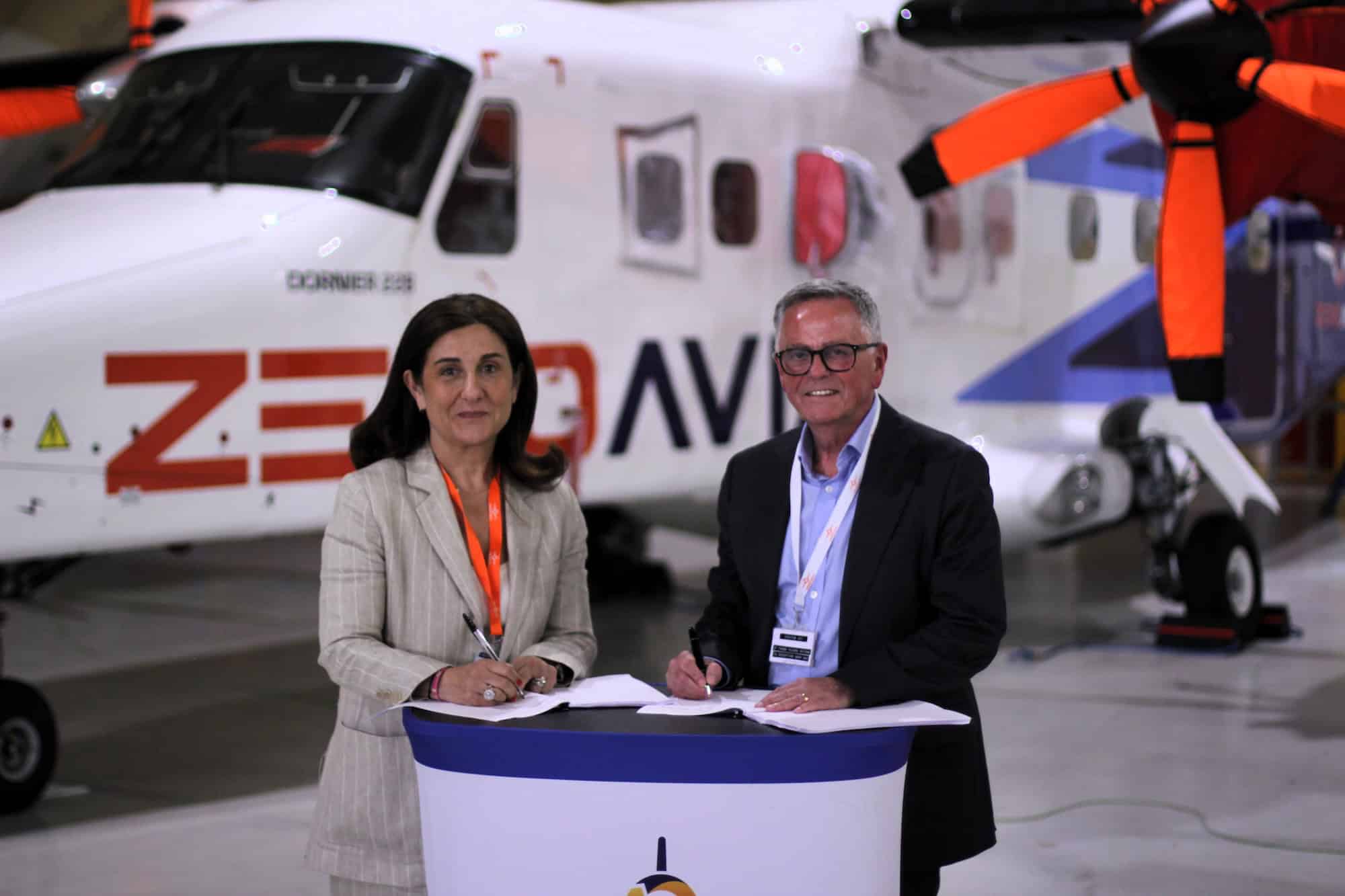
    ZeroAvia Signs Deal to Support Korean Atomic Energy Research Institute (KAERI) in Development and Testing of Composite Liquid Hydrogen Storage Systems  

    ZeroAvia today announced that it has signed a deal which will see it support the Korean Atomic Energy Research Institute (KAERI) in the development and testing of liquid hydrogen storage systems for aircraft.  As part of the agreement, ZeroAvia will advise KAERI on the design for these systems, while embarking on a multi-year testing project utilizing ZeroAvia’s state-of-the-art LH2 test facility at Cotswold Airport in the UK.    


    ZeroAvia’s Liquid Hydrogen Test Centre (LHTC) was built to support ZeroAvia’s aircraft and component liquid hydrogen testing and meets all necessary ATEX and DSEAR safety requirements. The specially modified shelter enables a testing setup that is protected from the elements but enables safe leak risk mitigation.  


    ZeroAvia and KAERI will work together on performance and safety testing through several stages of design, ultimately culminating in a full ground test campaign of the system.

    John Gallagher


    Head of Hydrogen Management Systems, ZeroAvia


    The team and facility we have built at ZeroAvia represents a unique capability globally for performing a vast array of safe and comprehensive tests of liquid hydrogen systems, from key components to full storage systems, and across a variety of sectors and applications. This partnership with KAERI promises to advance liquid hydrogen aviation capabilities significantly and we are delighted to be working with their team on the project.”

    For more information on the ZeroAvia’s Liquid Hydrogen Test Centre, get in touch with the team.  

    About ZeroAvia

    ZeroAvia is the leading developer of aerospace-grade hydrogen-electric propulsion and power systems, enabling a new era of clean, efficient and resilient flight. The company’s fuel cell-electric systems can deliver zero inflight emissions, lower noise, and enhanced energy independence for both commercial aviation and defense applications. ZeroAvia is the world’s only DOA approved manufacturer focused solely on hydrogen-electric aviation and has achieved major flight test and regulatory milestones with the FAA and UK CAA. The company has secured more than 3,000 preorders for its propulsion and power systems from operators, OEMs and defense customers globally.  


    For more, please visit ZeroAvia.com, follow @ZeroAvia on FacebookTwitter/X, InstagramLinkedIn, and YouTube. 


    Press Contact: 

    ZeroAvia Press Team 

    press@zeroavia.com  

    ZeroAvia Completes Financing Round 

    [Kemble, UK & Everett, WA – December 22nd 2025] — ZeroAvia today announced that it has completed a further round of financing, led by Barclays Climate Ventures, Breakthrough Energy Ventures, Ecosystem Integrity Fund, Horizons Ventures, Summa Equity, and AP Ventures, with participation from the National Wealth Fund and the Scottish National Investment Bank.


    With additional investment secured, ZeroAvia has extended its cash runway for the next two years and will continue to fully industrialize its hydrogen power and propulsion technology for the aviation and defense markets.  


    The company is already supplying its SuperStack Flex modular fuel cell power generation system to the defense sector, and there is increasing interest in the systems for unmanned aerial vehicles. The dual-use potential is strong: ZeroAvia is also in active customer discussions with eVTOL and fixed-wing commercial players in relation to deploying the compact, lightweight, flexible systems. 


    The SuperStack Flex can enable both electric propulsion and enhanced on-board electrical power generation with greater power density than battery systems. It unlocks all of the benefits of electrical operation – lower thermal and noise signatures, reduced maintenance costs, enhanced reliability and zero-emissions – and with significantly enhanced endurance. With Design Organisation Approval granted by the UK CAA in November, ZeroAvia is well positioned to deliver the first fuel cell systems for aviation with regulatory approvals. 


    As well as a standalone power generation system with a wide variety of defense and civil applications, the SuperStack Flex is a core module of ZeroAvia’s first planned full hydrogen-electric powertrain, ZA600, designed for 10-20 seat commercial aircraft. With a prototype extensively flight tested, hundreds of engine orders in place with airline customers (including a launch customer), and funding in place to support the entry-in-service of 15 aircraft in Norway, ZeroAvia’s focus is now on pushing towards its first certification to support these opportunities.   

    Val Miftakhov, Founder & CEO,  ZeroAvia said: 


    The support shown in this investment to power the next phase for the company is a great vote of confidence in the our technology and roadmap. With this latest financing we are able to progress at pace on the most immediate market opportunities – such as the SuperStack Flex – which will enable us to derisk later stages of our roadmap.

    For more information on the SuperStack Flex, download the brochure or get in touch with the team.  

    About ZeroAvia 


    ZeroAvia is leading the transition to a clean future of flight by developing electric propulsion technologies for aviation to unlock lower costs and emissions, cleaner air, reduced noise, energy independence and increased connectivity. The company is developing hydrogen-electric (fuel cell-powered) engines for existing commercial aircraft segments and also supplying hydrogen and electric propulsion component technologies for novel electric air transport applications (including battery, hybrid and fuel cell powered electric fixed-wing aircraft, novel eVTOL designs, rotorcraft and Unmanned Aerial Vehicles). ZeroAvia has submitted its first full engine for up to 20-seat planes for certification and is working on a larger powertrain for 40–80-seat aircraft, with significant flight test and regulatory milestones achieved with the U.S. FAA and UK CAA.  


    For more, please visit ZeroAvia.com, follow @ZeroAvia on Facebook, Twitter/X, Instagram, LinkedIn, and YouTube. 


    ZeroAvia Press Team

    press@zeroavia.com

    ZeroAvia Receives Design Organisation Approval from UK CAA 

    Approval is a global first for a hydrogen-electric aviation propulsion developer

    Civil Aviation Authority accreditation confirms ability to comply with certification requirements in bid for engine Type Certificate

    [Kemble, UK & Everett, WA – November 17, 2025] — ZeroAvia today announced that it has been awarded design organisation approval (DOA) by the UK CAA, a critical milestone on its path to certifying a hydrogen-electric engine intended for Part 23 aircraft. The accreditation confirms that the CAA is satisfied that ZeroAvia has the technical expertise, facilities and capabilities to design safe and reliable products, and is prepared to comply with stringent requirements for certification.


    The award means that ZeroAvia has become the first company globally seeking to certify a hydrogen-electric aviation powertrain to receive DOA accreditation from a national regulator. The award confirms that a manufacturer is qualified to design and hold a type certificate for propulsion systems developed under commercial aviation regulations. These requirements are intended to ensure safe global market entry and have been adopted by other regulatory authorities, including EASA and the FAA. 


    Securing DOA represents an essential enabler towards the company’s goal of securing a type certificate for its ZA600 – a 600kW powertrain which uses fuel cells to generate electricity from hydrogen, thus powering electric motors to turn aircraft propellers. Water vapour is the only emission from the engine, and it promises greater efficiency and reduced maintenance costs for airlines. 


    Achieving DOA status follows two other significant regulatory milestones for ZeroAvia this year, with the U.S. Federal Aviation Administration issuing both G-1 and P-1 issue papers in relation to ZeroAvia’s bid to certify its 600kW electric propulsion system (EPS). The 600kW EPS is made up of the company’s proprietary motor and power electronics technology and is both an integral part of the overall ZA600 hydrogen-electric powertrain, and a power-source agnostic electric engine in its own right, with a range of applications. 


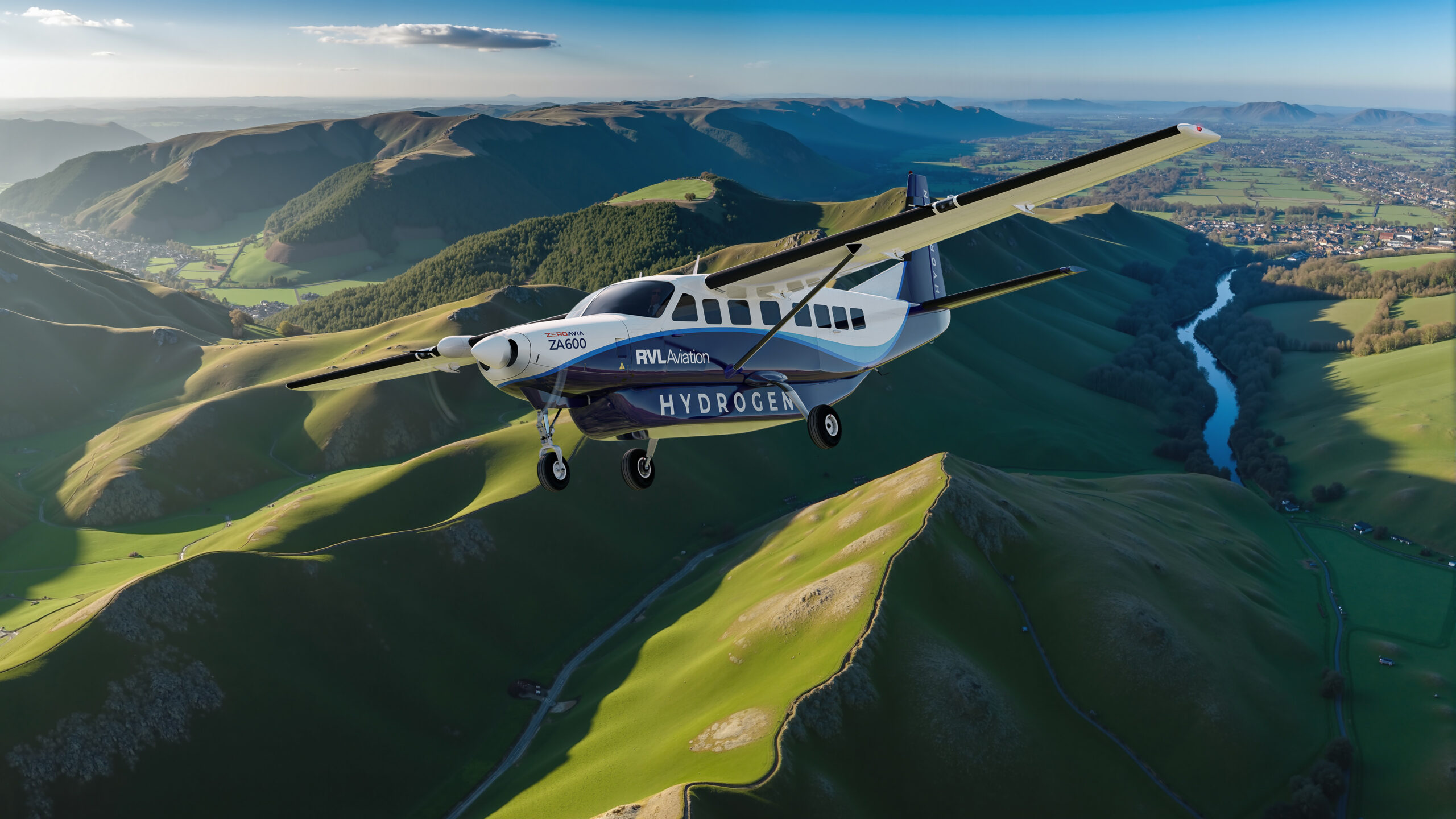
    Earlier this year, ZeroAvia confirmed that RVL Aviation intends to be the first operator to fly the ZA600 engine in a Cessna Caravan 208b on cargo routes in the UK. The company is also working to scale the hydrogen-electric propulsion technology for larger segments of aircraft and has secured thousands of engine pre-orders with airlines across the world. 

    The company has established a unique range of test facilities at its UK R&D and flight testing centre at Cotswold Airport, enabling an efficient testing programme to satisfy the means of compliance that it is in the process of agreeing with the CAA. After rigorous inspection of the facilities, interviews with ZeroAvia’s team and audit of its process, the CAA was able to award the DOA.  

    Keir Mather, UK Aviation Minister, said:


    “Backed by Government investment, it is fantastic to see ZeroAvia reach this major milestone and we look forward to seeing their hydrogen-electric engine taking to the skies next year. 

    We’re backing innovation like this to drive growth and support highly skilled jobs while providing the vital building blocks to help us to reach net zero in aviation by 2050.”  

    Val Miftakhov, Founder & CEO,  ZeroAvia said: 


    It is a huge achievement for any start-up company in the aerospace sector to advance to the stage of DOA status, particularly in a highly novel technology area. Certifying an aircraft engine is necessarily an arduous journey, but the prize here is enabling thousands of aircraft to fly clean, quiet and with improved economics.” 

    Giancarlo Buono, Group Director Safety & Airspace Regulation at the UK Civil Aviation Authority said: 


    “With the demand for air travel continuing to grow, it remains vital that we find sustainable solutions for the future of the aerospace industry. ZeroAvia’s Design Organisation Approval marks a step forward in the development of hydrogen-electric propulsion and introducing this technology safely into the sector. We look forward to continuing to work with organisations including ZeroAvia to drive forward towards a sustainable future for air travel.” 

    Subscribe to our Newsletter

    About ZeroAvia 


    ZeroAvia is leading the transition to a clean future of flight by developing electric propulsion technologies for aviation to unlock lower costs and emissions, cleaner air, reduced noise, energy independence and increased connectivity. The company is developing hydrogen-electric (fuel cell-powered) engines for existing commercial aircraft segments and also supplying hydrogen and electric propulsion component technologies for novel electric air transport applications (including battery, hybrid and fuel cell powered electric fixed-wing aircraft, novel eVTOL designs, rotorcraft and Unmanned Aerial Vehicles). ZeroAvia has submitted its first full engine for up to 20-seat planes for certification and is working on a larger powertrain for 40–80-seat aircraft, with significant flight test and regulatory milestones achieved with the U.S. FAA and UK CAA.  


    For more, please visit ZeroAvia.com, follow @ZeroAvia on Facebook, Twitter/X, Instagram, LinkedIn, and YouTube. 


    ZeroAvia Press Team

    press@zeroavia.com

    ZeroAvia and Hybrid Air Vehicles Sign Agreement to Collaborate on Zero-Emission Airlander

    Companies will explore equipping Airlander aircraft with four ZeroAvia hydrogen-electric ZA600 powertrains

    With plenty of room for hydrogen storage in the hull, the hydrogen-electric Airlander will have unparalleled range and capacity for an electric aircraft

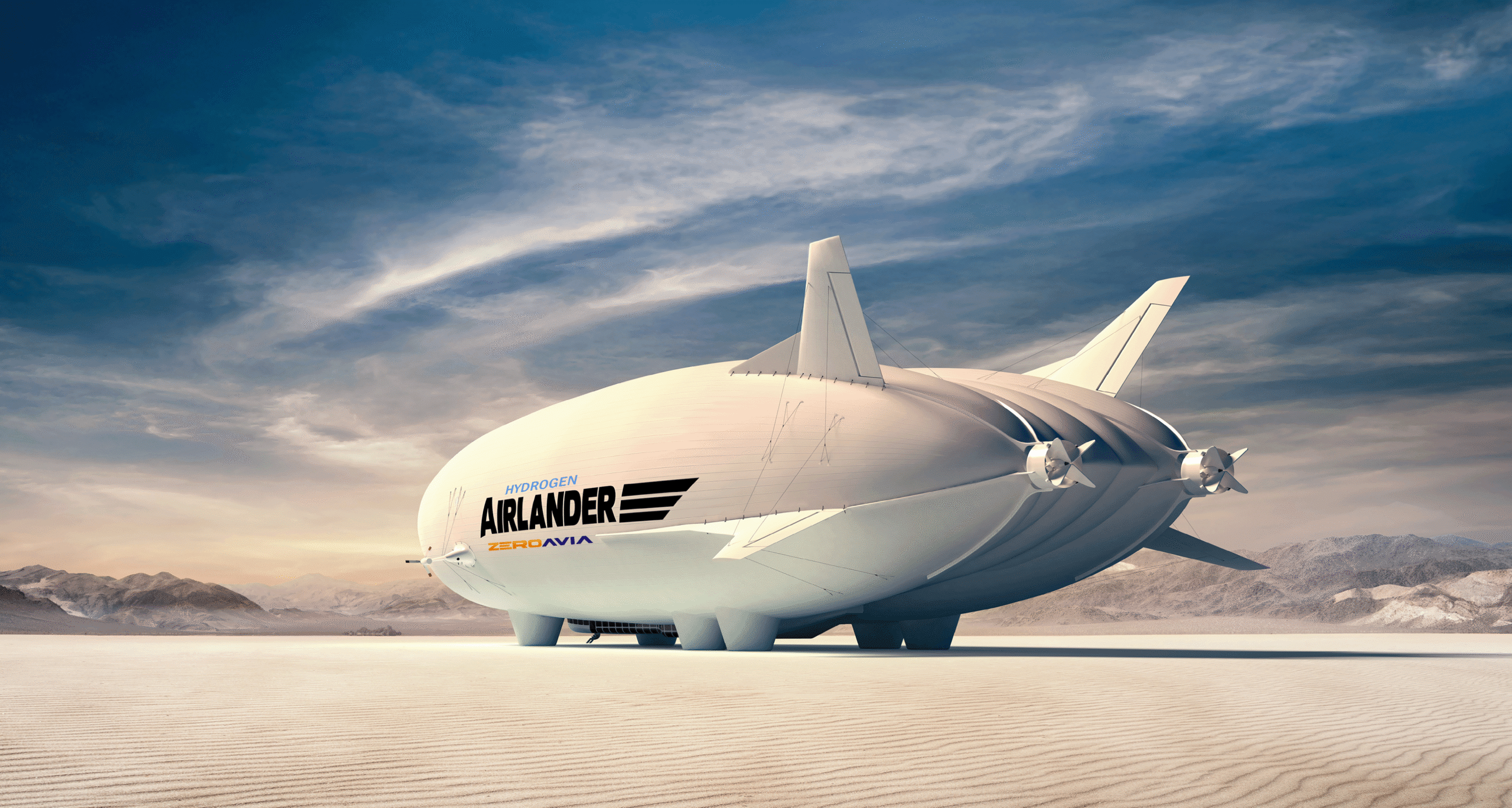
    [Kemble, UK & Bedford, UK – 10th November 2025] — ZeroAvia and Hybrid Air Vehicles today announced that they have signed a Memorandum of Understanding to partner on development of a hydrogen-electric variant of Airlander 10.


    Airlander 10 is a new type of hybrid aircraft that uses a combination of aerostatic lift, aerodynamic lift, and vectored thrust, with a 10 tonne payload and 4,000 nautical mile maximum range. The initial Airlander 10 will be powered by four diesel engines, providing an emissions reduction of up to 90% when compared with comparable capacity aircraft. Integrating ZeroAvia’s hydrogen-electric propulsion will deliver full zero-emission in-flight operations carrying 100+ passengers, as well as reduced maintenance costs.


    ZeroAvia’s first generation 600kW hydrogen-electric powertrain – ZA600 – has already passed several regulatory milestones, secured hundreds of pre-orders and signed up launch customer airlines who are working to embed the system into more traditional fixed-wing aircraft for lower cost and more environmentally friendly flight. The company has conducted flight testing of a prototype on board a 19-seat aircraft.


    With ample space for hydrogen storage in the hull, the Airlander represents an excellent option for adopting the first generation of certified hydrogen technologies that are already close to market entry: hydrogen storage, low temperature PEM fuel cell power generation and electric propulsion systems that are well advanced in the certification journey. This partnership will build on HAV’s earlier R&D work to explore electric propulsion for Airlander.


    As part of the agreement, the companies will also study the potential applicability of ZeroAvia’s hydrogen-electric technology to future larger aircraft developed by Hybrid Air Vehicles, and assess planned Airlander 10 operations to define the hydrogen fuel infrastructure requirements.

    Tom Grundy, Hybrid Air Vehicles, said:


     “ZeroAvia has led the development of hydrogen-electric propulsion systems and made impressive progress commercially, technically and with regulators. Our intention has always been to offer our customers a fully zero-emission variant of the Airlander, for efficiency and environmental reasons, and this partnership with ZeroAvia will help us in this direction.” 

    Val Miftakhov, Founder & CEO,  ZeroAvia said: 


    “Airlander is another exciting airframe for line-fit of our powertrains as it can open up a whole new market in air travel due to its range, efficiency and ability to operate from almost anywhere. Like ZeroAvia, Hybrid Air Vehicles is an aerospace innovator with exciting manufacturing and growth plans for the UK that can deliver hundreds of well-paid jobs in different regions in the UK.”


    “These are two businesses expanding UK footprints and manufacturing plans, with a broad array of strong use cases, including in the defence arena.”

    Subscribe to our Newsletter

    About ZeroAvia 


    ZeroAvia is leading the transition to a clean future of flight by developing electric propulsion technologies for aviation to unlock lower costs and emissions, cleaner air, reduced noise, energy independence and increased connectivity. The company is developing hydrogen-electric (fuel cell-powered) engines for existing commercial aircraft segments and also supplying hydrogen and electric propulsion component technologies for novel electric air transport applications (including battery, hybrid and fuel cell powered electric fixed-wing aircraft, novel eVTOL designs, rotorcraft and Unmanned Aerial Vehicles). ZeroAvia has submitted its first full engine for up to 20-seat planes for certification and is working on a larger powertrain for 40–80-seat aircraft, with significant flight test and regulatory milestones achieved with the U.S. FAA and UK CAA.  


    For more, please visit ZeroAvia.com, follow @ZeroAvia on Facebook, Twitter/X, Instagram, LinkedIn, and YouTube. 


    ZeroAvia Press Team

    press@zeroavia.com

    About Hybrid Air Vehicles


    Hybrid Air Vehicles Ltd (HAV) is a UK-based leader in advanced, sustainable aircraft technologies and the company behind Airlander, a family of ultra-efficient aircraft capable of delivering multi-day, efficient flight across travel and tourism, logistics, regional mobility, and communications & surveillance. HAV’s first production aircraft, the Airlander 10, is capable of delivering 100-seat passenger mobility, a ten tonne payload of freight transportation, or a combination of the two. Airlander 10’s production at a purpose-built factory in South Yorkshire will be the centre of a green advanced manufacturing boom in the region. Additional production sites are under consideration in the United States and other global locations.


    For more, please visit hybridairvehicles.com, follow @HybridAirVehicles on LinkedIn and @Airlander_official on Instagram


    Press Contact

    Hybrid Air Vehicles Press Team

    media@hybridairvehicles.net

    ZeroAvia Successful in €21m European Union Grant Application to Deliver World’s First Network of Hydrogen Aircraft in Norway 

    The Innovation Fund selected project will support the introduction of zero-emission hydrogen aircraft for the first time in the European Economic Area (EEA)

    Project ODIN (Operations to Decarbonize Interconnectivity in Norway) also sees the European Commission recognise hydrogen-electric aviation as a strategic technology

    [Kemble, UK & Everett, WA – November 6th – 2025] ZeroAvia today announced that its application to the Innovation Fund for a €21.4m grant to support the introduction of hydrogen-electric aircraft has been selected for grant agreement preparation. The project will support the retrofit of 15 Cessna Caravan aircraft with ZeroAvia’s ZA600 hydrogen-electric engines and the establishment of the supporting airport hydrogen fuel technologies, with operations planned to commence in 2028. 


    These zero-emission aircraft are planned to replace conventional kerosene-fueled turboprops on cargo routes and expected to see in excess of 95% reduction in greenhouse gas emissions. The project will also work to deliver hydrogen refuelling and storage infrastructure at 15 airports in Norway, establishing the world’s largest network of zero-emission commercial flights. The air operators for the network will be announced in due course.


    The ODIN project aims to validate the technical performance and economic case for utilizing hydrogen-electric aircraft in commercial operations, with a view to catalyzing further adoption in Norway, across the EU and further afield.  


    The project proposal was found to contribute to the objectives of the EU initiative “Strategic Technologies for Europe Platform (STEP)” and meets the requirements to receive the STEP Seal. The STEP Seal is a quality label awarded by the European Commission dedicated to boosting investment in critical technologies in Europe. ​ 


    ZeroAvia’s ZA600 powertrain uses fuel cells to generate electricity from hydrogen fuel without reliance on combustion, meaning that the only emission is low-temperature water vapour. ZeroAvia has already flight tested a prototype of this system, is now ground testing its final design for certification, and concurrently working with both the UK Civil Aviation Authority and US Federal Aviation Administration on certification programmes related to the engine.  

    Val Miftakhov, Founder & CEO,  ZeroAvia said: 

    The EU Innovation Fund is notoriously competitive with applications needing to pass through rigorous assessment and demonstrate compelling evidence for near-term greenhouse gas reductions. This project will set a phenomenal example by introducing a scaled network of hydrogen-electric aircraft operations, efficiently delivering vital goods to people and businesses across Norway without the typical associated environmental damage.”  

    The Innovation Fund, financed by EU Emissions Trading System revenues, is one of the world’s largest funding programmes for the demonstration of innovative low-carbon technologies. The Fund focuses on highly innovative clean technologies and big flagship projects with European added value that can bring significant emission and greenhouse gas reductions. 

    Subscribe to our Newsletter

    About ZeroAvia 


    ZeroAvia is leading the transition to a clean future of flight by developing electric propulsion technologies for aviation to unlock lower costs and emissions, cleaner air, reduced noise, energy independence and increased connectivity. The company is developing hydrogen-electric (fuel cell-powered) engines for existing commercial aircraft segments and also supplying hydrogen and electric propulsion component technologies for novel electric air transport applications (including battery, hybrid and fuel cell powered electric fixed-wing aircraft, novel eVTOL designs, rotorcraft and Unmanned Aerial Vehicles). ZeroAvia has submitted its first full engine for up to 20-seat planes for certification and is working on a larger powertrain for 40–80-seat aircraft, with significant flight test and regulatory milestones achieved with the U.S. FAA and UK CAA.  


    For more, please visit ZeroAvia.com, follow @ZeroAvia on Facebook, Twitter/X, Instagram, LinkedIn, and YouTube. 


    ZeroAvia Press Team

    press@zeroavia.com

    ZeroAvia Ships First Flight Intent SuperStack Flex Fuel Cell System to Defense Sector Customer 

    Modular, fuel cell power/propulsion unit packaged and shipped to defense sector customer ready for flight testing

    Final testing shows unparallelled specific power for fuel cell system in this power range

    [Kemble, UK & Everett, WA – October 15th, 2025] — ZeroAvia today announced that it has shipped its first flight intent SuperStack Flex modular low temperature proton exchange membrane (LTPEM) fuel cell system to a customer in the defense sector. The system has been fully qualified against the customer’s airworthiness requirements.


    ZeroAvia’s SuperStack Flex is a modular fuel cell power generation system that can be configured to meet specific customer power needs while maintaining high power-to-weight ratio and highly flexible configuration.  


    The lightweight, aerospace optimized balance-of-plant, has been developed to enhance the range of many Unmanned Air Vehicles (UAV), with further potential applicability across aerospace, maritime and ground use cases. The system can be used to provide propulsive power or to deliver enhanced onboard electrical capacity, opening up new capabilities in primary propulsion, auxiliary power systems and mission systems including ISR applications. The Superstack Flex is also an ideal system for the new FAA Mosaic Light Sport Category, providing more than enough power for a standard four-seater general aviation (GA) aircraft in this sector. 


    The SuperStack Flex has demonstrated over 1.2kW/kg specific power and recently completed more than 100 hours of testing, consuming over 250 kg of hydrogen, and delivering continuous power at greater than 150 kW over long intervals, with peak power over 175 kW.   

    Hydrogen and fuel cell technologies are becoming increasingly relevant to armed forces due to unique advantages in energy density, lower detectability thanks to reduced thermal and noise signatures, operational flexibility and lower maintenance costs. 


    Using selective laser sintering (SLS) powder-bed additive manufacturing processes, ZeroAvia has been able to perform high velocity cycles of design, build and test, and quickly combine typical parts or their functions into new monolithic structures. The key parts in the SuperStack Flex’s balance of plant – Anode, Cathode and Coolant Manifolds, thermal management, humidification and air compression systems – have been reduced from over 200 parts to less than 100, with ~50% weight and volume reductions. Fewer parts mean lighter, more compact, more reliable and less costly systems.    


    In the final stages of testing, the system was providing power back to ZeroAva’s Propulsion Center of Excellence in Everett, generating enough power to offset the entire building’s consumption. 

    Val Miftakhov, Founder & CEO,  ZeroAvia said: 


    Fuel cell systems are evolving to enable electric flight of unmanned aerial vehicles and a host of other vehicles. With lower noise and heat signatures, lower maintenance costs, increased endurance and the ability to generate fuel locally, there are enormous capability benefits.” 


    We can generate an amazing amount of electrical power at a really low weight, opening up all kinds of possibilities for new vehicles in both the civil and defense arenas.  

    Discover the SuperStack Flex

    About ZeroAvia 


    ZeroAvia is leading the transition to a clean future of flight by developing electric propulsion technologies for aviation to unlock lower costs and emissions, cleaner air, reduced noise, energy independence and increased connectivity. The company is developing hydrogen-electric (fuel cell-powered) engines for existing commercial aircraft segments and also supplying hydrogen and electric propulsion component technologies for novel electric air transport applications (including battery, hybrid and fuel cell powered electric fixed-wing aircraft, novel eVTOL designs, rotorcraft and Unmanned Aerial Vehicles). ZeroAvia has submitted its first full engine for up to 20-seat planes for certification and is working on a larger powertrain for 40–80-seat aircraft, with significant flight test and regulatory milestones achieved with the U.S. FAA and UK CAA.  


    For more, please visit ZeroAvia.com, follow @ZeroAvia on Facebook, Twitter/X, Instagram, LinkedIn, and YouTube. 


    ZeroAvia Press Team

    press@zeroavia.com

    ZeroAvia Certification-Intent Fuel Cell System Successfully Replicates Full Flight Profile in Ground Test   

    Building on breakthrough flight testing, certification-intent design of fuel cell module on track to be world’s first to meet CS-E and CS-23 certification requirements

    Venturi mechanism for aviation fuel cell system revealed as part of design, enhancing specific power and easing pathway to certification

    [Kemble, UK & Everett, WA – September 2nd 2025] ZeroAvia today announced that it has completed a full flight profile ground test of its certification-intent low temperature proton exchange membrane (LTPEM) fuel cell power generation system (PGS) for the ZA600 hydrogen-electric powertrain.


    The test simulated a 250 nautical mile flight in a Cessna Caravan 208b aircraft, equivalent to flying between London Heathrow and Dublin Airport. During the 2 hour and 38 minute test, the fuel cell system demonstrated stable power output and excellent performance of the balance-of-plants, with each 200kW capable module producing 170kW power for take-off, 132kW during a 23-minute climb and 83kW for a 90-minute cruise. As part of the ZA600 hydrogen-electric powertrain for up to 20 seat planes, four 200kW rated modules of the dual stack PGS will provide electrical power for ZeroAvia’s 600kW electric propulsion system, recently the subject of G-1 and P-1 issue papers from the FAA.


    Each module is capable of feeding DC electrical power to four ZeroAvia 200kW rated inverters, which in turn provide AC power to one of four segments of the company’s proprietary 600kW motor design. The segregated system enables full power operation of the motor if there is failure in one leg, creating a high degree of fault tolerance.  


    For the ZA600 engine, ZeroAvia has created a multi-stack balance-of-plant architecture capable of delivering 1.4 kW/kg power density. Since initial breakthrough flight tests, the company has been working to finalize the design of the certification-intent ZA600 as it works to certify with the UK CAA.  


    The company also revealed today that it has been able to optimize the weight and operation of its ZA600 power generation system (PGS) through the design and development of a bespoke passive Venturi ejector device (in conjunction with supplier The Lee Company) for the recirculation of hydrogen gas within the fuel cell system.


    The latest round of testing has seen the light and compact Venturi emulating the performance of a typical electrically-driven hydrogen blower, but with many advantages. Where the heavy and bulky blower system draws parasitic power from the fuel cells, the Venturi does not, boosting the overall specific power of the system. As a passive mechanical body, the Venturi also promises very low failure rates. 


    ZeroAvia’s Venturi design also simplifies the certification of the system as it is reliant on the DO160G environmental qualification, as opposed to the more stringent DO254 for complex hardware that would face a system utilizing the electric blower.  


    ZeroAvia’s ZA600 power generation system is the world’s first fuel cell module designed to meet CS-E and CS-23 certification requirements. The innovative balance of plant is en route to full certification and commercialization and is well advanced in the requirements validation testing campaign. 


    With both core components of the powertrain now in bench testing, ZeroAvia will move to full engine ground testing of the final design in the next few weeks. The rapid progression to this milestone for the ZA600 power generation system has been made possible by ZeroAvia’s strategy to invest in world class in-house testing facilities. ZeroAvia has built a 2MW capable fuel cell test lab at its Gloucestershire R&D center. ZeroAvia’s fuel cell test lab is equipped with two bays, which has enabled testing the systems in an open frame environment, while also progressing the volume constrained, certification-intent system. 

    Val Miftakhov, Founder & CEO,  ZeroAvia said: 


    “We have shown the possibilities by flying a prototype of the ZA600 system on shorter range missions, and we are now seeing the final design replicating customer needs in ground testing, and pushing the boundaries of performance with new innovations.”  


    “What we have achieved with the Venturi is genuinely groundbreaking and further enhances an already commercially attractive, highly efficient and certifiable fuel cell propulsion system. This innovation is one of many that our team have brought into the design of this pioneering system, including novel humidification approach, novel gas distribution system and the multistack BoP architecture itself. Importantly, all of these innovations now have a clear and direct path to aviation qualification and certification.” 

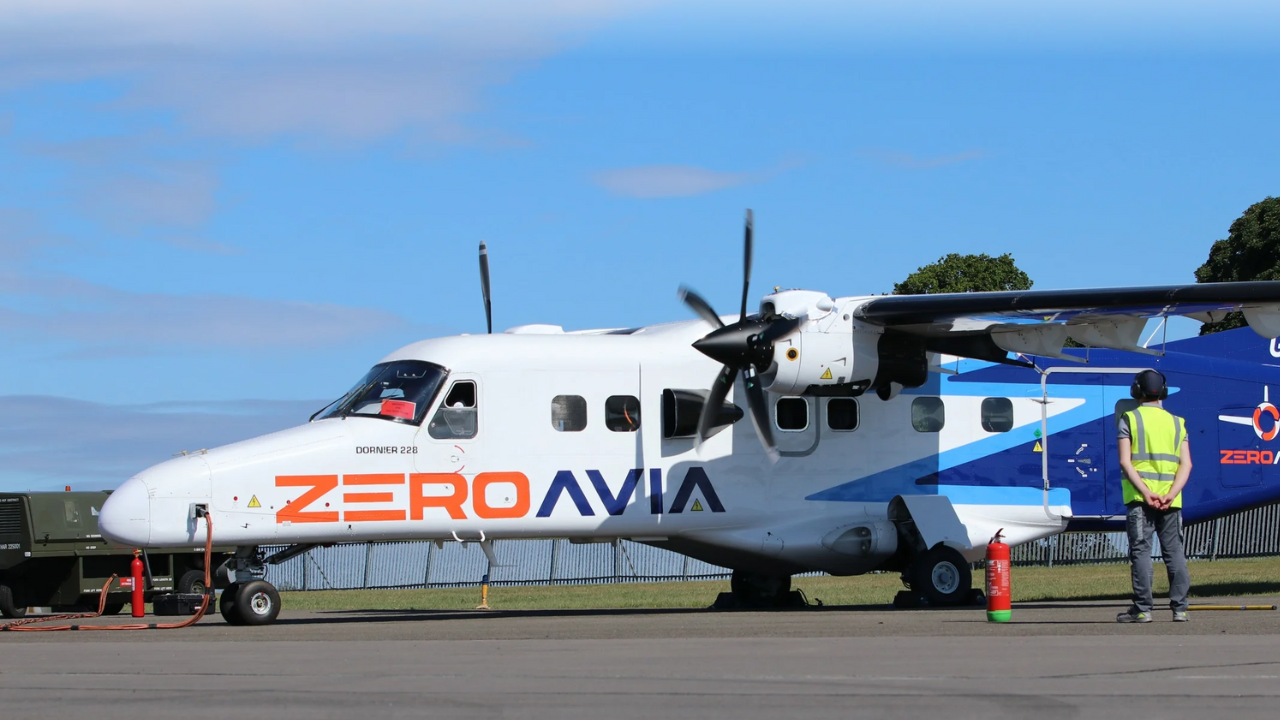
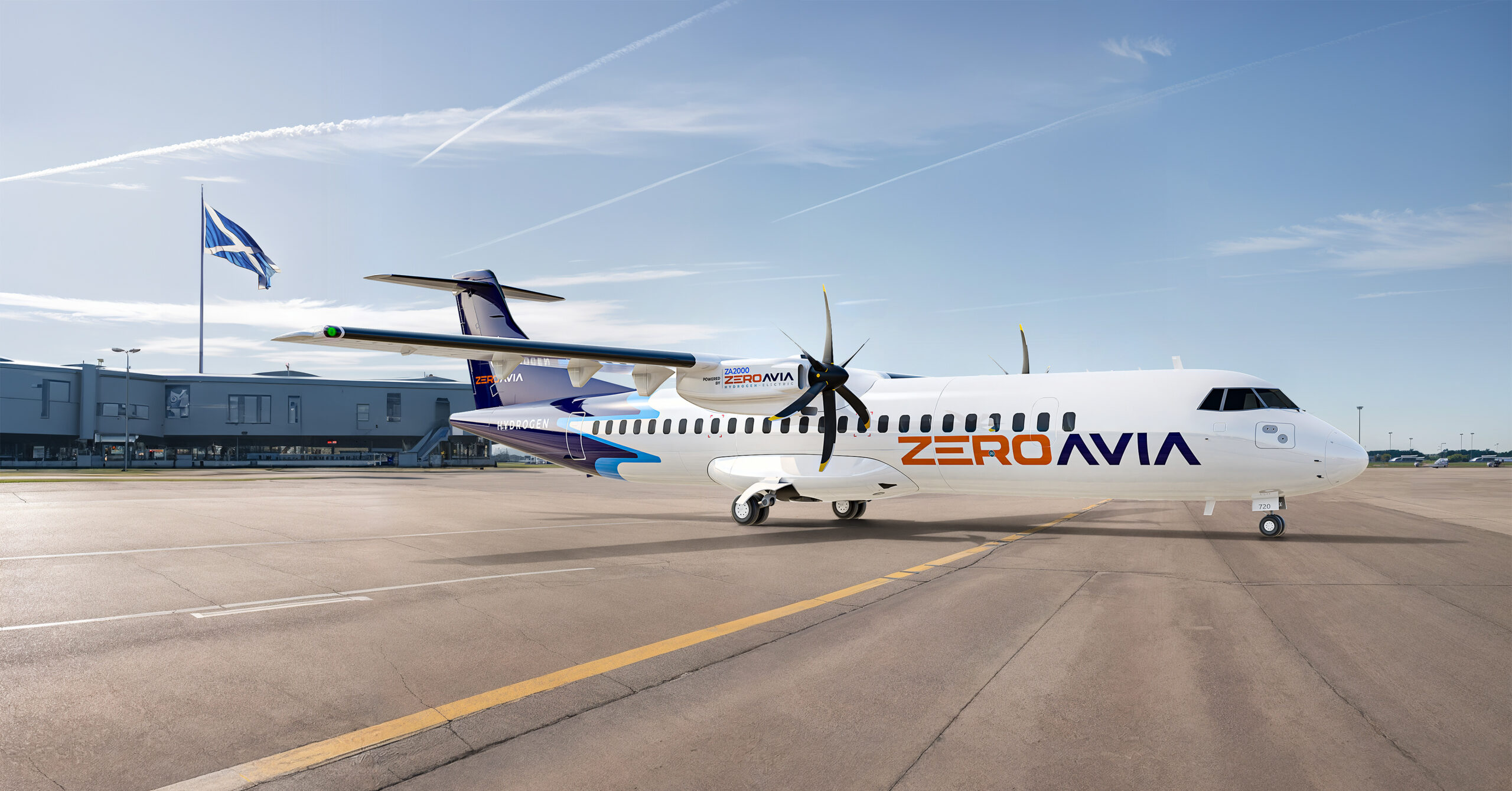
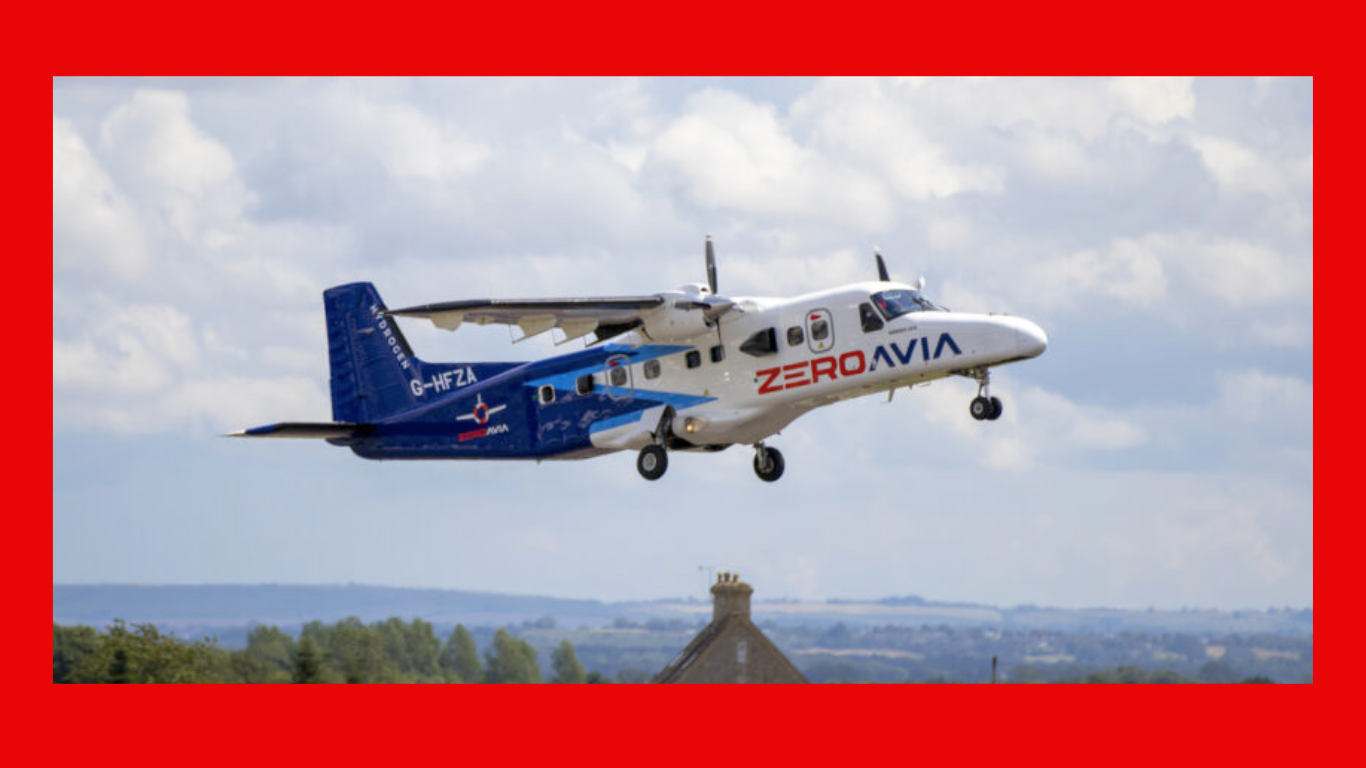
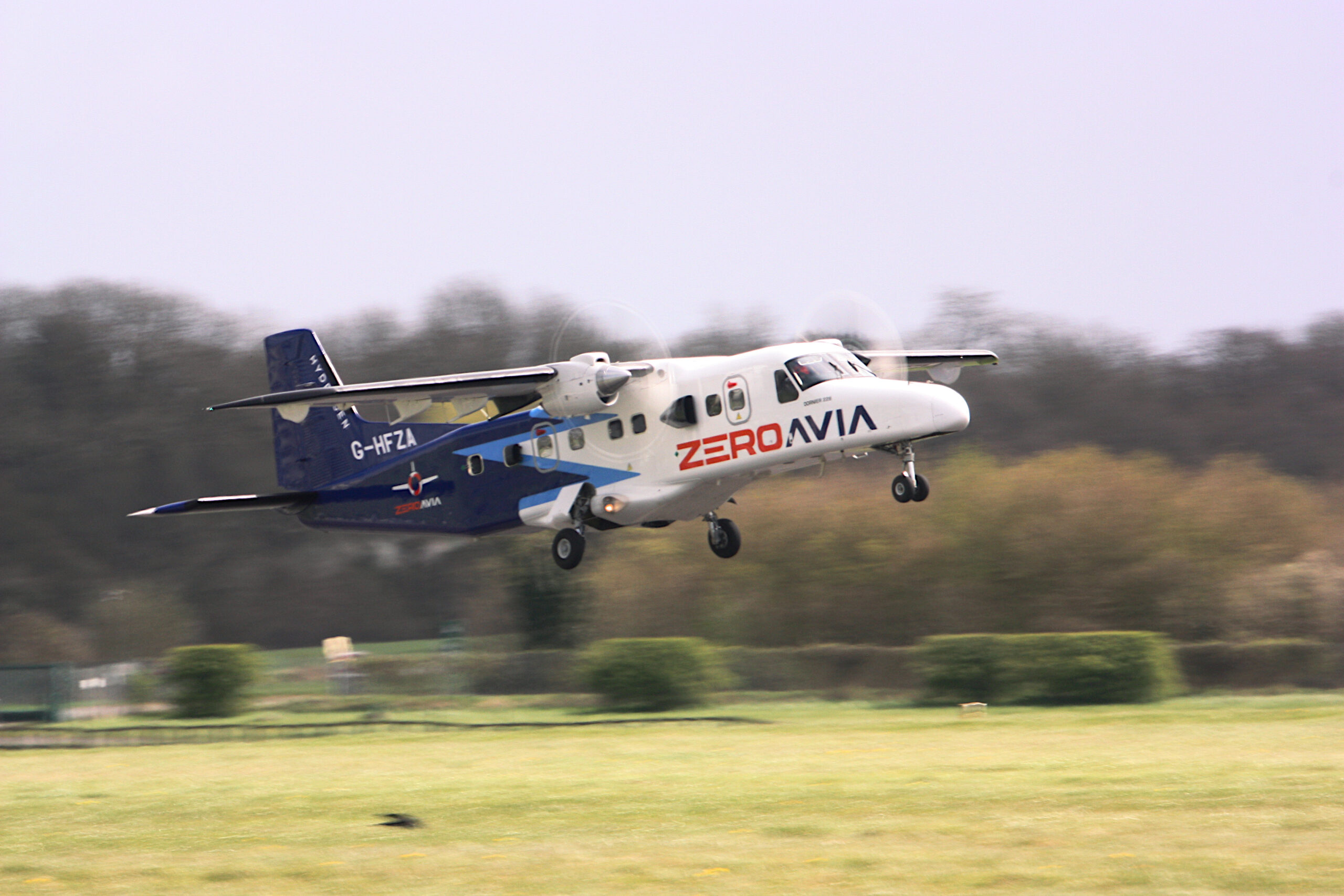
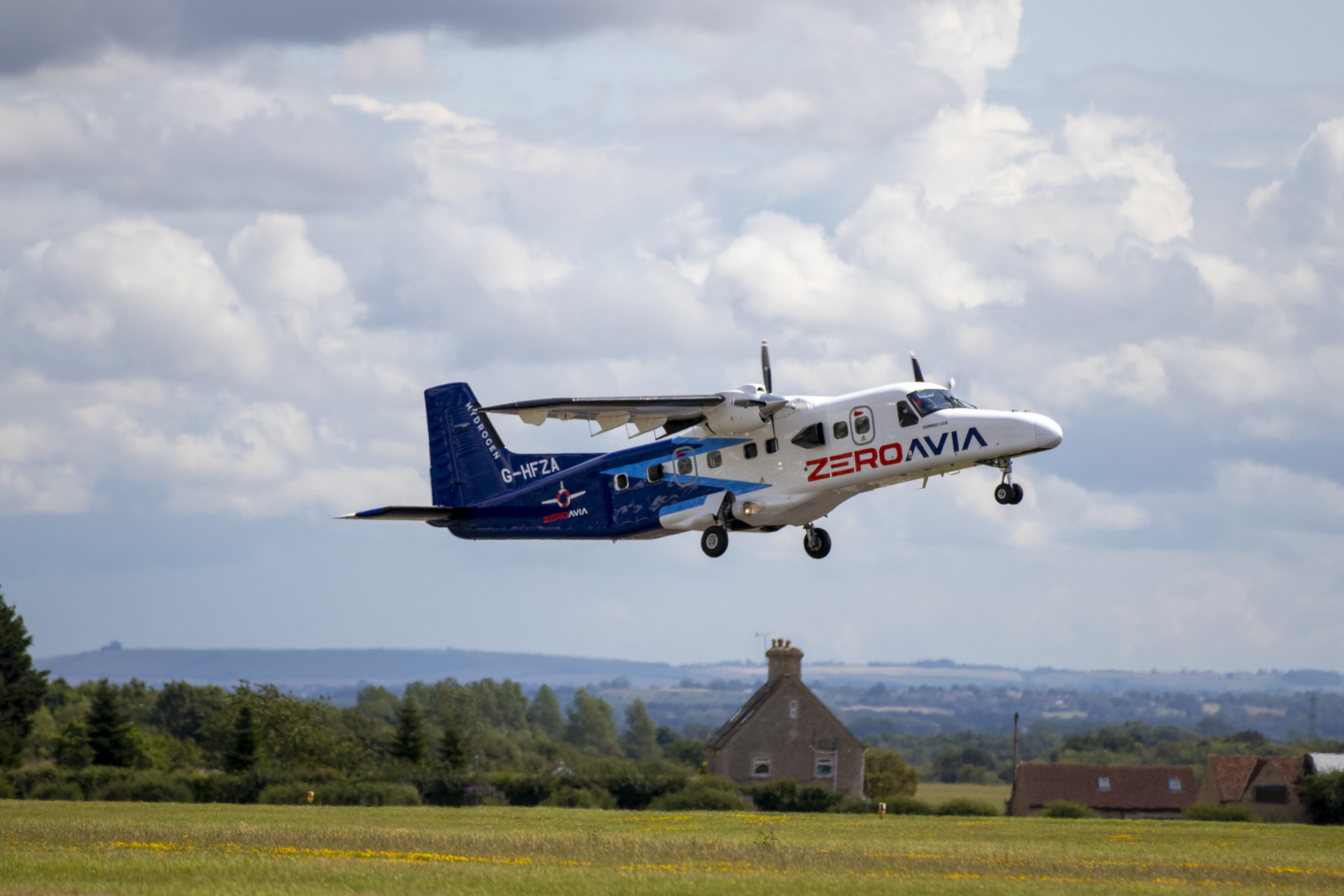
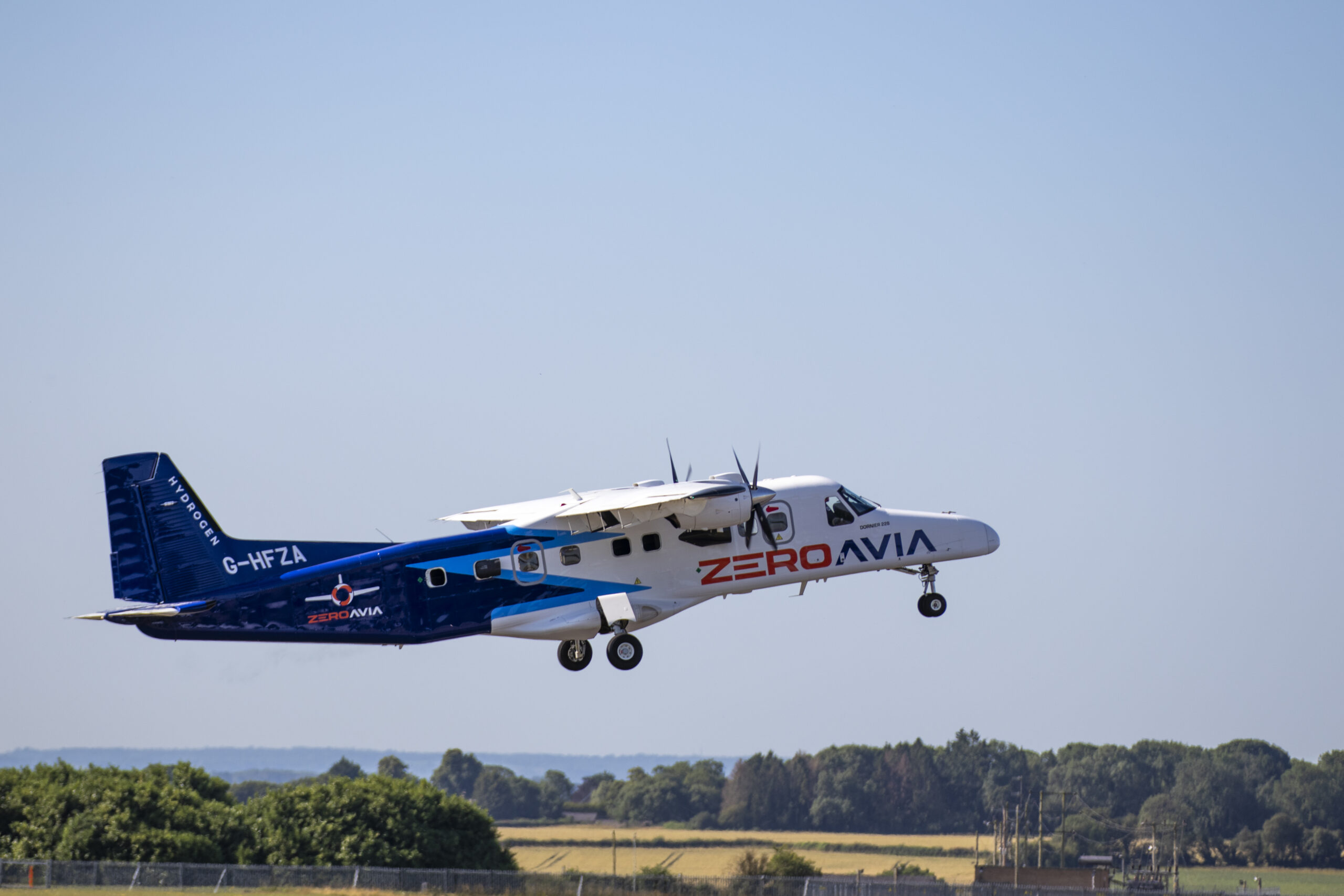
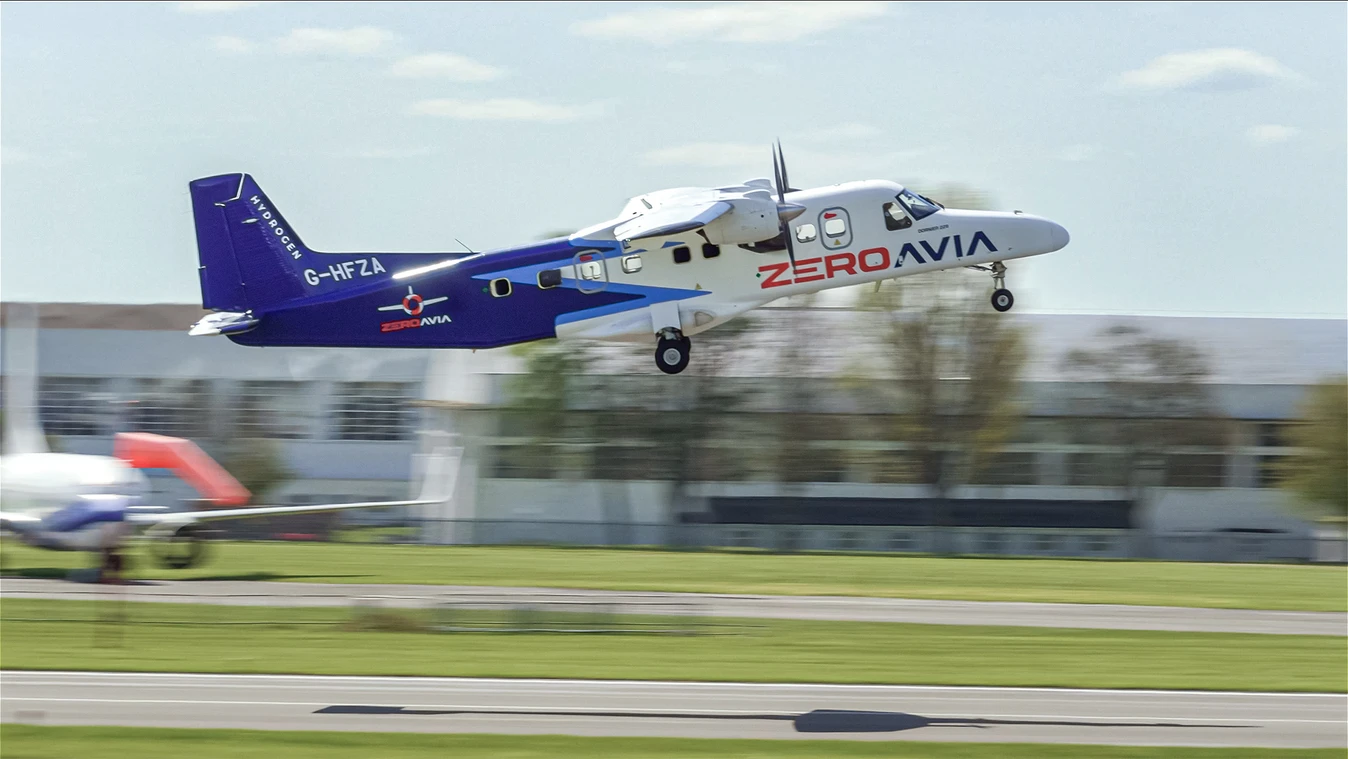
    ZeroAvia has already extensively tested a prototype of its first ZA600-engine aboard a Dornier 228 aircraft at its UK base. The company has also performed advanced ground tests in the US and UK for the key building block technologies for the ZA2000 system, including cryogenic tanks or LH2 and proprietary high-temperature PEM fuel cell and electric propulsion systems. ZA2000 will support up to 80 seat regional turboprop aircraft such as the ATR72 or the Dash 8 400.   

    Discover the ZA600 PGS

    About ZeroAvia 


    ZeroAvia is leading the transition to a clean future of flight by developing electric propulsion technologies for aviation to unlock lower costs and emissions, cleaner air, reduced noise, energy independence and increased connectivity. The company is developing hydrogen-electric (fuel cell-powered) engines for existing commercial aircraft segments and also supplying hydrogen and electric propulsion component technologies for novel electric air transport applications (including battery, hybrid and fuel cell powered electric fixed-wing aircraft, novel eVTOL designs, rotorcraft and Unmanned Aerial Vehicles). ZeroAvia has submitted its first full engine for up to 20-seat planes for certification and is working on a larger powertrain for 40–80-seat aircraft, with significant flight test and regulatory milestones achieved with the U.S. FAA and UK CAA.  


    For more, please visit ZeroAvia.com, follow @ZeroAvia on Facebook, Twitter/X, Instagram, LinkedIn, and YouTube. 


    ZeroAvia Press Team

    press@zeroavia.com

    ZeroAvia Receives Signed P-1 Issue Paper from Federal Aviation Administration for 600kW Electric Propulsion System   

    Agreement with regulator on Special Conditions marks key milestone toward certification for company’s innovative technology

     [Everett, WA: August 19th, 2025] — ZeroAvia today announced that it has reached consensus with the Federal Aviation Administration (FAA) with an agreed and fully signed P-1 Special Conditions Issue Paper regarding certification of its 600kW electric propulsion system (EPS). 


    The P-1 follows issuance of the FAA G-1 in February 2025 and documents the special conditions applicable to ZeroAvia’s novel electric propulsion technology to be addressed in the certification process with the U.S. regulator. Once the FAA’s Special Conditions rule is finalized and published in the Federal Register, the means of compliance for the innovative EPS meeting those conditions will be determined in the next certification stage.  


    Progressing from the G-1 to the P-1 marks another milestone both on the journey toward certification of ZeroAvia’s EPS with the U.S. regulator, and also on the path toward certifying the company’s first fully hydrogen-electric powertrain with the UK Civil Aviation Authority.  


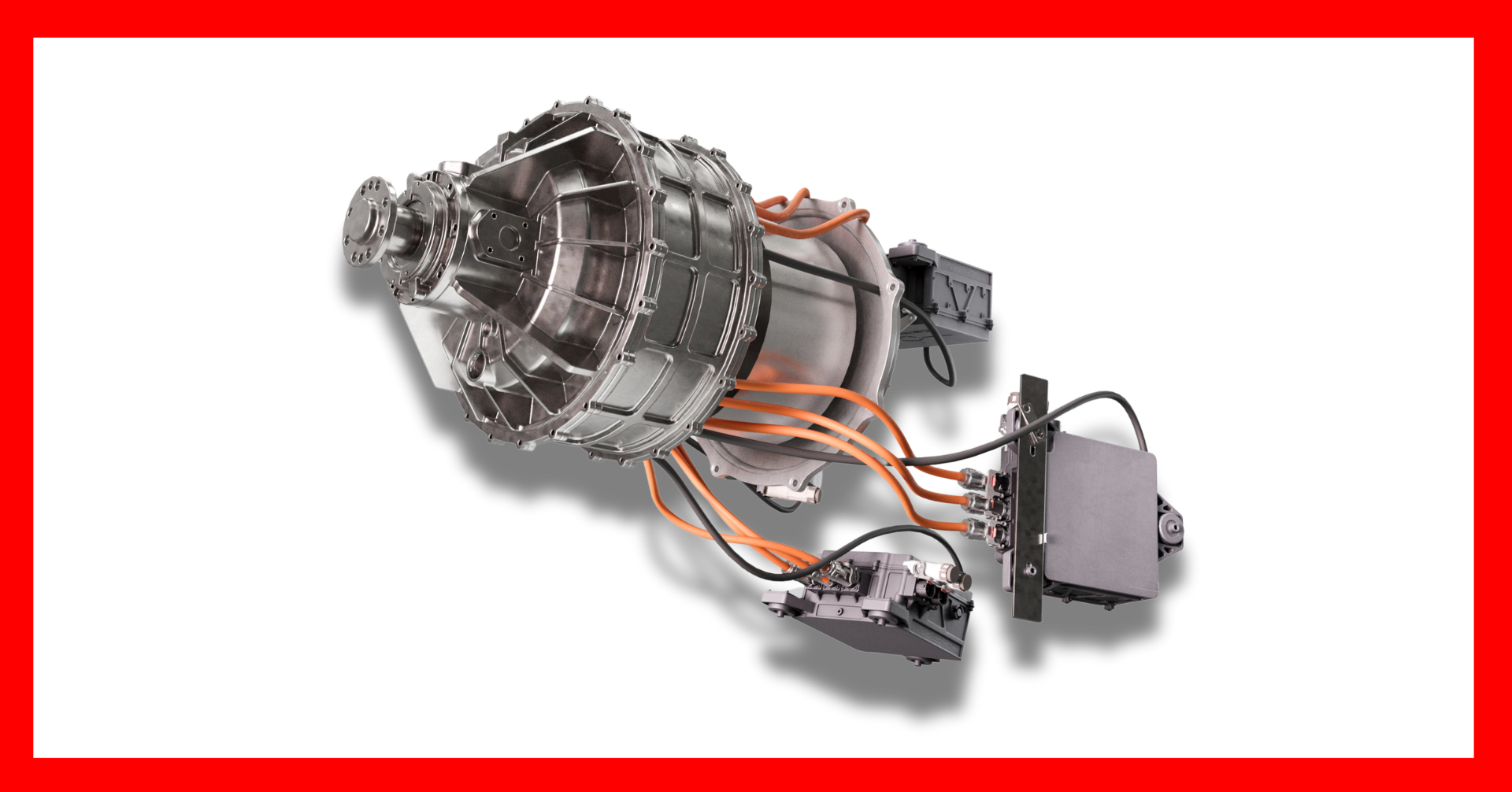
    ZeroAvia’s 600kW EPS combines the company’s proprietary inverter and electric motor technology to deliver a highly efficient electric engine with exceptional fault tolerance and specific power. The 600kW EPS system comprises four ZeroAvia 200kW continuous power bidirectional inverters converting DC power to AC to supply ZeroAvia’s direct drive motor, capable of 2,200 rpm.  


    ZeroAvia launched a component offering in May 2024 to serve the market for novel electric air transport applications. Potential applications for the 600kW EPS include battery, hybrid and fuel cell electric fixed-wing aircraft, rotorcraft and unmanned aerial vehicles (“UAV’s”).   


    The electric propulsion system is one part of ZeroAvia’s deep portfolio of hydrogen and electric aviation technology, resulting from the company’s strong commitment to vertical integration. ZeroAvia’s complete ZA600 hydrogen-electric powertrain, designed for up to 20-seat commercial aircraft, combines the EPS with a hydrogen fuel cell power generation system (“PGS”).  


    ZeroAvia has already tested a prototype of the ZA600 hydrogen-electric engine aboard a Dornier 228 aircraft at its UK base. The company also has an engineering partnership with Textron Aviation as it looks to secure a supplemental type certificate for the Cessna Grand Caravan as the launch airframe for the ZA600. And in May, the company announced RVL Aviation as its UK launch customer for the world’s first hydrogen-electric commercial service route.    

    Val Miftakhov, Founder & CEO,  ZeroAvia said: 


    Getting this electric propulsion system certified and into service will be a monumental leap in the next great transition in aviation: from fossil fuel combustion to electric aviation. Electrifying aviation will deliver a step change in efficiency plus steep reductions in operating costs by overcoming volatile fuel prices and the costly maintenance of complex, high-intensity combustion engines.  


    Air travel has been bringing the world together for more than a century, but we can do better for passengers trying to get to and from underserved communities, hours away from a hub airport. ZeroAvia and others in advanced air mobility are laying the groundwork to connect more people, more affordably, and to more places. 

    Discover our
    600kW Electric Propulsion System

    About ZeroAvia 


    ZeroAvia is leading the transition to a clean future of flight by developing electric propulsion technologies for aviation to unlock lower costs and emissions, cleaner air, reduced noise, energy independence and increased connectivity. The company is developing hydrogen-electric (fuel cell-powered) engines for existing commercial aircraft segments and also supplying hydrogen and electric propulsion component technologies for novel electric air transport applications (including battery, hybrid and fuel cell powered electric fixed-wing aircraft, novel eVTOL designs, rotorcraft and Unmanned Aerial Vehicles). ZeroAvia has submitted its first full engine for up to 20-seat planes for certification, with significant flight test and regulatory milestones achieved with the U.S. FAA and UK CAA. ZeroAvia has also performed advanced ground tests in the US and UK for the key building block technologies for its next system, the ZA2000, including cryogenic tanks for LH2 and proprietary high-temperature PEM fuel cell and electric propulsion systems. The ZA2000 will support up to 80seat regional turboprop aircraft such as the ATR 72 and the Dash 8-400


    For more, please visit ZeroAvia.com, follow @ZeroAvia on Facebook, Twitter/X, Instagram, LinkedIn, and YouTube. 


    ZeroAvia Press Team

    press@zeroavia.com

    ZeroAvia Granted Raft of New Patents Key to the Development of Large Hydrogen Aviation Engines 

    Patent awards add significant strength to ZeroAvia’s IP portfolio, with 45 patents granted to date

    [Everett, WA & Kemble, UK July 17, 2025] — ZeroAvia today announced that it has been awarded nine new patents this year so far, with many critical to the company’s roadmap for scaling hydrogen-electric engines for large regional aircraft. The company has now been granted a total of 45 patents related to hydrogen and electric aviation systems, with almost 250 applications, most of which are still going through the patent office pipelines.  


    United States Patent and Trademark Office (USPTO) no. 12,341,225 covers an integrated hydrogen-electric engine and is key to the development of a modular multi-MW hydrogen-electric engine for ATR and Dash 8 families of aircraft. The design concept relates to ZeroAvia’s ZA2000 engine for 40-80 seat regional turboprops and jets, with advanced and novel integration concepts creating a tightly packaged, power-dense zero-emission aircraft engine.  


    Also important for scaling hydrogen-electric engines for large aircraft is the delivery of fuel cell systems with higher specific power. UK patent office GB2614450 covers novel coatings for aluminium bipolar plates for high temperature PEM (HTPEM) fuel cell systems, allowing the higher temperature operation with lightweight metals, while overcoming material degradation challenges.  


    Other patents granted cover key innovations in cryogenic management systems, thermal management for fuel cell systems and fuel cell catalysts using platinum nanoparticles. One relates to a refueling system for hydrogen fuel cell-powered aircraft that enables both efficient refueling and employs a thermoelectric generator to leverage the heat from the refueling process to provide electricity for other aircraft systems.  


    ZeroAvia’s granted patent portfolio now includes key coverage across all key subsystems of the engine and aspects of aircraft integration. With the addition of the robust set of trade secrets, especially in the areas of material innovations related to ZeroAvia’s unique HTPEM fuel cell systems, the company now boasts one of the most advanced IP portfolios in hydrogen-electric aviation powertrain technology.  


    With both Airbus and Boeing advancing plans and IP for hydrogen-ready airframes in recent weeks, securing IP on engine systems is a key building block for aspiring clean engine manufacturers for the aircraft of the future. Building a strong IP portfolio has been an integral part of ZeroAvia’s strategy since inception, with high-levels of in-house development of core systems enabling rapid progression through design gates and creating additional commercial opportunities beyond the primary commercial aero engine market.  

    Val Miftakhov, Founder & CEO,  ZeroAvia said: 


    Recent patents filed and granted around hydrogen aviation give a window into an accelerating field of innovation. As we see the large airframe manufacturers beginning to compete on technologies for hydrogen aircraft, there is a big opportunity for companies pioneering hydrogen propulsion systems. These are the inventions that will deliver truly clean, more affordable and highly efficient commercial air travel.”  

    Subscribe to our Newsletter

    About ZeroAvia 

    ZeroAvia is leading the transition to a clean future of flight by developing electric propulsion technologies for aviation to unlock lower costs and emissions, cleaner air, reduced noise, energy independence and increased connectivity. The company is developing hydrogen-electric (fuel cell-powered) engines for existing commercial aircraft segments and also supplying hydrogen and electric propulsion component technologies for novel electric air transport applications (including battery, hybrid and fuel cell powered electric fixed-wing aircraft, novel eVTOL designs, rotorcraft and Unmanned Aerial Vehicles).  ZeroAvia has submitted its first full engine for up to 20-seat planes for certification and is working on a larger powertrain for 40–80-seat aircraft, with significant flight test and regulatory milestones achieved with the U.S. FAA and UK CAA.


    For more, please visit ZeroAvia.com, follow @ZeroAvia on Facebook, Twitter/X, Instagram, LinkedIn, and YouTube. 


    ZeroAvia Press Team

    press@zeroavia.com

    Horizon Aircraft and ZeroAvia Announce Plans to Explore Hydrogen eVTOL Propulsion 

    Announcement represents Horizon Aircraft’s first step towards zero-emission regional air travel with a focus on real-world implementation

    July 15, 2025 – ZeroAvia and Horizon Aircraft – an advanced aerospace engineering company and developer of one of the world’s first hybrid eVTOL (electric Vertical Take-Off and Landing) aircraft – today announced plans to work together on developing regional hydrogen-electric VTOL air travel.  


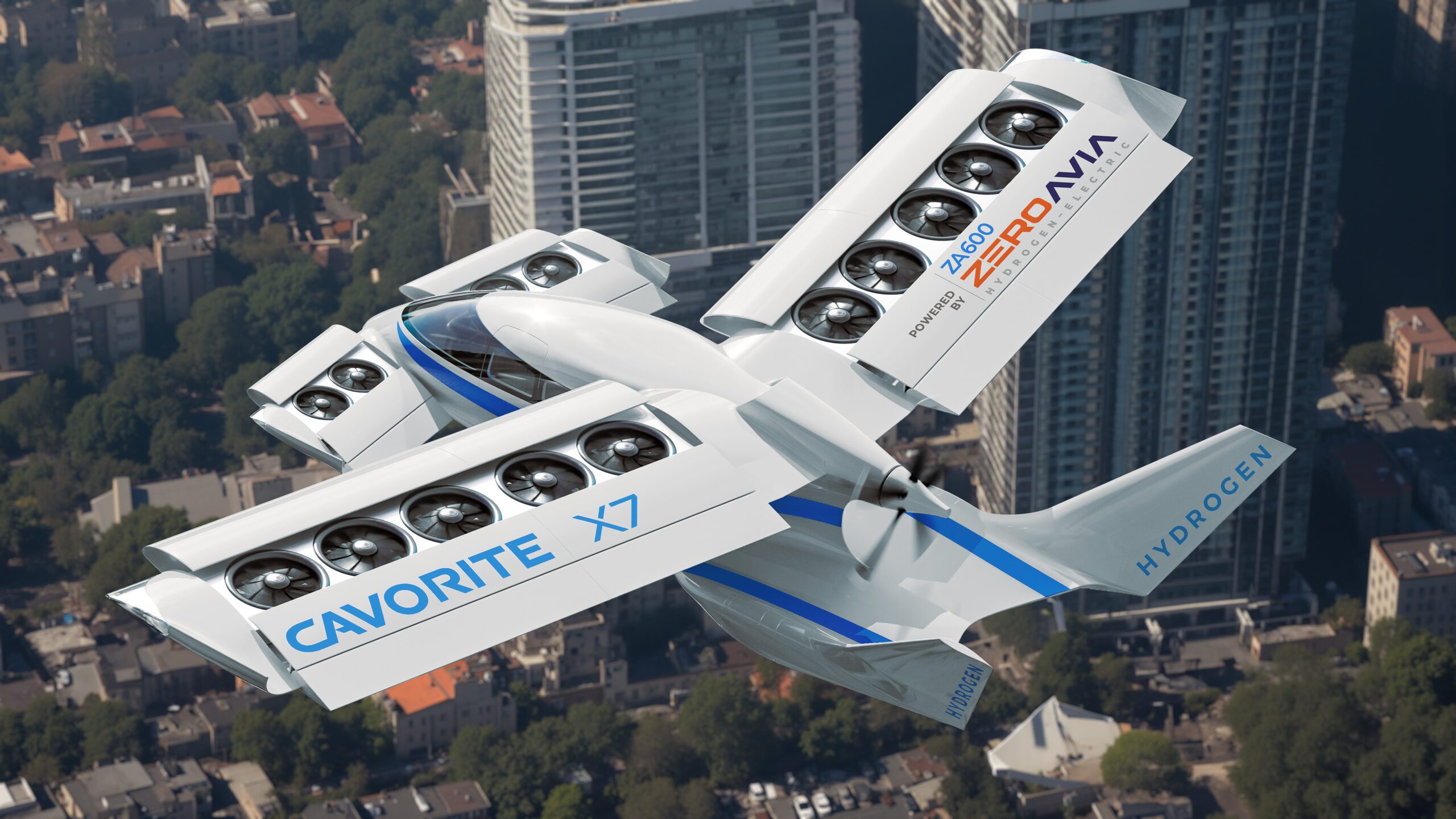
    Together, the companies will cooperate on exploring ZeroAvia’s ZA600 hydrogen-electric powertrain for Horizon Aircraft’s Cavorite X7 eVTOL.   


    The Cavorite X7’s unique fan-in-wing design incorporates 14 lift fans providing the thrust for vertical takeoff, with sliding panels which hide the fans as the aircraft transitions from hover to wing-borne flight and flies like a normal plane. For landing, it can use a normal runway, or the fans can be deployed to touchdown on a helipad, or an area the size of a tennis court. 


    Horizon Aircraft has already performed untethered flight tests of a large-scale prototype, including demonstrating hover modes and transition to wing-borne flight. The company has received backing from the U.S. Department of Defense and approvals for flight testing from the Canadian regulator.   


    As well as investigating the integration of ZeroAvia’s powertrain, the partnership will accelerate research into the necessary infrastructure and certification guidelines to unlock a zero-emission pathway for Horizon Aircraft.  

    Val Miftakhov, Founder & CEO,  ZeroAvia said: 


    “More and more eVTOL companies are looking to hydrogen-electric propulsion as the breakthrough that can extend range potential and durability of electric propulsion systems. Horizon Aircraft has developed an exciting application and performed successful prototype testing, and they are taking another leadership step in exploring hydrogen as a potential propulsion option for the Cavorite X7.” 

    Brandon Robinson, CEO and Co-founder at Horizon Aircraft, said: 


    “We are a company that continues to focus on what is best for operators of our aircraft. We have been impressed with ZeroAvia’s recent flight demonstrations of hydrogen-electric propulsion systems and the company’s traction with regulators. We are thankful for the opportunity to explore hydrogen solutions for the regional air mobility market which could develop into a viable solution to deliver clean, fast, and highly-efficient air travel.

    The planned collaboration with ZeroAvia represents an innovative move forward for Horizon Aircraft as it considers all operational and practical technologies. The company is developing strong aerospace partnerships while building momentum towards certification and commercial readiness.


    For more information about Horizon Aircraft, please visit the Company’s website or watch its innovative technology in action on the Company’s YouTube channel. 

    Subscribe to our Newsletter

    About ZeroAvia 

    ZeroAvia is leading the transition to a clean future of flight by developing electric propulsion technologies for aviation to unlock lower costs and emissions, cleaner air, reduced noise, energy independence and increased connectivity. The company is developing hydrogen-electric (fuel cell-powered) engines for existing commercial aircraft segments and also supplying hydrogen and electric propulsion component technologies for novel electric air transport applications (including battery, hybrid and fuel cell powered electric fixed-wing aircraft, novel eVTOL designs, rotorcraft and Unmanned Aerial Vehicles).  ZeroAvia has submitted its first full engine for up to 20-seat planes for certification and is working on a larger powertrain for 40–80-seat aircraft, with significant flight test and regulatory milestones achieved with the U.S. FAA and UK CAA.


    For more, please visit ZeroAvia.com, follow @ZeroAvia on Facebook, Twitter/X, Instagram, LinkedIn, and YouTube. 


    ZeroAvia Press Team

    press@zeroavia.com