Kate Barabanova, Author at ZeroAvia - Page 2 of 8

    Please enter your email to subscribe to our newsletter.


    Cancel

    Natilus Selects ZeroAvia ZA600 Hydrogen-Electric Engines for Zero-Emission Propulsion

    Kona, first of the Natilus fleet, to have option to be powered by ZeroAvia ZA600 hydrogen-electric engine for zero emission propulsion.

    Kona’s BWB design allows for increased hydrogen storage, maintaining payload capacity and range, making it an ideal solution for sustainable air cargo transportation.

    ZeroAvia’s 600kW prototype hydrogen-electric engine is already in flight testing, with certification on track for 2025.

    San Diego & Hollister, CA — May 25, 2023: Natilus, a leading innovator in designing and developing new autonomous blended-wing body (BWB) cargo aircraft, and ZeroAvia, the leader in zero-emission commercial aviation, have announced a strategic partnership to jointly develop hydrogen-electric engines for the Natilus Kona cargo aircraft. ZeroAvia’s ZA600 will be the sole hydrogen-electric propulsion source offered for the novel Kona short-haul feeder UAV, with the partnership focused on delivering zero-emission and lower cost operations.


    The Natilus Kona, with its revolutionary BWB design, offers increased volume for hydrogen storage, potentially transforming the air cargo delivery industry to one with low-cost, low carbon emissions, while also extending flight range. The partnership with ZeroAvia will leverage their expertise in hydrogen-electric powertrain technology with Natilus’ unique design to create a scalable, long-range, and zero-emission air cargo delivery solution for the entire industry.


    Natilus recently validated the performance of the BWB design with flight testing of a quarter-scale Kona prototype aircraft, following three years of extensive wind-tunnel testing, while ZeroAvia has now conducted eight test flights of its prototype ZA600, 600kW engine in a 19-seat testbed aircraft.

    Aleksey Matyushev, Co-founder and CEO of Natilus

    Aleksey Matyushev,
    Co-founder and CEO of Natilus, said:

    “Natilus has a long-term commitment to being a responsible steward of our environment, instituting practices that can protect the environment through continual improvements to save fuel and water, reduce waste, air emissions, noise, and material consumption. The Natilus-ZeroAvia partnership goes further, bringing the talents and innovations of the two companies together to deliver much needed innovation in the air cargo delivery industry and multiple solutions for our customers.”

    Val Miftakhov,
    CEO and founder of ZeroAvia, said:

    “Given Natilus’ impressive order book and corresponding technology development, working together on integrating the ZA600 as a line-fit engine for Kona can multiply the emissions and costs benefits that are already interesting cargo operators. We all depend on air cargo operators, and some communities depend on them absolutely, so improving the economics and environmental impacts of these operations while increasing service levels is a massive opportunity.”

    ZeroAvia has demonstrated a prototype of the ZA600 with world-first flight testing of a retrofitted 19-seat aircraft in flight. The company has twice held the record for demonstrating the largest hydrogen fuel cell aircraft and has struck several important agreements with airframe OEMs relevant to ZA600 – including Textron Aviation, manufacturer of the Cessna Caravan, and private aircraft manufacturer Otto Aviation.


    Natilus currently has more than $6.8 billion in order commitments, and 460+ aircraft in pre-orders, from companies including major airlines and integrators: Ameriflight, Volatus Aerospace, Flexport, Astral, Aurora International, and Dymond. The company is now working on construction of a full-scale Kona technology demonstrator, which will have a wingspan of 85 feet (26 meters).

    Subscribe to our Newsletters

    About ZeroAvia

    ZeroAvia is a leader in zero-emission aviation, focused on hydrogen-electric aviation solutions to address a variety of markets, initially targeting a 300-mile range in 9–19 seat aircraft by 2025, and up to 700-mile range in 40–80 seat aircraft by 2027. Based in the UK and USA, ZeroAvia has already secured experimental certificates for its two-prototype aircraft from the CAA and FAA, passed significant flight test milestones, secured a number of key partnerships with major aircraft OEMs and major global airlines, and is on track for commercial operations in 2025. The company’s expanding UK operations are supported by grants from UK’s Aerospace Technology Institute and Innovate UK, and ZeroAvia is part of the UK Government’s Jet Zero Council.


    For more, please visit ZeroAvia.com, follow @ZeroAvia on LinkedIn, Twitter, Instagram, Facebook and YouTube.

    Press Contact

    ZeroAvia Press Team

    press@zeroavia.com

    About Natilus

    Natilus was co-founded by Aleksey Matyushev and Anatoly Star in 2016 to expand and democratize the air cargo transport industry by designing and manufacturing a new fleet of blended wing body (BWB) autonomous freight aircraft that will increase volume by 60% and lower costs by 60%, as well as help airline customers reach their sustainability goals. Natilus aircraft use existing ground infrastructure and standard air cargo containers, to produce an innovative turnkey solution for customers.

    The Natilus family of cargo aircraft includes:

    • Kona — 3.8 ton payload (category) short-haul feeder domestic UAV
    • Alisio — 60 ton payload medium/long range UAV
    • Nordes — 100 ton payload long-range UAV

    For more, visit www.natilus.co, follow @NatilusAero on Twitter, and LinkedIn.

    Alaska Airlines and ZeroAvia developing world’s largest zero-emission aircraft

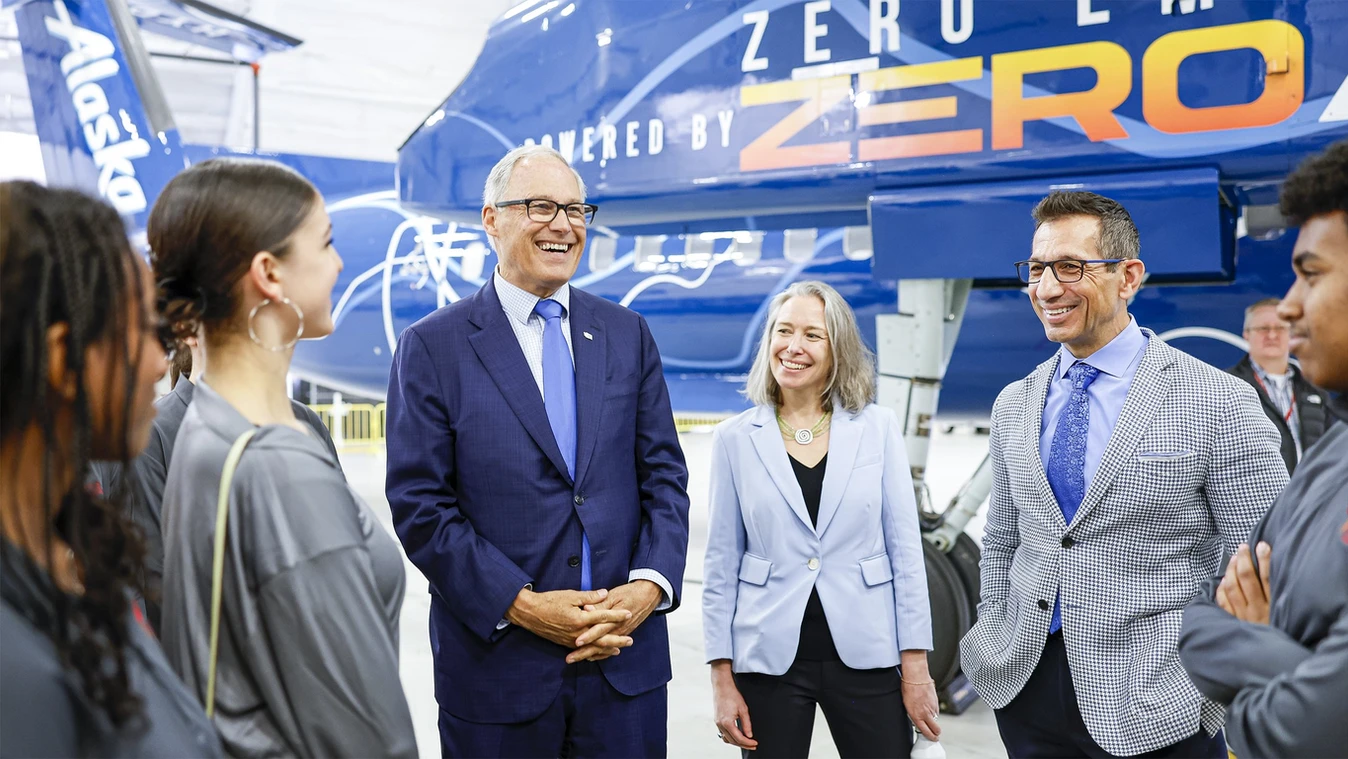
    Washington Gov. Jay Inslee, U.S. Rep. Suzan DelBene and Snohomish County Executive Dave Somers join CEOs from Alaska and ZeroAvia to launch retrofitting of aircraft

    ZeroAvia unveils HyperCore — the world’s most advanced electric motor technology for aviation, paving way for hydrogen-electric engines for Dash 8 and similar airframes

    Everett, WA – May 1, 2023: Alaska Airlines today presented a Bombardier Q400 regional turboprop to ZeroAvia that will be retrofitted with a hydrogen-electric propulsion system in an effort to expand the reach and applicability of zero emissions flight technology.


    At an event held at ZeroAvia’s Paine Field research and development site, the companies were joined by high school students from Raisbeck Aviation High School, Washington State Governor Jay Inslee, Congresswoman Suzan DelBene and Snohomish County Executive Dave Somers to participate in the formal handover of the 76-seat Q400 aircraft that will be developed by ZeroAvia, the U.S.-headquartered leader in designing and building zero-emission, hydrogen-electric aircraft propulsion systems for aircraft.


    When Alaska Airlines’ regional carrier Horizon Air retired its Q400 fleet, it reserved one of the aircraft for research and development purposes to further advance zero emissions technology for the aviation industry. The aircraft was repainted with a special livery to highlight the innovative mission of this partnership.


    ZeroAvia also debuted its breakthrough multi-megawatt modular electric motor system in a 1.8MW prototype configuration at the event – demonstrated with a propeller spin aboard the ZeroAvia’s 15-ton HyperTruck ground-test rig. Combined with higher temperature PEM fuel cells and advanced power electronics – both technologies that ZeroAvia is developing in-house – the leading-edge electric motor technology is one of three key building blocks for enabling commercially-relevant hydrogen fuel cell engines for larger aircraft.

    Ben Minicucci,
    Alaska Airlines CEO, said:

    “This is a great step forward in aviation innovation, to help create a new future of flight – right here at home. Alaska Airlines has defined a five-part journey to achieve net zero carbon emissions long-term, but we can’t get there alone. New technologies are required to make that future possible, and we’re thrilled to partner with industry leader ZeroAvia to make new zero emissions options a reality.”

    Aligning ZeroAvia’s powertrain with the Dash 8-400 airframe will represent a commercially viable zero-emission aircraft with fuel cell engine technology around five times more powerful than what has been demonstrated anywhere to date.

    Val Miftakhov,
    CEO and founder of ZeroAvia, said:

    “Demonstrating this size of aircraft in flight, powered entirely by novel propulsion, would have been unthinkable a few years ago. Launching this program puts us on track for a test flight next year, and accelerates our progress toward the future of zero-emission flight for Alaska Airlines and for the world at large.”

    ZeroAvia’s recent advancements clear the way for a potential flight of the Q400, also recognized as the Dash 8-400, but also demonstrate rapid progress toward certification of the ZA2000 propulsion system. ZeroAvia has already demonstrated a track-record of world-first flight testing. In January, ZeroAvia flew a retrofitted 19-seat aircraft with its prototype 600kW hydrogen-electric engine (ZA600). This followed the demonstration flight of a 250kW system in 2020, which at the time of flight was the world’s largest aircraft flown using a novel zero-emission power source.


    ZeroAvia’s hydrogen-electric engine uses fuel cells to generate electricity from hydrogen fuel, before using that electricity to power electric motors that turn the aircraft propellers. The certifiable ZA2000 system will include ZeroAvia’s High Temperature PEM fuel cells and liquid hydrogen fuel storage, integral to delivering the necessary energy density for commercial operations of large regional turboprops. The company has already established an engineering partnership with De Havilland of Canada, the original manufacturer of the Dash 8 family of aircraft, to enable exchange of data and expertise with the airframe.


    In 2021, Alaska Airlines launched a partnership and invested in ZeroAvia to support the development of zero emissions propulsion technology for regional aircraft. As the fifth largest U.S. airline with a large regional network, Alaska has a unique opportunity to support the development of zero-emissions propulsion technology for regional aircraft. By establishing the viability of regional-sized aircraft, both companies will help advance zero-emissions technology across the industry.

    Jay Inslee,
    Washington State Governor, said:

    “Our state has a rich history of leadership in aerospace, and we’re proud to be at the center of a technological revolution in zero-emission flight. Through innovation and partnerships like the one demonstrated today, we can help write the next chapter of aviation history right here in Washington State.”

    Suzan DelBene,
    Congresswoman (WA-01), said:

    “As we work to meet our emissions reduction goals, we must prioritize decarbonizing the commercial transportation sector. Washington state is leading the nation in developing and deploying clean energy technologies, and the Alaska Airlines—ZeroAvia partnership is a prime example. This collaboration could revolutionize the aviation industry to make our planes greener and our skies cleaner.”

    Dave Somers,
    Snohomish County Executive, said:

    “As a leader in supporting innovative industries, and as the center of aerospace manufacturing in Washington state, Snohomish County is proud to support this partnership and the development of the next generation of aviation technology, driving both job growth and environmental sustainability.”

    HyperCore Motor

    Over the last few weeks at its Hollister location in California, ZeroAvia has been testing its 1.8MW electric propulsion system configuration with the stock Dash 8-400 engine gearbox and propeller. This configuration consists of two “HyperCore” motor modules, each a high-power, high-speed 900kW permanent magnet radial flux machine which operate at 20,000 rpm, matching the typical turbine engine speeds, and providing an unprecedented 15kW/kg motor power density.


    Crucially, HyperCore’s modular design enables the technology to address applications ranging from 900kW up to 5.4MW, meeting a number of regional turbo-prop and regional jet requirements.


    The development and testing program will enable the understanding and measurement of system dynamics, calibration of physical and electrical models, and validation of thermal management systems. The company is concurrently developing world-class silicone-carbide power electronics and the matching hydrogen fuel cell systems, which convert hydrogen to electricity, powering the electric propulsion system. These systems will be brought together to create the full hydrogen-electric propulsion system, tested on the ground and then in the air.

    Subscribe to our Newsletters

    About ZeroAvia

    ZeroAvia is a leader in zero-emission aviation, focused on hydrogen-electric aviation solutions to address a variety of markets, initially targeting a 300-mile range in 9–19 seat aircraft by 2025, and up to 700-mile range in 40–80 seat aircraft by 2027. Based in the UK and USA, ZeroAvia has already secured experimental certificates for its two-prototype aircraft from the CAA and FAA, passed significant flight test milestones, secured a number of key partnerships with major aircraft OEMs and major global airlines, and is on track for commercial operations in 2025. The company’s expanding UK operations are supported by grants from UK’s Aerospace Technology Institute and Innovate UK, and ZeroAvia is part of the UK Government’s Jet Zero Council.


    For more, please visit ZeroAvia.com, follow @ZeroAvia on LinkedIn, Twitter, Instagram, Facebook and YouTube.

    Press Contact

    ZeroAvia Press Team

    press@zeroavia.com

    About Alaska Airlines

    Alaska Airlines and our regional partners serve more than 120 destinations across the United States, Belize, Canada, Costa Rica and Mexico. We strive to be the most caring airline with award-winning customer service and an industry-leading loyalty program. As a member of the oneworld alliance, and with our additional global partners, our guests can travel to more than 1,000 destinations on more than 25 airlines while earning and redeeming miles on flights to locations around the world. Learn more about Alaska at news.alaskaair.com and follow @alaskaairnews for news and stories. Alaska Airlines and Horizon Air are subsidiaries of Alaska Air Group.

    ZeroAvia and Absolut Hydrogen Partner to Develop Liquid Hydrogen Refueling Infrastructure for Aircraft Operations

    Partnership between global Liquid Hydrogen (LH2) transportation leaders Absolut Hydrogen and ZeroAvia supports a roadmap for powering up to 80 seat aircraft by 2027 and the development of robust airport infrastructure.

    Kemble, UK & Seyssinet-Pariset, France: April 17, 2023: ZeroAvia the leader in developing zero-emission solutions for commercial aviation, and Absolut Hydrogen, the leader in liquid hydrogen technologies, today announced a partnership to jointly explore liquid hydrogen (LH2) production, storage and refueling at airports.


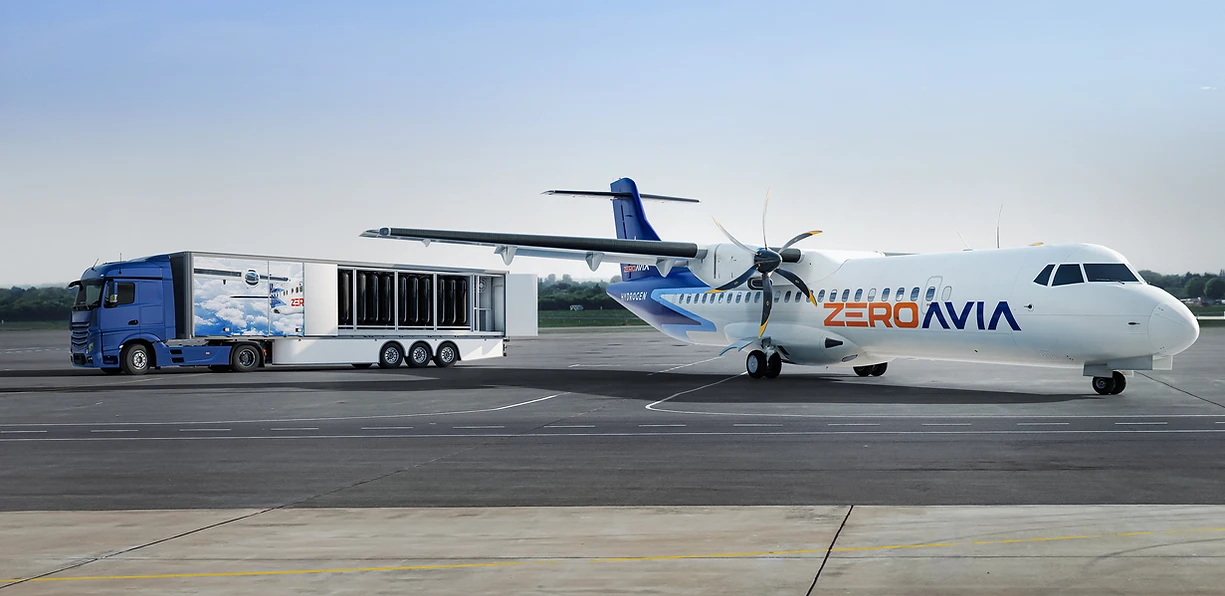
    The partners will work together to build and demonstrate liquefaction and liquid hydrogen storage in an airport context and ultimately explore the technology developments, concept of operations, safety procedures and standards for larger-scale deployment to deliver liquid hydrogen to aircraft.


    Grenoble-based Absolut Hydrogen, a subsidiary of Groupe Absolut, is a world leader in developing LH2 systems for heavy-duty mobility for aeronautical, maritime and land applications, building upon Groupe Absolut’s expertise and deep industry knowledge in complex cryogenic systems. Absolut Hydrogen is offering a full LH2 product range with an entry small scale hydrogen liquefaction system (< 50 kg/day), a 100 kg/day Turbo-Brayton based H2 liquefier and a 1T/day liquefier based on the same technology.


    Whilst ZeroAvia’s first certified powertrains for up to 19 seat aircraft will be powered by gaseous hydrogen, ZA2000—a 2–5.4 MW modular powertrain for 40–80 seat aircraft, targeting entry-in-service in 2027—will require liquid hydrogen. This will improve the volumetric energy density of the fuel, enabling support for larger aircraft, flying more passengers, on longer typical routes.


    The move further cements ZeroAvia’s advantage at developing solutions for large regional turboprops and beyond, following the recent announcement of its high-temperature fuel cell technology promising the necessary power for larger aircraft.

    Arnab Chatterjee,
    VP Infrastructure, ZeroAvia, said:

    “As well as building our in-house liquid hydrogen knowledge over the last few months, it has been critical to establish partnerships to begin building the ecosystem that can deliver liquid hydrogen fuel for larger aircraft, at larger airport locations.


    Retaining and growing aviation will bring us all closer together and keep the world small, but it depends upon this quest for zero-emission aviation being successful.”

    Jérôme Lacapère,
    CEO of Absolut Hydrogen, said:

    “This partnership with ZeroAvia is an opportunity to take a new step towards a more sustainable aviation.


    Liquid hydrogen is considered the most advantageous state for tomorrow’s aviation and heavy-duty mobility in general, and Absolut Hydrogen enables its availability thanks to its H2 liquefiers.


    I am convinced this partnership will lead to new standards on liquid hydrogen infrastructure for aircraft.”

    Subscribe to our Newsletters

    About ZeroAvia

    ZeroAvia is a leader in zero-emission aviation, focused on hydrogen-electric aviation solutions to address a variety of markets, initially targeting a 300-mile range in 9–19 seat aircraft by 2025, and up to 700-mile range in 40–80 seat aircraft by 2027. Based in the UK and USA, ZeroAvia has already secured experimental certificates for its two-prototype aircraft from the CAA and FAA, passed significant flight test milestones, secured a number of key partnerships with major aircraft OEMs and major global airlines, and is on track for commercial operations in 2025. The company’s expanding UK operations are supported by grants from UK’s Aerospace Technology Institute and Innovate UK, and ZeroAvia is part of the UK Government’s Jet Zero Council.


    For more, please visit ZeroAvia.com, follow @ZeroAvia on LinkedIn, Twitter, Instagram, Facebook and YouTube.

    Press Contact

    ZeroAvia Press Team

    press@zeroavia.com

    About Groupe Absolut

    Groupe Absolut is a worldwide leader of innovative cryogenic solutions (between -180°C and -271°C) for research and industry. Its ambition is to develop cryogenic innovations to accelerate the energy transition. Groupe Absolut’s origin is the subsidiary Absolut System, which develops ultra-complex and customized cryogenic equipment for 13 years. Recently, Groupe Absolut has created three other subsidiaries specialized in markets with high growth potential: liquid hydrogen, NewSpace earth observation and superconductivity. Absolut Hydrogen offers liquid hydrogen solutions for mobility and remote energy generation, and Absolut Sensing, which operates satellites for the detection of greenhouse gas emissions (methane). Recently, Absolut Quanta (low-energy consuming supercomputers) has been created with the objective of decarbonizing the data processing industry while improving its performances. With its international scope and its involvement in many strategic projects (France 2030, EU project call “Copernicus”…), Groupe Absolut is actively developing highly innovative solutions for environmental control, new energies (nuclear fusion, hydrogen) and quantum digital technology. Its clients include leading companies such as Airbus, Thalès, Safran, and CFS, and agencies such as CNES, ONERA, DGA, ESA and NASA.


    For more, please visit Groupe-Absolut.com, follow @GroupeAbsolut on Twitter and LinkedIn.

    About Absolut Hydrogen

    Absolut Hydrogen is a French industrial engineering SME based in Grenoble. As a subsidiary of Groupe Absolut, Absolut Hydrogen aims to make liquid hydrogen accessible for the decarbonization of the industrial and mobility sectors.


    Thanks to the know-how of Groupe Absolut, it is today the only independent entity positioned on the LH2 market with a multi-sector application expertise in cryogenics.


    For more, please visit absolut-hydrogen.com, follow @AbsolutHydrogen on Twitter and LinkedIn.

    ZeroAvia and Fortum Explore Hydrogen Airport Refueling Infrastructure Across the Nordics

    • Partnership brings zero-emission flights one step closer

    Kemble, UK – March 20, 2023: ZeroAvia today announced that it has signed a Memorandum of Understanding with the Nordic energy company Fortum to explore developing hydrogen production and refueling infrastructure at airports in the region. The companies will work together with a view to building a network of zero-emission flight routes.


    As part of the collaboration, ZeroAvia and Fortum will investigate the potential development of on-the-ground hydrogen infrastructure at relevant airports with the aim of removing emissions from both flights and the wider airport ecosystem. On-airport hydrogen infrastructure can also support complementary traffic from heavy-duty transportation, materials handling equipment and other energy consuming systems. Any future decisions on possible investments will be made at a later stage.


    Fortum is a Nordic energy company that produces and delivers clean energy, working together with industries on their decarbonization as part of the transition to net zero societies. Fortum’s core operations in the Nordics comprise efficient, CO2-free power generation as well as reliable supply of energy to private and business customers. This positions Fortum strongly to deliver the capacity required for the production of green hydrogen, a crucial ingredient for tackling aviation’s climate change impact.


    ZeroAvia is leading the race to deliver zero-emission engine technology for passenger and cargo-carrying commercial aircraft, with a target of certifying its engines first for 9–19 seat aircraft by 2025, followed by 40–80 seat aircraft by 2027.


    With a rich vein of encouraging policies and targets for the adoption of cleaner flight, Nordic countries will be among early adopters of zero-emission flights.

    Arnab Chatterjee,
    VP Infrastructure, ZeroAvia, said:

    “As hydrogen hubs, airports can help reduce climate and air quality impacts of flight and a raft of other operations. Scaling the renewable energy capacity and reducing costs pose clear, but fully surmountable, challenges to hydrogen as the fuel to power truly clean flights. Fortum is well positioned as a partner in this space, given the company’s clean energy focus and its emerging hydrogen leadership.”

    Torbjörn Wilén,
    Senior Manager, Hydrogen Business Development, Fortum, said:

    “ZeroAvia is a leader both in demonstrating clean flight, and in building the model for how hydrogen refueling will work in aviation. We believe that ZeroAvia and Fortum together can explore excellent options for clean aviation, both on the ground and in the air.”

    ZeroAvia has already demonstrated its world-first Hydrogen Airport Refueling Ecosystem (HARE) at its R&D hub in Kemble in the UK, and is working with a range of airports on projects to establish the infrastructure and operations to operate zero-emission routes as early as 2025.

    Subscribe to our Newsletters

    About ZeroAvia

    ZeroAvia is a leader in zero-emission aviation, focused on hydrogen-electric aviation solutions to address a variety of markets, initially targeting a 300-mile range in 9–19 seat aircraft by 2025, and up to 700-mile range in 40–80 seat aircraft by 2027. Based in the UK and USA, ZeroAvia has already secured experimental certificates for its two-prototype aircraft from the CAA and FAA, passed significant flight test milestones, secured a number of key partnerships with major aircraft OEMs and major global airlines, and is on track for commercial operations in 2025. The company’s expanding UK operations are supported by grants from UK’s Aerospace Technology Institute and Innovate UK, and ZeroAvia is part of the UK Government’s Jet Zero Council. 


    For more, please visit ZeroAvia.com, follow @ZeroAvia on LinkedIn, Twitter, YoutubeInstagram, Facebook

    Press Contact

    ZeroAvia Press Team

    press@zeroavia.com

    ZeroAvia High Temperature Fuel Cell Testing Shows Large Aircraft and Rotorcraft Potential for Hydrogen-Electric Propulsion

    • World-first pressurized HTPEM fuel cells achieve record-breaking power densities
    • Development unlocks large turboprop and regional jet applications, and could unlock single-aisle, zero-emission aircraft within 10 years

    Kemble & Sandwich, UK: March 9, 2023: ZeroAvia today announced that it has achieved record-breaking performance in testing of its High Temperature Proton Exchange Membrane (HTPEM) systems. Early testing of the pressurized 20kW HTPEM stack power module in ZeroAvia’s UK R&D location has demonstrated a record 2.5 kW/kg specific power at the cell level, paving the way for 3+ kW/kg system level densities in the next 24 months.


    Developing fuel cell technology for aviation is critical to enable true zero-emission commercial flight, and for energy intensive applications – like large fixed wing aircraft and rotorcraft – it is necessary to increase the temperature and pressure within fuel cell stacks in order to have a commercially viable product. Increased temperature and pressure allows for air cooling, reduces cooling drag, simplifies the system, and ultimately enables much more demanding applications.


    ZeroAvia’s team has made unprecedented deep tech breakthroughs by delivering a pressurized HTPEM system, innovative conductive coatings enabling the use of aluminum bipolar plates in highly aggressive HTPEM environments, and a novel approach to advanced membrane electrode assembly (MEA).


    ZeroAvia’s proprietary technology has been developed over the last three years as part of a concentrated effort to build an in-house portfolio of critical technologies for fuel cell aviation at ZeroAvia. Further R&D will deliver over 3kW/kg fuel cell system specific power, which enables a step change in performance relative to the traditional fuel cell technologies, making fuel cell propulsion commercially viable for large aircraft. Specifically, the HTPEM systems will be prime candidates to support ZeroAvia’s ZA2000 powertrain for 40-80 seat aircraft, as well as a range of rotorcraft and eVTOL applications. This next generation of fuel cells could also be sufficient to enable electric propulsion systems for 100+ seat single-aisle turbofan aircraft such as the Boeing 737 and Airbus A320.


    The components used in the ZeroAvia system have already been validated through third-party independent testing at several independent labs, including a leading U.S. Department of Energy national lab. The testing confirms the potential for HTPEM systems to accelerate the development of large hydrogen-electric powertrains for large aircraft.


    ZeroAvia’s recent breakthrough first flight of a 19-seat aircraft utilized Low Temperature PEM (LTPEM) fuel cell systems. Today’s LTPEM systems work well for the sub-megawatt scale of these smaller aircraft, but the lower stack core temperatures make it harder to remove heat from the larger systems. HTPEM technology eliminates a number of components from the fuel cell system and reduces cooling drag, thereby enabling commercially relevant payload and range. ZeroAvia’s HTPEM can also offer greater durability, further reducing operating costs for airlines.

    Val Miftakhov,
    CEO and founder of ZeroAvia, said:

    “The companies and geographies that seize the lead in high fuel cell temperatures and pressures will lead the industry. This progression is similar to the story of turbine engines, where ever-increasing temperatures and pressures drove higher and higher performance. Hydrogen fuel cell propulsion is the most environmental and economical alternative to existing engines, and HTPEM is the most promising route to delivering these benefits into large aircraft categories. I am confident that what we are demonstrating now is the core building block to delivering zero-emission flight for all categories of aircraft in the long-term.”

    Interest in hydrogen aviation has grown considerably in recent months. Hydrogen combustion engines are being developed to remove carbon emissions from flight, but they face the steep environmental penalty of maintaining or increasing the non-CO2 emissions impacts of aviation on the climate. These non-CO2 impacts are thought to have twice the climate impact of carbon emissions alone, according to a report from EASA. Additionally, a non-combustion, hydrogen-electric approach eliminates extreme material stresses inherent in modern combustion engines, which dramatically reduces maintenance costs, further improving the economics of the hydrogen-electric propulsion.


    ZeroAvia’s development of the HTPEM systems is in part supported by the HyFlyer II project, backed by the UK Government via the Aerospace Technology Institute (ATI).

    Subscribe to our Newsletters

    About ZeroAvia


    ZeroAvia is a leader in zero-emission aviation, focused on hydrogen-electric aviation solutions to address a variety of markets, initially targeting a 300-mile range in 5–20 seat aircraft by 2024, and up to 1000-mile range in 40–80 seat aircraft by 2026. Based in the UK and USA, ZeroAvia has already secured experimental certificates for its two-prototype aircraft from the CAA and FAA, passed significant flight test milestones, secured a number of key partnerships with major aircraft OEMs and major global airlines, and is on track for commercial operations in 2024. The company’s expanding UK operations are supported by grants from UK’s Aerospace Technology Institute and Innovate UK, and ZeroAvia is part of the UK Government’s Jet Zero Council. For more, please visit ZeroAvia.com, follow @ZeroAvia on TwitterInstagram, and LinkedIn.

    Press Contact

    press@zeroavia.com

    ZeroAvia and Birmingham Airport Plan for Zero-Emission Flights

    • Zero-emission, hydrogen-powered air travel is the aim of a new partnership between ZeroAvia and Birmingham Airport (BHX)
    • The companies have commenced a long-term partnership to make on-airfield hydrogen refuelling and regular domestic passenger flights of zero-emission aircraft a reality in the coming years

    Kemble, UK & Birmingham, UK – February 20, 2023: ZeroAvia is the leader in zero-emission technologies including hydrogen-electric-powered aircraft, such as those successfully test-flown at its base in Kemble, Gloucestershire, in January. Hydrogen-electric engines use hydrogen in fuel cells to generate electricity, which is then used to power electric motors to turn the aircraft’s propellers, with the only byproduct being water.

    ZeroAvia is currently working on bringing to market a zero-emission system capable of flying 20-seat aircraft 300 nautical miles by 2025.

    This opens up the possibility of green air travel from Birmingham to destinations like Glasgow, Aberdeen, Belfast and Dublin by the middle of this decade.

    In a move that would make zero-emission travel to Mediterranean holiday destinations a reality, ZeroAvia is aiming to get an emissions-free 80-seat aircraft flying up to 1,000 nautical miles by 2027.

    For BHX, the partnership with ZeroAvia forms an important part of its journey to become a net-zero-carbon airport by 2033, as outlined in its ‘carbon roadmap’, published in 2022.

    The airport plans to use an area near to its disused Elmdon terminal building as a potential location for hydrogen refuelling infrastructure, testing and operations.

    Tarnab Chatterjee,
    VP Infrastructure, ZeroAvia, said:
     

    “Birmingham Airport can be a central spoke in a green flight network in the UK, given that any domestic mainland destination will be reachable from the airport using our first systems in 2025. Given the commitments of the Jet Zero Strategy on domestic aviation, it is fantastic to engage with forward-thinking airports that want to be early innovators and developers to deliver the vision of bringing truly clean, quiet and pollution free flights to the UK.”

    Arnab Chatterjee – VP Infrastructure
    Simon Richards,
    Chief Finance & Sustainability Officer, Birmingham Airport, said:

    “We are thrilled to partner with ZeroAvia on creating solutions to the main challenge of our generation – protecting the future of our planet. We could, quite conceivably, see the first hydrogen-powered domestic passenger flight taking off from BHX in the UK in a few years. That’s mind-blowing.”

    Subscribe to our Newsletters


    About ZeroAvia


    ZeroAvia is a leader in zero-emission aviation, focused on hydrogen-electric aviation solutions to address a variety of markets, initially targeting a 300-mile range in 5–20 seat aircraft by 2024, and up to 1000-mile range in 40–80 seat aircraft by 2026. Based in the UK and USA, ZeroAvia has already secured experimental certificates for its two-prototype aircraft from the CAA and FAA, passed significant flight test milestones, secured a number of key partnerships with major aircraft OEMs and major global airlines, and is on track for commercial operations in 2024. The company’s expanding UK operations are supported by grants from UK’s Aerospace Technology Institute and Innovate UK, and ZeroAvia is part of the UK Government’s Jet Zero Council. For more, please visit ZeroAvia.com, follow @ZeroAvia on TwitterInstagram, and LinkedIn.


    About Birmingham Airport


    • Pre-pandemic, Birmingham Airport (BHX) served c12.5m passengers a year.

    • c35m people, more than half the population of the UK, live within a two-hour drive or train journey of BHX.

    • BHX is one of the West Midlands’ largest employers, supporting 30,900 jobs and contributing £1.5bn in GVA (gross value added) to the region’s economy. 

    • In the years to 2033, BHX plans to increase its annual passenger numbers to +18m, which will result in GVA rising to £2.1bn and jobs supported to 34,000. Click here for more.

    • Sitting at the heart of the country’s road and rail networks, BHX is the UK’s best-connected airport—and is set to become even better connected in future.

    • When the new HS2 railway is built, complete with its automated people mover linking directly to the BHX terminal, central London will be just 37 minutes away by train.

    • BHX has publicly committed to become a net-zero-carbon airport by 2033. It will do this by prioritising zero carbon airport operations with minimal use of carbon offsets.

    • BHX’s purpose is ‘Proud of every journey.’ That means everyone at BHX, and the 100 organisations operating on the airport site, taking pride in getting customers safely, punctually and comfortably from A to B.

    Press Contact

    ZeroAvia Press Team

    zeroavia@madano.com

    ZeroAvia, Shell, RHIA and Rotterdam The Hague Airport advance Plans for Hydrogen-Electric Flights by 2025

    • Zero-emission innovator, a global energy company, and Netherlands’ second city airport target green flights and decarbonising airport operations using hydrogen

    Kemble, UK & Rotterdam, Netherlands: February 7, 2023: ZeroAvia, the leader in developing zero-emission solutions for commercial aviation, today announced signing a collaboration agreement with Shell, Rotterdam The Hague Airport and Rotterdam The Hague Innovation Airport. The parties will develop a concept of operations for hydrogen in airports and demonstration flights to European destinations by the end of 2024, gearing up for commercial passenger flights by 2025.

    Following up on the cooperation commitment announced last year to launch the first hydrogen-electric commercial flight, this specific collaboration will focus on serving the first hydrogen flight from Rotterdam, including operation at the airport, developing on-the-ground infrastructure and operations to satisfactorily pilot distribution, storage, and dispensing of hydrogen for aviation, leading towards decarbonizing the whole airport ecosystem.


    Ultimately, the project targets supporting aircraft operations using gaseous hydrogen to fuel ZeroAvia’s hydrogen-electric, zero-emission ZA600 engines. For these specific demonstration flights, the parties aim to establish routes to airports in Europe within 250 nautical mile radius of Rotterdam. Last month, ZeroAvia demonstrated a first flight of a 19-seat aircraft powered by its prototype ZA600 engine.

    This project will also target the development of aviation specific standards and protocols around safety, refueling and hydrogen management, enabling rollout of the promising fuel seamlessly. The parties will work together in discussions with potential airline operators for the initial demonstration and subsequent commercial flights.

    Shell brings critical experiences and technical capabilities to the project. This is expertise related to hydrogen end-to-end supply chains and global experiences in design and operation of refueling equipment, including hydrogen. Shell invests in hydrogen production projects with the aim to develop regional and international hydrogen economies. In its decarbonization efforts, Shell collaborates with airports to develop fit-for-future infrastructure that will allow it to supply customers with sustainable aviation fuel, hydrogen and electric planes charging, so called “multi-modular” infrastructure.

    Arnab Chatterjee – VP Infrastructure
    Arnab Chatterjee,
    VP Infrastructure, ZeroAvia, said


    “Having this consortium, including Rotterdam The Hague Innovation Airport and Shell, moves the ball a significant distance down the field towards our goal line of commercial operations. Some first passengers on zero-emission flights in the world could be flying from Rotterdam. There is still a lot of work to do, but with clear milestones and targets identified, the hard work really starts now towards delivering the infrastructure and exploring the protocols and standards required.”

    Oliver Bishop, General Manager  Hydrogen at Shell said: 


     “This project and collaboration is a milestone as it enables a rapid decarbonization of a hard-to-electrify sector such as aviation. It also offers the chance to support one of the first international zero-emission passenger routes. On top of that, it allows the opportunity to road test multi-fuel and multimodal fueling operations in a live airport environment. This is a big step forward for hydrogen aviation and for Shell’s plans in this space.”

    Wilma van Dijk, CEO, Rotterdam The Hague Airport of Royal Schiphol Group, said:


    “Hydrogen is key to decarbonize aviation. This collaboration helps us demonstrate and validate new airport infrastructure requirements as well as concepts of operation. And hence accelerate and stimulate airport transformation towards Zero-Emission.”

    ZeroAvia has previously partnered with Shell for the provision of low carbon-intensity hydrogen to power some of its testing and early commercial operations in California. The multinational energy company also invested in ZeroAvia last year.
    Miranda Janse,
    CEO Rotterdam The Hague Innovation Airport, said:


    “As a foundation supported by Rotterdam The Hague airport and Municipality of Rotterdam, RHIA is always keen to drive innovation and sustainable aviation developments at RTHA together with and for a network of partners. RHIA is actively working with partners within its DutcH2 Aviation Hub program to develop hydrogen-driven flights from RTHA. This collaboration is one of the projects within the program that helps us create the open-access infrastructure required for the sector. RHIA is happy to help facilitate this specific partnership and bring the project to life, as well as creating the foundation for the partners within the community.”

    ZeroAvia’s testing of the ZA600 powertrain in flight is part of HyFlyer II, an R&D project supported in part by the UK Government’s ATI programme. The project has also seen the further development of ZeroAvia’s Hydrogen Airport Refuelling Ecosystem (HARE) demonstrator alongside project partner EMEC, and separately ZeroAvia has developed a hydrogen refuelling pipeline at Cotswold Airport.

    Subscribe to our Newsletters


    About ZeroAvia


    ZeroAvia is a leader in zero-emission aviation, focused on hydrogen-electric aviation solutions to address a variety of markets, initially targeting a 300-mile range in 5–20 seat aircraft by 2024, and up to 1000-mile range in 40–80 seat aircraft by 2026. Based in the UK and USA, ZeroAvia has already secured experimental certificates for its two-prototype aircraft from the CAA and FAA, passed significant flight test milestones, secured a number of key partnerships with major aircraft OEMs and major global airlines, and is on track for commercial operations in 2024. The company’s expanding UK operations are supported by grants from UK’s Aerospace Technology Institute and Innovate UK, and ZeroAvia is part of the UK Government’s Jet Zero Council. For more, please visit ZeroAvia.com, follow @ZeroAvia on TwitterInstagram, and LinkedIn.

    Press Contact

    ZeroAvia Press Team
    press@zeroavia.com

    ZeroAvia Flight Testing Hydrogen-Electric Powerplant

    Thanks for checking up on the progress of our Dornier 228 testing program and getting a glimpse at the future of clean aviation!

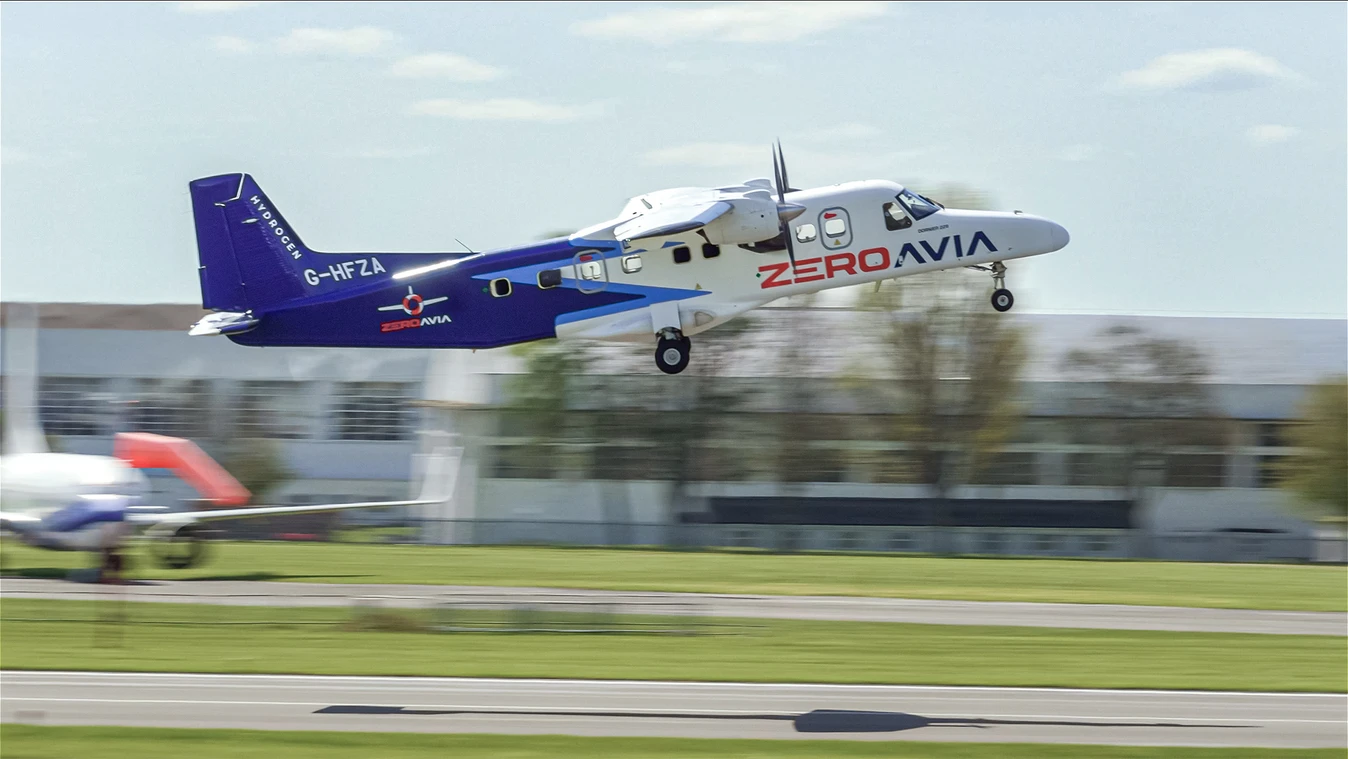
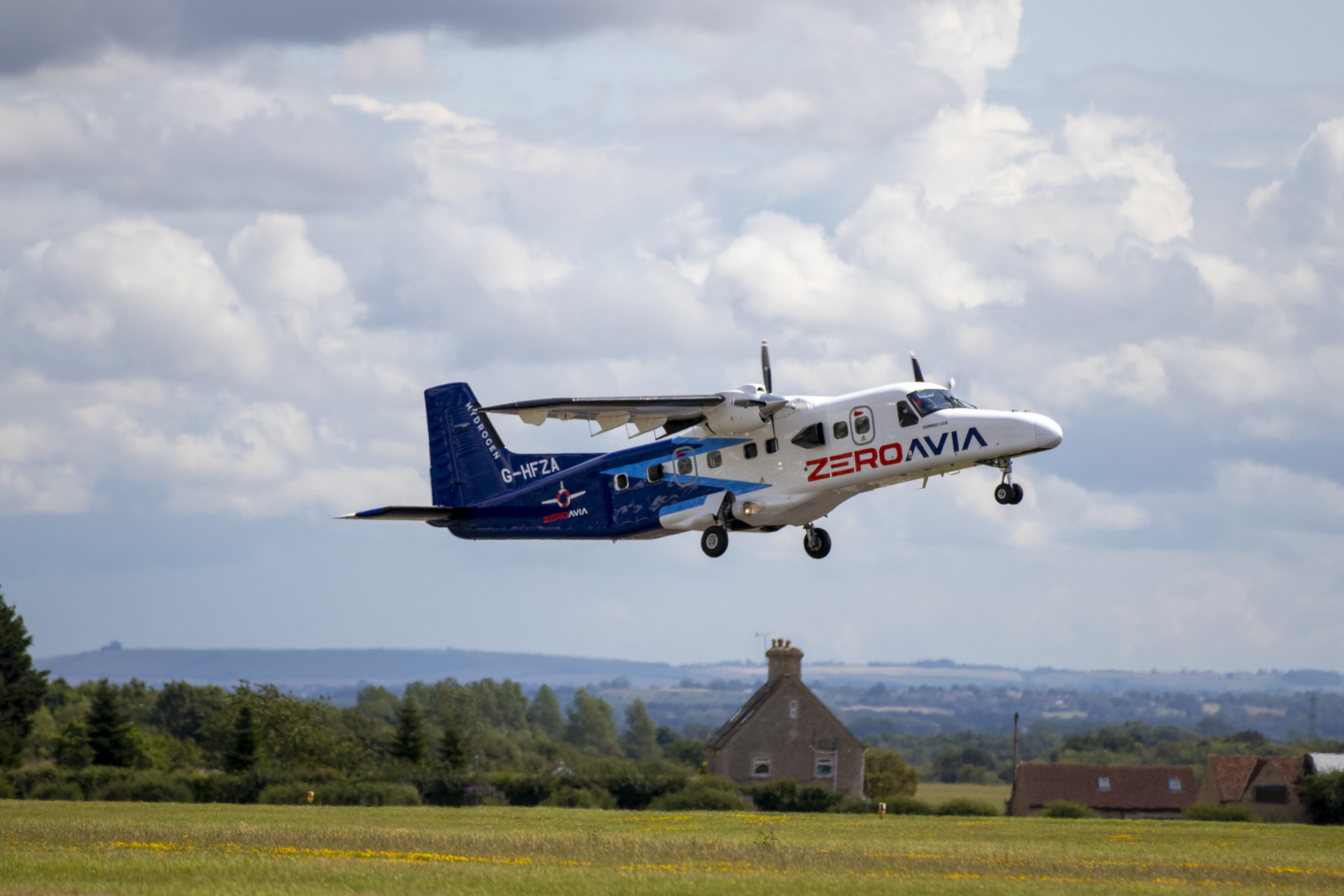
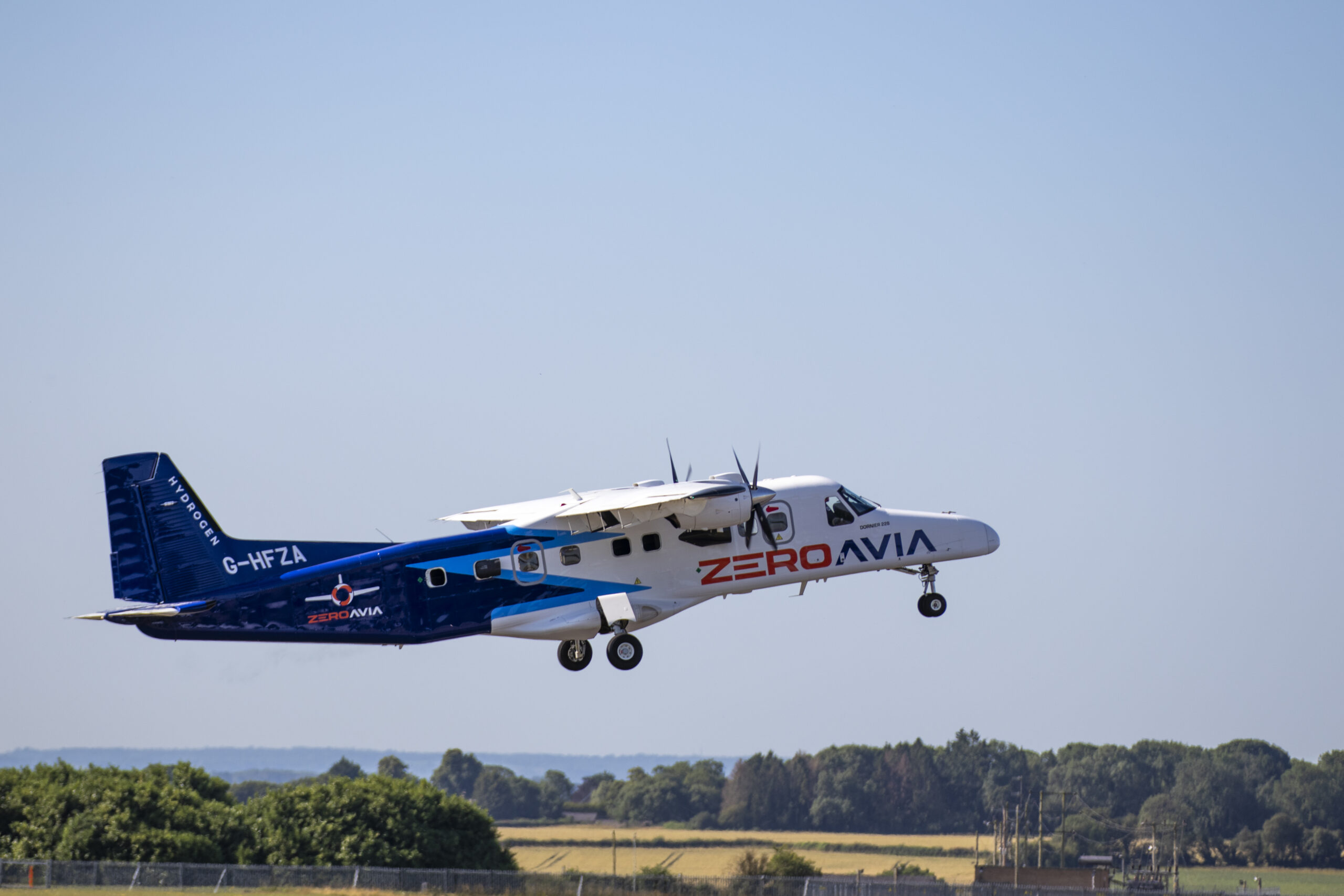
    We have retrofit our prototype ZA600 engine to power the left side propeller of our Dornier 228. The aircraft made history with a milestone first flight on January 19th 2023. The subsequent flights are all part of our bid to build understanding ahead of submitting for certification by the close of this year. ZeroAvia intends to power zero-emission commercial aircraft by 2025.


    We’ll use this page to share the latest updates from the flight test program, including photos and videos from flights, as well as behind the scenes content. Get in touch to let us know your views or pose any questions.

    Table of Contents

    April 18, 2024

    Flight 12 - The longest flight yet!

    Twelfth Flight Time!

    Another great flight test above the Cotswolds today. The longest yet at 35 minutes in duration as we build on efficiency and range. We continue to see excellent performance from our prototype hydrogen-electric system. Closer and closer to leaving home and taking a trip to another airfield.

    Keep watching as the clean future of flight comes closer into view!

    VC: Oliver Kay

    April 4, 2024

    Flight 11 - Taking Back to the Skies

    ZeroAvia resumed flight testing of the Dornier 228 testbed aircraft at Cotswold Airport on April 4th 2024. While excitement was high at resuming flight testing, the 20 minute flight test was described by the team as “unspectacular” as pilot Jon Killerby and flight test engineer James Yapp completed three circuits around the perimeter of the airfield, reflecting again the reliable performance of the hydrogen-electric propulsion system.

    With phase one flight testing complete in July last year, the team is now building up towards a first A to B flight planned for later this Spring. While the destination has not been announced, plans are crystalising around a 20-30 minute flight to a nearby airfield, before performing refueling on site using ZeroAvia’s mobile storage and distribution system, and then returning to base in Kemble.

    July 19, 2023

    Flight 10 - ZeroAvia Successfully Completes #Do228 Flight Test Campaign!

    A milestone moment in zero-emission technology flight testing! 


    We have now completed the 10th successful flight of the #Do228 testbed aircraft, marking the completion of our initial flight test campaign using the prototype ZA600. The test flight has set the groundwork for projecting future ranges using the system, teeing up the first course country flights as the next stage of testing and demonstration. 


    We have tested different areas of performance since our breakthrough world-first flight in January. The campaign has seen the aircraft fly above 5,000 feet, perform an endurance test at 23 minutes, and reach the maximum allowable speed under the Permit to Fly issued by the CAA.   


    Critically, throughout all phases of testing, the fuel cell power generation and electric propulsion system that are the core components of the novel zero-emission engine, performed at or above expectations. 


    Read more here. Plenty more flying to come as we pave the way for zero-emission aviation! Keep an eye out for future updates. 


    Pictured in the photo is the flight ops and Part145 team at ZeroAvia celebrating after the 10th Flight! 

    July 7, 2023

    Flight 9 - Welcome to the Mile Hydrogen Club!

    Welcome to the Mile Hydrogen Club! 


    A great end to the week with the successful completion of our 9th test flight of the Dornier 228 testbed in the wonderfully sunny Cotswolds. The aircraft testing our prototype ZA600 powertrain reached its highest altitude yet, ascending to 5,000 feet MSL, and flying for 20 minutes in total. 


    In the coming days we will undertake our last flight of this phase of flight testing, when we will assess the powertrain’s maximum endurance. Stay tuned for this milestone as we continue to push boundaries!


    Pictured are the aircraft taking off, in flight and two of our senior team – Head of Aircraft Integration and Testing Gabriele Teofili and CTO, Hydrogen Rudolf Coertze

    Another major milestone for ZeroAvia, with the 8th Flight of the Dornier 228 at Cotswold Airport

    May 18, 2023

    Flight 8 - And longer! And higher!

    Another major milestone for ZeroAvia, with the 8th Flight of the Dornier 228 at Cotswold Airport in Gloucestershire. ZeroAvia’s testbed aircraft soared to 4,000 feet MSL, making it the highest flying commercial-scale aircraft powered by fuel cells.


    The aircraft flew for 22 minutes, the longest duration flight yet. Fuel cell systems and the whole hydrogen-electric powertrain performing superbly well.

    May 10, 2023

    Flight 7 - Going longer!

    The Magnificent Seven! Flight 7 of the retrofitted Dornier 228. We flew for 16 minutes, making this the longest flight yet.


    The flight included two climbs. Low cloud cover kept us at lower altitude, making this a good day for flying for longer, versus higher!

    April 28, 2023

    Flight 6 - Going higher!

    Going higher! Having hit our max speed under the permit to fly during flight 5, the team were able to shift focused to flying at higher altitudes to test the system.


    During the sixth flight in this first phase of our flight testing, the Dornier reached 3,000 feet, with the hydrogen-electric powertrain performing as expected. Onwards and upwards!

    ZeroAvia's D228 Testbed Flying

    April 25, 2023

    Flight 5 - Performed as expected

    Flight five in the books! As we approach the midway point in the first phase of our flight testing programme for the retrofitted Dornier 228, we are happy to have achieved the maximum speed allowed under the permit to fly. During three loops of Cotswold Airport, test pilot Jon Killerby and flight test engineer James Yapp reached a top speed of 150 knots.


    In all five flights so far, the hydrogen-electric engine has performed as the team have expected and hoped. Over the next few weeks, we will begin to test at progressively higher altitudes. This testing all helps in our progression towards a certifiable design and the targeted entry-in-service date of 2025.

    April 13, 2023

    Flight 4 - Testing speed

    Amidst a break in the April showers, the flight test team at Kemble managed to perform a fourth test flight of the Dornier 228, completing three circuits above the Cotswold countryside.


    The aircraft reached its highest speed yet (140 kts), with the fuel cell and electric propulsion systems powering the left wing and continuing to increase the performance envelope.


    More flying planned next week and beyond!

    April 6, 2023

    Flight 3 - First hydrogen-electric only flying

    In the third flight in our testing program, we took another massive step forwards with the aircraft performing a leveled flight using only the ZA600 prototype engine. The test crew flew with zero thrust from the conventional turbine engine as the ZA600 entirely powered the testbed aircraft as it circled Cotswold Airport. The flight crew were able to perform tests to confirm the aircraft was able to fly on hydrogen-electric power with the turbine throttled back to simulate a zero thrust. This is all part of our ongoing tests of the powertrain.


    The flight consisted of three loops around the airport in Gloucestershire, UK, with a max speed of 130 knots.


    Plenty more flying to come as we test the system more as part of our path to certification by 2025. Stay tuned for further updates.

    January 19th, 2023

    First Breakthrough Flight

    ZeroAvia made aviation history with a huge step forward for the development of zero-emission flight on January 19th, 2023. The 19-seat Dornier 228 testbed aircraft took to the skies above England’s Cotswolds with the leftside propeller powered by a hydrogen-electric powertrain, making this the largest aircraft flown with hydrogen-electric propulsion at the time.


    This sets ZeroAvia well on the way to meeting the target of commercial flights using only hydrogen fuel cell power by 2025. It is a huge step towards a truly clean future for aviation.


    The future of flight is renewable hydrogen, and we’re so proud to be leading the way!

    September 30, 2022

    High Speed Taxi Testing

    Time to release the brakes!


    ZeroAvia ended September 2022 on a high, with our team witnessing the Dornier 228 aircraft accelerating down the runway, as part of our last giant step towards flight testing.


    The high speed taxiing took place at Cotswold Airport, last week. Test Pilot, Jon Killerby said: “We were able to do four rounds down the runway. We’re really happy with the handling and the performance of the fuel cells, especially. They’re generating the power we need, and were stable throughout the whole timespan we were running it.”

    September 13, 2022

    First Movements of ZeroAvia’s Dornier 228 Aircraft

    What a sight!


    All eyes were glued on the Dornier 228 as it made its first movements on the runway, with the hydrogen-electric powertrain powering the left side propeller!


    The medium power taxi testing took place early September 2022 at Cotswold Airport. Head of Aircraft Integration & Testing, Gabriele Teofili said:”The hydrogen-electric powertrain is delivering power, it’s doing what we expect, and the only thing that was not according to our expectation were a couple of drops of rain. Otherwise, we are very happy.

    June 15, 2022

    Start of the ground testing

    ZeroAvia started ground testing fully integrated flight configuration 19-seat prototype​.


    In mid-June 2022, ZeroAvia’s Dornier 228 testbed aircraft was on the verge of being the largest aircraft ever flown with a hydrogen-electric powertrain. ZeroAvia started the first outdoor ground testing of our aircraft after spending weeks completing the installation of the hydrogen-electric powertrain.


    According to Gabriele Teofili, the Head of Aircraft Integration and Testing at ZeroAvia, the commencement of the ground-test program was a day that engineers eagerly wait for.

    December 1, 2021

    First Propeller Spin

    First Propeller Spin for ZeroAvia’s Dornier 228 19-seat testbed Aircraft.


    ZeroAvia reached another milestone just before the end of 2021 with the first spin of the propeller on our Dornier 228 using electric power. The test was designed as a functional check of the fully integrated and flight-ready Electric Propulsion System aboard the testbed aircraft at Cotswold Airport in the UK. Several tests were performed, kicking off the 4-week ground test program before clearing the aircraft for flight.


    ZeroAvia’s work on the powertrain for 10-20 seat aircraft is part of the HyFlyer II project, in partnership with Aeristech and EMEC, and supported by the Aerospace Technology Institute, Innovate UK and BEIS.

    Subscribe to our Newsletters

    ZeroAvia Makes Aviation History, Flying World’s Largest Aircraft Powered with a Hydrogen-Electric Engine

    • 19-seat Dornier 228 twin-engine aircraft takes to the sky in testbed configuration for first flight as part of the HyFlyer II project
    • Milestone moves ZeroAvia forward on the way to meeting target of commercial flights using only hydrogen fuel cell power by 2025, and scaling the engine technology to larger airframes
    • Marks a significant step in addressing aviation’s climate change impact and a major innovation success for the UK Government’s Jet Zero Strategy

    Kemble, UK, January 19, 2023: Zero-emission flight took a giant step forward today with ZeroAvia flying the largest aircraft in the world to be powered by a hydrogen-electric engine. The leader in zero-emission aviation took to the skies for the maiden flight of its 19-seat Dornier 228 testbed aircraft, retrofitted with a full-size prototype hydrogen-electric powertrain on the left wing of the aircraft.

    The flight took place from the company’s R&D facility at Cotswold Airport in Gloucestershire, UK, and lasted 10 minutes. At 13.35 pm GMT this afternoon the aircraft completed taxi, take-off, a full pattern circuit, and landing. The landmark flight forms part of the HyFlyer II project, a major R&D programme backed by the UK Government’s flagship ATI Programme, which targets development of a 600kW powertrain to support 9-19 seat aircraft worldwide with zero-emission flight. 


    The twin-engine aircraft was retrofitted to incorporate ZeroAvia’s hydrogen-electric engine on its left wing, which then operated alongside a single Honeywell TPE-331 stock engine on the right. In this testing configuration, the hydrogen-electric powertrain comprises two fuel cell stacks, with lithium-ion battery packs providing peak power support during take-off and adding additional redundancy for safe testing. In this testbed configuration, hydrogen tanks and fuel cell power generation systems were housed inside the cabin. In a commercial configuration, external storage would be used and the seats restored.


    All systems performed as expected. This is the largest ZeroAvia engine tested to date, and places the company on the direct path to a certifiable configuration to be finalized and submitted for certification in 2023, with this programme also serving as key to unlocking speedy technology development for larger aircraft. ZeroAvia’s 2-5 MW powertrain programme, already underway, will scale the clean engine technology for up to 90-seat aircraft, with further expansion into narrowbody aircraft demonstrators over the next decade.

    Of note, this flight test campaign is being conducted under a full Part 21 flight permit with the UK CAA, which is a much more stringent set of requirements compared to the E-Conditions framework ZeroAvia used for its 6-seat prototype test flights in the prior years. This signifies the maturity of the company’s processes and design approaches and its readiness to proceed towards full commercial certification of its powerplants.


    ZeroAvia will now work towards its certifiable configuration in order to deliver commercial routes using the technology by 2025. The Dornier 228 will conduct a series of test flights from Kemble and later demonstration flights from other airports. Almost exactly two years ago, ZeroAvia conducted the first of more than 30 flights of a six-seat Piper Malibu aircraft using a 250kW hydrogen-electric powertrain.

    Celebrating this remarkable progress, Val Miftakhov, ZeroAvia, Founder & CEO, said:


    “This is a major moment, not just for ZeroAvia, but for the aviation industry as a whole, as it shows that true zero-emission commercial flight is only a few years away. The first flight of our 19-seat aircraft shows just how scalable our technology is and highlights the rapid progress of zero-emission propulsion. This is only the beginning – we are building the future of sustainable, zero climate impact aviation. Our approach is the best solution to accelerate clean aviation at scale. Congratulations to everyone on our team and all of our partners and stakeholders for the collective effort that brought us to this monumental day in history.”

    Val Miftakhov – Founder & CEO
    Secretary of State for Business,
    Grant Shapps, said:


    “Today’s flight is a hugely exciting vision of the future – guilt-free flying and a big step forward for zero-emission air travel. It also demonstrates how government funding for projects like these is translating into net zero growth.

    The UK is a world leader in green aviation technology, and the global shift to cleaner forms of flight represents a huge opportunity to secure growth and jobs for our country. That’s why we are backing businesses who share our ambitions, reaping the benefits of green technology and growing the thousands of new, skilled jobs that come with it.”

    This latest achievement follows ZeroAvia’s previous world-first milestones, starting with 6-seat prototype flights of a Piper M-Class airframe in 2019, and the world’s first commercial-scale 6-seater hydrogen-electric powered flight in September 2020. The 2020 prototype was a part of the HyFlyer I programme in the UK. Unlike the previous tech demonstrator programme, ZeroAvia’s 600kW engine being developed under HyFlyer II is a commercial-intent programme.

    The hydrogen-electric powertrain on board was fuelled using compressed gaseous hydrogen produced with an on-site electrolyzer. To enable hydrogen production on site, ZeroAvia and HyFlyer II partner the European Marine Energy Centre (EMEC) have delivered and operated the Hydrogen Airport Refuelling Ecosystem (HARE), a microcosm of what infrastructure will look like in terms of green hydrogen production, storage, refueling and fuel cell powered flight. The system’s electrolyzer capacity was doubled earlier this year from its initial design for the latest project.

    ZeroAvia’s HyFlyer II programme to develop its ZA-600 hydrogen-electric engine and retrofit the Dornier 228 is being delivered in partnership with EMEC and Aeristech and is supported by the UK Government through the ATI Programme and the Department for Business, Energy Industrial Strategy, Innovate UK and Aerospace Technology Institute. Val Miftakhov is also a member of the UK Government’s Jet Zero Council.

    Today’s historic first flight follows significant commercial momentum for ZeroAvia in recent months, including an engine order from American Airlines, a partnership agreement with OEM Textron Aviation and infrastructure partnerships with airports including Rotterdam, Edmonton International and AGS Airports. With 1,500 engines on pre-order, partnerships with 7 aircraft manufacturers, and a number of fuel and airport partnerships, ZeroAvia is well positioned to lead the industry’s transformation to a clean future.

    Subscribe to our Newsletters

    About ZeroAvia


    ZeroAvia is a leader in zero-emission aviation, focused on hydrogen-electric aviation solutions to address a variety of markets, initially targeting a 300-mile range in 5–20 seat aircraft by 2024, and up to 1000-mile range in 40–80 seat aircraft by 2026. Based in the UK and USA, ZeroAvia has already secured experimental certificates for its two-prototype aircraft from the CAA and FAA, passed significant flight test milestones, secured a number of key partnerships with major aircraft OEMs and major global airlines, and is on track for commercial operations in 2024. The company’s expanding UK operations are supported by grants from UK’s Aerospace Technology Institute and Innovate UK, and ZeroAvia is part of the UK Government’s Jet Zero Council. For more, please visit ZeroAvia.com, follow @ZeroAvia on TwitterInstagram, and LinkedIn.


    About the HyFlyer II Project


    The HyFlyer II project will see ZeroAvia develop a certifiable hydrogen-electric powertrain that can power airframes carrying up to 19 passengers. To do this, it will collaborate with two partners, the European Marine Energy Centre and Aeristech. The HyFlyer II project will conclude with another world’s first hydrogen-electric flight by ZeroAvia in a 19-seat aircraft, with a 300 nautical mile flight in 2023. The HyFlyer II project is part-funded by the UK Government’s Aerospace Technology Institute’s (ATI) programme, supported by the Department for Business, Energy and Industrial Strategy and Innovate UK.

    ZeroAvia Press Team:

    press@zeroavia.com

    ZeroAvia Named on the 2023 Global Cleantech 100 List of Exceptional Innovators with the Determination and Technologies to Race to Net-Zero

    Hollister, CA & Kemble, UK, January 12, 2023: ZeroAvia, the leader in developing zero-emission solutions for commercial aviation, has been named on Cleantech Group’s 2023 Global Cleantech 100. The Global Cleantech 100 is an annual list of the most innovative and promising companies that will take us from commitments to actions in our efforts to reach net zero. The Global Cleantech 100 companies are delivering sustainable solutions in these six sectors: Agriculture & Food, Enabling Technologies, Energy & Power, Materials & Chemicals, Resources & Environment, and Transportation & Logistics.
    Val Miftakhov,
    CEO and founder of ZeroAvia, said:


    “Hydrogen is key to decarbonize aviation. This collaboration helps us demonstrate and validate new airport infrastructure requirements as well as concepts of operation. And hence accelerate and stimulate airport transformation towards Zero-Emission.”

    Val Miftakhov – Founder & CEO

    The total number of nominations from the public, Cleantech Group’s expert panel, i3 research portal, awards, and Cleantech Group staff totaled 15,753 from over 93 countries. These companies were weighted and scored to create a short list of 330 companies that were reviewed by the 81 members of an expert panel. The Global Cleantech 100 Expert Panel is made up of leading investors, and corporate and industrial executives who are active in technology and innovation scouting.


    The Global Cleantech 100 program has been running since 2009. This highly anticipated annual report brings you the complete list of companies with the most promising ideas in cleantech—the ones best positioned to help us build a more digitized, de-carbonized and resource-efficient industrial future. Download the Global Cleantech 100 complimentary report.

    Richard Youngman,
    CEO Cleantech Group, said:


    “Having this consortium, including Rotterdam The Hague Innovation Airport and Shell, moves the ball a significant distance down the field towards our goal line of commercial operations. Some first passengers on zero-emission flights in the world could be flying from Rotterdam. There is still a lot of work to do, but with clear milestones and targets identified, the hard work really starts now towards delivering the infrastructure and exploring the protocols and standards required.”

    Miranda Janse,
    CEO Rotterdam The Hague Innovation Airport, said:


    “As a foundation supported by Rotterdam The Hague airport and Municipality of Rotterdam, RHIA is always keen to drive innovation and sustainable aviation developments at RTHA together with and for a network of partners. RHIA is actively working with partners within its DutcH2 Aviation Hub program to develop hydrogen-driven flights from RTHA. This collaboration is one of the projects within the program that helps us create the open-access infrastructure required for the sector. RHIA is happy to help facilitate this specific partnership and bring the project to life, as well as creating the foundation for the partners within the community.”

    These featured companies will be recognized at the upcoming Cleantech Forum North America on January 23–25 in Palm Springs, CA. Attendees will have the opportunity to connect with many of the companies on the list, along with many other rising stars.

    Subscribe to our Newsletters

    About ZeroAvia


    ZeroAvia is a leader in zero-emission aviation, focused on hydrogen-electric aviation solutions to address a variety of markets, initially targeting a 300-mile range in 5–20 seat aircraft by 2024, and up to 1000-mile range in 40–80 seat aircraft by 2026. Based in the UK and USA, ZeroAvia has already secured experimental certificates for its two-prototype aircraft from the CAA and FAA, passed significant flight test milestones, secured a number of key partnerships with major aircraft OEMs and major global airlines, and is on track for commercial operations in 2024. The company’s expanding UK operations are supported by grants from UK’s Aerospace Technology Institute and Innovate UK, and ZeroAvia is part of the UK Government’s Jet Zero Council. For more, please visit ZeroAvia.com, follow @ZeroAvia on TwitterInstagram, and LinkedIn.


    About Cleantech Group:


    Cleantech® Group provides research, consulting and events to catalyze opportunities for sustainable growth powered by innovation. At every stage from initial strategy to final deals, we bring corporate change makers, investors, governments and stakeholders from across the ecosystem the access and customized support they need to thrive in a more digitized, de-carbonized and resource-efficient future.

    Press Contact

    ZeroAvia Press Team

    press@zeroavia.com


    Cleantech Group
    Carole Jacques
    Director of Marketing
    carole.jacques@cleantech.com
    +1 347-225-6542