Dominic Weeks, Author at ZeroAvia - Page 2 of 3

    Please enter your email to subscribe to our newsletter.


    Cancel

    ZeroAvia Flexible Fuel Cell Test Shows Expanded UAV & VTOL Capabilities, Opens Up Range of New Applications 

    Market-leading fuel cell system power densities achieved at unparalleled pace using innovative additive manufacturing techniques

    Steep reductions in weight, volume and cost for aerospace applicable fuel cell systems alongside enhanced reliability

    [Everett, WA & Kemble, UK: 11th March 2025] — ZeroAvia today announced that its SuperStack Flex highly-customizable LTPEM fuel cell architecture has achieved over 1.0kW/kg specific net power at a full system level, including thermal management system, and has been successfully demonstrated in a 150kW net power configuration for a major customer.  


    The industry leading testing results have been made possible thanks to ZeroAvia’s innovative use of additive manufacturing techniques and will expand UAV / VTOL capabilities of the systems, as well as opening new applications in aerospace and other sectors.  


    Using selective laser sintering (SLS) powder-bed additive manufacturing processes, ZeroAvia has been able to perform high velocity cycles of design, build and test, and quickly combine typical parts or their functions into new monolithic structures. The key parts in the SuperStack Flex’s balance of plant – Anode, Cathode and Coolant Manifolds, thermal management, humidification and air compression systems – have been reduced from over 200 parts to less than 100, with ~50% weight and volume reductions. Fewer parts mean lighter, more compact, more reliable and less costly systems.   


    The ZeroAvia SuperStack Flex is a modular fuel cell power generation platform that can be scaled up or down between 100kW and 600kW net total continuous power applications. The lightweight, aviation optimized balance-of-plant, has been developed as a best-fit approach for many Unmanned Air Vehicles (UAV) with further potential applicability across aerospace and in marine and ground vehicles.  


    As well as its flexibility for different power requirements, the SuperStack Flex design enables separation of the core systems, meaning it can be highly versatile and efficient to integrate into different airframes, overcoming space constraints.  


    The flexibility of the SuperStack Flex system enables customers to incorporate the technology and accelerate their R&D on fuel cell powered platforms. ZeroAvia’s focus on certification of its fuel cell engines and its traction with the CAA and FAA, provides confidence to customers working towards regulatory approval of their platforms. 

    Val Miftakhov, Founder & CEO, ZeroAvia, said: 


    Our team has really knocked it out of the park and delivered some truly world-leading engineering here. We are creating stepchange aerospace fuel cell systems at a fraction of the usual development time and cost. SuperStack Flex can be customized to an aircraft OEM’s precise custom needs, power requirements and aircraft layout, so we can get them flying on fuel cells quickly, and thus improve the flight duration, lifecycle and the total cost of ownership of their aircraft.

    The breakthroughs in low temperature fuel cell technologies in the SuperStack Flex development closely follow other major milestones for ZeroAvia in early 2025: the company’s 600kW electric propulsion system (EPS) received its FAA G-1 issue paper and a first customer purchase of the standalone 600kw EPS.  

    Subscribe to our Newsletter

    About ZeroAvia 

    ZeroAvia is leading the transition to a clean future of flight by developing electric propulsion technologies for aviation to unlock lower costs and emissions, cleaner air, reduced noise, energy independence and increased connectivity. The company is developing hydrogen-electric (fuel cell-powered) engines for existing commercial aircraft segments and also supplying hydrogen and electric propulsion component technologies for novel electric air transport applications (including battery, hybrid and fuel cell powered electric fixed-wing aircraft, novel eVTOL designs, rotorcraft and Unmanned Aerial Vehicles). ZeroAvia has submitted its first full engine for up to 20-seat planes for certification and is working on a larger powertrain for 40–80-seat aircraft, with significant flight test and regulatory milestones achieved with the U.S. FAA and UK CAA.


    For more, please visit ZeroAvia.com, follow @ZeroAvia on Facebook, Twitter/X, Instagram, LinkedIn, and YouTube. 


    ZeroAvia Press Team

    press@zeroavia.com

    ZeroAvia Announces First Sale of Standalone Electric Propulsion System 

    Jetcruzer International has signed an agreement to purchase ZeroAvia’s 600kW electric propulsion system to power the next stage of its electric aircraft development

    [Everett, WA: 18th February 2025] ZeroAvia today announced that it agreed a deal for the first sale of its 600kW electric propulsion system (EPS) to Jetcruzer International for electric flight testing to hone the design of its Jetcruzer 500E. Delivery of the development unit EPS is expected this spring.  


    ZeroAvia has secured well in excess of 2,000 pre-orders for its full hydrogen-electric powertrains from commercial airlines and last year the company launched  a component offering to serve the market for novel electric air transport applications.  


    ZeroAvia’s 600kW EPS has just received an FAA G-1 issue paper outlining the basis of certification. The system comprises the company’s proprietary inverter and electric motor technology to deliver a highly efficient electric engine with exceptional fault tolerance and specific power. The 600kW EPS system comprises four ZeroAvia 200kW continuous power bidirectional inverters converting DC power to AC to supply ZeroAvia’s direct drive motor, capable of 2,200 rpm.  


    ZeroAvia has opened a 136k sq ft Propulsion Center of Excellence in Everett, WA to produce the electric propulsion systems for its own full hydrogen-electric powertrains and for aircraft OEMs like Jetcruzer.  


    Jetcruzer International is developing the Jetcruzer 500E, a six-seat hydrogen-electric aircraft, with an entry-into-service target of 2028, followed by the 1250E in 2030. ZeroAvia’s EPS system will be integrated into flight testing using a redesigned and rebuilt Jetcruzer 500 as a testbed for the new electric aircraft. Originally conceived in the 1990s as a cost-effective air transport solution, the Jetcruzer 500 achieved significant FAA certification milestones but never reached production. Jetcruzer International acquired the intellectual property in 2017 and has since been dedicated to advancing a new era of sustainable aviation. 


    The Jetcruzer 500E is set to become one of the first aircraft with a type certificate to successfully fly with an all-electric propulsion system. This collaboration with ZeroAvia underscores Jetcruzer International’s dedication to innovation and environmental responsibility. 

    Sergey Kiselev, Chief Business Officer, ZeroAvia, said: 


    It is exciting that our first sale of the 600kW EPS as a standalone unit will support a project with simultaneously a rich history and a bright future. Our commitment to deep vertical integration in development of our full powertrain technology is paying off as we have amassed a range of IP and a portfolio of valuable fuel cell and electric propulsion components that have a strong market in their own right. 

    Victor Tao, Chief Executive Officer, JetCruzer International, said:


    Sustainable aviation is the future, and we are thrilled to take a leadership role in advancing this vision. The electrification of the Jetcruzer 500E represents a bold step forward in reducing carbon emissions while maintaining the high performance and efficiency our customers expect. Partnering with ZeroAvia, a proven leader in zero-emission propulsion technology, reinforces our commitment to pioneering clean aviation solutions.” 


    “We are excited to embark on this journey with ZeroAvia, a company that has demonstrated remarkable expertise in sustainable aviation technology. Their cutting-edge electric propulsion solutions align perfectly with our vision, and we look forward to working closely with them throughout this process,” Tao added.

    As the aviation industry continues its transition toward greener solutions, the Jetcruzer 500E stands as a testament to what is possible when industry leaders come together with a shared commitment to sustainability. 


    ZeroAvia has already extensively tested  a prototype of the ZA600 hydrogen-electric engine aboard a Dornier 228 aircraft. The company has also performed advanced ground tests for the key building block technologies for the ZA2000 system for 40-80 seat aircraft, including proprietary high-temperature PEM fuel cells and electric motor designs.   


    Find out more about ZeroAvia’s Electric Propulsion System (EPS) here.

    Subscribe to our Newsletter

    About ZeroAvia 

    ZeroAvia is leading the transition to a clean future of flight by developing electric propulsion technologies for aviation to unlock lower costs and emissions, cleaner air, reduced noise, energy independence and increased connectivity. The company is developing hydrogen-electric (fuel cell-powered) engines for existing commercial aircraft segments and also supplying hydrogen and electric propulsion component technologies for novel electric air transport applications (including battery, hybrid and fuel cell powered electric fixed-wing aircraft, novel eVTOL designs, rotorcraft and Unmanned Aerial Vehicles). ZeroAvia has submitted its first full engine for up to 20-seat planes for certification and is working on a larger powertrain for 40–80-seat aircraft, with significant flight test and regulatory milestones achieved with the U.S. FAA and UK CAA.


    For more, please visit ZeroAvia.com, follow @ZeroAvia on Facebook, Twitter/X, Instagram, LinkedIn, and YouTube. 


    ZeroAvia Press Team

    press@zeroavia.com

     About Jetcruzer International 


    Jetcruzer International is a leading innovator in aviation, dedicated to advancing next-generation aircraft with cutting-edge technology. With a legacy of performance and efficiency, the company is now at the forefront of sustainable aviation, striving to redefine the future of flight. www.jetcruzer-international.com  

    ZeroAvia Invited to Join Second Round of UK CAA’s Hydrogen Sandbox Challenge 

    The Challenge is designed to prepare the aerospace industry for the adoption of hydrogen as a zero-carbon aviation fuel.

    [Kemble, UK: February 4th, 2025] ZeroAvia today announced that it has been invited to join the UK Civil Aviation Authority’s extended and expanded Hydrogen Challenge programme.  


    Working with the CAA, ZeroAvia will explore the necessary safety and regulatory requirements for commercial adoption of hydrogen as it looks towards the certification of its ZA600 hydrogen-electric powertrain for up to 20 seat aircraft. This work with the regulator includes exploring safe hydrogen fuel storage, distribution and refuelling practices at airfields and on aircraft. It complements ZeroAvia’s efforts to certify its first full hydrogen-electric engine – the ZA600 designed for up to 20 seat planes – with the CAA.  


    ZeroAvia’s participation in the first round of the Sandbox Challenge included investigating the development, design & testing of the ZA600, and furthering the operational understanding and safety requirements of hydrogen in aviation.  


    The next stage of the Hydrogen Challenge will see the development of new designs of cutting-edge aircraft that use hydrogen fuel cell power systems and remotely piloted systems to drive down carbon emissions. It will also examine changes to airport infrastructure, include new scientific research by some of Britain’s leading aeronautical institutes, and support flight trials, safety assessments, and demos.  

    Paul Harper, Director of Airworthiness and Certification, ZeroAvia said: 


    Our experiences in the first round of the Hydrogen Challenge have been extremely positive. We are working diligently towards the certification of our first full hydrogen-electric powertrain the ZA600 with the CAA, and this programme will help us prepare the wider ecosystem for flying zero-emission using hydrogen.” 

    Tim Johnson, Director of Communications, Strategy and Policy, UK Civil Aviation Authority, said: 


    “These trials keep the UK on course to be a world leader in hydrogen propulsion. We are working with some of the most innovative companies and minds to better understand this technology and how it might be introduced safely in the aerospace sector. In doing so, it offers the potential to enable a more sustainable aerospace system and support UK economic growth.”

    The news of ZeroAvia’s inclusion in the CAA programme coincides with another regulatory development, with the company receiving a G-1 issue paper for its 600kW electric propulsion system from the FAA in the U.S.   


    ZeroAvia has already extensively tested a prototype of the ZA600 hydrogen-electric engine aboard a Dornier 228 aircraft at its UK base. The company has an engineering partnership with Textron Aviation as it looks to secure a supplemental type certificate for the Cessna Grand Caravan as the launch airframe for the ZA600.    


    ZeroAvia has also performed advanced ground tests in the US and UK for the key building block technologies for the ZA2000 system, including cryogenic tanks or LH2 and proprietary high-temperature PEM fuel cell and electric propulsion systems. The ZA2000 will support up to 80 seat regional turboprop aircraft such as the ATR 72 and the Dash 8-400.   

    Subscribe to our Newsletter

    About ZeroAvia 

    ZeroAvia is leading the transition to a clean future of flight by developing electric propulsion technologies for aviation to unlock lower costs and emissions, cleaner air, reduced noise, energy independence and increased connectivity. The company is developing hydrogen-electric (fuel cell-powered) engines for existing commercial aircraft segments and also supplying hydrogen and electric propulsion component technologies for novel electric air transport applications (including battery, hybrid and fuel cell powered electric fixed-wing aircraft, novel eVTOL designs, rotorcraft and Unmanned Aerial Vehicles). ZeroAvia has submitted its first full engine for up to 20-seat planes for certification and is working on a larger powertrain for 40–80-seat aircraft, with significant flight test and regulatory milestones achieved with the U.S. FAA and UK CAA.


    For more, please visit ZeroAvia.com, follow @ZeroAvia on Facebook, Twitter/X, Instagram, LinkedIn, and YouTube. 


    ZeroAvia Press Team

    press@zeroavia.com

    ZeroAvia Receives FAA G-1 for 600kW Electric Propulsion System 

    Issue paper confirms basis of certification and provides clear pathway to certification of the company’s first commercial product

    [Everett, WA: February 3rd, 2025] ZeroAvia today announced that it has reached consensus on the Certification Basis relating to its 600kW electric propulsion system (EPS) with the Federal Aviation Administration (FAA), having received a G-1 Issue Paper (stage 2) and formally confirmed agreement with its contents. 


    The G-1 represents a key milestone on the journey towards final certification of the company’s EPS with the U.S. regulator, and also on its path to certifying its first full hydrogen-electric powertrain (of which the EPS is a core system) with the UK Civil Aviation Authority. The issue paper designates the applicable airworthiness regulations specific for ZeroAvia’s EPS, allowing the company to validate its design requirements.  


    ZeroAvia’s 600kW EPS combines the company’s proprietary inverter and electric motor technology to deliver a highly efficient electric engine with exceptional fault tolerance and specific power. The 600kW EPS system comprises four ZeroAvia 200kW continuous power bidirectional inverters converting DC power to AC to supply ZeroAvia’s direct drive motor, capable of 2,200 rpm. Potential applications for the 600kW EPS include battery, hybrid and fuel cell electric fixed-wing aircraft, rotorcraft and Unmanned Aerial Vehicles.  


    The 600kW system was designed as part of ZeroAvia’s wider ZA600 hydrogen-electric powertrain, designed for up to 20 seat commercial aircraft. By advancing the aerospace applicability and performance of power electronics and electric motors, the company is progressing discussions to supply the electric propulsion system separately to other clean aviation innovators. Last year ZeroAvia opened a 136k sq ft Propulsion Center of Excellence in Everett, WA to produce these electric propulsion systems.   


    The electric propulsion system is one part of the company’s deep portfolio of fuel cell, power electronics and electric motor technology developed thanks to a strong commitment to vertical integration, and ZeroAvia launched a component offering to serve the market for novel electric air transport applications in May 2024. 

    Val Miftakhov, Founder & CEO, ZeroAvia said: 


    “While hydrogen-electric is the future for the majority of commercial routes in existence today, advances in electric propulsion technology and novel aircraft design are opening up an exciting range of new shorter range, electric air mobility applications. Certifying and selling our 600kW electric propulsion system helps ZeroAvia expand our addressable market and increase our impact in pursuit of a clean future of flight.”


    “With nearly 3000 orders for our full powertrains and components, achieving a first certification will be a monumental achievement for our team and for the aviation industry, unlocking clean, efficient and affordable air transport all over the world.” 

    ZeroAvia has already extensively tested a prototype of the ZA600 hydrogen-electric engine aboard a Dornier 228 aircraft at its UK base. The company has an engineering partnership with Textron Aviation as it looks to secure a supplemental type certificate for the Cessna Grand Caravan as the launch airframe for the ZA600.    


    ZeroAvia has also performed advanced ground tests in the US and UK for the key building block technologies for the ZA2000 system, including cryogenic tanks or LH2 and proprietary high-temperature PEM fuel cell and electric propulsion systems. The ZA2000 will support up to 80 seat regional turboprop aircraft such as the ATR 72 and the Dash 8-400.   

    Subscribe to our Newsletter

    About ZeroAvia 


    ZeroAvia is leading the transition to a clean future of flight by developing electric propulsion technologies for aviation to unlock lower costs and emissions, cleaner air, reduced noise, energy independence and increased connectivity. The company is developing hydrogen-electric (fuel cell-powered) engines for existing commercial aircraft segments and also supplying hydrogen and electric propulsion component technologies for novel electric air transport applications (including battery, hybrid and fuel cell powered electric fixed-wing aircraft, novel eVTOL designs, rotorcraft and Unmanned Aerial Vehicles). ZeroAvia has submitted its first full engine for up to 20-seat planes for certification and is working on a larger powertrain for 40–80-seat aircraft, with significant flight test and regulatory milestones achieved with the U.S. FAA and UK CAA.


    For more, please visit ZeroAvia.com, follow @ZeroAvia on Facebook, Twitter/X, Instagram, LinkedIn, and YouTube. 


    ZeroAvia Press Team

    press@zeroavia.com

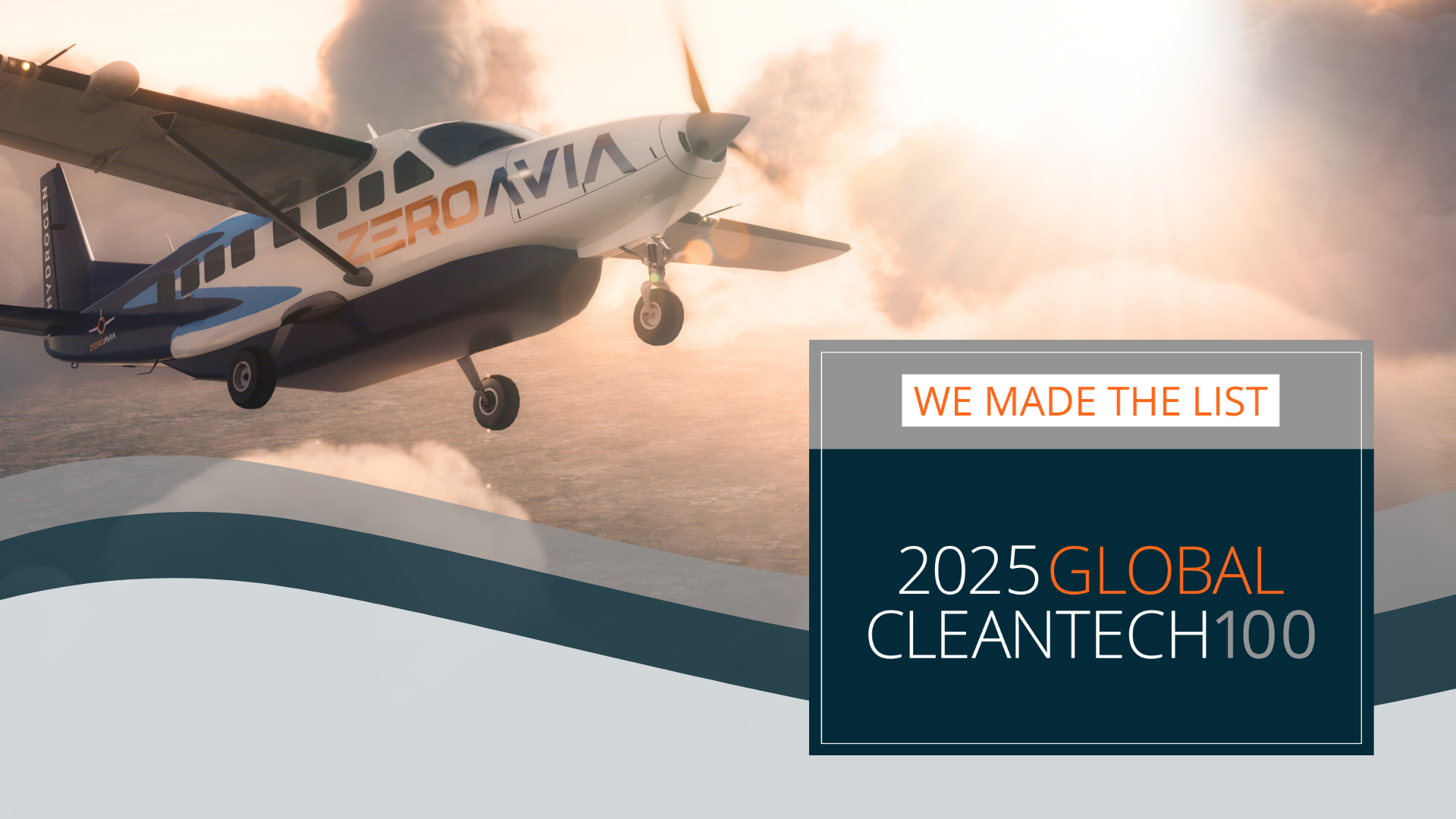
    ZeroAvia Named on the 2025 Global Cleantech 100  

    [Everett, WA; January 15, 2025]ZeroAvia, a leader in developing zero-emission propulsion for aviation, has been named on Cleantech Groups 2025 Global Cleantech 100. This annual list, now in its 16th year, showcases the most promising private cleantech companies making significant contributions to sustainable innovation.


    The complimentary report will introduce you to the innovators advancing groundbreaking technologies and business models to enable us to act on the ever-increasing climate and environmental crisis.


    The cleantech theme is poised for pivotal milestones in 2025 as market forces intensify and innovation accelerates. Continuing trends from 2024, including policy uncertainty, groundbreaking first-of-a-kind (FOAK) projects, and the surging demand for climate adaptation technologies, will emphasize the importance of product and project economics.


    Companies that capitalize on organic demand—such as the growing needs of data centers—and prove their technologies in real-world environments without relying on favorable policy support, will find themselves in the best position to succeed. Economic viability will be the defining metric of success in 2025.

    Richard Youngman, CEO of Cleantech Group said: 

    “2025 will be remembered as a transformative year for cleantech. The bar has gone up for what kind of level of potential novelty, uniqueness, and cost improvements might be attractive,”

    “The Global Cleantech 100 highlights innovators who are building the foundation for a sustainable and economically viable future.”

    Val Miftakhov, CEO of ZeroAvia said: 


    “Repeat recognition of ZeroAvia in the Cleantech 100 list shows our continued progress on groundbreaking R&D and in bringing clean flight closer and closer to market. We are working hard to deliver world-first zero-emission flight technology with regulators, while also developing the building block technologies that will scale electrification for larger aircraft and longer journeys.”

    Featured companies will be recognized at the Cleantech Forum North America, taking place January 27-29 in San Diego, CA. This event offers participants the opportunity to connect with many of the innovators on the list, along with many other rising stars. The Forum will showcase the latest trends, groundbreaking technologies, and foster collaboration within the cleantech community.


    The  Global Cleantech 100 program has been running since 2009, the last 12 years with the support of Chubb, the world’s largest property and casualty insurance company.

    Subscribe to our Newsletter

    About ZeroAvia 


    ZeroAvia is leading the transition to a clean future of flight by developing electric propulsion technologies for aviation to unlock lower costs and emissions, cleaner air, reduced noise, energy independence and increased connectivity. The company is developing hydrogen-electric (fuel cell-powered) engines for existing commercial aircraft segments and also supplying hydrogen and electric propulsion component technologies for novel electric air transport applications.  


    ZeroAvia has submitted its first full engine for up to 20-seat planes for certification and is working on a larger powertrain for 40–80-seat aircraft, with significant flight test and regulatory milestones achieved with the U.S. FAA and UK CAA.


    For more, please visit ZeroAvia.com, follow @ZeroAvia on Facebook, Twitter/X, Instagram, LinkedIn, and YouTube. 

    ZeroAvia Press Team

    press@zeroavia.com

    About Cleantech Group

    Cleantech® Group is a research-driven company that helps corporates, public sector, investors and others, identify, assess, and engage with the innovative solutions and opportunities that are related to the world’s massive, and growing, environmental and climate challenges. Our insights and expertise are delivered to clients all over the world through our Research, Consulting, and Events. We have been the leading authority on global cleantech innovation since 2002.

    Media Contacts:


    Carole Jacques   
    Director of Marketing  
    Cleantech Group   
    Email: carole.jacques@cleantech.com   
    Phone: +1 347-225-6542   

    ZeroAvia and PowerCell to Collaborate on Next Gen Fuel Cell Development

    Partners to explore co-development of higher temperature fuel cell technologies for aerospace applications and beyond

    [Kemble, UK and Everett, WA, USA: October 29, 2024] — ZeroAvia today announced that it has signed a new Memorandum of Understanding (MOU) with PowerCell Group to collaborate on next generation fuel cell technologies. Joint R&D will focus on intermediate and high temperature fuel cells which will open up more energy intensive applications such as large fixed-wing aircraft and rotorcraft.


    The two companies have been working together for the last few years, with PowerCell fuel cell stacks forming part of the prototype ZeroAvia powertrains that have powered both of the breakthrough fuel cell flight demonstrators flown by ZeroAvia.


    ZeroAvia is designing a bespoke multi-stack balance-of-plant architecture using PowerCell’s low temperature proton exchange membrane (LT-PEM) stacks applicable to aviation applications. As such, the Swedish fuel cell manufacturer is a key supplier for ZeroAvia’s first 600kW powertrain (ZA600) designed for up to 20 seat aircraft.


    ZeroAvia’s high temperature PEM fuel cell (HT-PEM) stacks – part of the roadmap to delivery of ZA2000 powertrain for 40-80 seat aircraft and a key part of the company’s component offering to other clean flight innovators – are already demonstrating industry record power density in excess of 2.5 kW/kg at the cell level, with a clear pathway to reaching 3+ kW/kg at the system level in the coming months.


    Increasing the operating temperature of fuel cell systems can allow for a reduction in cooling and humidification required, simplifying the architecture and improving the amount of power for a given unit of weight.   


    The collaboration will leverage PowerCell’s long experience industrializing hydrogen-electric technologies to push advanced fuel cells solutions to high TRL levels. For ZeroAvia, it will provide the opportunity to exploit its technology in different sectors, while retaining its core focus on aerospace.

    Val Miftakhov, Founder and CEO, ZeroAvia said: 


    “In PowerCell, we have found a likeminded and collaborative partner over the last few years, with a shared passion for advancing hydrogen fuel cell technologies for more power-hungry aircraft. Working together we can deliver change in this industry faster, as well as using these extreme use cases to advance the capabilities of solutions for myriad other transport and non-transport sectors.”

    Richard Berkling, CEO PowerCell Group, said: 


    “We’re confident that the first hydrogen-electric aircraft will be flying commercially in the upcoming years. When that happens, it will have a snowball effect as the environmental and operating cost benefits become clear to airlines and their passengers. For PowerCell, this is a key future market, and we are delighted to be deepening our partnership with the leader in this space to develop solutions to enable more clean flights, removing more emissions.”

    ZeroAvia has already extensively tested a prototype of its first engine (ZA600) aboard a Dornier 228 aircraft at its UK base and submitted its certification application for the ZA600 at the end of last year. The company has also performed advanced ground tests in the US and UK for the key building block technologies for the ZA2000 system, including cryogenic tanks or LH2 and proprietary high-temperature PEM fuel cell and electric propulsion systems. ZA2000 will support up to 80 seat regional turboprop aircraft such as the ATR72 or the Dash 8 400. 

    Subscribe to our Newsletter

    About ZeroAvia 


    ZeroAvia is working to deliver the clean future of flight for the entirety of aviation by enabling electric propulsion. With a primary focus on developing hydrogen-electric (fuel cell-powered) engines, ZeroAvia has submitted its first powertrain for up to 20 seat planes for certification and is working on a larger powertrain for 40–80 seat aircraft. Founded in California and now with thriving teams in Everett, WA and the United Kingdom, ZeroAvia has secured experimental certificates to test its engines in three separate testbed aircraft with the FAA and CAA and passed significant flight test milestones. The company has signed a number of key engineering partnerships with major aircraft OEMs and has nearly 2,000 pre-orders for engines and its component systems from a number of the major global airlines, operators, and OEMs with future revenue potential over $10bn. For more, please visit ZeroAvia.com, follow @ZeroAvia on Facebook, Twitter/X, Instagram, LinkedIn, and YouTube. 

    ZeroAvia Press Team
    press@zeroavia.com

    About PowerCell


    PowerCell is a world leader in hydrogen electric solutions with unique fuel cell stacks and systems. With decades of experience, we use our expertise to accelerate the transition to an emission-free, more sustainable world. We target industries such as aviation, marine, off-road, on-road and stationary power generation. With our cutting-edge products we help our customers to reach net zero emissions already today.


    We are headquartered in Gothenburg, Sweden with sales globally. PowerCell is listed on Nasdaq Stockholm.


    To read more about our products and services, visit powercellgroup.com.

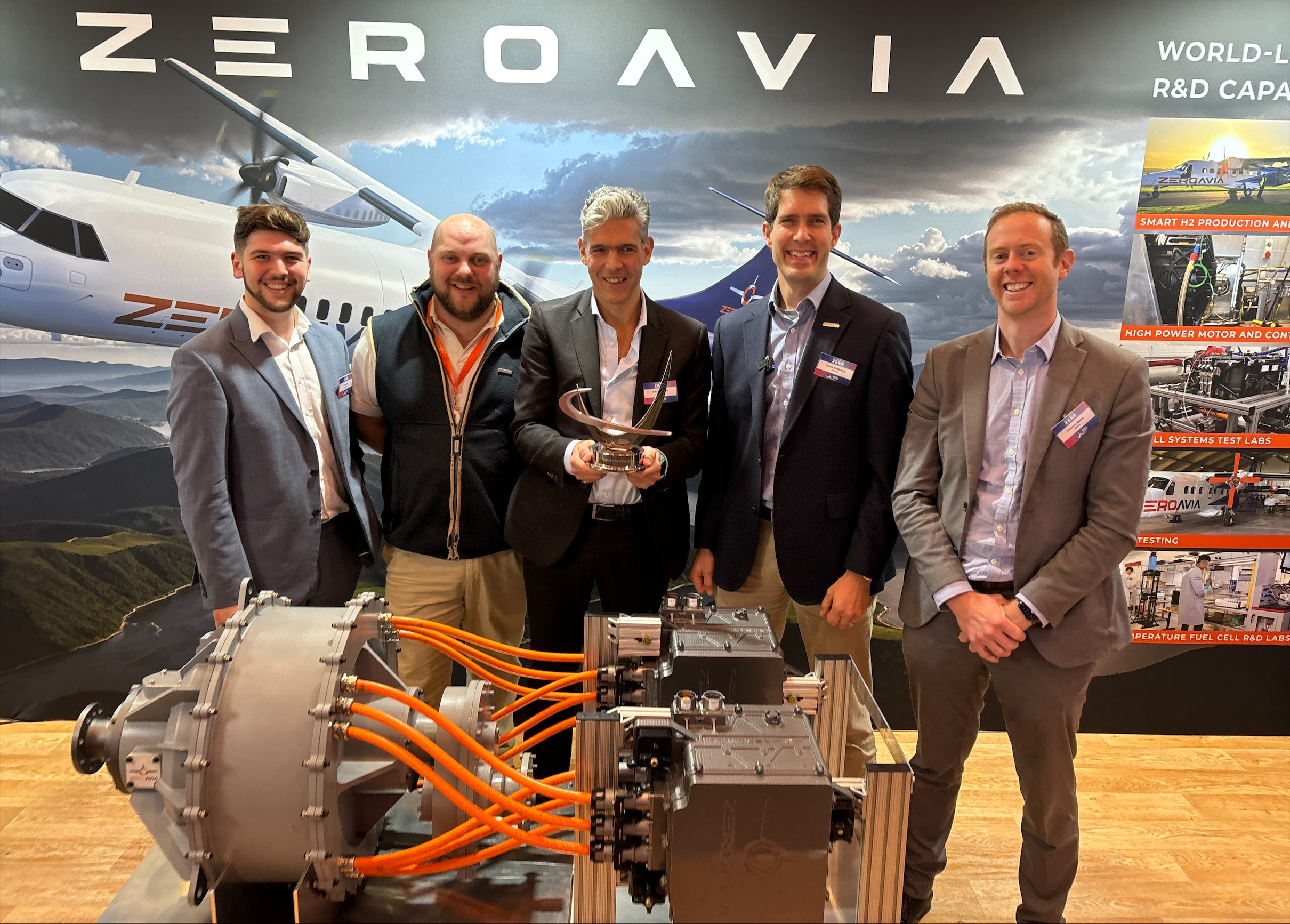
    ZeroAvia Receives ATI’s 2024 Project of The Year Award 

    Aerospace Technology Institute (ATI) awards ZeroAvia its Project of the Year Award 2024.

    The HyFlyer II project delivered the revolutionary first flight of a 19-seat aircraft using hydrogen-electric power and helped ZeroAvia advance its first engine up to formal certification application

    [Kemble, UK and Everett, WA: October 10th 2024] ZeroAvia today announced that its HyFlyer II project has been chosen as Project of the Year 2024 by the UK’s Aerospace Technology Institute (ATI). The award celebrates projects funded through the ATI programme that have reached a significant milestone or concluded within the last year.  


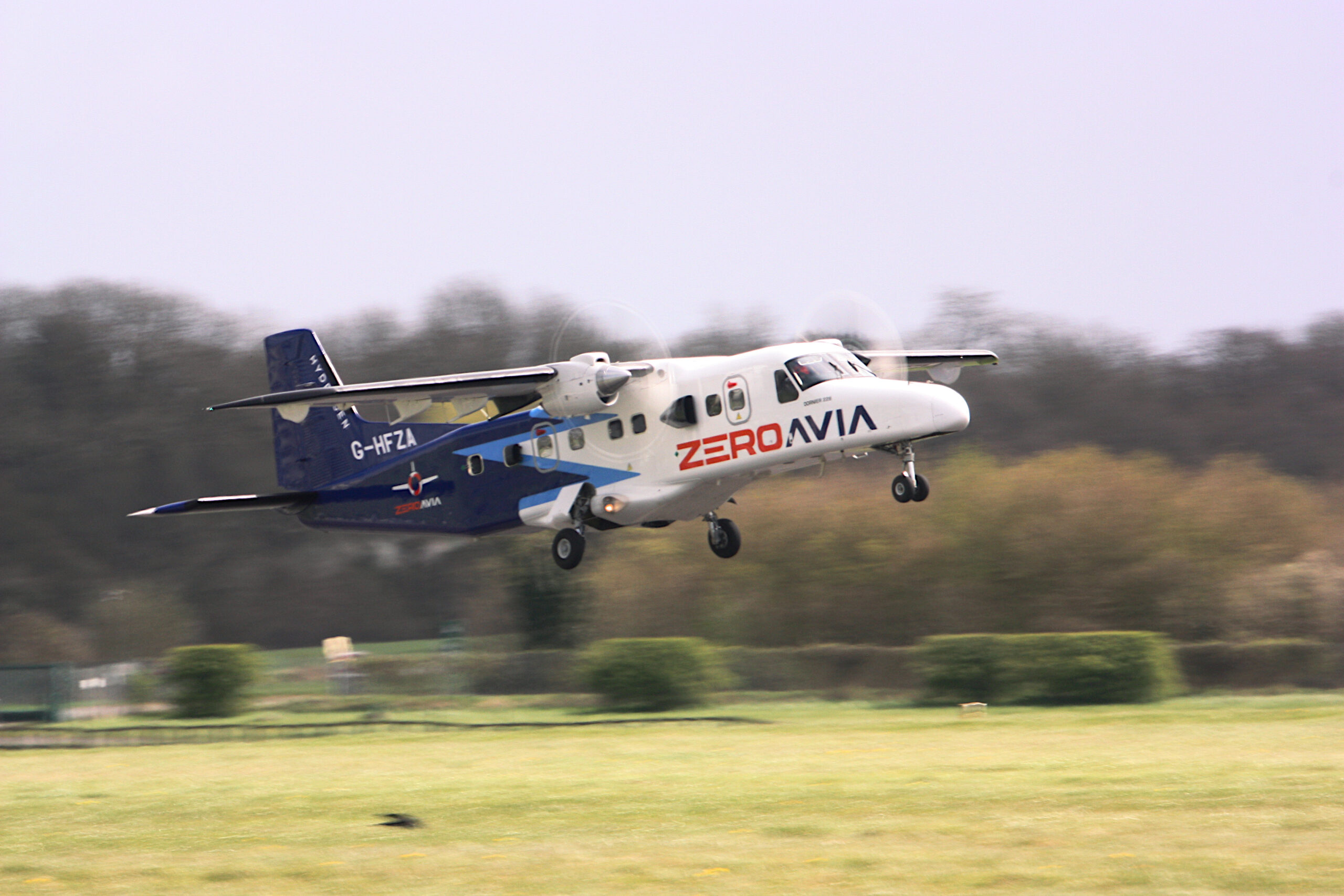
    The HyFlyer II programme, which ran from December 2020 to November 2023, has created hundreds of jobs, large inward investment and world-first breakthroughs. In Kemble, UK, January, 2023, ZeroAvia showcased the first flight of a retrofitted 19-seater twin-engine Do228 hydrogen-electric testbed.  


    The flight testing and system development as part of HyFlyer II has been critical in designing and testing fuel cell and electrical-propulsion systems, establishing greater confidence in the potential for zero-emission flights this decade and leading to what could be the world’s first certified hydrogen-electric engine for commercial aircraft. ZeroAvia has already submitted its application to certify the ZA600, 600kW hydrogen-electric powertrain for up to 20 seat aircraft to the CAA.


    The project also involved the development of novel high-temperature proton exchange membrane (HTPEM) fuel cells for aviation, exhibiting technology readiness for scaling hydrogen-electric technology for large aircraft. ZeroAvia sees HTPEM fuel cell power generation as key to developing zero-emission propulsion systems for aircraft larger than 20-seats, and the technology is integral to the company’s ZA2000 2-5.4 MW engine for 40-80 seat planes. Hydrogen-electric engines use hydrogen in fuel cells to generate electricity, which is then used to power electric motors to turn the aircraft’s propellers – the only emission is water. 


    ZeroAvia’s presence in the UK continues to grow with expansion of its operations, leading testing capabilities, including back-to-back electric propulsion rigs and fuel cell test labs, flight test platforms and hydrogen production at airport as well as associated refuelling infrastructure. 

    HyFlyer II has positioned ZeroAvia well to unlock the market for large regional turboprops, regional jets and, ultimately, the narrow-bodied aircraft segment, as well as supporting the growth of the UK supply chain, hydrogen economy and advancing the pathway for manufacturing. ZeroAvia has also launched a component line to support other electric aviation innovators based on the development for its full powertrains, further broadening the market for the technology. 

    Gabriele Teofili, Managing Director, ZeroAvia, said: 


    “This award provides a great opportunity for our team to pull their heads up for a little moment from the hard work we are doing on certification and reflect on an historic achievement with this project. The hard work continues towards certification and advancing the core technologies to support larger platforms. I would like to thank the ATI, the Department for Business and Trade and Innovate UK for their support with the project.”  

    Gary Elliott, Chief Executive, ATI, said: 


    With the project of the year we are looking for projects that have challenged conventional wisdom, taken risks and provided valuable lessons to support our journey towards net zero. I would like to congratulate ZeroAvia for an exceptional project and to wish the business continued success and growth in the UK. 

    As part of the HyFlyer II  project, ZeroAvia collaborated with two partners, the European Marine Energy Centre and Aeristech. The ATI  Programme is delivered in partnership with the Department for Business and Trade and Innovate UK, and in partnership with industry.   

    Subscribe to our Newsletter

    About ZeroAvia 


    ZeroAvia is working to deliver the clean future of flight for the entirety of aviation by enabling electric propulsion. With a primary focus on developing hydrogen-electric (fuel cell-powered) engines, ZeroAvia has submitted its first powertrain for up to 20 seat planes for certification and is working on a larger powertrain for 40–80 seat aircraft. Founded in California and now with thriving teams in Everett, WA and the United Kingdom, ZeroAvia has secured experimental certificates to test its engines in three separate testbed aircraft with the FAA and CAA and passed significant flight test milestones. The company has signed a number of key engineering partnerships with major aircraft OEMs and has nearly 2,000 pre-orders for engines and its component systems from a number of the major global airlines, operators, and OEMs with future revenue potential over $10bn. For more, please visit ZeroAvia.com, follow @ZeroAvia on Facebook, Twitter/X, Instagram, LinkedIn, and YouTube. 

    ZeroAvia Press Team

    press@zeroavia.com

    ZeroAvia Completes $150m Series C Financing 

    Scottish National Investment Bank joins financing round alongside American Airlines, IAG and ITOCHU Corporation

    Financing accelerates progress towards certification of first powertrain and supports sale of in-house components to other electrified aviation innovators

    [Hollister, CA: September 12th 2024] ZeroAvia today announced that it has extended its Series C financing to a total of $150m, with a £20m investment from Scottish National Investment Bank (“the Bank”) coming alongside recent investments from American Airlines, International Airlines Group (IAG) and ITOCHU Corporation.  


    The round was co-led by Airbus, Barclays Sustainable Impact Capital and NEOM Investment Fund (NIF), with UK Infrastructure Bank joining as a cornerstone-level investor, and with strong support from existing shareholders including Breakthrough Energy Ventures, Horizons Ventures, Ecosystem Integrity Fund, Summa Equity, Alaska Airlines, Amazon’s Climate Pledge Fund and AP Ventures 


    This is the Bank’s first investment in hydrogen-based technology and the sustainable aviation sector and will bolster the burgeoning aerospace supply chain in Scotland as ZeroAvia looks to create a manufacturing facility in the country. 


    ZeroAvia has already extensively flight tested a prototype of its first ZA600-engine aboard a Dornier 228 aircraft at its UK base and the application for certification is underway with the CAA. The company has also performed advanced ground tests in the US and UK for the key building block technologies for the ZA2000 system, including cryogenic tanks for LH2 and proprietary high-temperature PEM fuel cell and electric propulsion systems. ZA2000 will support up to 80 seat regional turboprop aircraft such as the ATR72 and the Dash 8 400. The company is also selling its component technology, including electric motors and fuel cell power generation systems, to other electric aviation innovators.  

    Val Miftakhov, Founder and CEO, ZeroAvia said:


    We have closed an exceptionally strong financing round to help us deliver the clean future of flight for the entirety of aviation. As a purposedriven impact investor, the Bank is an ideal partner for ZeroAvia. Scotland’s ambitious net zero targets, its strategic focus on hydrogen and its strong existing aerospace skills base make it an attractive place for ZeroAvia’s UK production operations as we scale into a major aerospace manufacturer. 

    Robin Tayal, Investment Director

    Robin Tayal, Investment Director at the Bank said:


    Decarbonising aviation is one of the key environmental challenges we face and it is fundamental to the net zero transition. We are pleased to address it by investing in ZeroAvia, enabling critical research and manufacturing. We are particularly encouraged by the potential of its technology to provide sustainable connectivity in the Highlands and Islands. 

    Subscribe to our Newsletter

    About ZeroAvia 


    ZeroAvia is working to deliver the clean future of flight for the entirety of aviation by enabling electric propulsion. With a primary focus on developing hydrogen-electric (fuel cell-powered) engines, ZeroAvia has submitted its first powertrain for up to 20 seat planes for certification and is working on a larger powertrain for 40–80 seat aircraft. Founded in California and now with thriving teams in Everett, WA and the United Kingdom, ZeroAvia has secured experimental certificates to test its engines in three separate testbed aircraft with the FAA and CAA and passed significant flight test milestones. The company has signed a number of key engineering partnerships with major aircraft OEMs and has nearly 2,000 pre-orders for engines and its component systems from a number of the major global airlines, operators, and OEMs with future revenue potential over $10bn. For more, please visit ZeroAvia.com, follow @ZeroAvia on Facebook, Twitter/X, Instagram, LinkedIn, and YouTube. 

    ZeroAvia Press Team

    press@zeroavia.com

    Scottish National Investment Bank 


    The Scottish National Investment Bank is Scotland’s development bank and exists to provide patient (long-term) debt or equity investments to businesses and projects that support the development of a fairer, more sustainable Scottish economy.  

    The Bank is a public limited company (plc) which was established in November 2020. It is wholly owned by Scottish Government ministers, on behalf of the people of Scotland, but operates independently from government.  


    As an impact investor, the Bank is focused on delivering both commercial returns and tangible benefits that align with at least one of its three missions: 

    • Net zero: Addressing the climate crisis through growing a fair and sustainable economy 
    • Innovation: Scaling up innovation and technology for a more competitive and productive economy 
    • Place: Transforming communities to make them places where everyone thrives. 

    The Scottish Government has committed to capitalising the Bank with £2bn in its first 10 years. Over time, as the Bank’s initial investments are repaid, it will reinvest those funds in more businesses and projects, creating a perpetual investment fund to support the Scottish economy in the long term. 


    Find out more at: www.thebank.scot  

    Ecojet and ZeroAvia trail-blaze towards a new era of zero-emission flights 

    Edinburgh-based Airline co-founded by green industrialist Dale Vince confirms Purchase Order of electric engines with zero-emission innovator 

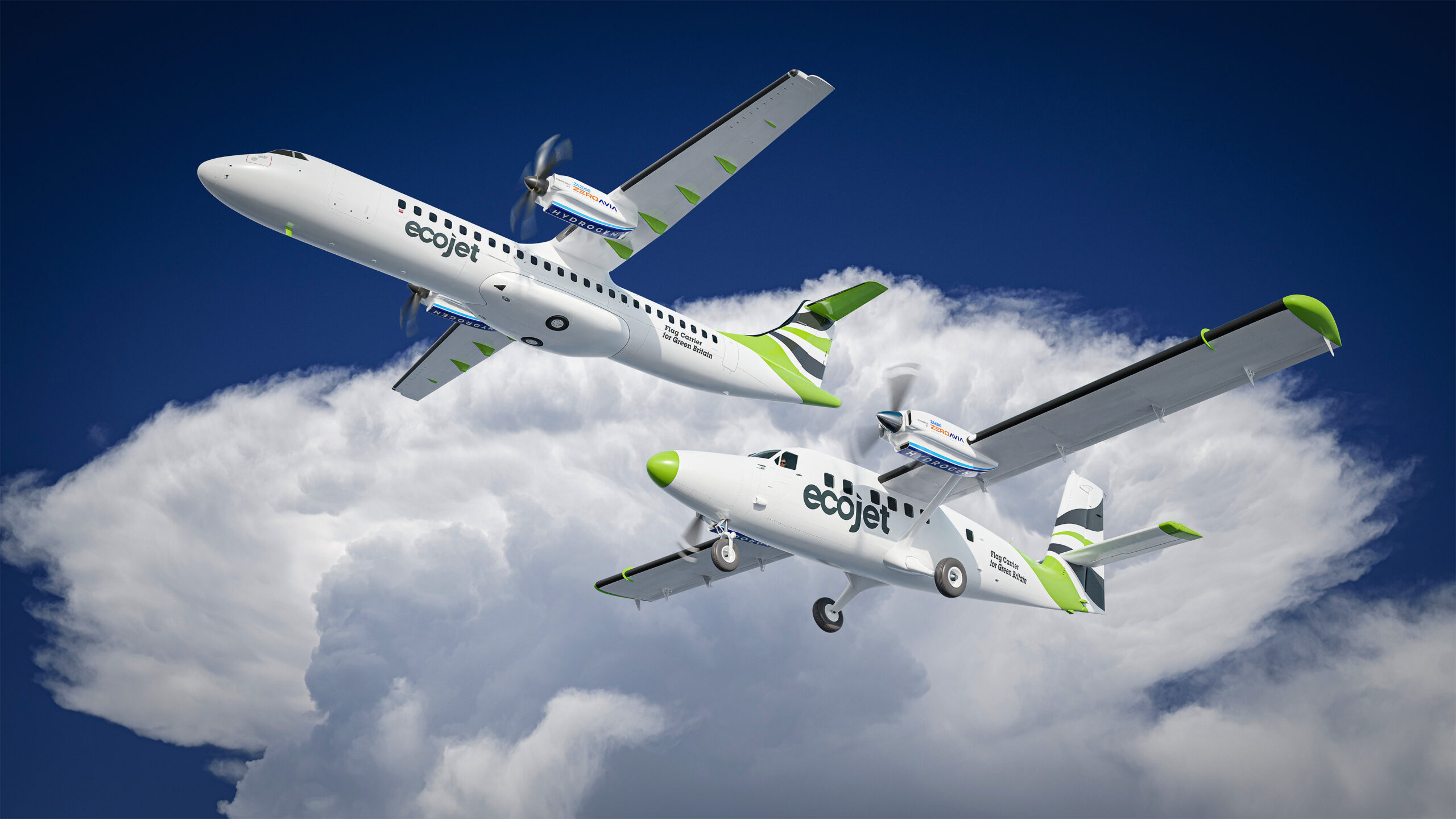
    [@Farnborough Airshow: July 26th, 2024] –  Ecojet, the world’s first electric, commercial airline, has signed an agreement to purchase 22 ZA2000 hydrogen-electric engines from the zero emissions innovator ZeroAvia, with options for a further 40 engines. The order takes the world a step closer towards a revolution in aviation with carbon free flights. The ZA2000 engine can be retrofitted into 40-80 seat regional turboprops for zero-emission flight.  


    The agreement deepens the commitment announced last November 2023, with a deposit schedule that will ensure Ecojet secures some of the first production slots of ZeroAvia ZA2000 powertrains post certification. 


    Ecojet based in Edinburgh is aiming to be the industry’s first fully electric commercial carrier enabling carbon-free living. The airline is aiming to launch services in late 2024 with conventionally powered aircraft, operating routes to and from Edinburgh and retrofitting them once the technology is certified. 


    The airline will begin this journey by operating its first zero-emission aircraft with ZeroAvia’s ZA600 engines for up to 20 seat planes. Ecojet’s aim is to build a fleet of larger regional aircraft to serve passengers on key domestic and shorter international routes. 


    The innovative hydrogen-electric engines work by using hydrogen to generate electricity which then powers propellers to fly the aircraft. 

    Val Miftakhov, Founder and CEO, ZeroAvia said:


    “We really love what the team are doing at Ecojet. Dale speaks powerfully on the future ubiquity of renewable power and is already helping to make that a reality in the UK. Hydrogen-electric aviation can be a big part of that journey, opening up low-cost, efficient and safe true zero-emission transport between UK destinations like never before.”

    Dale Vince, Founder, EcoJet, said:


    “Ecojet, the world’s first electric airline is on a mission to make net-zero, emission-free air travel possible for the first time. We’ve moved one step closer by signing an agreement to purchase 22 hydrogen electric engines from ZeroAvia. This is nothing short of a revolution in aviation, the world has just moved a step closer towards a solution to sustainable air travel.” 

    ZeroAvia has already extensively tested a prototype of its first ZA600-engine aboard a Dornier 228 aircraft at its UK base. The company has also performed advanced ground tests in the US and UK for the key building block technologies for the ZA2000 system, including cryogenic tanks or LH2 and proprietary high-temperature PEM fuel cell and electric propulsion systems. ZA2000 will support up to 80 seat regional turboprop aircraft such as the ATR72 or the Dash 8 400.  

    Subscribe to our Newsletter

    About ZeroAvia 


    ZeroAvia is working to deliver the clean future of flight for the entirety of aviation by enabling electric propulsion. With a primary focus on developing hydrogen-electric (fuel cell-powered) engines, ZeroAvia has submitted its first powertrain for up to 20 seat planes for certification and is working on a larger powertrain for 40–80 seat aircraft. Founded in California and now with thriving teams in Everett, WA and the United Kingdom, ZeroAvia has secured experimental certificates to test its engines in three separate testbed aircraft with the FAA and CAA and passed significant flight test milestones. The company has signed a number of key engineering partnerships with major aircraft OEMs and has nearly 2,000 pre-orders for engines from a number of the major global airlines, with future revenue potential over $10bn. For more, please visit ZeroAvia.com, follow @ZeroAvia on Facebook, Twitter/X, Instagram, LinkedIn, and YouTube.  

    ZeroAvia Press Team

    press@zeroavia.com

    About Ecojet


    Ecojet is an Edinburgh, UK, aiming to revolutionize aviation with the industry’s first fully electric commercial flights, enabling carbon-free living without compromising modern conveniences. The airline is aiming to launch services in late 2024 with conventionally powered aircraft prior to retrofitting them once the technology is certified. 

    Ecojet Press Team

    press@ecojetair.com


    ZeroAvia Awarded UK Government Grant to Progress Advanced Fuel Cell R&D for Clean Aviation  

    Aerospace Technology Institute (ATI) backs further development of ZeroAvia’s proprietary High Temperature PEM fuel cell technology ​as pathway​ to unlocking zero-emission large turboprop and, ultimately, single-aisle jet aircraft​.​

    ​​Project sees ZeroAvia collaborate with consortium partners University of Kent, Coventry University and the​ University of Sheffield​ Advanced Manufacturing Research Centre​ (AMRC).​ ​ ​​​ ​

    @Farnborough Airshow — ZeroAvia today announced that it has been awarded £10.5 million in UK Government funding through the ATI strategic programme, to further develop its high temperature fuel cell technology, a promising pathway for delivering zero-emission propulsion systems up to and including narrowbody jets.  


    The Advanced Fuel Cell for Aviation Decarbonisation (AFCAD) project will see ZeroAvia collaborate with the University of Kent, Coventry University and the University of Sheffield Advanced Manufacturing Research Centre, to advance this crucial technology towards commercialisation. The research will centre on developing components and the full HTPEM stacks and demonstrating previously unmatched levels of specific power and durability.  


    AFCAD builds on ZeroAvia’s highly successful HyFlyer I and II ATI projects which delivered breakthrough first flights of hydrogen-electric aircraft and were transformative in establishing greater confidence in the potential for commercial, zero-emission flights this decade.  


    During HyFlyer II, ZeroAvia also demonstrated the largest HTPEM stack module for aviation, showing technology readiness for scaling fuel cells into large commercial aircraft. AFCAD will further develop this technology to unlock the market for large regional turboprops, regional jets and, ultimately, narrowbody aircraft, as well as developing the supporting UK supply chain and advancing the pathway for manufacturing. 


    ZeroAvia sees HTPEM fuel cell power generation as key to developing zero-emission propulsion systems for aircraft larger than 20-seats, and the technology is integral to the company’s ZA2000 2-5.4 MW engine for 40-80 seat planes.  

    Val Miftakhov, Founder & CEO, ZeroAvia said:


    “The ATI has identified hydrogen as the likely fuel of the future for aviation, and put fuel cells with higher specific power as a major priority on its technology roadmap. The award of this project recognises that ZeroAvia is best placed to develop this technology and that the UK can garner strong industrial  advantage from establishing leadership in high temperature PEM fuel cells for aviation and beyond.” 

    The ATI Programme is delivered in partnership with the Department for Business and Trade and Innovate UK, and in partnership with industry.   

    Jonathan Reynolds, UK Government Business and Trade Secretary, said:


    Our world-class aerospace sector added almost £40 billion to the economy last year, and by backing it to pioneer cutting-edge new technologies we’re delivering economic growth and supporting high-skilled jobs in every part of the UK.”


    It’s fitting that I’m launching this new support here at Farnborough Airshow, where the best of British innovation is showcased on the global stage, reinforcing our commitment to placing innovation and manufacturing at the heart of our Industrial Strategy. 


    As part of AFCAD, the University of Kent will utilise its experience in advanced lightweight thermal systems and advanced measurement systems in order to accurately measure thermal parameters and temperature distributions, crucial to the validation and understanding of ZeroAvia’s high-temperature fuel cell systems.  


    Coventry University will leverage and expand its fuel cell testing infrastructure and resources to execute required tests at the stack level.

    Oliver Curnick, Professor of Electrochemical Engineering, University Research Centre of E-Mobility and Clean Growth,  said:


    “We are incredibly excited to be working with this team on the development of game-changing high temperature PEM fuel cell technology. Coventry University’s work within AFCAD draws on our expertise in fuel cell instrumentation, diagnostics and testing.”


    “We will be helping ZeroAvia to demonstrate the capabilities of their next-generation fuel cell hardware by performing detailed characterisation at our state-of-the-art Hydrogen Energy Applications Laboratory. We look forward to playing our part in accelerating the journey to zero emission aviation.” 

    The University of Sheffield AMRC will work to assess and assure manufacturability of key component designs, including pilot build lines.

    James Hunt, future propulsion lead, AMRC said:


    “ZeroAvia are pioneers in the development of hydrogen-electric propulsion systems, so we were thrilled when they asked the AMRC to join the AFCAD consortium.”


    “The AMRC is committed to helping companies industrialise their net zero systems, with a specific focus on developing solutions to the manufacturing challenges of hydrogen applications. Part of this solution will be delivered within our Hydrogen Electric Propulsion Systems testbed at our AMRC Cymru facility in North Wales, led by our future mobility lead, Lee Wheeler.” 


    “In designing an optimised production process and pilot line, we will enable ZeroAvia to manufacture the HTPEM stack module at the rate and scale required by the aerospace sector, helping anchor manufacturing in the UK and deliver zero emission flight.” 

    ZeroAvia recently flight tested a prototype of its ZA600 for the first time aboard a Dornier 228 aircraft at its UK base in Kemble, Gloucestershire, in January. Hydrogen-electric engines use hydrogen in fuel cells to generate electricity, which is then used to power electric motors to turn the aircraft’s propellers. The only emission is water. 

    Subscribe to our Newsletter

    About ZeroAvia

    ZeroAvia is a leader in zero-emission aviation with the mission of delivering a hydrogen-electric engine in every aircraft as the most environmentally and economically friendly solution for addressing the industry’s climate impact. The company is starting with engines to support a 300-mile range in 9–19 seat aircraft by the end of 2025, and up to 700-mile range in 40–80 seat aircraft by 2027. Founded in California and now with thriving teams also in Everett, WA and the United Kingdom, ZeroAvia has secured experimental certificates to test its engines in three separate testbed aircraft with the FAA and CAA and passed significant flight test milestones. The company has signed a number of key engineering partnerships with major aircraft OEMs and has nearly 2,000 pre-orders for engines from a number of the major global airlines, with future revenue potential over $10bn. For more, please visit ZeroAvia.com, follow @ZeroAvia on Facebook, Twitter/X, Instagram, LinkedIn, and YouTube. 

    ZeroAvia Contact

    For more information on ZeroAvia, please contact: press@zeroavia.com 


    About the University of Sheffield AMRC 


    The University of Sheffield Advanced Manufacturing Research Centre (AMRC) is a world-leading cluster for research, innovation and training. Part of the High Value Manufacturing Catapult network, we have 120 industrial partners and work with manufacturing companies of all sizes from across the globe to deliver cutting-edge products and processes, and train new talent and skills. We’re driving sustainable manufacturing technologies for net zero, creating the vital step-changes needed in the low-carbon transition to help businesses increase economic performance, boost productivity and sharpen their competitive edge.  


    amrc.co.uk  

    About the University of Kent 


    The University of Kent in England is renowned internationally for the quality of its teaching and research, with many of its academic schools and centres being among the best in their disciplines across the arts and humanities, sciences, and social sciences. Its campuses at Canterbury and Medway welcome more than 17,000 students from over 150 countries. The University is individually and collectively in the pursuit of progress, with a student-focused approach which is supportive, challenging and rewarding, and interdisciplinary research driven by collaboration to create positive impact. We are proud to be a values-driven university and work hard to ensure that our students are at the heart of all we do. We are committed to offering one of the best education and student experiences in the UK, undertaking research and innovation of the highest standard, and being a civic university that serves and contributes to our communities. 


    Follow University of Kent or tag us on X (Twitter)| Instagram | TikTok | Facebook |LinkedIn | YouTube 

    www.kent.ac.uk 


    Press Contact: pressoffice@kent.ac.uk