Dominic Weeks, Author at ZeroAvia - Page 3 of 3

    Please enter your email to subscribe to our newsletter.


    Cancel

    ASL Aviation Holdings Commits to Hydrogen-Electric Engine Order with ZeroAvia

    Leading airline enters into purchase agreement for 20 hydrogen-electric engines for regional turboprop aircraft


    [@Farnborough International Airshow: Tuesday 23rd July, 2023] — ZeroAvia today announced that ASL Aviation Holdings has signed a conditional purchase agreement for up to 20 hydrogen-electric engines for retrofit into its operated fleet of ATR regional turboprop aircraft – creating some of the world’s first zero-emission freight aircraft of this scale.


    The firm order of 10 engines, with a further option for up to another 10 and an agreement related to retrofit services, builds on an earlier MOU between the two companies announced in November 2021. ASL Aviation has now committed to paying deposits to secure delivery slots, further expanding ZeroAvia’s total number of delivery slots sold.


    Hydrogen-electric engines use fuel cells to convert hydrogen fuel into electricity using an electrochemical reaction. With no combustion of fuel, there are no CO2 or other climate impacting emissions, save for low temperature water vapor. The electricity generated is then used to power electric motors which turn the propellers. Overall, it is estimated that fuel cell systems in aircraft could reduce in-flight emissions by around 90%. The systems will have the added advantage of lower maintenance costs for airline operators.


    ZeroAvia has already successfully flown multiple test flights of a prototype 600kW system for 10-20 seat aircraft, with certification work already underway with regulators. The company has also demonstrated consistent technical progress in testing components for its 2-5 MW system (ZA2000) that will ultimately support aircraft within the ATR family, with ASL Airlines currently operating 13 such planes.


    Exploring the potential for hydrogen-powered ATR freighter aircraft forms a core part of ASL’s wider ESG strategy, alongside reductions in existing Scope 1 and 2 CO2 emissions across its eight owned and joint venture airline brands. The company has also developed an industry forum – ASL CargoVision – together with leading new technology companies to raise awareness of innovative new technologies and sustainability for air cargo operations.

    James Peck, Chief Customer Officer, ZeroAvia, said: 


    “ASL is a major player in freight and beyond, and they are forging the pathway to a sustainable future for the industry, not least in leading in the adoption of new, zero-emission propulsion technologies. Our commercial agreements are crystallizing into firmer commitments and for those looking on, that should be a clear signal of the rapid and successful technical progress we are making to deliver clean propulsion systems.”


    Robert Somers, Group Director Change Management, ASL Aviation Holdings, said: 


    “ASL has always believed that new lower or zero emissions propulsion technologies would be deployed first in the air cargo market, and as such of our responsibility as a global leader to explore how technologies such as ZeroAvia’s hydrogen-electric engines can improve aviation sustainability. ASL’s ESG strategy commits us to reducing aviation carbon emissions, by working with industry partners like ZeroAvia and we see the use of their powertrains on ATR aircraft as a significant step forward on the road to aviation sustainability in the best interests of people and the planet”

    Subscribe to our Newsletter

    About ZeroAvia 


    ZeroAvia is working to deliver the clean future of flight for the entirety of aviation by enabling electric propulsion. With a primary focus on developing hydrogen-electric (fuel cell-powered) engines, ZeroAvia has submitted its first powertrain for up to 20 seat planes for certification with a target of the end of 2025 and is working on a larger powertrain for 40–80 seat aircraft by 2027. Founded in California and now with thriving teams in Everett, WA and the United Kingdom, ZeroAvia has secured experimental certificates to test its engines in three separate testbed aircraft with the FAA and CAA and passed significant flight test milestones. The company has signed a number of key engineering partnerships with major aircraft OEMs and has nearly 2,000 pre-orders for engines from a number of the major global airlines, with future revenue potential over $10bn. For more, please visit ZeroAvia.com, follow @ZeroAvia on Facebook, Twitter/X, Instagram, LinkedIn, and YouTube.  

    Press Contact

    ZeroAvia Press Team

    press@zeroavia.com

    About ASL Aviation Holdings


    ASL Aviation Holdings

    ASL Aviation Holdings, a global aviation services company with five airlines based in Europe and Australia and three associate and joint-venture airlines in South Africa and Asia. ASL is a world leader in ACMI airline operations and both scheduled and charter cargo and passenger services.

    Headquartered in Dublin, Ireland, ASL’s airlines include ASL Airlines Ireland, ASL Airlines Belgium, ASL Airlines France and ASL Airlines United Kingdom in Europe and ASL Airlines Australia, formerly known as Pionair.

    ASL also has an associate low-cost passenger airline, FlySafair, in South Africa and joint venture cargo airlines K-Mile Asia in Thailand and Quikjet Airlines in India.


    ASL Aviation Holdings airlines operate cargo services for the world’s leading express parcel integrators and eCommerce retailers. Group airlines also operate scheduled and charter cargo and services under its own airline brands on domestic, international, and intercontinental routes in Europe, Asia, the Middle East, North America and Africa.


    ASL has a global team of 3,000 people of 51 nationalities. The Group has a fleet of 150 aircraft that includes  seven aircraft types ranging from the turbo-prop ATR 72 to the Boeing 747.

    JEKTA and ZeroAvia to partner on hydrogen-electric amphibious aircraft

    [Farnborough, UK – 22 July 2024]JEKTA, the Switzerland-based developer of the PHA-ZE 100 amphibious aircraft, today announced that it has selected ZeroAvia’s fuel cell power generation system (PGS) technology to demonstrate the concept of a fuel cell variant of its electric amphibious flying boat design, with a view to line-fit of the system as the PHA-ZE 100 variant comes to market.


    While battery technology continues evolving, JEKTA is committed to exploring all potential options that will increase the range and payload of its zero-emissions aircraft. Powered by ZeroAvia’s fuel cell PGS, it is anticipated the PHA-ZE 100 will achieve a range of up to 500 or 600km and increase the payload by up to one tonne, adding even more capability to the airframe. Operating and maintenance costs can also be lowered with a hydrogen fuel system supporting a life of up to 20,000 hours. Through close cooperation, JEKTA and ZeroAvia will develop and certify an integrated PGS, including inverters, other electronic components, and a hydrogen tank and fuel system.

    George Alafinov, CEO, JEKTA Switzerland, said:


    “By working with ZeroAvia and defining a suitable fuel cell system, we can offer our potential operator clients the choice of two fuel sources. The hydrogen system delivers a viable alternative to electric battery power that promises a significant increase in the range of our PHA-ZE 100, which will suit operators serving longer regional routes. In contrast, the battery power option will suit shorter-range missions and operators flying in locations where electric power is more cost-effective and accessible.”


    “ZeroAvia holds a strong market position with secure financing, an impressive set of customer commitments and well-developed infrastructure, which all contributed to our decision to work with them.”


    ZeroAvia is already flying a prototype of its entire hydrogen-electric powertrain (ZA600) in a 19-seat testbed aircraft. It has developed a range of flexible low-temperature proton exchange membrane (LTPEM) PGS solutions and novel high-temperature PEM (HTPEM) fuel cells for hydrogen-electric aerospace applications.

    Val Miftakhov, Founder & CEO, ZeroAvia, said: 


    “The JEKTA team shares our vision of introducing clean aircraft propulsion systems into commercial operations. We are noting a resurgence in the seaplane market, and we’re excited to work with an innovative company that is leading and shaping the future of amphibious aviation. We see the huge potential for creating zero-emission amphibious flights, and we believe hydrogen-electric propulsion will play a big role in this market.”

    ZeroAvia is also involved in global hydrogen infrastructure projects and has partnerships with nearly 20 airports to explore the concept of operations and the hydrogen refuelling ecosystem required to support route adoption. The company has also pioneered the testing of electrolyzers for on-site hydrogen generation, hydrogen pipeline technology and aircraft refuelling equipment in an airport environment. Alafinov sees these as essential components supporting an efficient regional amphibious aviation network and plans to work closely with ZeroAvia on both an optimized installation of their PGS in the PHA-ZE 100, and in exploring the infrastructure development with operator customers.


    JEKTA is exhibiting at Farnborough Airshow in the Swiss Pavillion, booth N4517 , Hall 4. For interviews please get in touch with Jane Stanbury, Arena Group, Jane@arenagroupassociates.com +44 7803 296046.


    ZeroAvia is exhibiting at Farnborough Airshow in Hall 1, Stand 1111. Please contact press@zeroavia.com


    Subscribe to our Newsletter

    About ZeroAvia 


    ZeroAvia is working to deliver the clean future of flight for the entirety of aviation by enabling electric propulsion. With a primary focus on developing hydrogen-electric (fuel cell-powered) engines, ZeroAvia has submitted its first powertrain for up to 20 seat planes for certification with a target of the end of 2025 and is working on a larger powertrain for 40–80 seat aircraft by 2027. Founded in California and now with thriving teams in Everett, WA and the United Kingdom, ZeroAvia has secured experimental certificates to test its engines in three separate testbed aircraft with the FAA and CAA and passed significant flight test milestones. The company has signed a number of key engineering partnerships with major aircraft OEMs and has nearly 2,000 pre-orders for engines from a number of the major global airlines, with future revenue potential over $10bn. For more, please visit ZeroAvia.com, follow @ZeroAvia on Facebook, Twitter/X, Instagram, LinkedIn, and YouTube.  

    Press Contact

    ZeroAvia Press Team

    press@zeroavia.com

    About Jekta

    Led by George Alafinov, the international Jekta team has more than two decades of experience designing and building flying boats, including the eight-seat, composite LA-8 and Borey ultralight. It is creating a modern 26,901m2 production and flight test facility within the Swiss Aeropole Cluster in the canton of Vaud, Switzerland. It will include design, certification, logistics, maintenance, and sales departments; an assembly hall; quality control laboratory; flight test organization; and administrative offices. For more info, please visit www.Jekta.Swiss and follow LinkedIn.


    About the PHA-ZE 100

    The electrically powered, all-composite PHA-ZE 100 amphibious airframe will be certified to EASA CS-23 and US FAA FAR-23 standards for fixed-wing passenger aircraft. The PHA-ZE 100’s initial flight endurance on battery power is projected at one hour, with a 30-minute reserve, powered by electric motors supplied with energy from batteries or hydrogen fuel cells. The PHA-ZE 100 will operate from coastal waters in waves up to 1.2m high, lakes, waterways, and runways, the latter using its standard retractable wheeled landing gear.


    Media Contact:

    Jane Stanbury – Arena Group

    Jane@arenagroupassociates.com

    +1 (438) 998 1668

    +44 7803 296 046

    Ryze partners with ZeroAvia as hydrogen demand increases

    [Hollister, CA & Kemble, UK – July 17, 2024] – Clean fuel supplier Ryze today announced that it is partnering with ground-breaking zero-emission aviation firm ZeroAvia to provide hydrogen for use in engine and flight testing at its UK base at Cotswold Airport.


    This latest deal further underlines the growing infrastructure in the hydrogen sector, with a raft of deals ensuring regular supply for key transport, mobility and industrial customers.


    ZeroAvia, recently named top in Time Magazine’s list of the USA’s leading greentech companies, has a mission of delivering the clean future of flight through zero-emission hydrogen and electric aircraft propulsion technology. The company is focused on hydrogen-electric (fuel cell) engines for commercial aviation as the most environmentally and economically friendly solution for addressing the industry’s climate impact.


    As well as flight testing a number of prototypes, including in a 19-seat testbed aircraft over the last 18 months, ZeroAvia has developed a microcosm of the Hydrogen Airport Refueling Ecosystem to support flight testing and developing concepts of operations.


    ZeroAvia has signed a hydrogen supply contract with Ryze, ensuring regular deliveries to its UK testing site at Cotswold Airport in Cirencester. This will meet an increased hydrogen demand as the company embarks on extensive ground and flight testing to meet the certification requirements for its ZA600 powertrain for up to 20 seat aircraft.


    Earlier this year Ryze unveiled partnerships with Vauxhall, to develop hydrogen solutions for fleet operators, and Guardian Glass, to help decarbonise the energy-intensive float glass production process.


    Ryze’s state-of-the-art tube trailer fleet, the largest available fleet by capacity in the UK with a variety of specifications and capabilities, will ensure maximum flexibility to support ZeroAvia’s research and testing requirements.

    Sergey Kiselev, Chief Business Officer, ZeroAvia said:


    “Supply of cost-effective, clean hydrogen is integral in meeting our ambitions for unlocking zero-emission flight, and this partnership with Ryze will help us advance our testing and journey to certification.”


    Alex Webster, Head of Business Development,  Ryze, said:


    “The work Ryze is doing to support fossil fuel displacement is fundamental to the UK’s decarbonisation strategy.


    “This partnership with ZeroAvia is another important milestone for both Ryze and ZeroAvia and cements the ambition of both businesses to make real, tangible headway towards a hydrogen economy both in the UK and globally.”

    ZeroAvia’s team of over 300 employees is focused on hydrogen-electric propulsion and fuelling solutions to address a variety of markets, initially targeting a 300-mile range in up to 20 seat aircraft within the next couple of years, and up to 700-mile range in 40–80 seat aircraft by 2027.


    In 2023, more than 6.7 million flights departed from European airports, emitting a total of 164.85 Mt of CO2 – the equivalent to the emissions of 80 million petrol cars in one year and a 13% rise in CO2 emissions compared to the previous year.


    Subscribe to our Newsletter

    About ZeroAvia 


    ZeroAvia is working to deliver the clean future of flight for the entirety of aviation by enabling electric propulsion. With a primary focus on developing hydrogen-electric (fuel cell-powered) engines, ZeroAvia has submitted its first powertrain for up to 20 seat planes for certification with a target of the end of 2025 and is working on a larger powertrain for 40–80 seat aircraft by 2027. Founded in California and now with thriving teams in Everett, WA and the United Kingdom, ZeroAvia has secured experimental certificates to test its engines in three separate testbed aircraft with the FAA and CAA and passed significant flight test milestones. The company has signed a number of key engineering partnerships with major aircraft OEMs and has nearly 2,000 pre-orders for engines from a number of the major global airlines, with future revenue potential over $10bn. For more, please visit ZeroAvia.com, follow @ZeroAvia on Facebook, Twitter/X, Instagram, LinkedIn, and YouTube.  

    Press Contact

    ZeroAvia Press Team

    press@zeroavia.com

    About Ryze:


    Ryze supplies organisations wanting to decarbonise their solutions through the use of clean hydrogen. For heavy-duty vehicle and long-range fleet operators through to the industrial and construction sectors, Ryze provides a simple and affordable conversion to hydrogen to lower emissions.


    Notes:

    For more information, contact Sarah Hughes, PR Director, Atmos Communications

    07376255251

    www.atmoscomms.com

    ZeroAvia Unveils AI Software to Slash Hydrogen Production Costs 

    Advanced algorithm designed to reduce cost and emissions for green H2 production

    Tested with real hardware, demonstrating over 20 percent reduction of levelized cost of hydrogen

    [Hollister, CA & Kemble, UK – July 10, 2024] — ZeroAvia today announced that it has developed revolutionary AI-driven, scalable smart microgrid optimization software which promises to minimize the cost of hydrogen production for clean aviation and other applications.  


    Real-world testing of the Smart Hydrogen AI Production Software (SHAIPS) has shown in excess of a 20 percent reduction of the levelized cost of hydrogen (LCOH) compared to an electrolyzer generating all H2 based on the average electricity wholesale price. In order to test the software on real hardware, the company’s advanced software division, based in Silicon Valley, worked with its hydrogen infrastructure team to develop a working sub-scale smart microgrid in California, inclusive of renewable generation (solar), battery storage system, electrolyzers, and gaseous hydrogen storage. 


    The hardware testing has validated many of the underlying assumptions in modeled scenarios, proving the applicability of the software for delivering cost-effective and eco-friendly hydrogen production. SHAIPS will allow the producer to set a limit on the carbon intensity of hydrogen production, meaning the hydrogen can qualify for the most generous subsidies in their geography.  


    With ZeroAvia’s approach, excess renewable electricity can be stored as hydrogen, in batteries, or sold back to the grid. The system will also draw capacity from the grid for H2 production at periods of low carbon intensity energy and low cost, with the microgrid solar energy preserved in battery storage for use when most economically and environmentally sound.  


    Major policy initiatives are already pushing the world towards an era of low-cost hydrogen production. In the U.S. the DOE targets $1 per kg of hydrogen by 2030, and is investing $7 billion in Hydrogen Hubs across the country, while the Inflation Reduction Act established up to $3 per kg of hydrogen as part of a production tax credit. In the EU, mandates now require member states to build hydrogen refueling stations at fixed intervals and a newly established EU Hydrogen Bank will provide projects with fixed premium support.  

    Val Miftakhov, Founder and CEO, ZeroAvia said:


    Tomorrow’s aviation fuel can be made from water and sunlight with today’s technology, the only question is cost. Our advanced software team has delivered an impactful application that can provide end users in aviation, transport and other industries the clean hydrogen fuel they need to operate, at costs that work for all parties. It is inevitable that the levelized cost of hydrogen will fall over time, but we are seeking to accelerate that transition through innovation. 


    Additional Benefits of SHAIPS 


    The algorithm is designed to optimize the use of each component to extend their lifecycles, reducing project capital costs and further reducing the carbon intensity of the production process.     

    Figure 1: April 15th and 16th, 2024 - Power Management in SHAIPS

    SHAIPS was developed by a seasoned team that was previously involved in creating Juice.net, a leading smart-grid charging station network control and management system which featured advanced algorithms for electric grid load balancing and could manage Demand/Response requests from grid infrastructure. Juice.net ensured smooth operation and enabled trading in the US wholesale electricity market. The JuiceBox charging system, along with the Juice.net software, has been recognized with several awards: the Global Cleantech 100 Award in 2018, the Silver Edison Award in Energy, Sustainability, and Vehicle Improvement in 2018, and the Grid Edge Awards in 2017. 


    With a 2025 target for entry in service of its fuel cell powertrains, the company is also pressing ahead to develop the hydrogen fuel ecosystem necessary to support aviation. This began with the demonstration of its world-first Hydrogen Airport Refueling Ecosystem (HARE), now deployed at two separate airport locations. The current HARE system is composed of electrolytic production, mobile storage and distribution and also a fixed pipeline for moving hydrogen from landside to airside.  


    If you would like more information about the results from our smart hydrogen production software testing, please contact ZeroAvia here 

    Subscribe to our Newsletter

    About ZeroAvia 


    ZeroAvia is working to deliver the clean future of flight for the entirety of aviation by enabling electric propulsion. With a primary focus on developing hydrogen-electric (fuel cell-powered) engines, ZeroAvia has submitted its first powertrain for up to 20 seat planes for certification with a target of the end of 2025 and is working on a larger powertrain for 40–80 seat aircraft by 2027. Founded in California and now with thriving teams in Everett, WA and the United Kingdom, ZeroAvia has secured experimental certificates to test its engines in three separate testbed aircraft with the FAA and CAA and passed significant flight test milestones. The company has signed a number of key engineering partnerships with major aircraft OEMs and has nearly 2,000 pre-orders for engines from a number of the major global airlines, with future revenue potential over $10bn. For more, please visit ZeroAvia.com, follow @ZeroAvia on Facebook, Twitter/X, Instagram, LinkedIn, and YouTube.  

    Press Contact

    ZeroAvia Press Team

    press@zeroavia.com

    American Airlines commits to conditional purchase of 100 ZeroAvia hydrogen-powered engines, increases investment in hydrogen-electric innovator

    [Fort Worth, Texas, and Everett, Washington – July 2, 2024] American Airlines today announced that it has entered into a conditional purchase agreement with clean aviation innovator ZeroAvia for 100 hydrogen-electric engines intended to power regional jet aircraft with zero inflight emissions save for water vapor.  


    In addition, American has increased its investment in ZeroAvia. American made its first investment in ZeroAvia in 2022 and has also now participated in the company’s Series C financing round. The engine agreement follows the Memorandum of Understanding the companies announced in 2022. 


    ZeroAvia is developing hydrogen-electric (fuel cell-powered) engines for commercial aircraft, which offer the potential for close to zero inflight emissions. The company is flight testing a prototype for a 20-seat plane and designing an engine for larger aircraft such as the Bombardier CRJ700, which American operates on certain regional routes.    

    Robert Isom, CEO, American Airlines,  said:


    “Advancing the transition of commercial aviation to a low-carbon future requires investments in promising technologies, including alternate forms of propulsion,”


    “This announcement will help accelerate the development of technologies needed to power our industry and uphold our commitment to make American a sustainable airline so we can continue to deliver for customers for decades to come.” 


    The investment and conditional commitment to purchase novel engine technology contributes to American’s aggressive goal to achieve net-zero greenhouse gas emissions by 2050. In recent years, American has undertaken the most extensive fleet renewal effort in the history of commercial aviation, which currently gives it the youngest mainline fleet of any major U.S. network carrier and improves fuel efficiency. American has made industry-leading investments in sustainability, including finalizing an offtake agreement with Infinium, a producer of next-generation low-carbon sustainable aviation fuel, and becoming the first customer of Graphyte’s innovative and permanent carbon removal process.  

    Val Miftakhov, Founder and CEO, ZeroAvia said:


    In signing this purchase agreement and furthering its investment, American is supporting our mission of innovation for clean aircraft propulsion and it is a good signal that ZeroAvia is delivering on our technology roadmap,”


    “The solutions that can serve the largest airlines are within reach, and the clean future of flight is coming.”  


    ZeroAvia’s hydrogen-electric engines use hydrogen in fuel cells to generate electricity, which is then used to power electric motors to turn the aircraft’s propellers. The only inflight emission is low-temperature water vapor, and the lower intensity electrical systems have the potential to offer significant cost savings. 

    Subscribe to our Newsletter

    About ZeroAvia 


    ZeroAvia is working to deliver the clean future of flight for the entirety of aviation by enabling electric propulsion. With a primary focus on developing hydrogen-electric (fuel cell-powered) engines, ZeroAvia has submitted its first powertrain for up to 20 seat planes for certification with a target of the end of 2025 and is working on a larger powertrain for 40–80 seat aircraft by 2027. Founded in California and now with thriving teams in Everett, WA and the United Kingdom, ZeroAvia has secured experimental certificates to test its engines in three separate testbed aircraft with the FAA and CAA and passed significant flight test milestones. The company has signed a number of key engineering partnerships with major aircraft OEMs and has nearly 2,000 pre-orders for engines from a number of the major global airlines, with future revenue potential over $10bn. For more, please visit ZeroAvia.com, follow @ZeroAvia on Facebook, Twitter/X, Instagram, LinkedIn, and YouTube.  

    Press Contact

    ZeroAvia Press Team

    press@zeroavia.com

    About American Airlines Group


    To Care for People on Life’s Journey®. Shares of American Airlines Group Inc. trade on Nasdaq under the ticker symbol AAL and the company’s stock is included in the S&P 500. Learn more about what’s happening at American by visiting news.aa.com and connect with American @AmericanAir and at Facebook.com/AmericanAirlines. 

    American Airlines

    mediarelations@aa.com

    Cautionary statement regarding forward-looking statements and information 

    Certain of the statements contained in this release should be considered forward-looking statements within the meaning of the Securities Act of 1933, as amended, the Securities Exchange Act of 1934, as amended, and the Private Securities Litigation Reform Act of 1995. These forward-looking statements may be identified by words such as “may,” “will,” “expect,” “intend,” “anticipate,” “believe,” “estimate,” “plan,” “project,” “could,” “should,” “would,” “continue,” “seek,” “target,” “guidance,” “outlook,” “if current trends continue,” “optimistic,” “forecast” and other similar words. Such statements include, but are not limited to, statements about the company’s plans, objectives, expectations, intentions, estimates and strategies for the future, and other statements that are not historical facts. These forward-looking statements are based on the company’s current objectives, beliefs and expectations, and they are subject to significant risks and uncertainties that may cause actual results and financial position and timing of certain events to differ materially from the information in the forward-looking statements. These risks and uncertainties include, but are not limited to, those set forth herein as well as in the company’s Quarterly Report on Form 10-Q for the quarter ended March 31, 2024 (especially in Part I, Item 2. Management’s Discussion and Analysis of Financial Condition and Results of Operations and Part II, Item 1A. Risk Factors), and other risks and uncertainties listed from time to time in the company’s other filings with the Securities and Exchange Commission. Additionally, there may be other factors of which the company is not currently aware that may affect matters discussed in the forward-looking statements and may also cause actual results to differ materially from those discussed. The company does not assume any obligation to publicly update or supplement any forward-looking statement to reflect actual results, changes in assumptions or changes in other factors affecting these forward-looking statements other than as required by law. Any forward-looking statements speak only as of the date hereof or as of the dates indicated in the statement. 

    Airbus and ZeroAvia Partner on Hydrogen Hubs at Leading Canadian Airports  

    [Montreal, Canada, 21 May 2024] – Airbus and ZeroAvia have signed three respective Memorandum of Understanding (MoU) with Canada’s three busiest airports, Montréal–Trudeau International Airport (YUL), Toronto Pearson International Airport (YYZ) and Vancouver International Airport (YVR) to study the feasibility of hydrogen infrastructure at airports in Canada. The news was announced at a press event which took place at the International Aerospace Innovation Forum, organized by Aéro Montréal.


    This is the first time that a feasibility study of this magnitude has taken place in Canada to pioneer hydrogen for aviation, with the three airports. It reflects the partners’ shared ambition to use their respective expertise to support the decarbonisation of the aviation industry (ICAO, ATAG and IATA) and to achieve net zero carbon emissions by 2050.


    Air transport is prime in the country because of its wide-spread geography. Not only does it connect to international cities but is also an important means of supplying critical connectivity domestically. Commercial flights in Canada enable the flows of goods, investments, people and ideas that are the fundamental drivers of economic growth. Air transport in Canada is forecast to grow by 51% in the next 20 years under the “current trends” scenario. This would result in an additional 39.8 million passenger journeys by 2037. (Source IATA Economics)


    This cooperation will provide better understanding of hydrogen aircraft concepts and operations, supply, infrastructure and refueling needs at airports, with the goal of developing the hydrogen aviation ecosystem across the country. The work will also collaborate to support the development of regulations and standards. Montreal is the home city of the International Civil Aviation Organization (ICAO) and collaboration is a key driver to support a global framework.

    Karine Guenan, Vice-President of ZEROe Ecosystem said:


    “Canada is one of the most promising regions for hydrogen hubs due to its natural resources.
    Canada has great potential for hydrogen production from renewable energy sources such as
    hydroelectric power. These first Canadian hydrogen partnerships enable us to cover the country from coast to coast. Hydrogen stands out as a key enabler as we pioneer a sustainable aviation future. We are very pleased to enter into this cooperation with partners fully engaged to take significant steps towards decarbonising aerospace. It fits perfectly with our strategy of deploying hydrogen aviation ecosystems in the most suitable parts of the world, now including North America.”

    Val Miftakhov, Founder and CEO, ZeroAvia said:


    “We are bringing together Canada’s largest airports, the world’s largest aircraft manufacturer and the leading innovator in decarbonised propulsion technology, in order to progress the transition to hydrogen aviation. ZeroAvia flight testing demonstrates that hydrogen-powered commercial aviation is a prospect ahead of 2030, so we need to start working hard to prepare for the hydrogen infrastructure needed to support the aviation industry and airports as they step into a new golden age of clean flight.” 

    Yves Beauchamp, President and CEO of ADM Aéroports de Montréal, said:


    “ADM is committed to decarbonizing airport operations and improving air quality at its YUL and YMX sites. The use of hydrogen as a fuel for aircraft is a forward-looking solution that fits perfectly with these goals. This partnership will allow our organization not only to better prepare for the introduction of this alternative in our airport operations, but above all to adequately plan the infrastructure required to offer it at YUL as early as 2035. As Montréal is the world’s civil aviation capital, we are all the more proud that our city is playing a leading role in this sustainable innovation project.”


    Deborah Flint, President and CEO of Toronto Pearson said:


    “Toronto Pearson is committed to making our own operations and those of the larger aviation industry more sustainable. Our partnership with Airbus and ZeroAvia is an extension of our ongoing efforts to adopt clean energy solutions, including the construction of our new hydrogen filling station.”


    “The future of airports and their aviation partners will be built with innovative infrastructure that minimizes environmental impact.”

    Tamara Vrooman, President and CEO at Vancouver International Airport, said:


    “We know when it comes to climate change, aviation isn’t the enemy, carbon is. Looking into the feasibility of airports as Hydrogen Hubs is an important step on the journey to net zero carbon emissions. 


    “The collaboration between Airbus, ZeroAvia and the three biggest airports in Canada will help identify the changes required in our industry and supporting ecosystem to meet carbon reduction goals.” 

    The use of hydrogen to power future aircraft is not only expected to significantly reduce aircraft emissions in the air, but could also help decarbonise air transport activities on the ground. In 2020, Airbus unveiled the first ZEROe concept with the ambition to bring to market the world’s first hydrogen-powered commercial aircraft by 2035. The development of the corresponding technology bricks is now underway in a global Research & Technology network.


    Airbus also launched the “Hydrogen Hub at Airports” programme to jumpstart research into infrastructure requirements and low-carbon airport operations, across the entire value chain. To date agreements have been announced with partners and airports in ten countries including France, Germany, Italy, Japan, New Zealand, Norway, Singapore, South Korea, Sweden and the United Kingdom. ZEROe wishes to develop its hydrogen visibility and partnership network in North America. Therefore, there is a strong need to recruit partners in the region. 


    ZeroAvia has an active certification application for a powertrain (ZA600) for 10-20 seat aircraft, targeting market entry within the next couple of years, and is also developing a second engine (ZA2000) for 40-80 seat aircraft to follow soon after. In addition, the company is working to develop the hydrogen fuel ecosystem to support these clean propulsion systems at airports by developing unique production, storage and dispensing technologies, and by working with airport partners to plan for hydrogen operations in the near future. 


    Airbus has been in Canada for 40 years with more than 4,500 people working at the ten sites and offices of Airbus and its subsidiaries sourcing around C$2 billion annually from Canadian companies. Canada is also home of the A220 aircraft, where its main final assembly lines, pre-assembly line and main programme, engineering and customer services offices are located in Mirabel, Quebec. 


    To find out more about hydrogen and decarbonisation, visit airbus.com

    Subscribe to our Newsletter

    About ZeroAvia

    ZeroAvia is working to deliver the clean future of flight for the entirety of aviation by enabling electric propulsion. With a primary focus on developing hydrogen-electric (fuel cell-powered) engines, ZeroAvia has submitted its first powertrain for up to 20 seat planes for certification with a target of the end of 2025 and is working on a larger powertrain for 30–90 seat aircraft by 2027. Founded in California and now with thriving teams also in Everett, WA and the United Kingdom, ZeroAvia has secured experimental certificates to test its engines in three separate testbed aircraft with the FAA and CAA and passed significant flight test milestones. The company has signed a number of key engineering partnerships with major aircraft OEMs and has nearly 2,000 pre-orders for engines from a number of the major global airlines, with future revenue potential over $10bn. For more, please visit ZeroAvia.com, follow @ZeroAvia on Facebook, Twitter/X, Instagram, LinkedIn, and YouTube

    Press Contact

    ZeroAvia Press Team

    press@zeroavia.com

    About Airbus
    A commercial aircraft manufacturer, with Space and Defence as well as Helicopters Divisions, Airbus is the largest aeronautics and space company in Europe and a worldwide leader. Airbus has built on its strong European heritage to become truly international – with roughly 148,000 employees at 180 locations globally. The company has aircraft and helicopter final assembly lines across Asia, Europe and the Americas.

    Airbus Press Contact


    Amélie Forcier
    Airbus Canada

    1-514-452-5279

    amelie.forcier@airbus.com


    Philippe Gmerek
    Airbus
    +33 613 193 727
    philippe.gmerek@airbus.com

    About Montréal-Trudeau International Airport 

    ADM Aéroports de Montréal is the airport authority for the Greater Montréal area responsible for the management, operation and development of YUL Montréal-Trudeau International Airport, which is certified 4 stars under the Skytrax World Airport Star Rating program, and of YMX International Aerocity of Mirabel. Montréal–Pierre Elliott Trudeau International Airport (formerly Montréal–Dorval International Airport) is the main Canadian airport East of the Great Lakes, serving Québec, Atlantic Canada as well as Eastern Ontario and Northern New England. Each year some 30 air carriers transport more than 13 million passengers via Montréal-Trudeau; there are direct flights to and from about 130 regular and seasonal destinations in Canada, the United States and internationally. Owing to its geographic location, Montréal is a major hub for air traffic between Canada and Europe. 

    Montréal–Trudeau International
    Airport

    affaires.publiques@admtl.com

    1-514-394-7304

    About Toronto Pearson

     The Greater Toronto Airports Authority is the operator of Toronto Pearson International Airport, Canada’s largest airport and a vital connector of people, businesses and goods. Toronto Pearson has been named “Best Large Airport in North America serving more than 40 million passengers” for five years in a row by Airports Council International (ACI), the global trade representative of the world’s airports. In recognition of its Healthy Airport program, ACI has also awarded Toronto Pearson the “Best hygiene measures in North America” award for three years running, and Toronto Pearson was the first Canadian airport to receive ACI’s global health accreditation for its response to COVID-19. For our corporate X channel, please visit @PearsonComms. For operational updates and passenger information, please visit @TorontoPearson/@AeroportPearson on X. You can also follow us on Facebook or Instagram.

    Toronto Pearson International
    Airport
    media.relations@gtaa.com
    1-416-776-3709

    About Vancouver International Airport 

    Vancouver International Airport (YVR) is a diverse global hub that connects people, cargo, data, and ideas and serves as a platform for our community to come together and thrive. We are motivated by supporting regional economic development and making a positive difference in the lives of British Columbians. We do this with a focus on serving our passengers, partners, workers, and community through digital modernization, climate leadership, reconciliation, and financial sustainability.

    Vancouver International Airport media_relations@yvr.ca
    1-604-880-9815

    ZeroAvia Welcomes Congressional Passage of FAA Reauthorization  

    [Hollister, CA: 16 May 2024] – ZeroAvia, the leading developer of zero-emission hydrogen-electric aircraft powertrains, today commended the U.S. Congress’s passage of a five-year reauthorization of the Federal Aviation Administration that includes provisions to advance hydrogen aviation.  The bipartisan bill passed the U.S. Senate on May 9 by a vote of 88-4 and was passed in the U.S. House of Representatives by a vote of 387-26.  


    Committee leadership in the House and Senate negotiated the compromise package that reconciled their respective versions of the bill. Lead negotiators included Sens. Maria Cantwell (D-WA) and Ted Cruz (R-TX), the Chair and Ranking Member of the U.S. Senate Commerce Science and Transportation Committee, as well as Reps. Sam Graves (R-6-MO) and Rick Larsen (D-2-WA), the Chair and Ranking Member of the U.S. House Committee on Transportation and Infrastructure. 

    The bill contains provisions supporting development of the U.S. hydrogen aviation industry, most importantly directing the FAA to develop a viable path to “safely and efficiently certify hydrogen-powered commercial aircraft.” The bill also includes language supporting hydrogen aviation research through the FAA ASCENT program, adding hydrogen refueling infrastructure to the list of eligible projects funded under the Airport Improvement Program, and establishing a Hydrogen Aviation Federal Advisory Committee.  

    ZeroAvia, Founder and CEO, Val Miftakhov said:  

    “We applaud the hard work of Senators Cantwell, Cruz, Duckworth, and Moran and Representatives Sam Graves, Larsen, Garret Graves, and Cohen. The hydrogen measures in this legislation are a welcome signal that Congress supports the innovation, cost and emissions reduction, and job creation that hydrogen aviation promises. We are eager to work with FAA and other federal agencies with a large role to play in advancing hydrogen in aviation, notably DOE, to implement these new measures. 

    The bill now moves to the White House, where President Biden is expected to sign it into law. 

    Subscribe to our Newsletter

    About ZeroAvia

    ZeroAvia is working to deliver the clean future of flight for the entirety of aviation by enabling electric propulsion. With a primary focus on developing hydrogen-electric (fuel cell-powered) engines, ZeroAvia has submitted its first powertrain for up to 20 seat planes for certification with a target of the end of 2025 and is working on a larger powertrain for 30–90 seat aircraft by 2027. Founded in California and now with thriving teams also in Everett, WA and the United Kingdom, ZeroAvia has secured experimental certificates to test its engines in three separate testbed aircraft with the FAA and CAA and passed significant flight test milestones. The company has signed a number of key engineering partnerships with major aircraft OEMs and has nearly 2,000 pre-orders for engines from a number of the major global airlines, with future revenue potential over $10bn. For more, please visit ZeroAvia.com, follow @ZeroAvia on Facebook, Twitter/X, Instagram, LinkedIn, and YouTube

    Press Contact

    ZeroAvia Press Team

    press@zeroavia.com

    ZeroAvia Launches Electric and Hydrogen Aviation Components Offering as Manufacturing Plans Revealed  

    Clean aviation innovator seeks to expand addressable market for full engine systems and capitalize on strong OEM interest in its leading fuel cell, power electronics, compressor and electric motor technology

    New Propulsion Center of Excellence manufacturing facility at Paine Field, Everett, WA opens to support power electronics and electric motor manufacture

    Company also plans site for a Hydrogen Center of Excellence to support fuel cell system production

    [Everett, WA: April 24, 2024]ZeroAvia today announced that it will be offering some of its key components designed for its hydrogen-electric engines to other clean aviation innovators. The move allows ZeroAvia to build upon the multi-billion dollar per annum market for its hydrogen-electric powertrain family, maximizing the company’s investment in R&D and its strategy of vertical integration, as well as furthering the company’s impact on reducing environmental harm from aviation. 


    With the certification work for the ZA600 engine for up to 20 seat aircraft underway, and the underpinning technology for the ZA2000 engine for up to 90 seat aircraft in advanced development, ZeroAvia has conducted component market research and sees significant opportunity in the following areas:

    • Advanced electric motors for aviation, including a 660 kW max-power direct-drive motor capable of speeds up to 2,200 rpm, and the HyperCore 900kW modular motor capable of speeds up to 20,000 rpm.
    • Silicon carbide inverters – The 200kW continuous power bidirectional inverter design offers a power density above 20 kW/kg and is available in single (225kW peak / 200kW continuous) and dual (450kW peak / 400kW continuous) configurations.  The inverters are designed and produced following aerospace standards, allowing a high-power density and reduced weight with advanced thermal management technologies and integration to enable reliable high performance for high altitude and engine compartment location.
    • Low temperature Proton Exchange Membrane (LT-PEM) fuel cell configurations (in partnership with PowerCell) – ZeroAvia’s SuperStack Flex architecture is a customizable 100-400kW fuel cell power generation platform designed to meet a range of different aerospace power, performance, and packaging requirements, while maintaining exceptional pressure, mass flow rate, humidity, and temperature control.
    • High temperature PEM (HT-PEM) fuel cell stacks and full power generation systems – ZeroAvia’s High-Temperature Proton Exchange Membrane (HTPEM) fuel cell stack is a turbo-air cooled modular system which offers up to 3.5 kW/kg specific power, supporting a variety of traditional aviation and VTOL applications.
    • Aviation fuel cell compressor is a leading-edge compressor capable of supporting up to 900kW fuel cell applications up to 15,000 feet. The compressor is designed specifically for fuel cell applications and designed for aerospace standards from the start.

    The company is in active discussions on potential deals with a number of companies working on electric and hydrogen aviation innovations. More detail on the individual component lines offered by ZeroAvia can be found here.  


    To facilitate the production of the electric propulsion systems (specifically, power electronics and electric motors) for both its own powertrains and its component offering, ZeroAvia will today open its propulsion center of excellence at Paine Field in Everett, north of Seattle. At a ribbon-cutting ceremony attended by Washington State Governor Jay Inslee, U.S. Representative Rick Larsen, and U.S. Representative Suzan DelBene, guests will get a glimpse of how the new facility will support manufacture of ZeroAvia’s world-leading electric propulsion systems for aviation in the new 136k sf facility, as well as housing ZeroAvia’s existing R&D operations at Paine Field.

    ZeroAvia also plans a separate facility focused on producing hydrogen fuel cell systems – a Hydrogen Center of Excellence – and is currently exploring site selection.

    Val Miftakhov,
    Founder and CEO, ZeroAvia said:


    “Today we set forth plans that detail how we are going to bring our engines to market for commercial aircraft as well as the additional market potential in components generated by our pursuit of aerospace applicable fuel cell and electric propulsion technologies.


    “We intend to secure as much market share for commercial aviation propulsion systems as possible as this will enhance shareholder value and ensure we deliver in tackling climate impact in the sector. While the market for our powertrains is thousands of engines across commercial aircraft, there will be other applications that are not strategically aligned with our full engine offering, but where our technologies can play a major role in the supply chain for other OEMs.   


    “And with the opening of the new facility today, we are also able to show ZeroAvia’s growth from ambitious startup into a clean aerospace manufacturing powerhouse, with a production site officially opened in Everett. The future is bright for clean flight, Washington State!”

    Speaking at the launch of ZeroAvia’s Propulsion Center of Excellence, Jay Inslee, Washington State Governor, said:


    “This opening is another milestone in Washington’s long history at the cutting edge of aviation and aerospace innovation. The transition to clean fuels is not only necessary to turn the tide against climate change and its devastating health impacts, it also secures Washington’s continued economic dynamism well into the future.”

    United States Representative Suzan DelBene (D-WA-01) said:


    “The hydrogen fuel-cell engines that ZeroAvia will begin producing in Everett are a huge step in decarbonizing the aviation sector. Washington is leading the nation in clean energy, making it the ideal hub for this technological advancement. I’m excited by ZeroAvia’s new milestone, and I look forward to continuing working with them as they leverage hydrogen’s ability to revolutionize the aviation industry.”
     

    United States Representative Rick Larsen (D-WA-02) said:


    “Congratulations to ZeroAvia on the grand opening of its electric propulsion center at Paine Field. ZeroAvia is helping to lead the charge to reduce emissions in aviation while creating more jobs and keeping the economy moving in the Pacific Northwest. Congress must continue to partner with innovative companies like ZeroAvia and the workforce to ensure the United States remains the global leader in cleaner, greener and safer aviation.”

    Senator Maria Cantwell (D-WA) said:

    “The State of Washington is leading the way on next-generation aviation and creating innovative solutions to advance clean regional air travel for communities all across the nation. Hydrogen-electric powertrains have the potential to both reduce reliance on expensive jet fuel and greenhouse gas emissions.”


    Subscribe to our Newsletter

    About ZeroAvia

    ZeroAvia is working to deliver the clean future of flight for the entirety of aviation by enabling electric propulsion. With a primary focus on developing hydrogen-electric (fuel cell-powered) engines, ZeroAvia has submitted its first powertrain for up to 20 seat planes for certification with a target of the end of 2025 and is working on a larger powertrain for 30–90 seat aircraft by 2027. Founded in California and now with thriving teams also in Everett, WA and the United Kingdom, ZeroAvia has secured experimental certificates to test its engines in three separate testbed aircraft with the FAA and CAA and passed significant flight test milestones. The company has signed a number of key engineering partnerships with major aircraft OEMs and has nearly 2,000 pre-orders for engines from a number of the major global airlines, with future revenue potential over $10bn. For more, please visit ZeroAvia.com, follow @ZeroAvia on Facebook, Twitter/X, Instagram, LinkedIn, and YouTube

    Press Contact

    ZeroAvia Press Team

    press@zeroavia.com

    ZeroAvia and FEAM Aero Sign Agreement for Hydrogen-Electric Aircraft Engines MRO 

    Clean aviation innovator signs MOU with leading provider of MRO and Aviation Maintenance Services

    [Kemble, UK & Hollister, CA: April 9th, 2023] ZeroAvia today announced that it has signed a memorandum of understanding (MOU) with FEAM Aero surrounding retrofit, maintenance, and technical support.  


    With ZeroAvia’s first hydrogen-electric engine design for 9-19 seat aircraft already subject to a certification application to regulators, and with thousands of powertrain pre-orders in place, the company is preparing a network that can support operators in converting their fleets to zero-emission propulsion systems and then provide the required maintenance support.  


    As part of the agreement the parties will explore how FEAM Aero’s 50+ locations can support MRO services for operators leveraging ZeroAvia’s technology. FEAM Aero already actively service fleets relevant to ZeroAvia’s second powertrain design for 30-90 seat aircraft, including Dash 8 and CRJ aircraft.  


    As part of the agreement, FEAM Aero will explore establishing a green hydrogen production facility  at one of its locations in the Unites States in partnership with ZeroAvia, enabling the support of early retrofit, testing and training.  

    James Peck, Chief Customer Officer, ZeroAvia, said: 


    Fuel cell and electric propulsion systems will keep aircraft flying longer, but the improved economics and drastically reduced environmental impact also mean that there will be more flying, so there is a big opportunity for MRO providers in this transition. ZeroAvia needs to partner to build the network that can support our customers who are already planning their switch away from combustion engines and FEAM Aero has an exceptional track record of service and an uncompromising focus on safety and quality, as well as strong alignment with ZeroAvia’s values.” 

    Dan Allawat, Chief Strategy Officer, said:


    We like to say that aviation is an industry where staying in motion is the only thing that matters, but aviation faces a number of challenges that potentially threaten growth. ZeroAvia is a leading innovator in clean aviation that is rapidly advancing towards certification for a system that can solve some of these challenges, so we’re excited to explore what this means for MRO and training in the years to come.” 

    ZeroAvia has been flight testing a prototype of its ZA600 aboard a Dornier 228 aircraft at its UK base in Kemble, Gloucestershire, over the last 15 months. Hydrogen-electric engines use hydrogen in fuel cells to generate electricity, which is then used to power electric motors to turn the aircraft’s propellers. The only emission is water. 

    Subscribe to our Newsletter

    About ZeroAvia


    ZeroAvia is a leader in zero-emission aviation with the mission of delivering a hydrogen-electric engine in every aircraft as the most environmentally and economically friendly solution for addressing the industry’s climate impact. The company is starting with engines to support a 300-mile range in 9–19 seat aircraft by the end of 2025, and up to 700-mile range in 40–80 seat aircraft by 2027. Founded in California and now with thriving teams also in Everett, WA and the United Kingdom, ZeroAvia has secured experimental certificates to test its engines in three separate testbed aircraft with the FAA and CAA and passed significant flight test milestones. The company has signed a number of key engineering partnerships with major aircraft OEMs and has nearly 2,000 pre-orders for engines from a number of the major global airlines, with future revenue potential over $10bn. For more, please visit ZeroAvia.com, follow @ZeroAvia on FacebookTwitter/XInstagramLinkedIn, and YouTube.


    ZeroAvia Press Team

    press@zeroavia.com

    About FEAM Aero 


    FEAM Aero is the largest leading provider of aircraft line maintenance services in the United States. FEAM Aero has maintenance bases at 52 locations globally, including two hangar facilities, and employs a growing workforce of over 1,500 Aircraft maintenance technicians and engineers. Over the years, FEAM Aero has diversified its MRO portfolio to include line maintenance, technical training, global AOG support, technical support services, and base maintenance. Our full line of services ensures our customers meet their mission and goals and mitigate AOG ground time. FEAM Aero holds EASA/FAA Maintenance Organization Approvals and approvals from several other domestic and international aviation regulatory authorities. For more information, please visit www.feam.aero 


    ZeroAvia Engines to Power Ecojet

    Ecotricity founder Dale Vince’s newly launched airline to use hydrogen-electric propulsion technology pioneered in the Cotswolds

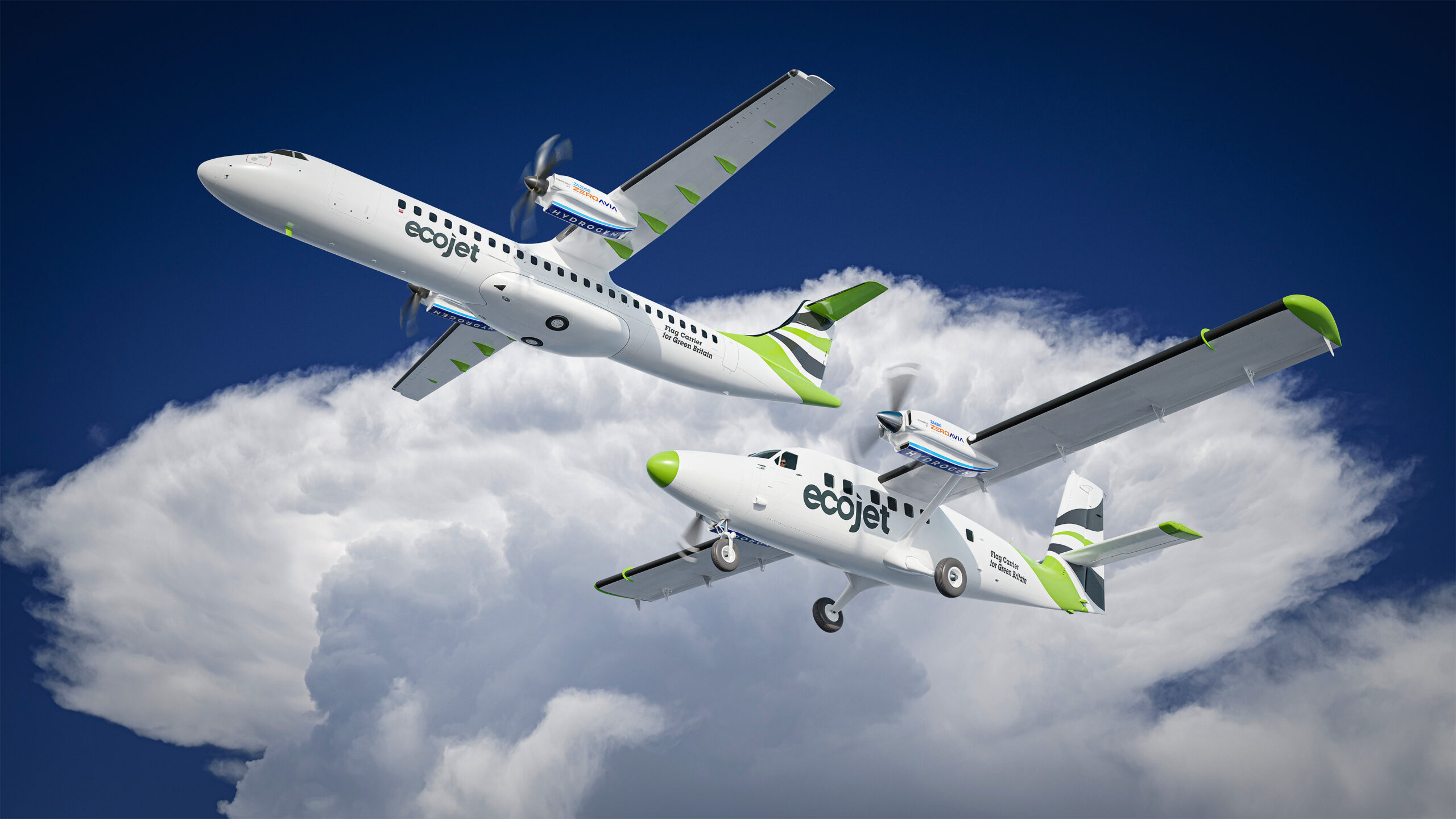
    [Kemble, UK & Edinburgh, UK: November 28, 2023]ZeroAvia today announced that it has signed an agreement with newly launched airline Ecojet for up to 70 hydrogen-electric, zero-emission engines.


    Ecojet – which aims to become the flag carrier for green Britain – will begin operations in 2024 with conventionally powered aircraft operating routes to and from Edinburgh, before converting its fleet to become what it aims to be the world’s first electric airline. The airline will achieve its goal by retrofitting its aircraft with ZeroAvia’s ZA600 engines once certified. Ecojet will be working with MONTE, ZeroAvia’s preferred ZA600 lessor partner, in bringing this groundbreaking technology to market. ZeroAvia is targeting type certification of the ZA600 engine in 2025.


    The newly launched airline has also placed a larger order for the more powerful ZA2000 engine, designed for up to 80 seat regional turboprops and with an entry-in-service target of 2027. This will open up the potential to fly aircraft such as the ATR72 and Dash 8 400, already popular on regional routes across the world.


    ZeroAvia, Ecojet and MONTE will work together with airports and other industry partners, to identify and finance the first pathways to hydrogen-electric commercial operations. ZeroAvia analysis shows that, if powered by UK wind generated green hydrogen, domestic flights would have lower lifecycle carbon emissions per passenger than any other common mode of transport today, including fully occupied cars, domestic rail and coach travel.


    Val Miftakhov, Founder and CEO, ZeroAvia said:


    “Clean aviation will mean increased regional air travel and new routes, Ecojet can capitalize based on their clear focus on low-emission travel. The UK Government’s Jet Zero Strategy has set a great example for the world to follow, but the UK can go much further by being early to act and introducing some of the first zero-emission routes in the world.”

    Dale Vince, Founder, EcoJet, said:


    “We don’t have to give up flying to live a green lifestyle or to get to net zero as a country – and this is big news.  The technology is here now and the planes are coming very soon – carbon free, guilt free flying is just around the corner.  And although aviation is responsible for only a small part of all global emissions, it occupies a far bigger space than that in our psyche.  The hearts and minds value of this new opportunity outweighs the carbon issue significantly. It shows that everything we need to do, can be done, with a low to zero carbon footprint. And that is big news and a big encouragement to us all.”

    In June, ZeroAvia announced that it had signed a definitive purchase agreement with lessor MONTE for 100 engines. MONTE will provide financing for Ecojet’s powertrain purchase, installation and operation, meaning that Ecojet will become the lessors first confirmed customer, and recipient of their currently reserved production slots with ZeroAvia.


    Rishi Majithia, Head of Investment, MONTE said:


    “Since signing our definitive purchase agreement with ZeroAvia, we have been working closely with ZeroAvia and our global network of aircraft operators to reach tri-party agreements on the use of the ZA600 powertrain. Ecojet’s commitment to using the ZA600 whilst being financed by MONTE is one of the first of these partnerships and we are excited to be working with an operator that is aligned with our goals of decarbonizing regional aviation.”

    ZeroAvia recently completed a program of 10 test flights of a prototype of its ZA600 for the Dornier 228 aircraft at its UK base in Kemble, Gloucestershire. In May, the company unveiled its testbed aircraft for testing the ZA2000 engine, a Dash 8 400 76-seat plane provided by Alaska Airlines, as well as announcing rapid progress in developing the core technologies for flying these larger aircraft. 


    Hydrogen-electric engines use hydrogen in fuel cells to generate electricity, which is then used to power electric motors to turn the aircraft’s propellers. The only emission is water.

    Subscribe to our Newsletter

    About ZeroAvia


    ZeroAvia is a leader in zero-emission aviation, focused on hydrogen-electric aviation as the initially targeting a 300-mile range in 9–19 seat aircraft by the end of 2025, and up to 700-mile range in 40–80 seat aircraft by 2027. Based in the US and the UK, ZeroAvia has already secured experimental certificates for its three prototype aircraft from the CAA and FAA, passed significant flight test milestones, secured a number of key partnerships with major aircraft OEMs, secured pre-orders for nearly 2,000 engines from a number of the major global airlines, with future revenue potential over $10bn. ZeroAvia is part of the UK Government’s Jet Zero Council. For more, please visit ZeroAvia.com, follow @ZeroAvia on Facebook, Twitter, Instagram, LinkedIn, and YouTube

    ZeroAvia Press Team

    press@zeroavia.com

    About Ecojet


    Announced by green entrepreneur Dale Vince OBE in July 2023 – Ecojet is the world’s first electric airline and will take to the skies with ZeroAvia’s hydrogen-electric engines in 2025 (subject to certification).  Ecojet’s fleet will comprise conventional planes retrofitted with hydrogen-electric powertrains. Once converted, the aircraft will operate with the same power output as before, but with a one-hundred percent reduction in CO2 emissions. The decision to repurpose old planes rather than build new models from scratch will save 90,000 tonnes of carbon per year.


    About MONTE


    MONTE is a leader in financing zero and low emission technologies in the regional aviation market. MONTE is exclusively focused on supporting the aviation industry’s transition to net zero carbon emissions by providing financing and leasing solutions for sustainable aviation to regional aircraft operators. For more, please visit www.montecleantech.com or follow @MONTE on LinkedIn