Uncategorized Archives - Page 9 of 15 - ZeroAvia

    Please enter your email to subscribe to our newsletter.


    Cancel

    ZeroAvia and Birmingham Airport Plan for Zero-Emission Flights

    • Zero-emission, hydrogen-powered air travel is the aim of a new partnership between ZeroAvia and Birmingham Airport (BHX)
    • The companies have commenced a long-term partnership to make on-airfield hydrogen refuelling and regular domestic passenger flights of zero-emission aircraft a reality in the coming years

    Kemble, UK & Birmingham, UK – February 20, 2023: ZeroAvia is the leader in zero-emission technologies including hydrogen-electric-powered aircraft, such as those successfully test-flown at its base in Kemble, Gloucestershire, in January. Hydrogen-electric engines use hydrogen in fuel cells to generate electricity, which is then used to power electric motors to turn the aircraft’s propellers, with the only byproduct being water.

    ZeroAvia is currently working on bringing to market a zero-emission system capable of flying 20-seat aircraft 300 nautical miles by 2025.

    This opens up the possibility of green air travel from Birmingham to destinations like Glasgow, Aberdeen, Belfast and Dublin by the middle of this decade.

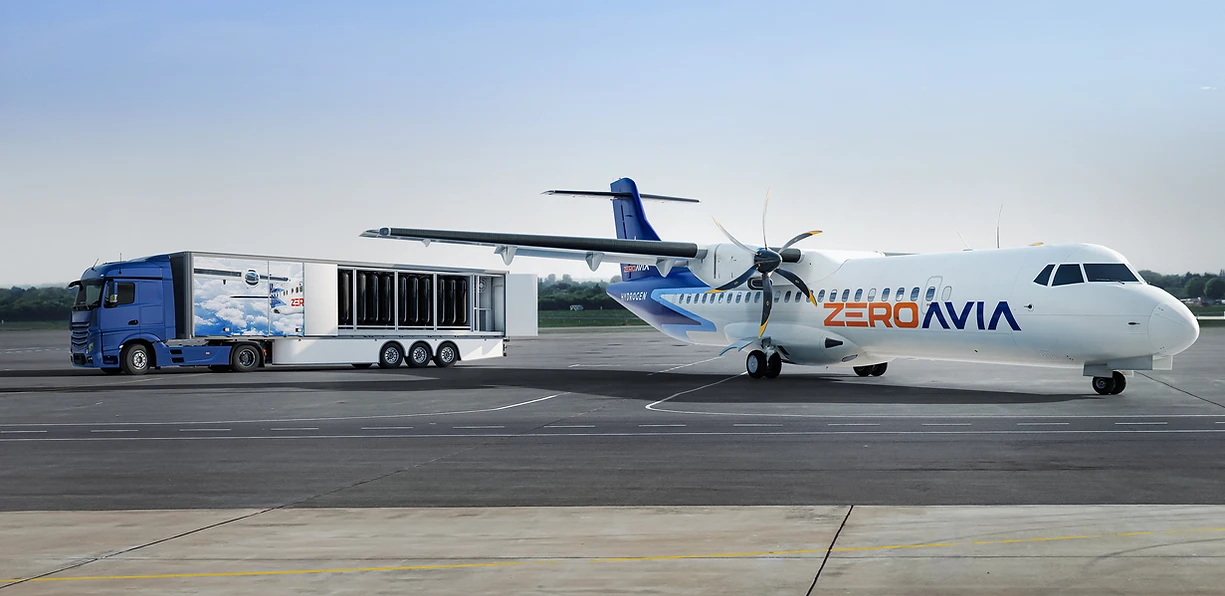
    In a move that would make zero-emission travel to Mediterranean holiday destinations a reality, ZeroAvia is aiming to get an emissions-free 80-seat aircraft flying up to 1,000 nautical miles by 2027.

    For BHX, the partnership with ZeroAvia forms an important part of its journey to become a net-zero-carbon airport by 2033, as outlined in its ‘carbon roadmap’, published in 2022.

    The airport plans to use an area near to its disused Elmdon terminal building as a potential location for hydrogen refuelling infrastructure, testing and operations.

    Tarnab Chatterjee,
    VP Infrastructure, ZeroAvia, said:
     

    “Birmingham Airport can be a central spoke in a green flight network in the UK, given that any domestic mainland destination will be reachable from the airport using our first systems in 2025. Given the commitments of the Jet Zero Strategy on domestic aviation, it is fantastic to engage with forward-thinking airports that want to be early innovators and developers to deliver the vision of bringing truly clean, quiet and pollution free flights to the UK.”

    Arnab Chatterjee – VP Infrastructure
    Simon Richards,
    Chief Finance & Sustainability Officer, Birmingham Airport, said:

    “We are thrilled to partner with ZeroAvia on creating solutions to the main challenge of our generation – protecting the future of our planet. We could, quite conceivably, see the first hydrogen-powered domestic passenger flight taking off from BHX in the UK in a few years. That’s mind-blowing.”

    Subscribe to our Newsletters


    About ZeroAvia


    ZeroAvia is a leader in zero-emission aviation, focused on hydrogen-electric aviation solutions to address a variety of markets, initially targeting a 300-mile range in 5–20 seat aircraft by 2024, and up to 1000-mile range in 40–80 seat aircraft by 2026. Based in the UK and USA, ZeroAvia has already secured experimental certificates for its two-prototype aircraft from the CAA and FAA, passed significant flight test milestones, secured a number of key partnerships with major aircraft OEMs and major global airlines, and is on track for commercial operations in 2024. The company’s expanding UK operations are supported by grants from UK’s Aerospace Technology Institute and Innovate UK, and ZeroAvia is part of the UK Government’s Jet Zero Council. For more, please visit ZeroAvia.com, follow @ZeroAvia on TwitterInstagram, and LinkedIn.


    About Birmingham Airport


    • Pre-pandemic, Birmingham Airport (BHX) served c12.5m passengers a year.

    • c35m people, more than half the population of the UK, live within a two-hour drive or train journey of BHX.

    • BHX is one of the West Midlands’ largest employers, supporting 30,900 jobs and contributing £1.5bn in GVA (gross value added) to the region’s economy. 

    • In the years to 2033, BHX plans to increase its annual passenger numbers to +18m, which will result in GVA rising to £2.1bn and jobs supported to 34,000. Click here for more.

    • Sitting at the heart of the country’s road and rail networks, BHX is the UK’s best-connected airport—and is set to become even better connected in future.

    • When the new HS2 railway is built, complete with its automated people mover linking directly to the BHX terminal, central London will be just 37 minutes away by train.

    • BHX has publicly committed to become a net-zero-carbon airport by 2033. It will do this by prioritising zero carbon airport operations with minimal use of carbon offsets.

    • BHX’s purpose is ‘Proud of every journey.’ That means everyone at BHX, and the 100 organisations operating on the airport site, taking pride in getting customers safely, punctually and comfortably from A to B.

    Press Contact

    ZeroAvia Press Team

    zeroavia@madano.com

    ZeroAvia, Shell, RHIA and Rotterdam The Hague Airport advance Plans for Hydrogen-Electric Flights by 2025

    • Zero-emission innovator, a global energy company, and Netherlands’ second city airport target green flights and decarbonising airport operations using hydrogen

    Kemble, UK & Rotterdam, Netherlands: February 7, 2023: ZeroAvia, the leader in developing zero-emission solutions for commercial aviation, today announced signing a collaboration agreement with Shell, Rotterdam The Hague Airport and Rotterdam The Hague Innovation Airport. The parties will develop a concept of operations for hydrogen in airports and demonstration flights to European destinations by the end of 2024, gearing up for commercial passenger flights by 2025.

    Following up on the cooperation commitment announced last year to launch the first hydrogen-electric commercial flight, this specific collaboration will focus on serving the first hydrogen flight from Rotterdam, including operation at the airport, developing on-the-ground infrastructure and operations to satisfactorily pilot distribution, storage, and dispensing of hydrogen for aviation, leading towards decarbonizing the whole airport ecosystem.


    Ultimately, the project targets supporting aircraft operations using gaseous hydrogen to fuel ZeroAvia’s hydrogen-electric, zero-emission ZA600 engines. For these specific demonstration flights, the parties aim to establish routes to airports in Europe within 250 nautical mile radius of Rotterdam. Last month, ZeroAvia demonstrated a first flight of a 19-seat aircraft powered by its prototype ZA600 engine.

    This project will also target the development of aviation specific standards and protocols around safety, refueling and hydrogen management, enabling rollout of the promising fuel seamlessly. The parties will work together in discussions with potential airline operators for the initial demonstration and subsequent commercial flights.

    Shell brings critical experiences and technical capabilities to the project. This is expertise related to hydrogen end-to-end supply chains and global experiences in design and operation of refueling equipment, including hydrogen. Shell invests in hydrogen production projects with the aim to develop regional and international hydrogen economies. In its decarbonization efforts, Shell collaborates with airports to develop fit-for-future infrastructure that will allow it to supply customers with sustainable aviation fuel, hydrogen and electric planes charging, so called “multi-modular” infrastructure.

    Arnab Chatterjee – VP Infrastructure
    Arnab Chatterjee,
    VP Infrastructure, ZeroAvia, said


    “Having this consortium, including Rotterdam The Hague Innovation Airport and Shell, moves the ball a significant distance down the field towards our goal line of commercial operations. Some first passengers on zero-emission flights in the world could be flying from Rotterdam. There is still a lot of work to do, but with clear milestones and targets identified, the hard work really starts now towards delivering the infrastructure and exploring the protocols and standards required.”

    Oliver Bishop, General Manager  Hydrogen at Shell said: 


     “This project and collaboration is a milestone as it enables a rapid decarbonization of a hard-to-electrify sector such as aviation. It also offers the chance to support one of the first international zero-emission passenger routes. On top of that, it allows the opportunity to road test multi-fuel and multimodal fueling operations in a live airport environment. This is a big step forward for hydrogen aviation and for Shell’s plans in this space.”

    Wilma van Dijk, CEO, Rotterdam The Hague Airport of Royal Schiphol Group, said:


    “Hydrogen is key to decarbonize aviation. This collaboration helps us demonstrate and validate new airport infrastructure requirements as well as concepts of operation. And hence accelerate and stimulate airport transformation towards Zero-Emission.”

    ZeroAvia has previously partnered with Shell for the provision of low carbon-intensity hydrogen to power some of its testing and early commercial operations in California. The multinational energy company also invested in ZeroAvia last year.
    Miranda Janse,
    CEO Rotterdam The Hague Innovation Airport, said:


    “As a foundation supported by Rotterdam The Hague airport and Municipality of Rotterdam, RHIA is always keen to drive innovation and sustainable aviation developments at RTHA together with and for a network of partners. RHIA is actively working with partners within its DutcH2 Aviation Hub program to develop hydrogen-driven flights from RTHA. This collaboration is one of the projects within the program that helps us create the open-access infrastructure required for the sector. RHIA is happy to help facilitate this specific partnership and bring the project to life, as well as creating the foundation for the partners within the community.”

    ZeroAvia’s testing of the ZA600 powertrain in flight is part of HyFlyer II, an R&D project supported in part by the UK Government’s ATI programme. The project has also seen the further development of ZeroAvia’s Hydrogen Airport Refuelling Ecosystem (HARE) demonstrator alongside project partner EMEC, and separately ZeroAvia has developed a hydrogen refuelling pipeline at Cotswold Airport.

    Subscribe to our Newsletters


    About ZeroAvia


    ZeroAvia is a leader in zero-emission aviation, focused on hydrogen-electric aviation solutions to address a variety of markets, initially targeting a 300-mile range in 5–20 seat aircraft by 2024, and up to 1000-mile range in 40–80 seat aircraft by 2026. Based in the UK and USA, ZeroAvia has already secured experimental certificates for its two-prototype aircraft from the CAA and FAA, passed significant flight test milestones, secured a number of key partnerships with major aircraft OEMs and major global airlines, and is on track for commercial operations in 2024. The company’s expanding UK operations are supported by grants from UK’s Aerospace Technology Institute and Innovate UK, and ZeroAvia is part of the UK Government’s Jet Zero Council. For more, please visit ZeroAvia.com, follow @ZeroAvia on TwitterInstagram, and LinkedIn.

    Press Contact

    ZeroAvia Press Team
    press@zeroavia.com

    ZeroAvia Flight Testing Hydrogen-Electric Powerplant

    Thanks for checking up on the progress of our Dornier 228 testing program and getting a glimpse at the future of clean aviation!

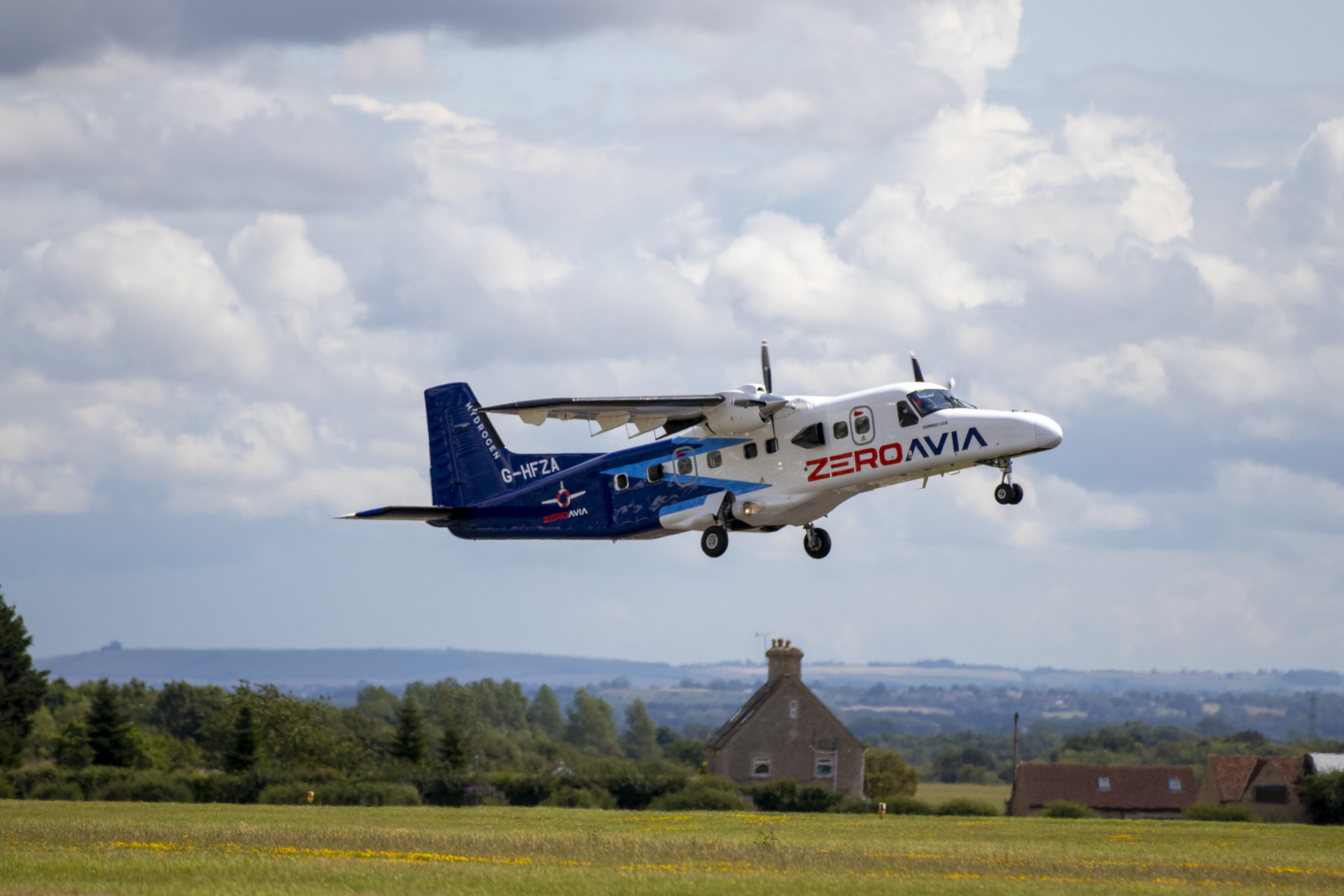
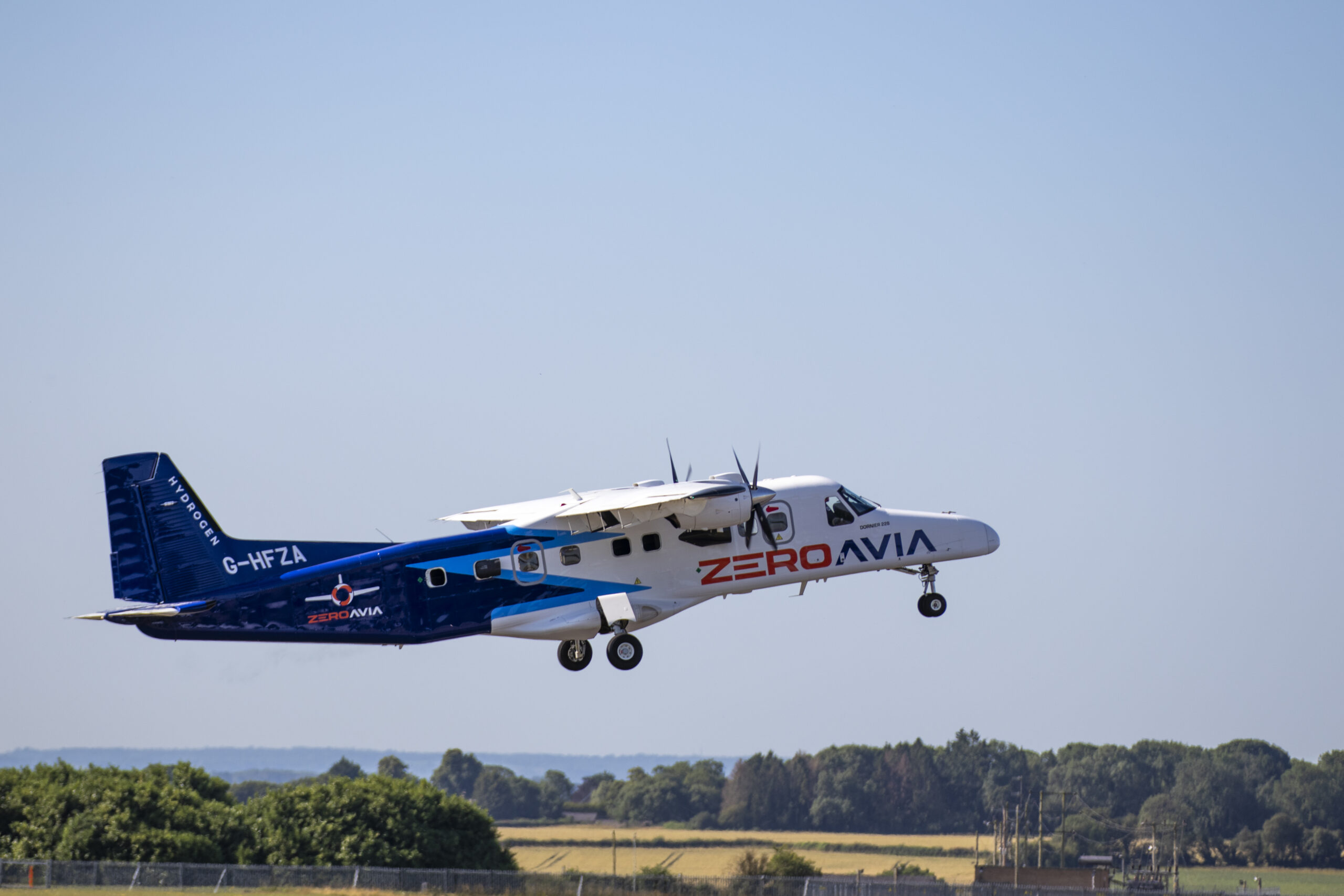
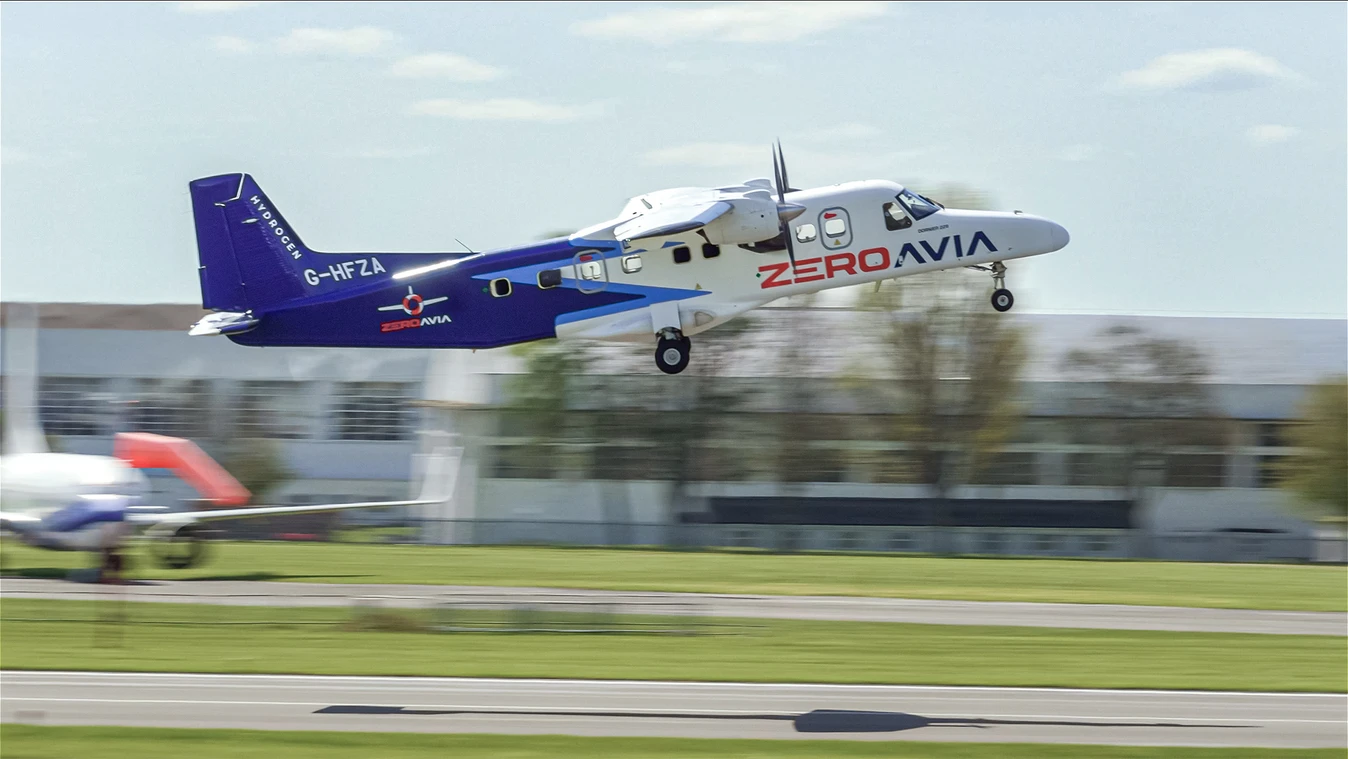
    We have retrofit our prototype ZA600 engine to power the left side propeller of our Dornier 228. The aircraft made history with a milestone first flight on January 19th 2023. The subsequent flights are all part of our bid to build understanding ahead of submitting for certification by the close of this year. ZeroAvia intends to power zero-emission commercial aircraft by 2025.


    We’ll use this page to share the latest updates from the flight test program, including photos and videos from flights, as well as behind the scenes content. Get in touch to let us know your views or pose any questions.

    Table of Contents

    April 18, 2024

    Flight 12 - The longest flight yet!

    Twelfth Flight Time!

    Another great flight test above the Cotswolds today. The longest yet at 35 minutes in duration as we build on efficiency and range. We continue to see excellent performance from our prototype hydrogen-electric system. Closer and closer to leaving home and taking a trip to another airfield.

    Keep watching as the clean future of flight comes closer into view!

    VC: Oliver Kay

    April 4, 2024

    Flight 11 - Taking Back to the Skies

    ZeroAvia resumed flight testing of the Dornier 228 testbed aircraft at Cotswold Airport on April 4th 2024. While excitement was high at resuming flight testing, the 20 minute flight test was described by the team as “unspectacular” as pilot Jon Killerby and flight test engineer James Yapp completed three circuits around the perimeter of the airfield, reflecting again the reliable performance of the hydrogen-electric propulsion system.

    With phase one flight testing complete in July last year, the team is now building up towards a first A to B flight planned for later this Spring. While the destination has not been announced, plans are crystalising around a 20-30 minute flight to a nearby airfield, before performing refueling on site using ZeroAvia’s mobile storage and distribution system, and then returning to base in Kemble.

    July 19, 2023

    Flight 10 - ZeroAvia Successfully Completes #Do228 Flight Test Campaign!

    A milestone moment in zero-emission technology flight testing! 


    We have now completed the 10th successful flight of the #Do228 testbed aircraft, marking the completion of our initial flight test campaign using the prototype ZA600. The test flight has set the groundwork for projecting future ranges using the system, teeing up the first course country flights as the next stage of testing and demonstration. 


    We have tested different areas of performance since our breakthrough world-first flight in January. The campaign has seen the aircraft fly above 5,000 feet, perform an endurance test at 23 minutes, and reach the maximum allowable speed under the Permit to Fly issued by the CAA.   


    Critically, throughout all phases of testing, the fuel cell power generation and electric propulsion system that are the core components of the novel zero-emission engine, performed at or above expectations. 


    Read more here. Plenty more flying to come as we pave the way for zero-emission aviation! Keep an eye out for future updates. 


    Pictured in the photo is the flight ops and Part145 team at ZeroAvia celebrating after the 10th Flight! 

    July 7, 2023

    Flight 9 - Welcome to the Mile Hydrogen Club!

    Welcome to the Mile Hydrogen Club! 


    A great end to the week with the successful completion of our 9th test flight of the Dornier 228 testbed in the wonderfully sunny Cotswolds. The aircraft testing our prototype ZA600 powertrain reached its highest altitude yet, ascending to 5,000 feet MSL, and flying for 20 minutes in total. 


    In the coming days we will undertake our last flight of this phase of flight testing, when we will assess the powertrain’s maximum endurance. Stay tuned for this milestone as we continue to push boundaries!


    Pictured are the aircraft taking off, in flight and two of our senior team – Head of Aircraft Integration and Testing Gabriele Teofili and CTO, Hydrogen Rudolf Coertze

    Another major milestone for ZeroAvia, with the 8th Flight of the Dornier 228 at Cotswold Airport

    May 18, 2023

    Flight 8 - And longer! And higher!

    Another major milestone for ZeroAvia, with the 8th Flight of the Dornier 228 at Cotswold Airport in Gloucestershire. ZeroAvia’s testbed aircraft soared to 4,000 feet MSL, making it the highest flying commercial-scale aircraft powered by fuel cells.


    The aircraft flew for 22 minutes, the longest duration flight yet. Fuel cell systems and the whole hydrogen-electric powertrain performing superbly well.

    May 10, 2023

    Flight 7 - Going longer!

    The Magnificent Seven! Flight 7 of the retrofitted Dornier 228. We flew for 16 minutes, making this the longest flight yet.


    The flight included two climbs. Low cloud cover kept us at lower altitude, making this a good day for flying for longer, versus higher!

    April 28, 2023

    Flight 6 - Going higher!

    Going higher! Having hit our max speed under the permit to fly during flight 5, the team were able to shift focused to flying at higher altitudes to test the system.


    During the sixth flight in this first phase of our flight testing, the Dornier reached 3,000 feet, with the hydrogen-electric powertrain performing as expected. Onwards and upwards!

    ZeroAvia's D228 Testbed Flying

    April 25, 2023

    Flight 5 - Performed as expected

    Flight five in the books! As we approach the midway point in the first phase of our flight testing programme for the retrofitted Dornier 228, we are happy to have achieved the maximum speed allowed under the permit to fly. During three loops of Cotswold Airport, test pilot Jon Killerby and flight test engineer James Yapp reached a top speed of 150 knots.


    In all five flights so far, the hydrogen-electric engine has performed as the team have expected and hoped. Over the next few weeks, we will begin to test at progressively higher altitudes. This testing all helps in our progression towards a certifiable design and the targeted entry-in-service date of 2025.

    April 13, 2023

    Flight 4 - Testing speed

    Amidst a break in the April showers, the flight test team at Kemble managed to perform a fourth test flight of the Dornier 228, completing three circuits above the Cotswold countryside.


    The aircraft reached its highest speed yet (140 kts), with the fuel cell and electric propulsion systems powering the left wing and continuing to increase the performance envelope.


    More flying planned next week and beyond!

    April 6, 2023

    Flight 3 - First hydrogen-electric only flying

    In the third flight in our testing program, we took another massive step forwards with the aircraft performing a leveled flight using only the ZA600 prototype engine. The test crew flew with zero thrust from the conventional turbine engine as the ZA600 entirely powered the testbed aircraft as it circled Cotswold Airport. The flight crew were able to perform tests to confirm the aircraft was able to fly on hydrogen-electric power with the turbine throttled back to simulate a zero thrust. This is all part of our ongoing tests of the powertrain.


    The flight consisted of three loops around the airport in Gloucestershire, UK, with a max speed of 130 knots.


    Plenty more flying to come as we test the system more as part of our path to certification by 2025. Stay tuned for further updates.

    January 19th, 2023

    First Breakthrough Flight

    ZeroAvia made aviation history with a huge step forward for the development of zero-emission flight on January 19th, 2023. The 19-seat Dornier 228 testbed aircraft took to the skies above England’s Cotswolds with the leftside propeller powered by a hydrogen-electric powertrain, making this the largest aircraft flown with hydrogen-electric propulsion at the time.


    This sets ZeroAvia well on the way to meeting the target of commercial flights using only hydrogen fuel cell power by 2025. It is a huge step towards a truly clean future for aviation.


    The future of flight is renewable hydrogen, and we’re so proud to be leading the way!

    September 30, 2022

    High Speed Taxi Testing

    Time to release the brakes!


    ZeroAvia ended September 2022 on a high, with our team witnessing the Dornier 228 aircraft accelerating down the runway, as part of our last giant step towards flight testing.


    The high speed taxiing took place at Cotswold Airport, last week. Test Pilot, Jon Killerby said: “We were able to do four rounds down the runway. We’re really happy with the handling and the performance of the fuel cells, especially. They’re generating the power we need, and were stable throughout the whole timespan we were running it.”

    September 13, 2022

    First Movements of ZeroAvia’s Dornier 228 Aircraft

    What a sight!


    All eyes were glued on the Dornier 228 as it made its first movements on the runway, with the hydrogen-electric powertrain powering the left side propeller!


    The medium power taxi testing took place early September 2022 at Cotswold Airport. Head of Aircraft Integration & Testing, Gabriele Teofili said:”The hydrogen-electric powertrain is delivering power, it’s doing what we expect, and the only thing that was not according to our expectation were a couple of drops of rain. Otherwise, we are very happy.

    June 15, 2022

    Start of the ground testing

    ZeroAvia started ground testing fully integrated flight configuration 19-seat prototype​.


    In mid-June 2022, ZeroAvia’s Dornier 228 testbed aircraft was on the verge of being the largest aircraft ever flown with a hydrogen-electric powertrain. ZeroAvia started the first outdoor ground testing of our aircraft after spending weeks completing the installation of the hydrogen-electric powertrain.


    According to Gabriele Teofili, the Head of Aircraft Integration and Testing at ZeroAvia, the commencement of the ground-test program was a day that engineers eagerly wait for.

    December 1, 2021

    First Propeller Spin

    First Propeller Spin for ZeroAvia’s Dornier 228 19-seat testbed Aircraft.


    ZeroAvia reached another milestone just before the end of 2021 with the first spin of the propeller on our Dornier 228 using electric power. The test was designed as a functional check of the fully integrated and flight-ready Electric Propulsion System aboard the testbed aircraft at Cotswold Airport in the UK. Several tests were performed, kicking off the 4-week ground test program before clearing the aircraft for flight.


    ZeroAvia’s work on the powertrain for 10-20 seat aircraft is part of the HyFlyer II project, in partnership with Aeristech and EMEC, and supported by the Aerospace Technology Institute, Innovate UK and BEIS.

    Subscribe to our Newsletters

    ZeroAvia Makes Aviation History, Flying World’s Largest Aircraft Powered with a Hydrogen-Electric Engine

    • 19-seat Dornier 228 twin-engine aircraft takes to the sky in testbed configuration for first flight as part of the HyFlyer II project
    • Milestone moves ZeroAvia forward on the way to meeting target of commercial flights using only hydrogen fuel cell power by 2025, and scaling the engine technology to larger airframes
    • Marks a significant step in addressing aviation’s climate change impact and a major innovation success for the UK Government’s Jet Zero Strategy

    Kemble, UK, January 19, 2023: Zero-emission flight took a giant step forward today with ZeroAvia flying the largest aircraft in the world to be powered by a hydrogen-electric engine. The leader in zero-emission aviation took to the skies for the maiden flight of its 19-seat Dornier 228 testbed aircraft, retrofitted with a full-size prototype hydrogen-electric powertrain on the left wing of the aircraft.

    The flight took place from the company’s R&D facility at Cotswold Airport in Gloucestershire, UK, and lasted 10 minutes. At 13.35 pm GMT this afternoon the aircraft completed taxi, take-off, a full pattern circuit, and landing. The landmark flight forms part of the HyFlyer II project, a major R&D programme backed by the UK Government’s flagship ATI Programme, which targets development of a 600kW powertrain to support 9-19 seat aircraft worldwide with zero-emission flight. 


    The twin-engine aircraft was retrofitted to incorporate ZeroAvia’s hydrogen-electric engine on its left wing, which then operated alongside a single Honeywell TPE-331 stock engine on the right. In this testing configuration, the hydrogen-electric powertrain comprises two fuel cell stacks, with lithium-ion battery packs providing peak power support during take-off and adding additional redundancy for safe testing. In this testbed configuration, hydrogen tanks and fuel cell power generation systems were housed inside the cabin. In a commercial configuration, external storage would be used and the seats restored.


    All systems performed as expected. This is the largest ZeroAvia engine tested to date, and places the company on the direct path to a certifiable configuration to be finalized and submitted for certification in 2023, with this programme also serving as key to unlocking speedy technology development for larger aircraft. ZeroAvia’s 2-5 MW powertrain programme, already underway, will scale the clean engine technology for up to 90-seat aircraft, with further expansion into narrowbody aircraft demonstrators over the next decade.

    Of note, this flight test campaign is being conducted under a full Part 21 flight permit with the UK CAA, which is a much more stringent set of requirements compared to the E-Conditions framework ZeroAvia used for its 6-seat prototype test flights in the prior years. This signifies the maturity of the company’s processes and design approaches and its readiness to proceed towards full commercial certification of its powerplants.


    ZeroAvia will now work towards its certifiable configuration in order to deliver commercial routes using the technology by 2025. The Dornier 228 will conduct a series of test flights from Kemble and later demonstration flights from other airports. Almost exactly two years ago, ZeroAvia conducted the first of more than 30 flights of a six-seat Piper Malibu aircraft using a 250kW hydrogen-electric powertrain.

    Celebrating this remarkable progress, Val Miftakhov, ZeroAvia, Founder & CEO, said:


    “This is a major moment, not just for ZeroAvia, but for the aviation industry as a whole, as it shows that true zero-emission commercial flight is only a few years away. The first flight of our 19-seat aircraft shows just how scalable our technology is and highlights the rapid progress of zero-emission propulsion. This is only the beginning – we are building the future of sustainable, zero climate impact aviation. Our approach is the best solution to accelerate clean aviation at scale. Congratulations to everyone on our team and all of our partners and stakeholders for the collective effort that brought us to this monumental day in history.”

    Val Miftakhov – Founder & CEO
    Secretary of State for Business,
    Grant Shapps, said:


    “Today’s flight is a hugely exciting vision of the future – guilt-free flying and a big step forward for zero-emission air travel. It also demonstrates how government funding for projects like these is translating into net zero growth.

    The UK is a world leader in green aviation technology, and the global shift to cleaner forms of flight represents a huge opportunity to secure growth and jobs for our country. That’s why we are backing businesses who share our ambitions, reaping the benefits of green technology and growing the thousands of new, skilled jobs that come with it.”

    This latest achievement follows ZeroAvia’s previous world-first milestones, starting with 6-seat prototype flights of a Piper M-Class airframe in 2019, and the world’s first commercial-scale 6-seater hydrogen-electric powered flight in September 2020. The 2020 prototype was a part of the HyFlyer I programme in the UK. Unlike the previous tech demonstrator programme, ZeroAvia’s 600kW engine being developed under HyFlyer II is a commercial-intent programme.

    The hydrogen-electric powertrain on board was fuelled using compressed gaseous hydrogen produced with an on-site electrolyzer. To enable hydrogen production on site, ZeroAvia and HyFlyer II partner the European Marine Energy Centre (EMEC) have delivered and operated the Hydrogen Airport Refuelling Ecosystem (HARE), a microcosm of what infrastructure will look like in terms of green hydrogen production, storage, refueling and fuel cell powered flight. The system’s electrolyzer capacity was doubled earlier this year from its initial design for the latest project.

    ZeroAvia’s HyFlyer II programme to develop its ZA-600 hydrogen-electric engine and retrofit the Dornier 228 is being delivered in partnership with EMEC and Aeristech and is supported by the UK Government through the ATI Programme and the Department for Business, Energy Industrial Strategy, Innovate UK and Aerospace Technology Institute. Val Miftakhov is also a member of the UK Government’s Jet Zero Council.

    Today’s historic first flight follows significant commercial momentum for ZeroAvia in recent months, including an engine order from American Airlines, a partnership agreement with OEM Textron Aviation and infrastructure partnerships with airports including Rotterdam, Edmonton International and AGS Airports. With 1,500 engines on pre-order, partnerships with 7 aircraft manufacturers, and a number of fuel and airport partnerships, ZeroAvia is well positioned to lead the industry’s transformation to a clean future.

    Subscribe to our Newsletters

    About ZeroAvia


    ZeroAvia is a leader in zero-emission aviation, focused on hydrogen-electric aviation solutions to address a variety of markets, initially targeting a 300-mile range in 5–20 seat aircraft by 2024, and up to 1000-mile range in 40–80 seat aircraft by 2026. Based in the UK and USA, ZeroAvia has already secured experimental certificates for its two-prototype aircraft from the CAA and FAA, passed significant flight test milestones, secured a number of key partnerships with major aircraft OEMs and major global airlines, and is on track for commercial operations in 2024. The company’s expanding UK operations are supported by grants from UK’s Aerospace Technology Institute and Innovate UK, and ZeroAvia is part of the UK Government’s Jet Zero Council. For more, please visit ZeroAvia.com, follow @ZeroAvia on TwitterInstagram, and LinkedIn.


    About the HyFlyer II Project


    The HyFlyer II project will see ZeroAvia develop a certifiable hydrogen-electric powertrain that can power airframes carrying up to 19 passengers. To do this, it will collaborate with two partners, the European Marine Energy Centre and Aeristech. The HyFlyer II project will conclude with another world’s first hydrogen-electric flight by ZeroAvia in a 19-seat aircraft, with a 300 nautical mile flight in 2023. The HyFlyer II project is part-funded by the UK Government’s Aerospace Technology Institute’s (ATI) programme, supported by the Department for Business, Energy and Industrial Strategy and Innovate UK.

    ZeroAvia Press Team:

    press@zeroavia.com

    ZeroAvia Named on the 2023 Global Cleantech 100 List of Exceptional Innovators with the Determination and Technologies to Race to Net-Zero

    Hollister, CA & Kemble, UK, January 12, 2023: ZeroAvia, the leader in developing zero-emission solutions for commercial aviation, has been named on Cleantech Group’s 2023 Global Cleantech 100. The Global Cleantech 100 is an annual list of the most innovative and promising companies that will take us from commitments to actions in our efforts to reach net zero. The Global Cleantech 100 companies are delivering sustainable solutions in these six sectors: Agriculture & Food, Enabling Technologies, Energy & Power, Materials & Chemicals, Resources & Environment, and Transportation & Logistics.
    Val Miftakhov,
    CEO and founder of ZeroAvia, said:


    “Hydrogen is key to decarbonize aviation. This collaboration helps us demonstrate and validate new airport infrastructure requirements as well as concepts of operation. And hence accelerate and stimulate airport transformation towards Zero-Emission.”

    Val Miftakhov – Founder & CEO

    The total number of nominations from the public, Cleantech Group’s expert panel, i3 research portal, awards, and Cleantech Group staff totaled 15,753 from over 93 countries. These companies were weighted and scored to create a short list of 330 companies that were reviewed by the 81 members of an expert panel. The Global Cleantech 100 Expert Panel is made up of leading investors, and corporate and industrial executives who are active in technology and innovation scouting.


    The Global Cleantech 100 program has been running since 2009. This highly anticipated annual report brings you the complete list of companies with the most promising ideas in cleantech—the ones best positioned to help us build a more digitized, de-carbonized and resource-efficient industrial future. Download the Global Cleantech 100 complimentary report.

    Richard Youngman,
    CEO Cleantech Group, said:


    “Having this consortium, including Rotterdam The Hague Innovation Airport and Shell, moves the ball a significant distance down the field towards our goal line of commercial operations. Some first passengers on zero-emission flights in the world could be flying from Rotterdam. There is still a lot of work to do, but with clear milestones and targets identified, the hard work really starts now towards delivering the infrastructure and exploring the protocols and standards required.”

    Miranda Janse,
    CEO Rotterdam The Hague Innovation Airport, said:


    “As a foundation supported by Rotterdam The Hague airport and Municipality of Rotterdam, RHIA is always keen to drive innovation and sustainable aviation developments at RTHA together with and for a network of partners. RHIA is actively working with partners within its DutcH2 Aviation Hub program to develop hydrogen-driven flights from RTHA. This collaboration is one of the projects within the program that helps us create the open-access infrastructure required for the sector. RHIA is happy to help facilitate this specific partnership and bring the project to life, as well as creating the foundation for the partners within the community.”

    These featured companies will be recognized at the upcoming Cleantech Forum North America on January 23–25 in Palm Springs, CA. Attendees will have the opportunity to connect with many of the companies on the list, along with many other rising stars.

    Subscribe to our Newsletters

    About ZeroAvia


    ZeroAvia is a leader in zero-emission aviation, focused on hydrogen-electric aviation solutions to address a variety of markets, initially targeting a 300-mile range in 5–20 seat aircraft by 2024, and up to 1000-mile range in 40–80 seat aircraft by 2026. Based in the UK and USA, ZeroAvia has already secured experimental certificates for its two-prototype aircraft from the CAA and FAA, passed significant flight test milestones, secured a number of key partnerships with major aircraft OEMs and major global airlines, and is on track for commercial operations in 2024. The company’s expanding UK operations are supported by grants from UK’s Aerospace Technology Institute and Innovate UK, and ZeroAvia is part of the UK Government’s Jet Zero Council. For more, please visit ZeroAvia.com, follow @ZeroAvia on TwitterInstagram, and LinkedIn.


    About Cleantech Group:


    Cleantech® Group provides research, consulting and events to catalyze opportunities for sustainable growth powered by innovation. At every stage from initial strategy to final deals, we bring corporate change makers, investors, governments and stakeholders from across the ecosystem the access and customized support they need to thrive in a more digitized, de-carbonized and resource-efficient future.

    Press Contact

    ZeroAvia Press Team

    press@zeroavia.com


    Cleantech Group
    Carole Jacques
    Director of Marketing
    carole.jacques@cleantech.com
    +1 347-225-6542

    ZeroAvia Heads to World Economic Forum in Davos for Second Time

    Hollister, CA & Kemble, UK: ZeroAvia CEO Val Miftakhov has been invited to attend the Word Economic Forum annual meeting in Davos, Switzerland this month in order to join discussions with world political, economic and business leaders around sustainable transport. Val will join the meeting with a view to communicating the existential threat facing aviation—so critical to global commerce and international relations—and describe how we can have clean, guilt-free flight in the decades to come if the right action is taken.

    In 2021 ZeroAvia was named a tech pioneer by the World Economic Forum, with Val attending the COVID delayed event hosted in May last year. Since the special Spring edition of Davos, ZeroAvia has continued to make massive progress, announcing powertrain commitment and investment from American Airlines and securing a permit to fly for its 19–seat demonstrator, which is scheduled to take place ahead of the event in Switzerland. The continued momentum and importance of ZeroAvia’s mission to the WEF agenda resulted in a second invite to the marquee gathering, this time as part of the World Economic Forum Technology Pioneers and Unicorns community, reflecting the significant progress the company has made through 2022.

    Under the theme ‘Cooperation in a Fragmented World’, the Annual Meeting 2023 will bring together more than 2,500 leaders from government, business and civil society, at a pivotal time for the world.

    Arnab Chatterjee,
    VP Infrastructure, ZeroAvia, said:


    “We are working hard to demonstrate the future of aviation: emissions-free flight using hydrogen-electric engines. As well as the technology development, I am passionate about explaining the enormous threat that climate change poses to aviation, an industry that is so critical to our collective prosperity. We can fly with a clean conscience in the years ahead, but we must pursue the furthest reaching solutions to tackling aviation emissions. It is of the upmost importance that world business and political leaders appreciate the complexity of the challenge and the best ways forward.”

    ZeroAvia has previously partnered with Shell for the provision of low carbon-intensity hydrogen to power some of its testing and early commercial operations in California. The multinational energy company also invested in ZeroAvia last year.

    Subscribe to our Newsletters


    About ZeroAvia


    ZeroAvia is a leader in zero-emission aviation, focused on hydrogen-electric aviation solutions to address a variety of markets, initially targeting a 300-mile range in 5–20 seat aircraft by 2024, and up to 1000-mile range in 40–80 seat aircraft by 2026. Based in the UK and USA, ZeroAvia has already secured experimental certificates for its two-prototype aircraft from the CAA and FAA, passed significant flight test milestones, secured a number of key partnerships with major aircraft OEMs and major global airlines, and is on track for commercial operations in 2024. The company’s expanding UK operations are supported by grants from UK’s Aerospace Technology Institute and Innovate UK, and ZeroAvia is part of the UK Government’s Jet Zero Council. For more, please visit ZeroAvia.com, follow @ZeroAvia on TwitterInstagram, and LinkedIn.

    Press Contact

    ZeroAvia Press Team

    press@zeroavia.com

    ZeroAvia Gets CAA Green Light for Next Phase of Hydrogen-Electric Test Flights

    • ZeroAvia closes off 2022 by securing a Part 21 permit to fly for retrofitted Dornier 228 from the Civil Aviation Authority, following successful groundtesting campaign
    • Milestone paves the way for pioneering test flights of 19-seat testbed to begin in early 2023

    Kemble UK, December 23, 2022: The UK’s Civil Aviation Authority (CAA) has granted a permit to fly for ZeroAvia’s Dornier 228 aircraft, which has been retrofitted with its prototype hydrogen-electric powertrain. ZeroAvia secured the permit to fly following an extensive ground testing campaign and a rigorous review of the full development program.


    It means that ZeroAvia, the leader in zero-emission aviation, can now begin the first test flights of its 600kW hydrogen-electric powertrain. The 19-seat twin-engine aircraft has been retrofitted in an engineering testbed configuration to incorporate ZeroAvia’s hydrogen-electric engine powering the propellor on its left wing, operating alongside a single Honeywell TPE-331 stock engine on the right for appropriate redundancy to allow the safe testing of the novel propulsion technology.


    The test flights are set to be a landmark achievement for ZeroAvia and the HyFlyer II project, a major R&D program backed by the UK Government’s ATI Programme, which targets the development of a 600kW hydrogen-electric powertrain for 9-19 seat aircraft.


    For this testing program, ZeroAvia has worked with the CAA in meeting a far more stringent set of requirements when compared to the E-Conditions framework ZeroAvia had used for its 6-seat prototype in 2020. Part 21 is an industry-standard term used to describe the regulatory approval of aircraft design and production organizations, and the certification of products, parts, and appliances for aircraft. Securing this permit to fly is a significant milestone in ZeroAvia’s path towards commercialization.

    Val Miftakhov,
    ZeroAvia, Founder & CEO, said:


    “Earning our full Part 21 permit to fly with the CAA is a critical milestone as we develop a zero-emission aviation propulsion system that will be the most environmental and economical solution to the industry’s climate impact. We’re going to be starting 2023 in the best way possible, by demonstrating through flight that true zero-emission commercial flight is much closer than many think.

    It will pave the way for a commercially certifiable configuration for ZA600 to be submitted by the end of 2023, ahead of delivering powertrains for the first commercial routes for 9-19 seat aircraft to commence by 2025. With 1,500 engines under pre-order, partnerships with seven aircraft manufacturers and multiple fuel and airport partnerships, ZeroAvia is well positioned to lead the industry’s transformation to a clean future.


    When test flights begin in January, ZeroAvia’s Dornier 228 testbed is expected to become the largest aircraft to ever fly using a hydrogen-electric powertrain.

    Subscribe to our Newsletters

    About ZeroAvia


    ZeroAvia is a leader in zero-emission aviation, focused on hydrogen-electric aviation solutions to address a variety of markets, initially targeting a 300-mile range in 5–20 seat aircraft by 2024, and up to 1000-mile range in 40–80 seat aircraft by 2026. Based in the UK and USA, ZeroAvia has already secured experimental certificates for its two-prototype aircraft from the CAA and FAA, passed significant flight test milestones, secured a number of key partnerships with major aircraft OEMs and major global airlines, and is on track for commercial operations in 2024. The company’s expanding UK operations are supported by grants from UK’s Aerospace Technology Institute and Innovate UK, and ZeroAvia is part of the UK Government’s Jet Zero Council. For more, please visit ZeroAvia.com, follow @ZeroAvia on TwitterInstagram, and LinkedIn.


    About the HyFlyer II Project


    The HyFlyer II project will see ZeroAvia develop a certifiable hydrogen-electric powertrain that can power airframes carrying up to 19 passengers. To do this, it will collaborate with two partners, the European Marine Energy Centre and Aeristech. The HyFlyer II project will conclude with another world’s first hydrogen-electric flight by ZeroAvia in a 19-seat aircraft, with a 300 nautical mile flight in 2023. The HyFlyer II project is part-funded by the UK Government’s Aerospace Technology Institute’s (ATI) programme, supported by the Department for Business, Energy and Industrial Strategy and Innovate UK.

    Press Contact


    ZeroAvia Press Team

    press@zeroavia.com

    ZeroAvia and Air France Industries KLM Engineering & Maintenance have signed a first-of-a-kind MOU focused on partnering to develop capabilities and knowledge around maintenance, repair and overhaul (MRO) for hydrogen-electric aircraft propulsion systems.

    We will work with our partners in AFI KLM E&M to assess the training needs that will be required for technicians involved in retrofit and maintenance, explore data analytics and prognostics, and work towards possible retrofit and MRO partnerships to support ZeroAvia powertrains globally.


    To see one of the world’s largest and most reputable MRO providers planning for different future new forms of propulsion including hydrogen-electric powertrains is another proof point as to why we think zero-emissions aviation will go much further, much sooner, than some imagine.


    Derk Nieuwenhuijze – Head of Strategy, Marketing & Communications, Air France Industries KLM Engineering & Maintenance – joins a panel at our Hydrogen Aviation Summit later today.


    Join here.

    Press Contact


    ZeroAvia Press Team

    press@zeroavia.com

    Subscribe to our Newsletters

    ZeroAvia & AGS Airports Team Up to Bring Zero-Emission Flights to Scotland

    • Zero-emission aviation pioneer and AGS Airports to collaborate on hydrogen fuel infrastructure and launching zero-emission routes in first-of-a-kind partnership for the UK

    Kemble & Glasgow, UK, November 2, 2022:: ZeroAvia, the leader in developing zero-emission solutions for commercial aviation, today announced an agreement with AGS Airports to explore the development of hydrogen fuel infrastructure, regulatory framework requirements and resourcing required for delivering zero-emission flights from Aberdeen and Glasgow airports.


    The team at AGS, which owns and operates Aberdeen, Glasgow and Southampton airports, will work closely with ZeroAvia’s specialist airport infrastructure team to assess the opportunities for hydrogen production onsite, as well as exploring potential commercial routes.

    Switching some routes to aircraft powered by ZeroAvia’s hydrogen-electric powertrain will help AGS Airports to significantly reduce Scope 3 carbon emissions from aircraft and reduce noise and air quality impacts locally. At the same time, AGS will explore how hydrogen can be used to remove emissions across ground operations, further extending the impact.


    ZeroAvia will share its experience in developing and operating its Hydrogen Airport Refuelling Ecosystem (HARE) at Cotswold Airport in Gloucestershire. The partners will work towards a flight demonstration powered by ZeroAvia’s ZA600 600kW hydrogen-electric engine, which is on a path towards certification by 2025. Commercial routes from Scotland’s biggest city, Glasgow, could follow soon after.

    The agreement will form an important part of AGS Airports’ drive to reach net zero carbon emissions by the middle of the next decade. The airport operator’s sustainability strategy is market-leading in its ambition for tackling environmental impact from flight.

    Arnab Chatterjee – VP Infrastructure
    Arnab Chatterjee,
    VP Infrastructure, ZeroAvia, said:


    “In recent months, we have stepped up our work with airports significantly to better understand the operational needs and requirements for hydrogen as a fuel. Working with the team at AGS allows us to plan for some of the commercial routes that we will be able to support in a little over two years’ time, and do so in the setting of a major international airport.”

    Derek Provan,
    Chief Executive of AGS Airports, said:


    “The development of hydrogen powered aircraft has the potential to completely revolutionise aviation, and it is becoming an increasingly viable option for regional and short-haul aircraft. As a regional airport group serving the Highlands and Islands of Scotland as well as the Channel Islands from Southampton, AGS will be the perfect testbed for hydrogen flight. Through our partnership with ZeroAvia we’ll address some of the challenges associated with the generation, delivery and storage of hydrogen on-site and how we can prepare our infrastructure to support zero emission flights.”

    Scottish Minister for Transport,
    Jenny Gilruth, said:


    “This is an encouraging development as hydrogen has the potential to be a true zero emission fuel and could play a key role in helping the Scottish aviation sector reach net zero. Many of the routes that operate from Glasgow and Aberdeen to airports across the Highlands and Islands are served by small aircraft and real social, economic and environmental benefits could be delivered by cleaner, quieter and lower cost aircraft. I congratulate AGS Airports and ZeroAvia on this partnership and will follow its progress with interest.”

    Zero-emission route flights will better connect Scotland’s major cities to remote areas in the Highlands and Islands, but also to other parts of the UK within the next few years. Given the reduced operating costs and lower noise profile offered by hydrogen-electric engines, operating more flights becomes attractive and can thus boost regional economic growth. Aircraft relevant to ZeroAvia’s first commercial offering (ZA600) already operate from Glasgow, and there is a potential to expand zero-emission flights across the AGS group to Aberdeen and Southampton.


    The ZA600 is designed to power 9–19 seat aircraft up to 300 nautical miles, and will soon be flight tested for the first time in a 19-seat Dornier 228. ZeroAvia’s mission is to deliver hydrogen-electric engines in every aircraft, having identified the technology as the most practical, economical, and furthest reaching solution for reducing aviation’s climate change and clean air impacts. Hydrogen-electric engines use hydrogen in fuel cells to generate electricity, which is then used to power electric motors to turn the aircraft’s propellers, with the only byproduct being water.


    ZeroAvia’s infrastructure team is working to deliver low-cost, low-carbon, resilient and reliable hydrogen to decarbonise airport ecosystems and fuel hydrogen-electric powertrains. The team is working with airports and other partners to deliver last-mile hydrogen delivery and refuelling infrastructure to support airline operators, supported either by upstream fuel supplier partnerships or building of distributed production infrastructure.

    Subscribe to our Newsletters

    About ZeroAvia


    ZeroAvia is a leader in zero-emission aviation, focused on hydrogen-electric aviation solutions to address a variety of markets, initially targeting a 300-mile range in 5–20 seat aircraft by 2024, and up to 1000-mile range in 40–80 seat aircraft by 2026. Based in the UK and USA, ZeroAvia has already secured experimental certificates for its two-prototype aircraft from the CAA and FAA, passed significant flight test milestones, secured a number of key partnerships with major aircraft OEMs and major global airlines, and is on track for commercial operations in 2024. The company’s expanding UK operations are supported by grants from UK’s Aerospace Technology Institute and Innovate UK, and ZeroAvia is part of the UK Government’s Jet Zero Council. For more, please visit ZeroAvia.com, follow @ZeroAvia on TwitterInstagram, and LinkedIn.


    About AGS Airports


    AGS Airports Limited was established in 2014 to invest in Aberdeen International, Glasgow and Southampton airports and is the second largest airport group in the UK.


    AGS Airports Limited is jointly held by Ferrovial (via Faero UK Limited) and AGS Ventures Airports Limited, an entity controlled by Macquarie European Infrastructure Fund 4 LP.


    AGS Airports supports tens of thousands of jobs and contributes in excess of £2 billion in GVA to the UK economy every year. In 2021, AGS launched its sustainability strategy, setting out how it will balance the undoubted economic and social benefits of aviation with its climate change responsibilities. AGS has:

    • Reduced its direct carbon emissions by 52% since 2018.
    • Achieved carbon neutrality in 2020.
    • Has committed to achieving net zero for direct emissions by the mid-2030s.

    Press Contact


    ZeroAvia Press Team

    press@zeroavia.com

    ZeroAvia Acquires Leading Fuel Cell Stack Innovator HyPoint

    • Hydrogen-electric aviation pioneer strengthens product roadmap with addition of world-leading HTPEM fuel cell stack technology and team
    • News follows announcement of deal signed with PowerCell for delivery of LTPEM fuel cell stacks, giving ZeroAvia a strong position across the fuel cell technology spectrum

    Hollister, California & Kemble, UK, October 6, 2022: ZeroAvia, the leader in developing zero-emission solutions for commercial aviation, today announced that it has acquired in full the leading fuel cell stack innovator HyPoint. The financial terms of the deal were not disclosed.

    The acquisition adds HyPoint’s advanced high-temperature fuel cell technology—a promising avenue for increasing power output and energy density of aviation fuel cell powertrains—to ZeroAvia’s already leading expertise in developing the full powertrain to enable hydrogen-electric flight.

    All 40 HyPoint team members will be integrated into ZeroAvia, working across the R&D locations in Kemble, Gloucestershire, and HyPoint’s location in Sandwich, Kent. HyPoint’s CEO Alex Ivanenko joins ZeroAvia as GM for VTOL and New Segments, to develop ZeroAvia’s rotorcraft business applications, and to explore other applications outside ZeroAvia’s core focus on fixed-wing commercial aviation.

    All of HyPoint’s engineering team will join ZeroAvia’s Hydrogen Power Generation Systems (PGS) division led by Rudolf Coertze, CTO Hydrogen, combining two rare sets of exceptionally talented fuel cell researchers and engineers working in the field today.

    The two companies have worked closely together on co-developing and testing HTPEM fuel cell technology as part of ZeroAvia’s powertrain development over the last couple of years, with HyPoint relocating the bulk of its R&D into the UK in February 2022 to support the partnership. HyPoint has garnered recognition as an innovator developing technology with the potential to significantly expedite the introduction of fuel cell propulsion into larger aircraft. This early partnership was part of ZeroAvia’s work within the HyFlyer II programme, supported by the UK’s ATI Programme.

    Val Miftakhov,
    ZeroAvia, Founder & CEO, said:


    “We see this as a significant forward step for ZeroAvia, and a hugely important strategic step to strengthen our leadership position in hydrogen-electric powertrain development for aviation. There are no other organizations with the breadth of expertise and world-leading IP in hydrogen-electric aviation that we now have within the company. This acquisition, together with our long-standing partnership with the leading LTPEM (low-temperature PEM) fuel cell maker PowerCell, puts us in the top position for delivering the most environmentally and economically attractive solution to aviation’s growing climate impact.”

    Alex Ivanenko,
    former CEO of HyPoint and newly appointed GM for VTOL and New Segments at ZeroAvia, said:


    “This acquisition is the natural next chapter in our journey, allowing us to tap into the benefits of the larger and strategic resources that ZeroAvia has to offer. It will accelerate our product development and, as a result, partners from different market segments will get mature products based on novel turbo-air cooled HTPEM hydrogen fuel cells. The team and I are excited to join forces with ZeroAvia to achieve the ambitious vision and product roadmap for zero-emission aviation.”

    This new development comes on the heels of the announcement of a major deal with ZeroAvia’s long-term fuel cell partner PowerCell which will see the serial delivery of hydrogen fuel stacks beginning in 2024. Together, these moves will allow ZeroAvia to progress both LTPEM and HTPEM technologies for relevant aviation applications from a strong position of leadership.

    ZeroAvia has identified hydrogen-electric powertrains—where fuel cells use hydrogen in a chemical reaction to generate electricity that powers electric motors—as the most practical, economical, and farthest reaching solution for reducing aviation’s climate change and clean air impacts.

    Subscribe to our Newsletters


    About ZeroAvia


    ZeroAvia is a leader in zero-emission aviation, focused on hydrogen-electric aviation solutions to address a variety of markets, initially targeting a 300-mile range in 5–20 seat aircraft by 2024, and up to 1000-mile range in 40–80 seat aircraft by 2026. Based in the UK and USA, ZeroAvia has already secured experimental certificates for its two-prototype aircraft from the CAA and FAA, passed significant flight test milestones, secured a number of key partnerships with major aircraft OEMs and major global airlines, and is on track for commercial operations in 2024. The company’s expanding UK operations are supported by grants from UK’s Aerospace Technology Institute and Innovate UK, and ZeroAvia is part of the UK Government’s Jet Zero Council. For more, please visit ZeroAvia.com, follow @ZeroAvia on TwitterInstagram, and LinkedIn.

    Press Contact


    ZeroAvia Press Team

    press@zeroavia.com